US lifts COVID-19 test requirement for international travel

Advertisement

Advertise with us

WASHINGTON (AP) — The Biden administration is lifting its requirement that international travelers test negative for COVID-19 within a day before boarding a flight to the United States, ending one of the last remaining government mandates designed to contain the spread of the coronavirus.

Read this article for free:


By clicking the button above, an account will be created and you will begin to receive some of our recommended newsletters. You may opt out of any newsletter by visiting your Email and Communication Preferences page or by clicking "unsubscribe" at the bottom of any email.

or

Already have an account? Log in here »

To continue reading, please subscribe:

Digital Subscription

One year of digital access for only $1.44 a week*

  • Enjoy unlimited reading on winnipegfreepress.com
  • Read the E-Edition, our digital replica newspaper
  • Access News Break, our award-winning app
  • Play interactive puzzles

*Billed as $5.77 plus GST every four weeks. After 52 weeks, price increases to the regular rate of $19.95 plus GST every four weeks. Offer available to new and qualified returning subscribers only. Cancel any time.

To continue reading, please subscribe:

Add Free Press access to your Brandon Sun subscription for only an additional

$1 for the first 4 weeks*

  • Enjoy unlimited reading on winnipegfreepress.com
  • Read the E-Edition, our digital replica newspaper
  • Access News Break, our award-winning app
  • Play interactive puzzles
Start now

*Your next Brandon Sun subscription payment will increase by $1.00 and you will be charged $17.95 plus GST for four weeks. After four weeks, your payment will increase to $24.95 plus GST every four weeks.

Hey there, time traveller!
This article was published 10/06/2022 (1603 days ago), so information in it may no longer be current.

WASHINGTON (AP) — The Biden administration is lifting its requirement that international travelers test negative for COVID-19 within a day before boarding a flight to the United States, ending one of the last remaining government mandates designed to contain the spread of the coronavirus.

The Centers for Disease Control and Prevention announced Friday that the requirement will end early Sunday morning. The health agency said it will continue to monitor state of the pandemic and will reassess the need for a testing requirement if the situation changes.

“This step is possible because of the progress we’ve made in our fight against COVID-19,” said U.S. Health Secretary Xavier Becerra.

President Joe Biden listens at a meeting with Brazilian President Jair Bolsonaro during the Summit of the Americas, Thursday, June 9, 2022, in Los Angeles. (AP Photo/Evan Vucci)

Airline and tourism groups have been pressing the administration for months to eliminate the testing requirement, saying it discourages people from booking international trips because they could be stranded overseas if they contract the virus on their trip.

Roger Dow, president of the U.S. Travel Association, called lifting the testing rule “another huge step forward for the recovery of inbound air travel and the return of international travel to the United States.”

Airlines argued that the rule was put into effect when few Americans were vaccinated — now 71% of those 5 and older are fully vaccinated, according to CDC figures. They also complained that people entering the U.S. at land borders are not required to test negative for COVID-19, although they must show proof of vaccination.

While domestic U.S. travel has returned nearly to pre-pandemic levels, international travel — which is very lucrative for the airlines — has continued to lag. In May, U.S. international air travel remained 24% below 2019 levels, with declines among both U.S. and foreign citizens, according to trade group Airlines for America.

Many other countries have lifted their testing requirements for fully vaccinated and boosted travelers in a bid to increase tourism.

Some infectious-disease experts said they were comfortable with the CDC’s decision, and that lifting the restriction is unlikely to cause further spread of the virus in the U.S.

Dr. William Schaffner of Vanderbilt University said the rule was designed to prevent importing the virus, “but we’ve got plenty of COVID here. It’s like telling someone not to pour a bucket of water in their swimming pool.”

Dr. Peter Chin-Hong at the University of California, San Francisco, said travel restrictions demonstrate that officials are trying to keep variants out, “but they haven’t really shown to be beneficial, ever.” However, he said, requiring foreign visitors to be vaccinated makes sense to avoid straining the U.S. health-care system with people who could develop severe disease.

The requirement for a negative COVID-19 test before flying to the U.S. dates to January 2021 and is the most visible remaining U.S. travel restriction of the pandemic era.

In April, a federal judge in Florida struck down a requirement that passengers wear masks on planes and public transportation, saying that the CDC had exceeded its authority. The Biden administration is appealing that ruling, saying it aims to protect the CDC’s ability to respond to future health emergencies.

FILE - Passengers get a COVID-19 test at Heathrow Airport in London, Nov. 29, 2021. The Biden administration is lifting its requirement that international air travelers to the U.S. take a COVID-19 test within a day before boarding their flights, easing one of the last remaining government mandates meant to contain the spread of the coronavirus. A senior administration official says the mandate expires Sunday at 12:01 a.m. Eastern time. The official says the Centers for Disease Control and Prevention has determined that it’s no longer necessary. (AP Photo/Frank Augstein, File)

The Biden administration put the testing requirement in place as it moved away from rules that banned nonessential travel from dozens of countries — most of Europe, China, Brazil, South Africa, India and Iran — and focused instead on classifying individuals by the risk they pose to others. It was coupled with a requirement that foreign, non-immigrant adults traveling to the United States need to be fully vaccinated, with only limited exceptions.

The initial mandate allowed those who were fully vaccinated to show proof of a negative test within three days of travel, while unvaccinated people had to present a test taken within one day of travel.

In November, as the highly transmissible omicron variant swept the world, the Biden administration toughened the requirement and required all travelers — regardless of vaccination status — to test negative within a day of travel to the U.S.

In February, travel groups argued that the testing requirement was obsolete because of the high number of omicron cases already in every state, higher vaccinations rates and new treatments for the virus.

Meanwhile, travelers found creative ways around the rule. This spring, several Canadian teams in the National Hockey League flew to cities near the border, then took buses into the U.S. to avoid the risk of losing players who tested positive.

U.S. airlines estimate that dropping the test requirement will mean 4.3 million more passengers in one year.

It is unclear, however, whether airlines can boost flights quickly enough to handle that kind of increase. Airlines facing a shortage of pilots have already scaled back their original schedules for the peak summer vacation season.

Brett Snyder, a travel adviser who writes about the industry at CrankyFlier.com, said the requirement has caused some people to postpone international travel.

“It’s not that they are afraid of getting sick, they don’t want to get stuck,” Snyder said. He thinks there will now be a surge in booking those trips, “which, if anything, will lead to higher fares.”

FILE - Travelers pass a sign near a COVID-19 testing site in Terminal E at Logan Airport, on Dec. 21, 2021, in Boston .The Biden administration is lifting its requirement that international air travelers to the U.S. take a COVID-19 test within a day before boarding their flights, easing one of the last remaining government mandates meant to contain the spread of the coronavirus.(AP Photo/Charles Krupa, File)

Hotels, theme parks and other travel businesses also lobbied the administration to drop the rule.

“The whole industry has been waiting for this announcement,” said Martin Ferguson, a spokesman for American Express Global Business Travel, which advises companies on travel policy. He said there are few remaining pandemic policies that cause so much consternation for the travel sector, with China’s “zero-COVID” restrictions being another.

Despite ending the testing requirement, the CDC said it still recommends COVID-19 testing prior to air travel of any kind as a safety precaution.

___

___

Koenig reported from Dallas. AP Medical Reporter Mike Stobbe in New York contributed to this report.

Report Error Submit a Tip

More Stories

A timeline of the WE Charity controversy

The Canadian Press 9 minute read Wednesday, Aug. 19, 2020

OTTAWA - A timeline of events regarding the Canada Student Service Grant program, based on public documents, events and statements from cabinet ministers, government officials, and WE Charity:

March 6, 2020: WE Charity staff prepare a concept paper on service learning for public servants at Employment and Social Development Canada.

April 5: Finance Minister Bill Morneau and Prime Minister Justin Trudeau talk over the phone about how to help students whose summer job and volunteer opportunities were vanishing due to the COVID-19 pandemic. Finance Department officials are tasked with considering options the next morning.

April 7: Small Business Minister Mary Ng and WE co-founder Craig Kielburger have an introductory phone call in which Ng asks WE to send what it calls a ``pre-established proposal'' to help young people launch businesses.

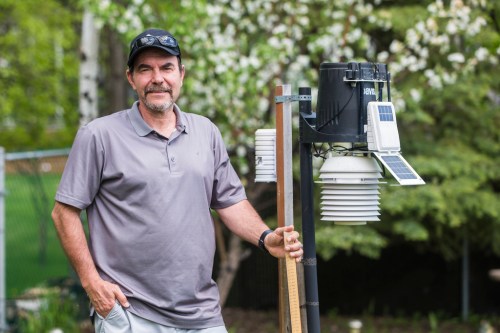
Meteorologist behind Rob’s Obs is moving weather station to Ontario

Ben Waldman 7 minute read Preview

Meteorologist behind Rob’s Obs is moving weather station to Ontario

Ben Waldman 7 minute read Monday, Jun. 13, 2022

In a Winnipeg winter, there are always at least two certainties: it will be cold, and it will snow. A third certainty: the people will talk endlessly about how frigid the temperature is, and argue about how much snow is cloaking their driveways. Is it colder than it ever has been? Is there more snow today than the same time last year?

Rob Paola likely knows the answers to those questions.

Paola possesses no super powers. He is but a man with a metre stick and 40 years of professional meteorological experience, in the midst of a lifelong love affair with Mother Nature, a most turbulent mistress who rarely, if ever, reciprocates.

Each year when snow begins to fall, Paola heads outside his Charleswood home to figure out how much. He sticks his ruler in the ground, grabs his clipboard, and clicks his pen. In neat script, he records the temperature, what time precipitation began, how deep the powder is stacked. Then, he shares his data and insights online with thousands of followers who want a clear answer to the eternal questions: Why is this happening? When will it stop? How much snow has fallen in the city of Winnipeg?

Read
Monday, Jun. 13, 2022

Building healthier Canadians

Jason M. Sutherland 4 minute read 2:00 AM CDT

Ottawa is betting that billions of taxpayer dollars spent on steel, asphalt and concrete will secure Canada’s economic future and prosperity. Through the $51 billion Build Communities Strong fund, the federal government is paying for roads, bridges, water systems and transit to boost productivity and attract capital from Europe and Asia.

As the shovels hit the ground from Halifax to Vancouver, Canadians should be asking themselves: What good does it do to build a stronger country if we are not building healthier Canadians?

The fund’s $5 billion allocation for health infrastructure is welcome news, as many of our hospitals and long-term care homes across the country are showing severe signs of aging, and modern care centres are much needed. But pouring concrete for new facilities is not the same as building a healthy population.

A ribbon-cutting at a modern hospital does not guarantee you see a family doctor when you need one, keep a rural emergency department open overnight, or shorten the wait for a knee replacement keeping someone off the job or robbing a retiree of independence.

Is Canada headed for time chaos this weekend?

Michelle Bastian 5 minute read 2:00 AM CDT

When Manitoba Premier Wab Kinew declared Sept. 17 that the province would remain on permanent daylight time, he suggested it was a historical moment people would share with their “great-great-grandkids.” But, while Sunday, Nov. 1 has been heralded as the date many Canadians will stop changing their clocks, there are rumblings behind the scenes suggesting this will actually cause more trouble than ever before.

There are, of course, the warnings from chrono-biologists and sleep scientists about the damage permanent daylight time will do. The lighter evenings will mean many more dark mornings. But there is another set of problems in the offing in the critical infrastructure that underpins our digital lives.

While it used to be common to spend the Sunday morning after a time change going around our homes updating the clocks, we now wake up to devices that have already adjusted to the new time. These automatic updates occur regularly for daylight time, as well as when we travel to new time zones.

Our clocks are able to change by themselves owing to the hard work of a group of volunteers who were recently named in a list of the people who hold up the internet. This group, led by Paul Eggert, a computer scientist at UCLA, maintains a little-known tool called the Time Zone Database. Since the 1980s, it has kept track of regional, national and international debates about clock time and provided an up-to-date table of what time it should be on our walls.

Kinew will listen to city request for new taxes — but no promises

Nicole Buffie 5 minute read Preview

Kinew will listen to city request for new taxes — but no promises

Nicole Buffie 5 minute read Friday, Nov. 1, 2024

Premier Wab Kinew remained coy about whether he would support a new municipal tax in Winnipeg as the city struggles to maintain services.

Kinew dodged questions on the matter Friday afternoon.

“We want to see services strong, we want to see roads getting fixed,” Kinew said. “Affordability is really top of mind … we got to keep life affordable for the average person out there.”

Some of the items being considered for a new tax are: alcohol, online deliveries, vehicle registration, vacant homes, commercial parking and land transfers with an exemption for first-time homebuyers.

Read
Friday, Nov. 1, 2024

Just say no (to deficits during good economic times)

Tom Brodbeck 5 minute read Preview

Just say no (to deficits during good economic times)

Tom Brodbeck 5 minute read Wednesday, Oct. 2, 2019

When a political party pledges to run small, “manageable” deficits if elected, it almost always means it will go deeper into the red if it wins government.

It’s human nature.

After all, as a government, if you get the blessing of the public to spend beyond your means, what’s a few billion more a year in overspending?

The problem is, it doesn’t usually end there. When those same politicians seek re-election, they often want permission to post even larger deficits. In some cases, they’ve abandoned the idea of balancing the books altogether, arguing perpetual deficit financing is acceptable, as long as the debt doesn’t exceed a certain percentage of the economy.

Read
Wednesday, Oct. 2, 2019