Getting fleeced: from sheep to skein

Advertisement

Advertise with us

When you need a haircut, you really need a haircut. And Yo-Yo Bah needs a haircut.

Read this article for free:

or

Already have an account? Log in here »

To continue reading, please subscribe:

Subscribe and receive a limited-edition Free Press branded hat or tote.

Digital Subscription

One year of digital access for only $205*

  • Enjoy unlimited reading on winnipegfreepress.com
  • Read the E-Edition, our digital replica newspaper
  • Access News Break, our award-winning app
  • Play interactive puzzles

*First annual payment billed as $205.00 + GST for one year. This annual subscription will automatically renew at $233.00 + GST every 52 weeks (10% off the regular annual price of $259.35). Offer available to new and qualified returning subscribers only. Cancel any time.

To continue reading, please subscribe:

Add Free Press access to your Brandon Sun subscription for only an additional

$1 for the first 4 weeks*

  • Enjoy unlimited reading on winnipegfreepress.com
  • Read the E-Edition, our digital replica newspaper
  • Access News Break, our award-winning app
  • Play interactive puzzles
Start now

*Your next Brandon Sun subscription payment will increase by $1.00 and you will be charged $17.95 plus GST for four weeks. After four weeks, your payment will increase to $24.95 plus GST every four weeks.

Hey there, time traveller!
This article was published 26/05/2022 (1520 days ago), so information in it may no longer be current.

When you need a haircut, you really need a haircut. And Yo-Yo Bah needs a haircut.

It’s the last day in April, and the sheep has been waiting all year to get shorn. For humans, that can mean looking shaggy, dishevelled and pre-historic. For Yo-Yo Bah and the other 37 sheep at Long Way Homestead — including Alexander Lambilton, Apollo, Mr. Sinister, Sage, and Shadrach — it means carrying around a lot of extra weight, which can be both uncomfortable and a hindrance to their life if the fleece reaches an extreme length.

An unshorn sheep is an unhappy sheep, and an unhealthy one at that. So a haircut is as much a wellness procedure as it is a grooming opportunity.
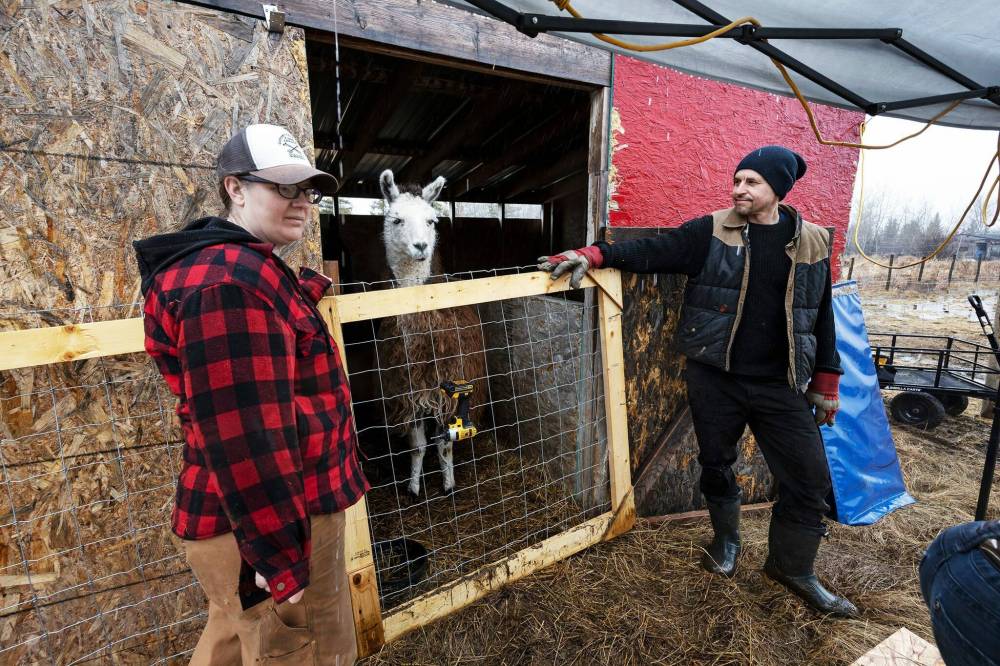
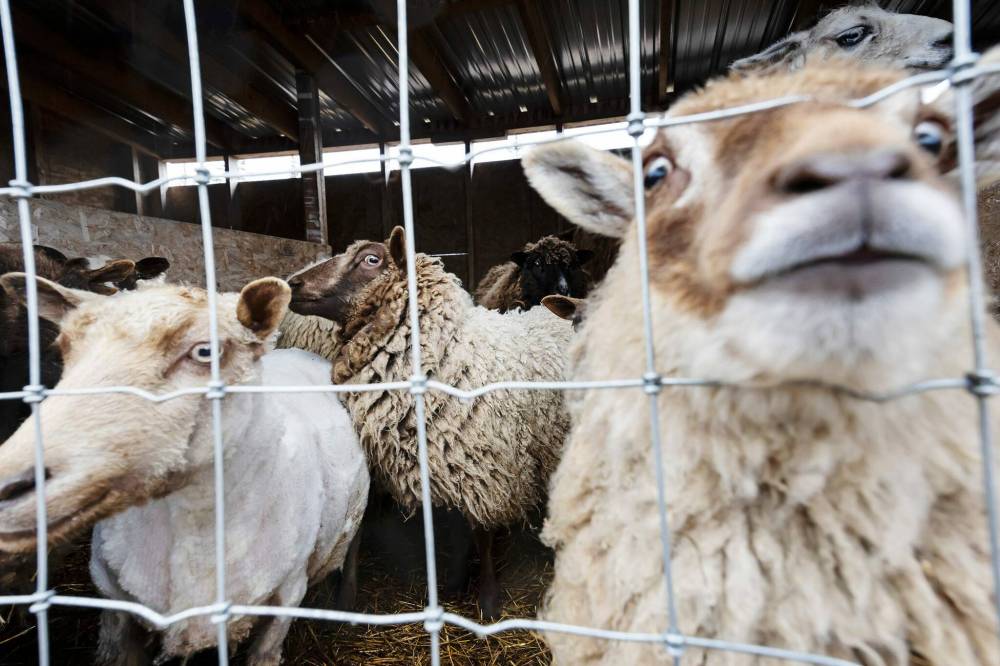
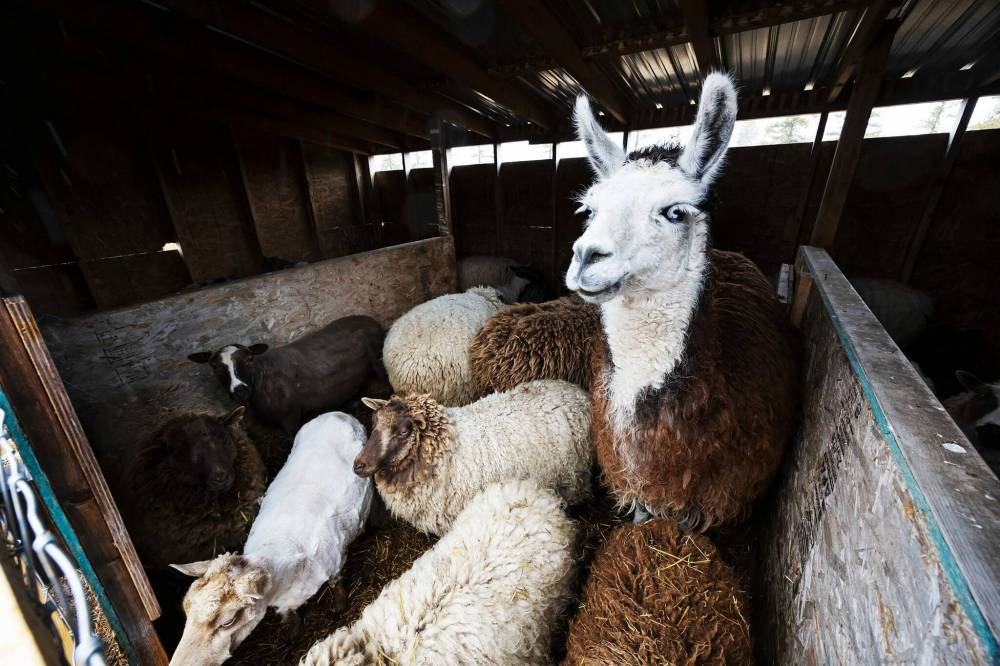
Shetland sheep at Long Way Homestead. Anna Hunter (left) and her husband Luke run the homestead in the town of St. Genevieve. They run a wool mill, make their own natural dyes, and run workshops, while raising two children. (Prabhjot Singh Lotey / Winnipeg Free Press)

Even if they didn’t make the appointment themselves, the sheep — who typically produce around four pounds of wool each — don’t mind the trip to the salon, says Anna Hunter, who with her husband Luke Palka runs the homestead about a 45-minute drive east of Winnipeg, in the town of Ste. Genevieve. At the homestead, they run the province’s only operational wool mill, make their own natural dyes, and run workshops, while raising two children.

The couple had big things planned for the big haircut: a shearing festival where community members could learn more about the animals, the wool, textile and fibre industry, and the homestead’s fibre processes. A chance to interact with textiles and their sources, and to understand the benefits of domestic production.

But it started raining, the festival was cancelled, and shearer Stacey Rosvold could only get to three members of the flock before the slippery conditions got too dangerous to keep going.
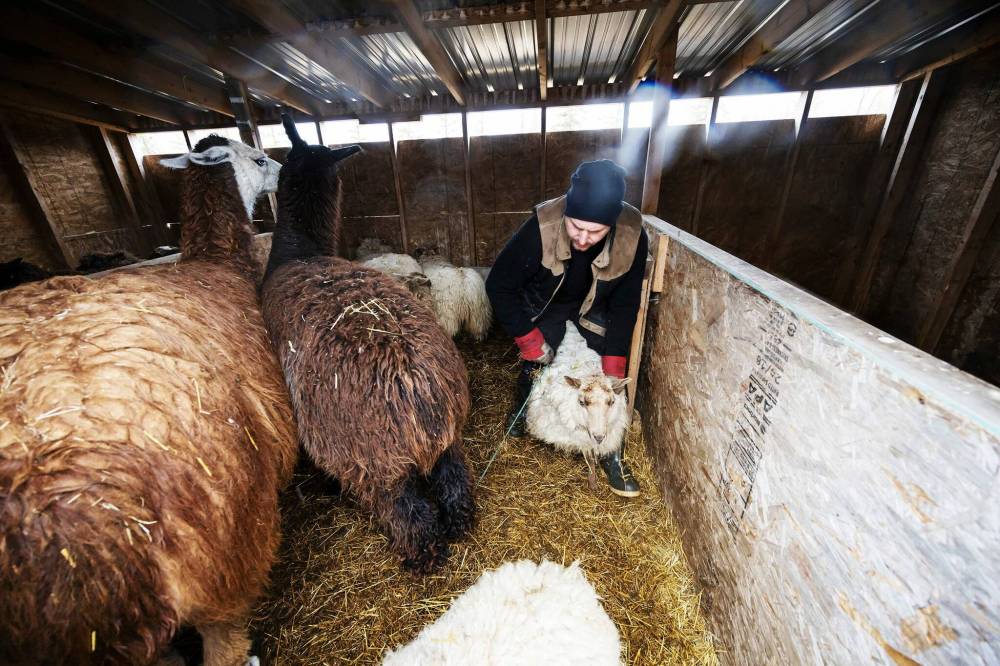
Luke Palka gathers a sheep for shearing. (Prabhjot Singh Lotey / Winnipeg Free Press)

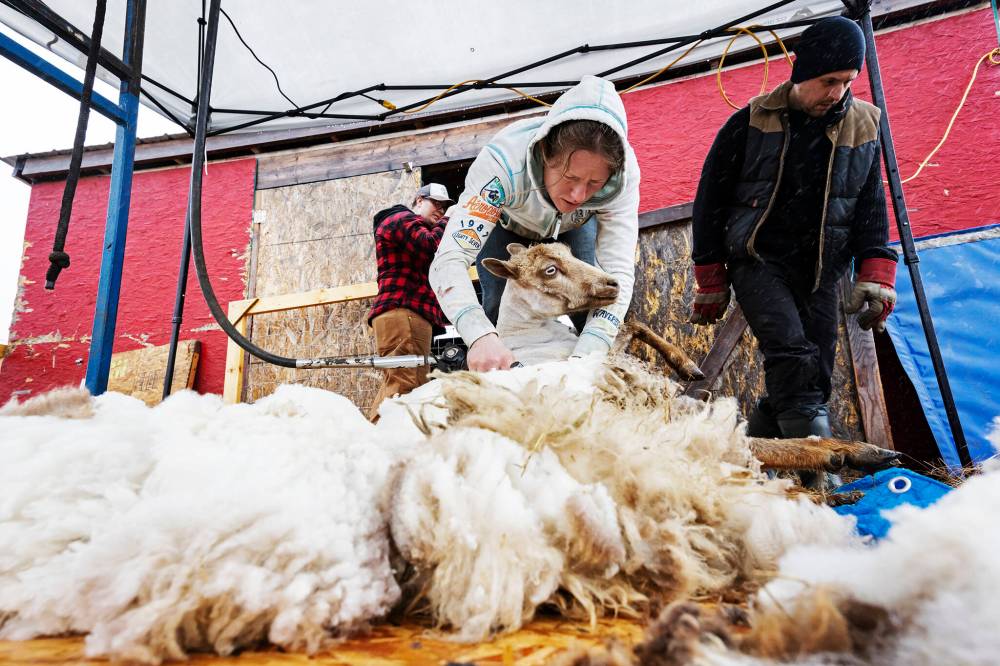
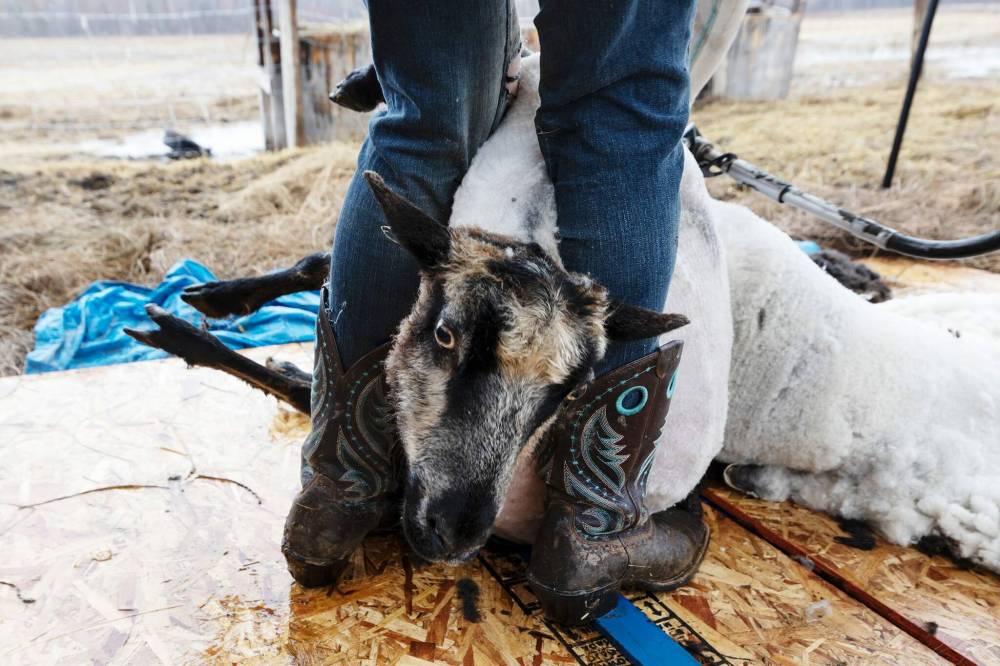
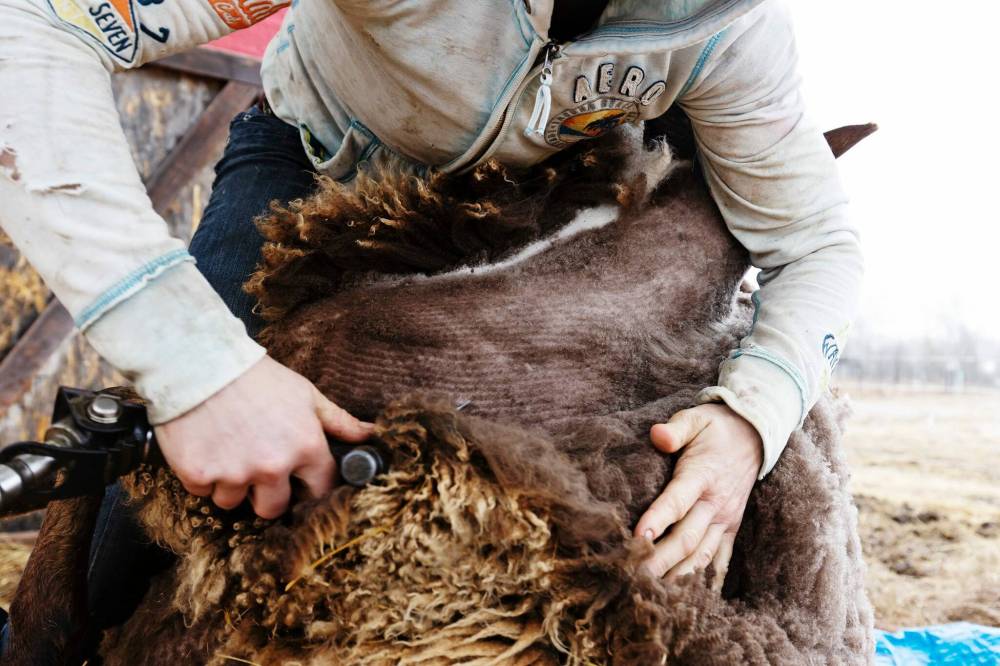
Rosvold has sheep of her own, but spends a good deal of her year on the road, travelling from farm to farm to help sheep shed their heavy coats of fleece. It’s hard work: she has to ensure the animals stay still and calm while handling the super-sharp shears. Just as a hairdresser tells you to look down or turn your head, Rosvold attempts and succeeds in controlling the shearing process. It’s as much athletic as it is cosmetic.

Shearing has to be done by hand, Hunter says, and there is a scarcity of experienced shearers in the province, which makes Rosvold a busy person: in the month of May, she was only home for three days, spending the bulk of the month shearing across the Prairies. This year, she estimates she will shear more than 20,000 sheep.

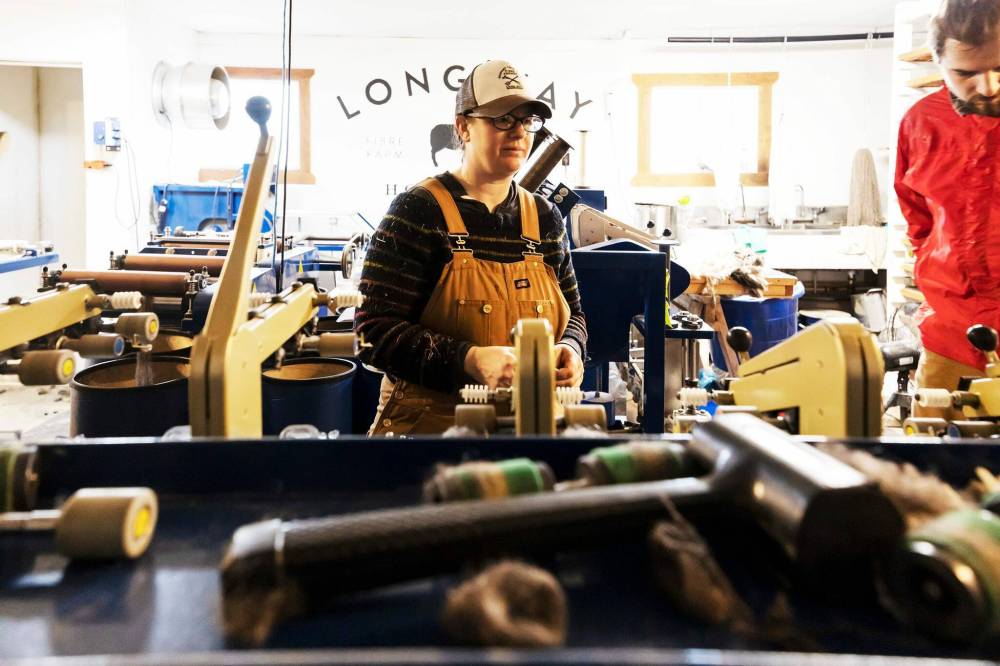
Once the fleece is removed, it’s taken to the mill, where it is scoured, dried, picked, and combed, before the fibre can become batting or roving, which can then be spun into yarn.
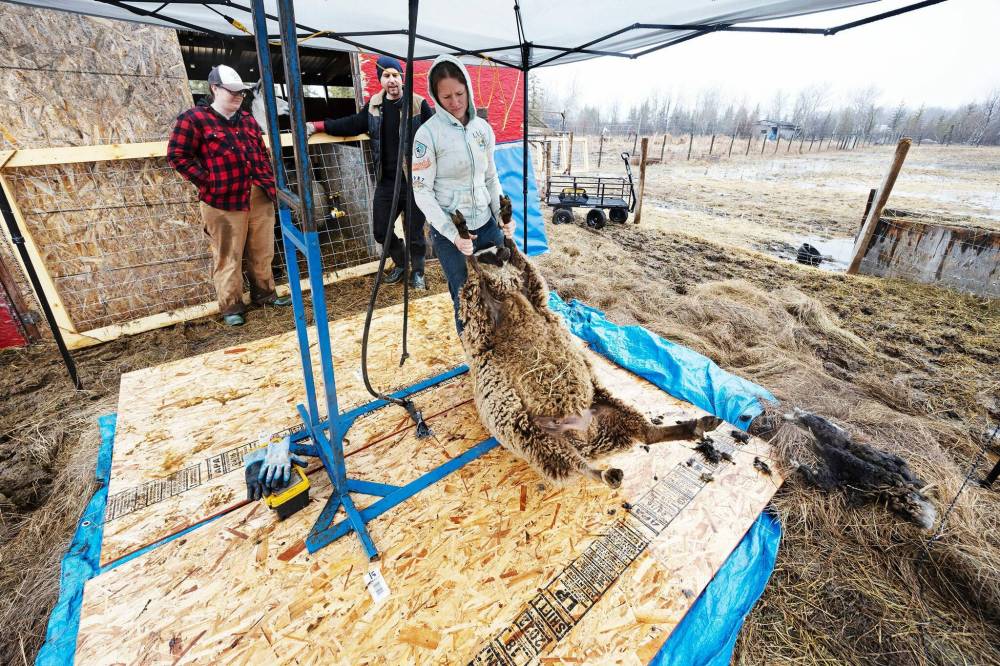
For sheep, shedding the heavy wool coat is more than a haircut, it’s a great relief. (Prabhjot Singh Lotey / Winnipeg Free Press)

It’s a laborious process, but Hunter says it’s worth it: wool is hypoallergenic, flexible, relatively fire-retardant, odour resistant, hygroscopic (temperature regulating) and most importantly, renewable and biodegradable. It can be grown and shorn annually, while unused fibres can be returned to the soil to decompose.

For Yo-Yo Bah, it’s a little bit much. But the sheep will get a haircut soon, Hunter says. When you need a haircut, you really need a haircut.

ben.waldman@winnipegfreepress.com
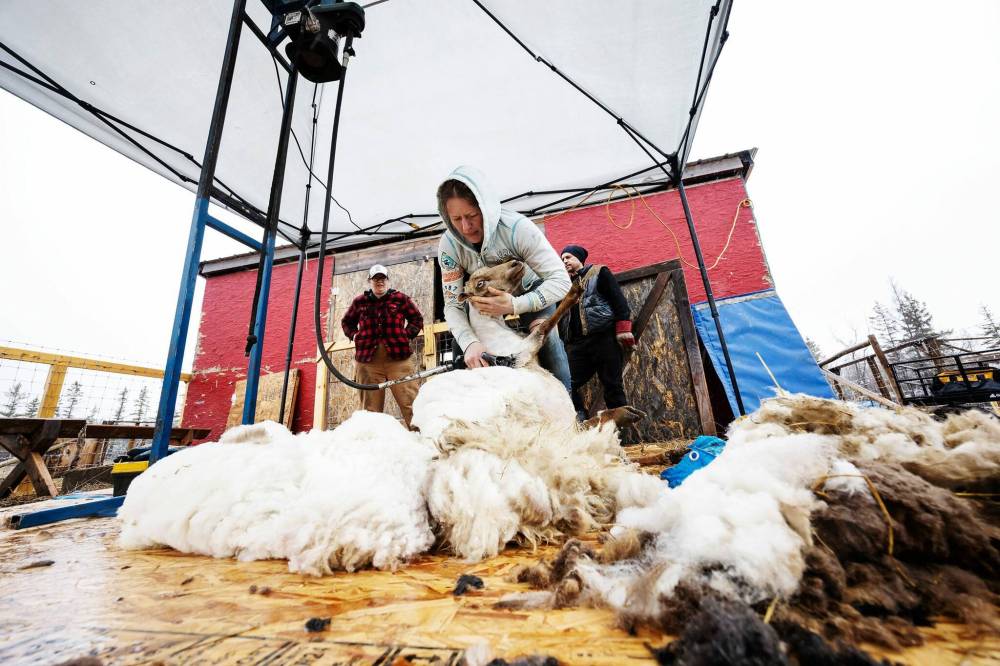
Shearer Stacy Rosvold with barn owners, Anna Hunter, left, and Luke Palka. (Prabhjot Singh Lotey / Winnipeg Free Press)
(Prabhjot Singh Lotey / Winnipeg Free Press)
Shearer Stacey Rosvold holds a sheep steady as she finishes up the job. (Prabhjot Singh Lotey / Winnipeg Free Press)
The shearing process is as much athletic as cosmetic. (Prabhjot Singh Lotey / Winnipeg Free Press)
One down and many others to go. On this rainy day in late April, conditions made it too difficult to continue safely with the shearing. (Prabhjot Singh Lotey / Winnipeg Free Press)
Long Way Homestead now boasts nearly 40 sheep and a couple of llamas. (Prabhjot Singh Lotey / Winnipeg Free Press)
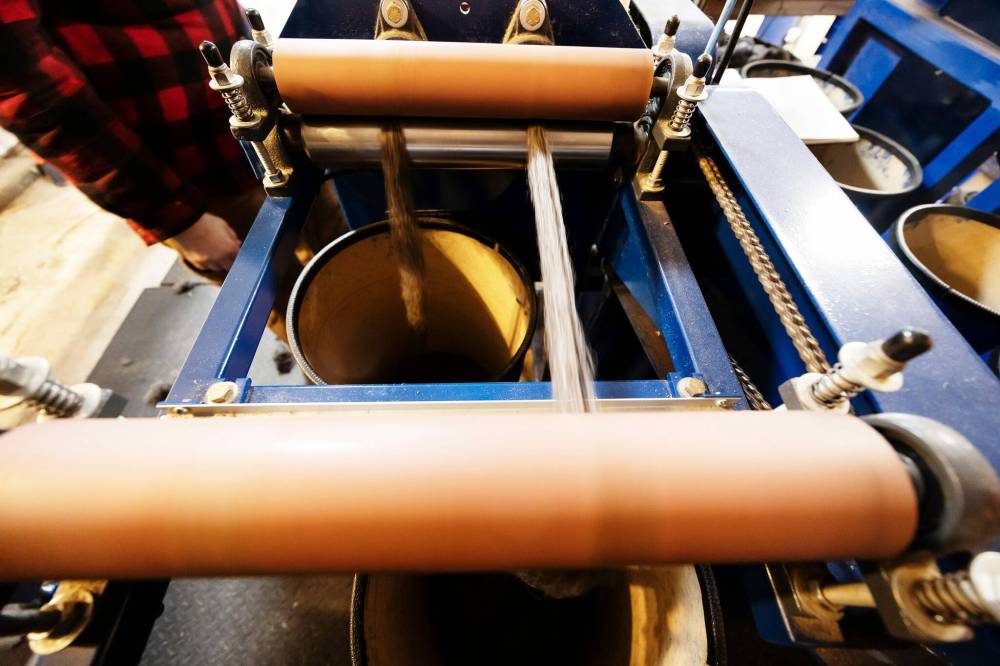
Wool roving passing through the draw frame machine. This further aligns the fibre in order to make smooth yarn.  (Prabhjot Singh Lotey / Winnipeg Free Press)
Wool roving passing through the draw frame machine. This further aligns the fibre in order to make smooth yarn. (Prabhjot Singh Lotey / Winnipeg Free Press)
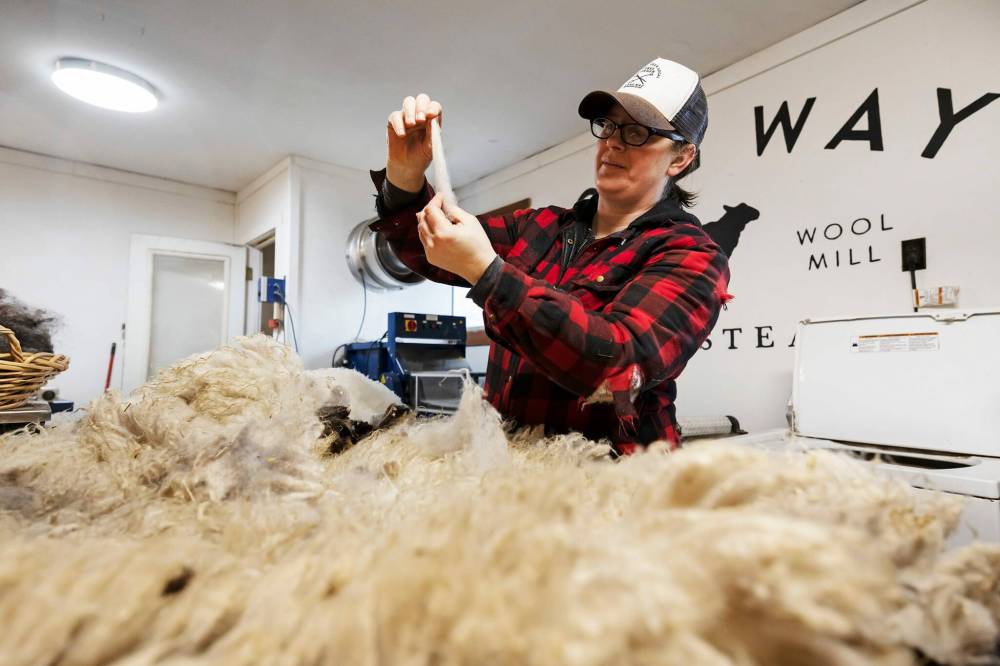
Anna Hunter tests the staple length and strength of some white wool — this happens during the skirting and evaluation process of each fleece that comes through the mill. (Prabhjot Singh Lotey / Winnipeg Free Press)
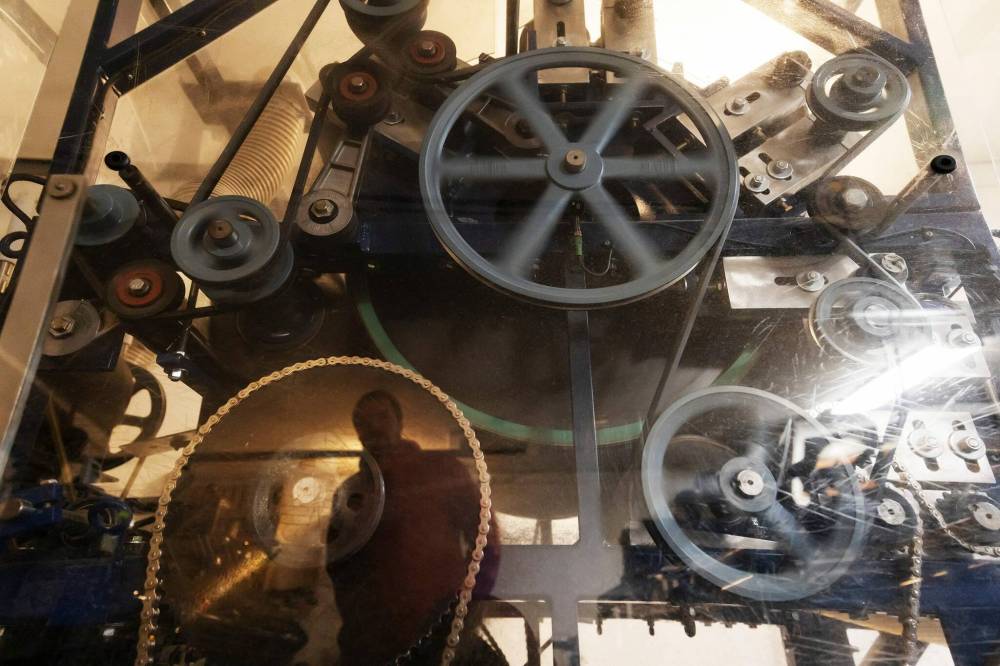
The carding machine: the wool passes through many different drums with tiny little teeth — essentially it is like a comb — combing all the fibres to be lying parallel to each other. (Prabhjot Singh Lotey / Winnipeg Free Press)
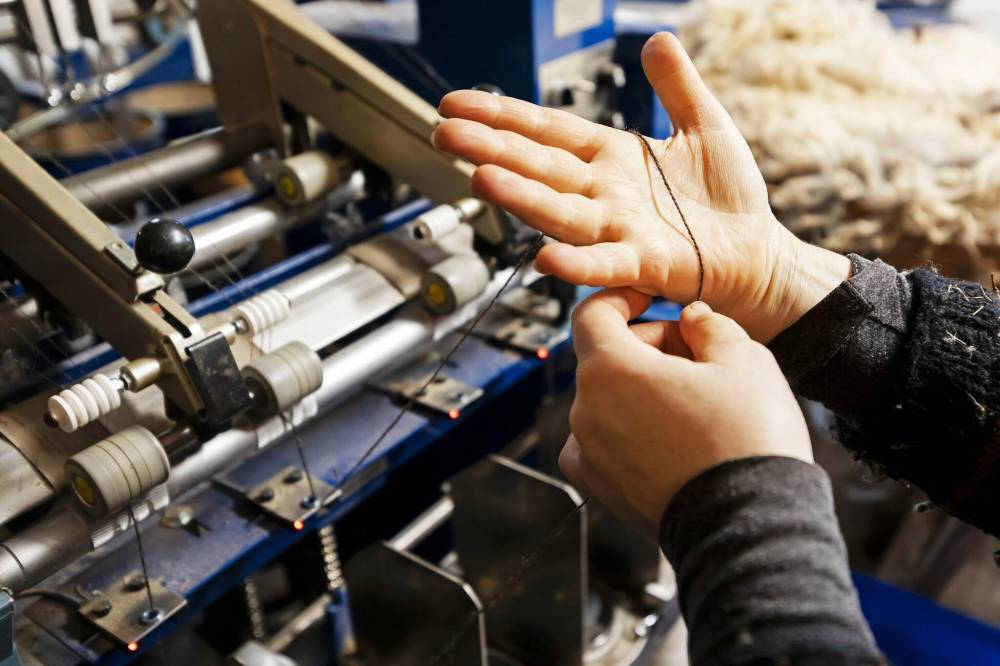
Hunter sets up the spinner, which is where roving fibre is transformed into spun yarn.They can spin 12 spindles at a time and can do a variety of yarn weights. (Prabhjot Singh Lotey / Winnipeg Free Press)
Hunter demonstrates the plying process. This is where they take two or more strands, twist them together in the opposite direction of which they were originally spun to create a stronger, more balanced yarn. (Prabhjot Singh Lotey / Winnipeg Free Press)
Hard work leads to a hearty lunch. (Prabhjot Singh Lotey / Winnipeg Free Press)
Report Error Submit a Tip

More Stories

Lawyer working on unpaid tax bill in Costa Rica, Pallister says

Larry Kusch 1 minute read Preview

Lawyer working on unpaid tax bill in Costa Rica, Pallister says

Larry Kusch 1 minute read Tuesday, Dec. 18, 2018

Three-and-a-half months after acknowledging he owed luxury taxes on his Costa Rican vacation home, Brian Pallister now admits that the bill remains unpaid.

In a year-end interview, the premier expressed frustration at being unable to make the payment, citing unspecified problems in navigating the Costa Rican bureaucracy.

While he told the Canadian Press in late August that he had paid what he owed — roughly C$8,000, including penalties — it turns out that he had, in fact, transferred the money to his Costa Rican lawyer, Paul Oporta, to carry out the transaction.

"I've been assured by the lawyer that he is endeavouring his very best to get it done," Pallister said of the tax payment.

Read
Tuesday, Dec. 18, 2018

Puzzles Palace

1 minute read Updated: Yesterday at 2:38 PM CDT

To solve our puzzles, please subscribe with this special offer: |

Lessons of the co-operative movement

Laura Rance 4 minute read Saturday, Jan. 27, 2024

Sometimes things people say during conversations on either side of a formal interview stay tucked away in your memory, circling back from time to time to root themselves in a new context.

Bill Strath, a grain farmer from Souris, was president of Manitoba Pool Elevators and a leader in the Prairie co-operative movement in the late 1980s. That was back in the days when these farmer-owned businesses controlled more than 80 per cent of the grain handling capacity, with investments in oilseed processing, flour milling and forays into doughnut-making.

“You know, people like to call the co-operative movement ‘socialism’,” Strath said, or words to that effect. “They’re wrong. Co-ops are really about small-C capitalism.”

I hadn’t thought about it that way before. For me, co-ops didn’t have a philosophical label; they were just a part of daily life.

Blood services: need 1-M new donors in next 5 years

Tiago Resko 4 minute read Preview

Blood services: need 1-M new donors in next 5 years

Tiago Resko 4 minute read Wednesday, Jul. 22, 2026

Getting a tattoo or going out to a bar are common things to do when turning 18, but Saige Zdebiak’s first act of adulthood was donating blood.

“It was always kind of a goal of mine. I’ve always wanted to do it because my mom’s done it hundreds of times,” said the now-22-year-old while donating at Canadian Blood Services earlier this week.

Zdebiak needed a heart transplant when she was three and developed Lyme disease when she was 10. She gives back today so health-care workers can continue to help people the way they helped her.

She is one of 400,000 donors to Canadian Blood Services across the country — but it’s still not enough to meet the recent spike in demand.

Read
Wednesday, Jul. 22, 2026

Bell under fire after 911 outage

Chris Kitching 7 minute read Preview

Bell under fire after 911 outage

Chris Kitching 7 minute read Updated: Yesterday at 6:06 PM CDT

Bell Canada — Manitoba’s 911 service provider — is facing questions about reliability and redundancy measures after an hours-long outage outside Winnipeg, caused by a severed fibre optic cable, prevented dozens of calls from getting through Wednesday.

Bell spokeswoman Elise von Scheel said backup systems that reroute 911 calls when an outage occurs due to equipment damage also experienced “issues” after a third party cut the cable during construction “near Winnipeg.”

“Manitoba’s 911 system relies on legacy architecture that does not support the failsafes that newer systems have, which is why Bell is in the process of upgrading the ecosystem to next generation 911,” von Scheel wrote in an email.

“All Manitoba public safety answering points are planned to be migrated to the new system by the end of 2026. Migration to NG911 is the fastest and most effective remediation to prevent instances like this in the future.”

Read
Updated: Yesterday at 6:06 PM CDT

Photos reveal ‘pretty nasty’ scene inside flooded Dauphin hospital

Morgan Modjeski 5 minute read Preview

Photos reveal ‘pretty nasty’ scene inside flooded Dauphin hospital

Morgan Modjeski 5 minute read Yesterday at 6:33 PM CDT

Prairie Mountain has released 22 photos depicting the muddy mess in the Dauphin hospital left by floodwater last month that has shut down the regional facility for as long as a year.

Dauphin Mayor David Bosiak said he understands the photos were released in response to criticism from some who wonder why the hospital will be closed for as long as a year.

“(The public) needed to see the scale and the scope of the damage,” he said. “And the pictures that PMH released today, I think have really opened people’s eyes as to what’s gone on at the hospital.”

He said 80 people are working to clean the filthy facility in conditions that are “less than ideal.” Sections of the hospital still have no power and there’s no air circulation as a result.

Read
Yesterday at 6:33 PM CDT