Resilient infrastructure, faster disaster recovery needed to adapt to climate change

Advertisement

Advertise with us

OTTAWA - Canada is built for a climate that no longer exists and we can either accept that and adapt or face the consequences of inaction, Environment Minister Steven Guilbeault said Monday, as he kicked off public consultations on a national strategy.

Read this article for free:


or

Already have an account? Log in here »

To continue reading, please subscribe:

Subscribe and receive a limited-edition Free Press branded hat or tote.

Digital Subscription

One year of digital access for only $205*

  • Enjoy unlimited reading on winnipegfreepress.com
  • Read the E-Edition, our digital replica newspaper
  • Access News Break, our award-winning app
  • Play interactive puzzles

*First annual payment billed as $205.00 + GST for one year. This annual subscription will automatically renew at $233.00 + GST every 52 weeks (10% off the regular annual price of $259.35). Offer available to new and qualified returning subscribers only. Cancel any time.

To continue reading, please subscribe:

Add Free Press access to your Brandon Sun subscription for only an additional

$1 for the first 4 weeks*

  • Enjoy unlimited reading on winnipegfreepress.com
  • Read the E-Edition, our digital replica newspaper
  • Access News Break, our award-winning app
  • Play interactive puzzles
Start now

*Your next Brandon Sun subscription payment will increase by $1.00 and you will be charged $17.95 plus GST for four weeks. After four weeks, your payment will increase to $24.95 plus GST every four weeks.

Hey there, time traveller!
This article was published 16/05/2022 (1604 days ago), so information in it may no longer be current.

OTTAWA – Canada is built for a climate that no longer exists and we can either accept that and adapt or face the consequences of inaction, Environment Minister Steven Guilbeault said Monday, as he kicked off public consultations on a national strategy.

But experts on adaptation say Canada needs to do a lot more, and a lot faster, because those consequences are already upon us.

The strategy, which the Liberals have promised will be ready by this fall, is intended to set goals for Canada to adapt its built and natural environment, with deadlines in both 2030 and 2050.
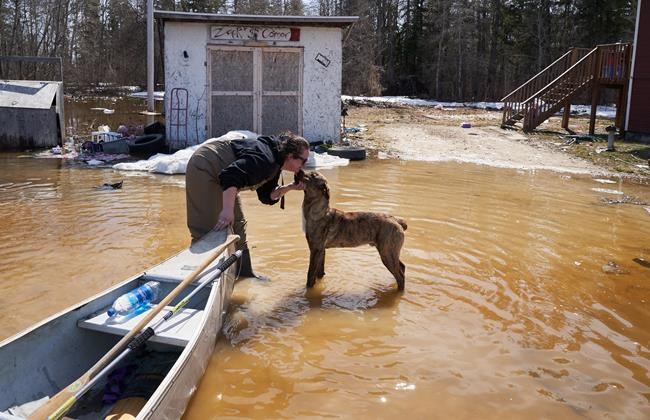
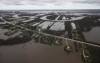
President and founder of Save A Dog Network, Katie Powell gets a kiss from a dog after bringing bags of dog food by canoe to stranded homes during flooding in Peguis First Nation, Man., Wednesday, May 4, 2022. Dozens of experts advising the government on the best way to adapt to the reality of climate change say we need to do more to prepare infrastructure for the threats of extreme weather and get faster to help Canadians recover when their lives and livelihoods are threatened by floods, fires and major storms.THE CANADIAN PRESS/David Lipnowski

A consultation paper released Monday lists some of the goals the government is considering adopting for 2030, including reducing the number of people exposed to flood or fire risk, restoring communities faster after a disaster, and providing information so individual Canadians can assess their own risk.

“The national adaptation strategy represents a really important new direction for the country to go beyond climate change mitigation, and tackle in a comprehensive and strategic way how we make our communities safer, and better prepared for the impacts of climate change,” Guilbeault said.

Guilbeault was in the Pierrefonds neighbourhood of Montreal where the Rivière des Prairies spilled over its banks and into homes in both 2017 and 2019, and the conversations are about turning temporary, emergency flood responses into permanent protections.

The climate changes that are flooding Pierrefonds more frequently are happening nationwide. In Manitoba, where spring flooding prompted 33 local emergency declarations, residents of Peguis First Nation were forced to flee their homes for the sixth time in less than two decades.

In Red Lake, Ont., residents threatened by wildfires the last two summers are now cut off by road as floodwaters washed out their highway this spring.

In British Columbia, residents of Lytton still don’t know when they might return home after a wildfire razed their town 10 months ago. A few months after that fire, B.C. suffered massive flooding that threatened multiple communities and washed out parts of the rail and highway connections between the West Coast and the rest of Canada. Repair efforts in Lytton were slowed because the road into the town was among those washed out by the rain.

The Canadian Climate Institute said in a report that between 2010 and 2019, insured losses from extreme weather totalled $18 billion, three times the total of the 1980s.

The effect of each disaster is also bigger, with the average cost of individual weather-related events in the 2010s pegged at $112 million, compared with $8 million in the 1970s.

Emergency Preparedness Minister Bill Blair said last week following a visit to Lytton that provinces had requested federal help with wildfires 14 times in the last two years, compared with four requests in the five years before that.

Blair Feltmate, head of the Intact Centre on Climate Adaptation at the University of Waterloo, said the consultation process launched Monday is welcome but is moving too slowly.

“I do not get a sense of the need to act with urgency to put adaptation measures on the ground today, for the perils that are here today that are going to get worse tomorrow,” he said. “There seems to me to be a discussion almost characterized by complacency rather than urgency.”

Feltmate said public education programs to explain the benefits of relatively cheap and easy fixes to reduce the risk of basement flooding, or lower the risk of fire damage to your home, could prompt action at the homeowner level quickly.

He said 60,000 homes are flooded in Canada every year because of overland floods or water backing up into basements, causing $1.2 billion in insured damage.

He added that Canada’s most common response to flooding is the emergency use of sandbags. “That is technically the same technology the Romans used 2,000 years ago.”

Ryan Ness, director of adaptation at the Canadian Climate Institute, said the consultation paper captures the general needs for a Canadian adaptation strategy but must get a lot more specific — and fast. “It’s clear that there’s still a lot of hard work to do to get to a strategy that’s actually going to raise the bar for adaptation in Canada.”

Canada has budgeted more than $3 billion for climate adaptation but Ness said that’s nowhere near enough.

The Federation of Canadian Municipalities estimated in 2020 that it would cost more than $5 billion a year for Canada’s cities and towns to avoid the worst of climate-related effects.

Both Feltmate and Ness were on five expert advisory panels tasked with giving the government guidance on the strategy in specific areas including nature, infrastructure, health, economics and disaster resilience.

The final strategy is expected to set measurable goals in each area, but Guilbeault said it wasn’t yet clear if the government would enshrine those goals into legislation like it did for greenhouse gas emission targets last year.

This report by The Canadian Press was first published May 16, 2022.

Report Error Submit a Tip

More Stories

Report calls for schools to add more ‘sensory rooms’

Maggie Macintosh 6 minute read Preview

Report calls for schools to add more ‘sensory rooms’

Maggie Macintosh 6 minute read Wednesday, Jul. 15, 2026

Manitoba schools are being urged to set up more “sensory rooms” and use the spaces — which can feature mood lighting, flexible seating and fidget toys — to address growing concerns about student outbursts and related injuries.

A new report from the Manitoba Federation of Labour is renewing calls to better protect educational assistants, teachers and other public-sector employees.

One of its 10 recommendations, published on Monday, focuses on tackling overcrowding in community facilities and establishing “safe spaces in schools to respond to violence.”

“It’s become the norm: kids having meltdowns that require you have to evacuate the classroom,” said Jane Allison, an educational assistant in Winnipeg.

Read
Wednesday, Jul. 15, 2026

Letters, Oct. 6

6 minute read 2:00 AM CDT

High road not so easy

Re: Khan should’ve taken high road: Goertzen (Oct. 3)

Politics is a tough game. Just ask former provincial Liberal leader Dougald Lamont. He got thrown under the bus by a prominent Manitoba/Canadian Liberal who advised people to vote NDP in the last provincial election.

As Lamont said when he lost the election, he is “human” and what happened to him “hurt.” Khan is also human. It is easy to criticize him for not taking the “high road.”

Odermatt wins super-G, keeps season title hopes alive

The Associated Press 3 minute read Preview

Odermatt wins super-G, keeps season title hopes alive

The Associated Press 3 minute read Sunday, Mar. 7, 2021

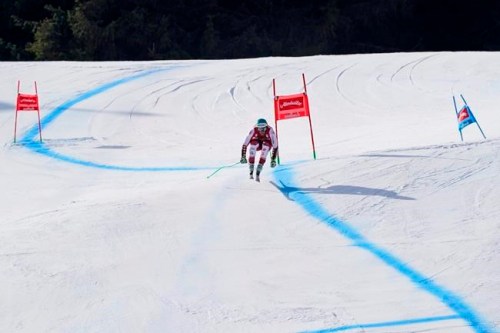
SAALBACH-HINTERGLEMM, Austria - Marco Odermatt dominated the penultimate men’s World Cup super-G of the season Sunday to keep himself in the race for the discipline title.

The Swiss skier finished his gutsy run on the Schneekristall course 0.62 seconds ahead of runner-up Matthieu Bailet.

The Frenchman was the 2016 junior world champion and earned his first podium result on the World Cup circuit.

Vincent Kriechmayr, the double world champion from Austria, trailed Odermatt by 0.81 in third, a day after he won the downhill on the same hill. Another Austrian, Raphael Haaser, finished two-hundredths behind Kriechmayr in fourth.

Read
Sunday, Mar. 7, 2021

Biographer delves deep into the comedy and the tragedy of Robin Williams' troubled life

Reviewed by GC Cabana-Coldwell 6 minute read Preview

Biographer delves deep into the comedy and the tragedy of Robin Williams' troubled life

Reviewed by GC Cabana-Coldwell 6 minute read Saturday, Jun. 16, 2018

Whenever I’m asked with whom I’d love to dine, entertainer Robin Williams always tops my short list of three. Still.

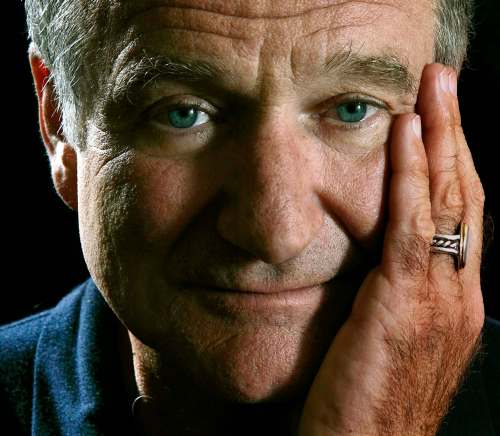
It’s immaterial that we didn’t move in the same social circles. Or that our career paths never crossed, even though one of his many movies, The Big White, was partially shot in Winnipeg in 2005. Something about him — that hairy persona, those kind blue eyes, the “aw shucks” grin — had intrigued me since watching the debut of his Mork & Mindy TV sitcom in 1978. His off-the-wall goofiness simply sealed the deal.

Comedian Williams became movie-star Williams, and I bought every flick — the good, the not-so-good and the real stinkers. His raunchy standup recordings, often released between his movies, were just an added, adult-only bonus.

So I, like many, was gutted when, at age 63, Williams took his own life in 2014. I didn’t “get” it: how could an award-winning, funny guy, admired by so many for so long, get so beaten up inside that he’d off himself?

Read
Saturday, Jun. 16, 2018

Olympic soccer, boxing qualifiers in China affected by virus

The Associated Press 2 minute read Preview

Olympic soccer, boxing qualifiers in China affected by virus

The Associated Press 2 minute read Wednesday, Jan. 22, 2020

KUALA LUMPUR, Malaysia - Olympic qualifying events in two sports were moved from the Chinese city of Wuhan on Wednesday because of an outbreak of a deadly viral illness.

A four-nation Asian qualifying group for the women’s soccer tournament was switched from the city at the centre of the health scare to Nanjing.

The Asia-Oceania boxing qualifying tournament scheduled for Feb. 3-14 in Wuhan was cancelled. No new plans were announced.

The decisions followed Chinese health authorities telling people in Wuhan to avoid crowds and public gatherings.

Read
Wednesday, Jan. 22, 2020

Pimp sentenced to 11 years in prison

Erik Pindera 5 minute read Preview

Pimp sentenced to 11 years in prison

Erik Pindera 5 minute read 2:00 AM CDT

A man who picked up a vulnerable 17-year-old child-welfare ward on the streets of Winnipeg and coerced her into providing sexual services for several months has been sent to prison for more than a decade.

After a trial, Hassan Kargbo, who’s in his early 30s, was found guilty of sexual exploitation, making child sexual abuse and exploitation material, receiving a material benefit from sexual services provided by a person under 18, procuring a person under 18 and advertising sexual services.

Provincial court Judge Julie Frederickson sentenced him to 11 years behind bars late last month.

“Mr. Kargbo picked up a young Indigenous girl walking over the Osborne Street bridge and quickly got her involved in drug use and escorting,” Frederickson said in a written decision.

Read
2:00 AM CDT