Budget 2022 makes good on dental care, but little in new health spending
Advertisement
Read this article for free:
or
Already have an account? Log in here »
To continue reading, please subscribe:
Digital Subscription
One year of digital access for only $1.44 a week*
- Enjoy unlimited reading on winnipegfreepress.com
- Read the E-Edition, our digital replica newspaper
- Access News Break, our award-winning app
- Play interactive puzzles
*Billed as $5.77 plus GST every four weeks. After 52 weeks, price increases to the regular rate of $19.95 plus GST every four weeks. Offer available to new and qualified returning subscribers only. Cancel any time.
To continue reading, please subscribe:
Add Free Press access to your Brandon Sun subscription for only an additional
$1 for the first 4 weeks*
- Enjoy unlimited reading on winnipegfreepress.com
- Read the E-Edition, our digital replica newspaper
- Access News Break, our award-winning app
- Play interactive puzzles
*Your next Brandon Sun subscription payment will increase by $1.00 and you will be charged $17.95 plus GST for four weeks. After four weeks, your payment will increase to $24.95 plus GST every four weeks.
Read unlimited articles for free today:
or
Already have an account? Log in here »
Hey there, time traveller!
This article was published 07/04/2022 (1668 days ago), so information in it may no longer be current.
OTTAWA – The Liberals have made good on promises to the NDP when it comes to health spending in their newly released budget, but offered little else in new spending to reinvigorate Canada’s struggling health system.
The government expects to launch a new dental program in 2022, starting with children under the age of 12 at an initial cost of $300 million.
The scheme laid out in the budget is a major tenet of the Liberal’s confidence and supply agreement with the NDP to keep the government in power until 2025. The budget closely mirrors the opposition party’s costed platform proposal from the 2021 election, though details about how it will work are still sparse.
The new program will be restricted to families with an income of less than $90,000, with no co-pays for those who make under $70,000 per year.
The plan is to expand eligibility to children under the age of 18, seniors and persons with disabilities in 2023. The government expects full implementation by 2025, with an annual cost of $1.7 billion.
In total, the government expects to spend $5.3 billion over five years on dental care.
The Liberals also committed to passing a legislative framework for a national pharmacare plan by the end of 2023 as part of their deal with the NDP, but did not set aside any funds for the program in the budget.
While the government contemplates adding to public health care, provinces and health workers have warned the existing system is crumbling and in desperate need of help.
Provinces have clamoured for the federal government to increase its share of health spending, with an immediate increase of about $28 billion, to shore up their struggling systems.
Health transfers to the provinces will increase in 2022, but not nearly to the degree provinces have asked for.
They want minimum funding increases of five per cent annually, arguing the current plan of three per cent jumps in spending means transfers don’t keep pace with yearly cost increases.
Currently, federal contributions to provincial health systems grow in line with a three-year moving average of nominal gross domestic product. Thanks to a sunnier economic outlook than expected, the transfers will rise by about 4.8 per cent.
Health Minister Jean-Yves Duclos previously announced a $2-billion one-time boost for provincial health systems to work through the massive surgical backlogs that accumulated during the COVID-19 pandemic.
In the budget, the government alludes to the possibility of further negotiations on health transfers, but says that money would have to be tied to government priorities like increased access to primary and mental health care.
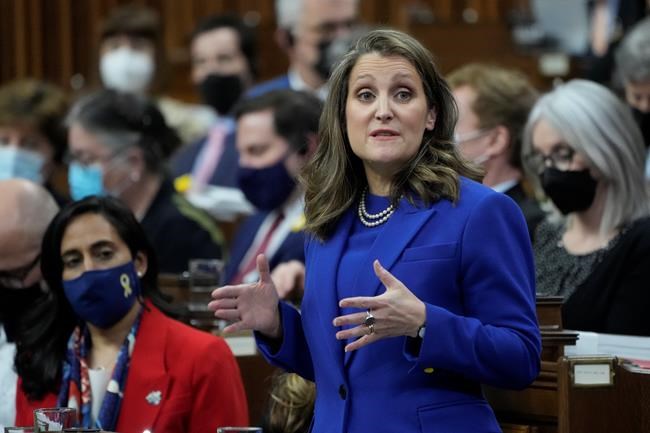
Finance Minister Chrystia Freeland said Canada already spends a lot on health care compared to peer countries but doesn’t get better outcomes, which is why the government wants to take time to “do it right.”
The budget does not appear to respond to the near-frantic pleas from health workers for a plan to address a serious staff shortage, as burnt-out employees reduce their hours and leave the industry in droves.
The Canadian Federation of Nurses Unions said this budget was supposed to be the light at the end of a dark tunnel, when they would finally get a sign that things would change. But president Linda Silas says they were left disappointed.
“We’ve been telling all levels of government that we’re in a crisis situation, and we needed strong words today,” Silas said.
Canadian Medical Association president Dr. Katharine Smart said the budget identified some key areas of concern, but given the state of the system, action is needed.
“We are still in this pandemic, it’s not over. In fact, it’s potentially getting worse right now. The health workforce is struggling and we would like to see more tangible investments for the health workforce and the health system,” Smart said.

The only new measures involve expanding loan forgiveness for doctors, nurses and other health professionals in rural and remote communities, as well as making it easier for foreign trained professionals to be certified in Canada.
The budget also included funds to “finish the fight” against COVID-19, with $50 million in 2022 to finance the purchase of vaccines, tests and therapeutics; $50 million to maintain Canada’s emergency stockpile of critical health supplies; $18 million to maintain vaccine passports for one more year; and $25 million to maintain the ArriveCan app to track public health information for travellers.
The Public Health Agency of Canada will also get a $436-million boost over the next five years to track and assess the risk of viruses, flu and respiratory infections.
The government appears keen to wind down COVID-19 health spending beyond 2022, but has set aside $20 million to study the long-term impact of the virus on infected Canadians and Canada’s health-care systems.
This report by The Canadian Press was first published April 7, 2022.


Advertisement Advertise With Us
Advertisement Advertise With Us