Seeing Bucha atrocities is turning point for media, viewers
Advertisement
Read this article for free:
or
Already have an account? Log in here »
To continue reading, please subscribe:

Digital Subscription
One year of digital access for only $205*
- Enjoy unlimited reading on winnipegfreepress.com
- Read the E-Edition, our digital replica newspaper
- Access News Break, our award-winning app
- Play interactive puzzles
*First annual payment billed as $205.00 + GST for one year. This annual subscription will automatically renew at $233.00 + GST every 52 weeks (10% off the regular annual price of $259.35). Offer available to new and qualified returning subscribers only. Cancel any time.
To continue reading, please subscribe:
Add Free Press access to your Brandon Sun subscription for only an additional
$1 for the first 4 weeks*
- Enjoy unlimited reading on winnipegfreepress.com
- Read the E-Edition, our digital replica newspaper
- Access News Break, our award-winning app
- Play interactive puzzles
*Your next Brandon Sun subscription payment will increase by $1.00 and you will be charged $17.95 plus GST for four weeks. After four weeks, your payment will increase to $24.95 plus GST every four weeks.
Read unlimited articles for free today:
or
Already have an account? Log in here »
Hey there, time traveller!
This article was published 06/04/2022 (1613 days ago), so information in it may no longer be current.
NEW YORK (AP) — CBS News reporter Debora Patta has covered conflicts in Africa and the Middle East, and the aftermath of terrorist attacks in Europe. She has seen violence and death at close range before. But the atrocities she witnessed in Bucha, Ukraine this week stood out, and overwhelmed her.
“We need to be disturbed by these pictures,” Patta said on “CBS Mornings,” after describing what she and other journalists witnessed in the outskirts of Kyiv.
The war changed this week from a media perspective, which is how most people outside of Ukraine experience it.
Before, events had been seen primarily from a slight distance — fiery explosions caught on camera or drone-eyed views of burned-out buildings. Now, with the Ukrainian army retaking control of villages near Kyiv that had been brutalized by Russian soldiers, journalists are capturing the aftermath of horrific violence at close range — of dead bodies bound, tortured and burned.
While there’s a sense that images like these might change public opinion or have an impact on how a war plays out, historically that hasn’t often been the case, said Rebecca Adelman, a communications professor at the University of Maryland who specializes in war and the media.
Still, several countries, including the United States and Britain, imposed additional sanctions on Russia this week, and they cited the brutality in Bucha as compelling them to do more.
Whatever the impact, Adelman said it is critical to have journalists on hand to document what is going on. “Bearing witness is crucially important, particularly in cases of catastrophic loss,” she said. “Sometimes the photograph is all you have left.”
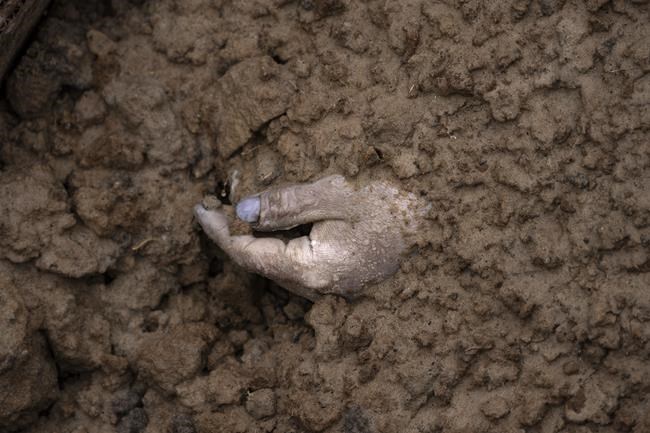
Photographs and video from Bucha showed body bags piled in trenches, lifeless limbs protruding from hastily dug graves, and corpses scattered in streets where they fell, including one man blown off a bicycle.
Journalists from around the world also interviewed Ukrainians emerging from their hiding places to tell stories about the barbarism they witnessed from Russian soldiers.
TV anchors and correspondents warned viewers that they were about to see graphic and disturbing pictures — a warning that came four times in one episode of “World News Tonight” on ABC. “I’m sorry I have to show you this,” CNN’s Frederik Pleitgen apologized, before motioning a camera to show body bags piled in a van.
“While we may want to look away, it is becoming harder and harder to close our eyes to what’s happening,” NBC “Nightly News” anchor Lester Holt said in his warning to viewers.
Veteran television news producer Rick Kaplan said that, from what he’s seen, news organizations have been careful in what they’ve shown without flinching from the story.
“Every day we have these images it brings (the war) home more and more,” said Kaplan, a former president of both CNN and MSNBC. “It’s a good thing that this horrifies us. Can you imagine if we were blase about it?”
The gruesome images from Bucha, in particular, have dominated news reports around the world.
The BBC reported on the continued “world revulsion.” Italian state TV gave no warning before showing bodies with bound hands, half-buried in sandy terrain. “What you see from here, unfortunately, are signs of torture on the face,” journalist Stefania Battistini said. “All are wearing civilian clothes.”
Narrating a story on Fakty, Poland’s most-watched evening news program, anchor Grzegorz Kajdanowicz said “it is our duty to warn you, but also to show you what the Russians did in Bucha and several other places.”
It was different in Russia, where state television falsely claimed Ukraine was responsible for either killing civilians themselves or perpetrating a hoax. Russian TV has also run images of dead bodies in Bucha, some taken from CNN, with the word “fake” stamped on the screen, according to Internet Archive, a company that collects and saves Web and television content.
The Russian propaganda prompted many Western news organizations to debunk those claims by using satellite imagery to show that many dead bodies that were documented on the ground this week by journalists had been in the same spots when Russia controlled the town.
Some of the most graphic images were compiled in a short video made by Ukraine to accompany President Volodymyr Zelenskyy’s speech to the United Nations on Tuesday. To a soundtrack of somber music and the cries of children, the video showed close-ups of corpses and body parts.
Technical difficulties delayed its airing until well after Zelenskyy talked, giving networks like CNN and Fox News Channel that had aired the speech time to present it later in edited form. But MSNBC appeared to show it in full, leaving anchor Andrea Mitchell visibly shaken.
“That’s just horrific,” she said. “I don’t think the world has seen anything like it.”
Ukraine has a clear motivation to show the world what is happening, and journalists accompanied Zelenskyy on a visit to Bucha on Monday.
While television and the Internet give greater immediacy to war coverage, heart-wrenching images — and their potential to shape public opinion — are hardly new.
Harvard historian Drew Faust, author of “This Republic of Suffering: Death and the American Civil War,” noted that when Matthew Brady had an exhibit of his Civil War photographs in 1862, The New York Times wrote, “if he has not brought bodies and laid them in our dooryards and along the streets, he has done something very like it.”
When a memorable photo was circulated of a 5-year-old boy sitting dazed and bloodied after being rescued from a bombing in Aleppo, Syria in 2016, NPR asked in a headline, “Can one photo help end a war?”
It hasn’t yet.
A danger, too, is that in a world not easily shocked people will become numb to the pictures. That’s Faust’s fear, particularly as she expressed surprise that many people became strangely disconnected to the news of so many people dying of COVID-19.

As more communities are liberated from Russian rule, the number of ghastly images will almost certainly multiply.
“A little caution will be needed going forward so every news program doesn’t become a parade of horrible images,” said news consultant and retired NBC News executive Bill Wheatley.
Yet one of the surprises of this war, along with Ukraine’s ability to stave off a quick defeat, is the way Zelenskyy has been able to win the information battle and unite opposition in a way that was not anticipated. In that context, the images may help make a difference.
___
Associated Press correspondents Colleen Barry in Milan, Italy; Louise Dixon in London; Vanessa Gera in Warsaw, Poland; and Amanda Seitz in Washington, D.C., contributed to this report.
Related Articles
RCMP to launch national investigation into allegations of war crimes in Ukraine






Advertisement Advertise With Us
Advertisement Advertise With Us