‘Reconciliation was possible:’ Indigenous priest reconciles faith with identity

Advertisement

Advertise with us

Cristino Bouvette’s mind often goes to his grandmother when he thinks about reconciliation: her strength, her empathy and her ability to forgive. He is a Roman Catholic priest and his kokum, Amelia Mae Bouvette, was a residential school survivor.

Read this article for free:


or

Already have an account? Log in here »

To continue reading, please subscribe:

Subscribe and receive a limited-edition Free Press branded hat or tote.

Digital Subscription

One year of digital access for only $205*

  • Enjoy unlimited reading on winnipegfreepress.com
  • Read the E-Edition, our digital replica newspaper
  • Access News Break, our award-winning app
  • Play interactive puzzles

*First annual payment billed as $205.00 + GST for one year. This annual subscription will automatically renew at $233.00 + GST every 52 weeks (10% off the regular annual price of $259.35). Offer available to new and qualified returning subscribers only. Cancel any time.

To continue reading, please subscribe:

Add Free Press access to your Brandon Sun subscription for only an additional

$1 for the first 4 weeks*

  • Enjoy unlimited reading on winnipegfreepress.com
  • Read the E-Edition, our digital replica newspaper
  • Access News Break, our award-winning app
  • Play interactive puzzles
Start now

*Your next Brandon Sun subscription payment will increase by $1.00 and you will be charged $17.95 plus GST for four weeks. After four weeks, your payment will increase to $24.95 plus GST every four weeks.

Hey there, time traveller!
This article was published 24/03/2022 (1660 days ago), so information in it may no longer be current.

Cristino Bouvette’s mind often goes to his grandmother when he thinks about reconciliation: her strength, her empathy and her ability to forgive. He is a Roman Catholic priest and his kokum, Amelia Mae Bouvette, was a residential school survivor.

“She was a woman of deep faith,” Bouvette says from Calgary.

In recent years, Bouvette, 35, has been asked on numerous occasions how he reconciles being Indigenous and being a priest.
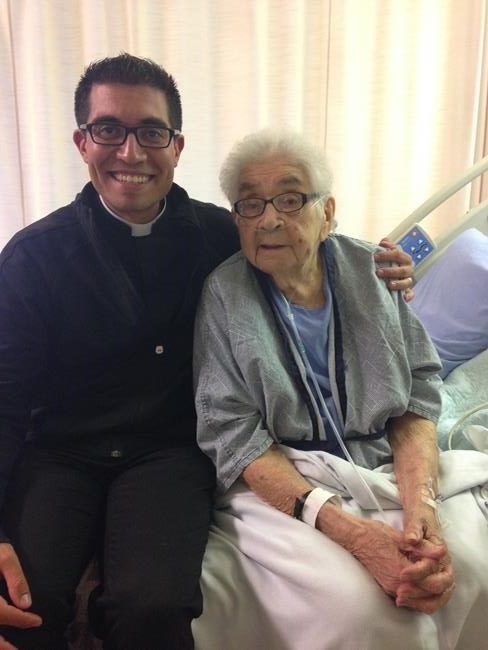
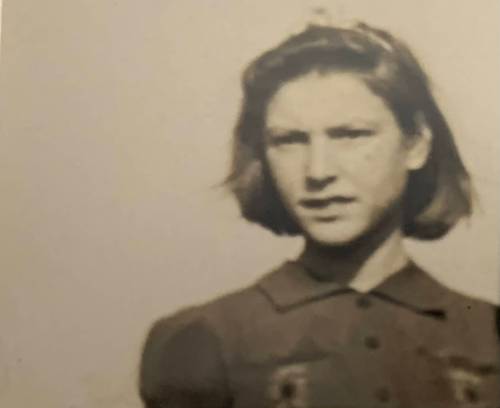
Cristino Bouvette (left), an Indigenous priest, says he often thinks of his grandmother, Amelia Mae Bouvette (right), a residential school survivor, when he considers the Catholic Church’s role in reconciliation. THE CANADIAN PRESS/HO-Gerald McMaster **MANDATORY CREDIT**

For a long time there was no conflict, he says. Christianity was ingrained in his grandmother. She grew up a member of the United Church of Canada and members of the family were ordained ministers.

Hymns echoed through the rooms of her Alberta farmhouse where a young Bouvette would eat his grandmother’s bannock and celebrate his Cree identity.

“There was a harmony, I would say, in all of those factors and components in my life.”

But when the young man was in seminary school, he became much more aware of the tragic implications of residential schools. It was then he thought to himself, “I wonder if this hurts kokum, that her grandson was going to become a priest?”

An estimated 150,000 Indigenous children were forced to attend residential schools over a century.

Amelia Mae Bouvette was seven in 1926 when she was removed from her family on the Saddle Lake Cree Nation in east-central Alberta and taken to the Edmonton Indian Residential School, which was operated by the United Church. She would stay there until 1938. Her grandson says it was a source of indescribable pain.

Decades later, after she’d raised 14 children and had careers helping her community, she was peeling potatoes with her grandson in her kitchen.

Was she offended or worried that he’d decided to become a priest, Bouvette asked?

His grandmother responded that she’d met good nuns and priests in her life, and she hoped he would be one of them.

“She was already then beginning to teach me that reconciliation was possible.”

His grandmother died in 2019 one month short of her 100th birthday.
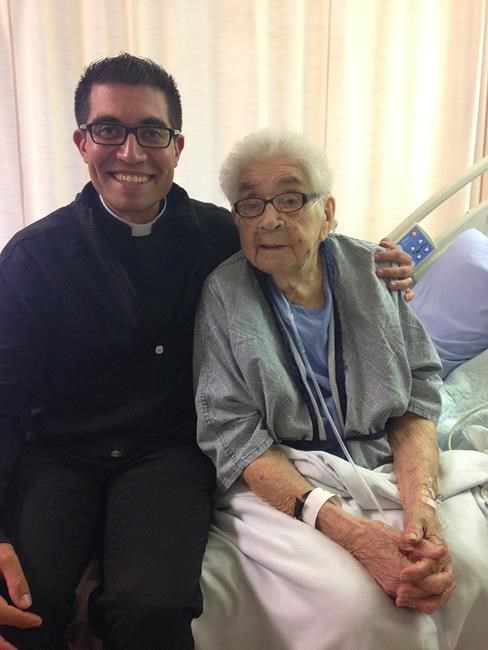
Cristino Bouvette (left), an Indigenous priest, says he often thinks of his grandmother, Amelia Mae Bouvette (right), who was a residential school survivor when he considers the Catholic Church’s role in reconciliation. THE CANADIAN PRESS/HO-Gerald McMaster **MANDATORY CREDIT**

The theme of a delegation to Rome next week is how Indigenous Peoples and the Catholic Church can come together toward healing and reconciliation.

In Winnipeg, Geraldine Shingoose has no intention to forgive or reconcile.

From Tootinaowaziibeeng First Nation in Manitoba, Shingoose spent nine years in the Muscowequan Residential School in Saskatchewan. Shingoose says her time there was her first real exposure to Christianity and it was a traumatic and abusive experience.

The school opened in the 1880s and closed in 1997. Unmarked graves were first discovered there during water line construction in the early 1990s.

In 2018 and 2019, at least 35 potential unmarked graves were located on the site with using ground-penetrating radar.

Shingoose says the injustices at residential schools were thrust back into the spotlight when 215 potential graves were found near the Kamloops Residential School in British Columbia last year.

Shingoose wanted answers.

“The Catholic Church committed a crime,” she says.

Shingoose went to St. Mary’s Cathedral in Winnipeg and sat outside for about 10 hours until she was able to get a meeting with the archbishop.

The conversation didn’t feel sincere and she did not feel heard, she says.

She doesn’t support the delegation to the Vatican and suggests it’s a “colonial tactic” the church is using to distract from ongoing injustices against Indigenous people.
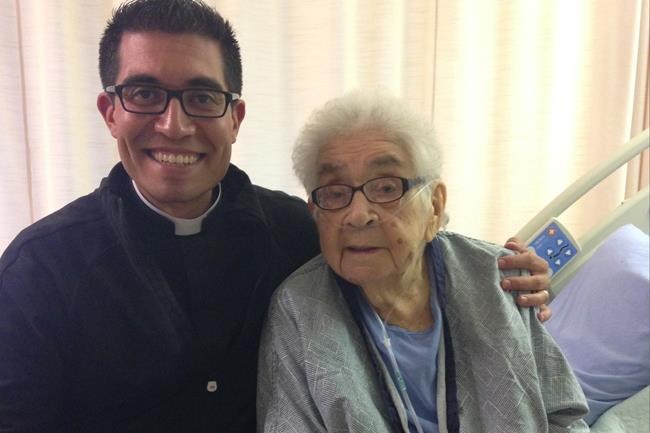
Cristino Bouvette (left), an Indigenous priest, says he often thinks of his grandmother, Amelia Mae Bouvette (right), who was a residential school survivor when he considers the Catholic Church’s role in reconciliation. THE CANADIAN PRESS/HO-Gerald McMaster **MANDATORY CREDIT**

“Would you go visit someone that murdered your child and ask them for an apology?”

Like many Indigenous people who are Christian and Catholic, recent discoveries of unmarked graves at former residential school sites have left Bouvette thinking deeply about the role and responsibility of the church to foster healing.

He understands how the delegation is important to some, but adds the church “cannot give the impression of checking boxes.”

Repairing the relationship and making amends happens in the quiet moments in the living room of a home on a First Nation, he says. It happens when he sits and listens to elders for hours and truly hears what they say.

“Regardless of what happens at the Vatican, regardless of whether the Pope comes to Canada, regardless of what the Pope has to say, there’s so much ongoing work that … we must not lose sight of,” Bouvette says. “We have been doing it and it needs to continue.”

Bouvette says the church must continue working toward forgiveness and understanding even if some Indigenous people aren’t ready to forgive. No number of apologies or money can take away the pain, he says, so reconciliation doesn’t have a timeline.

“We can’t talk about reconciliation if forgiveness is off the table.”

This report by The Canadian Press was first published March 24, 2022.

Report Error Submit a Tip

The Free Press acknowledges the financial support it receives from members of the city’s faith community, which makes our coverage of religion possible.
More Stories

Green growth focus of hydroponic gathering

Aaron Epp 4 minute read Preview

Green growth focus of hydroponic gathering

Aaron Epp 4 minute read 8:00 PM CDT

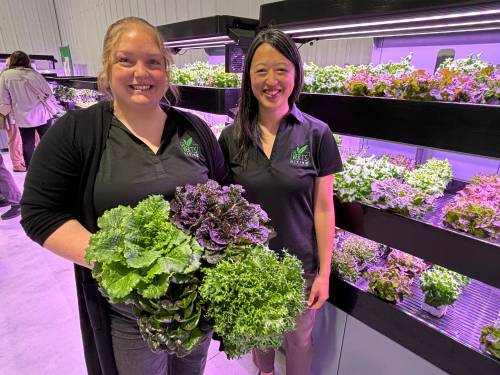
In a town where fresh produce is hard to come by, Rick Barentsen has a line on some lettuce.

Barentsen is part of an initiative at an education centre in Leaf Rapids that grows 60 heads of fresh leafy greens each week, year-round, using indoor hydroponic growing systems.

The veggies are distributed to many of the northwestern Manitoba town’s 300 residents. It’s a boon to a community where Barentsen said the local grocery store has not carried fresh produce for the last six months.

“Being the only food grower in the community, it makes a big difference for the 90 families that we have,” he said. “We harvest it, we wrap it in plastic food bags (and) we hand it out the same day.”

Read
8:00 PM CDT

Manitoba to open India trade office

Gabrielle Piché 5 minute read Preview

Manitoba to open India trade office

Gabrielle Piché 5 minute read Wednesday, May. 20, 2026

Instead of being stationed on Broadway, a Manitoba government employee will set up their own office — in India.

The New Democrats will today announce their plans to open a trade office in the South Asia country.

“We’re going to be continuing to expand our global presence,” said Business Minister Jamie Moses.

Government has slated $150,000 for the trade office, including the representative’s salary. A request for proposal will be posted online Tuesday, Moses said.

Read
Wednesday, May. 20, 2026

Federal COVID-19 aid bill passes into law

Mia Rabson and Joan Bryden, The Canadian Press 6 minute read Preview

Federal COVID-19 aid bill passes into law

Mia Rabson and Joan Bryden, The Canadian Press 6 minute read Wednesday, Mar. 25, 2020

OTTAWA - An emergency federal bill to give the government billions of dollars to spend to help anxious workers, families and employers cope with COVID-19 is now law.

Gov. Gen. Julie Payette signed the bill at 12:18 p.m. Eastern time Wednesday, after both the House of Commons and Senate issued speedy approvals earlier in the day.

The bill allows the federal government up to $52 billion in funds to directly help Canadians, including a repackaged aid program for workers who can't work for almost any reason connected to the virus.

That Canada Emergency Response Benefit will offer $2,000 a month in direct support through the Canada Revenue Agency, and is the main reason the cost of direct COVID-19 aid nearly doubled from an estimated $27 billion last week to $52 billion now.

Read
Wednesday, Mar. 25, 2020

Alzheimer’s has sent my mother back in time

Pam Frampton 5 minute read Preview

Alzheimer’s has sent my mother back in time

Pam Frampton 5 minute read Yesterday at 2:01 AM CDT

My mother does a lot of time-travelling — time-shifting, the Alzheimer’s Society calls it.

I wonder how it feels to be in the present at one moment and then suddenly catapulted deep into the past. Is it a jolting experience or a smooth transition to go back and forth in time?

Mom will never be able to tell me. There is so much she can never tell me now.

She can still recite her children’s names when prompted, but she doesn’t ask us about our lives. Instead, she talks about her younger siblings, their grandfather who was hard of hearing, the isolated place where they used to live whose inhabitants were resettled nearly 60 years ago.

Read
Yesterday at 2:01 AM CDT

Manitoba pharmacists push for increased role in administration of vaccines

Chris Kitching 6 minute read Preview

Manitoba pharmacists push for increased role in administration of vaccines

Chris Kitching 6 minute read 6:39 PM CDT

Manitoba’s public health officials are preparing for influenza season to peak earlier than usual amid concerns about declining uptake for flu and COVID-19 vaccinations.

While the season started early in some provinces, including Ontario and B.C., Dr. Brent Roussin, Manitoba’s chief public health officer, said it’s too soon to conclusively say if the same will happen here.

“But certainly seeing what’s around us and seeing an uptick (in cases) here, it’s making a concern it might be an early year,” he told the Free Press on Thursday.

Manitoba’s flu season usually peaks in late December, with the vaccination campaign continuing into the new year.

Read
6:39 PM CDT

Today’s horoscope

Georgia Nicols 4 minute read Preview

Today’s horoscope

Georgia Nicols 4 minute read 2:00 AM CDT

MOON ALERT: Caution. Avoid shopping (except for food and gas) and important decisions all day. The moon is in Virgo.

ARIES (March 21-April 19)

You might have to put your own emotional considerations second to those of someone else because an element of service is a theme for you. You also might explore ways to improve your health, especially through diet. Be aware there’s a moon alert all day.

TAURUS (April 20-May 20)

Read
2:00 AM CDT