In Ukraine, female war reporters build on legacy of pioneers
Advertisement
Read this article for free:
or
Already have an account? Log in here »
To continue reading, please subscribe:
Digital Subscription
One year of digital access for only $1.44 a week*
- Enjoy unlimited reading on winnipegfreepress.com
- Read the E-Edition, our digital replica newspaper
- Access News Break, our award-winning app
- Play interactive puzzles
*Billed as $5.77 plus GST every four weeks. After 52 weeks, price increases to the regular rate of $19.95 plus GST every four weeks. Offer available to new and qualified returning subscribers only. Cancel any time.
To continue reading, please subscribe:
Add Free Press access to your Brandon Sun subscription for only an additional
$1 for the first 4 weeks*
- Enjoy unlimited reading on winnipegfreepress.com
- Read the E-Edition, our digital replica newspaper
- Access News Break, our award-winning app
- Play interactive puzzles
*Your next Brandon Sun subscription payment will increase by $1.00 and you will be charged $17.95 plus GST for four weeks. After four weeks, your payment will increase to $24.95 plus GST every four weeks.
Read unlimited articles for free today:
or
Already have an account? Log in here »
Hey there, time traveller!
This article was published 14/03/2022 (1691 days ago), so information in it may no longer be current.
LOS ANGELES (AP) — Clarissa Ward interrupted her live TV report on Ukrainian refugees to help a distraught older man, then a woman, down a steep and explosion-mangled path, gently urging them on in their language.
A day later, Lynsey Addario, a photographer for The New York Times, captured a grim image of a Russian mortar attack’s immediate outcome: the bodies of a mother and her two children crumpled on a road, amid their suitcase, backpacks and a pet carrier.
The memorable reports illustrate both the skill and gutsiness of female journalists serving as eyewitnesses to Russia’s brutal invasion of Ukraine and the way their presence — hard-won after overcoming ingrained notions of why women shouldn’t cover combat — has changed the nature of war reporting.
They cover the tactics of war, but give equal measure to its toll.
“People are so exhausted, they can barely walk,” Ward told viewers in her report. “It’s just an awful, awful scene. And they’re the lucky ones.”
The author of “You Don’t Belong Here,” a 2021 book that profiles three pioneering women who covered the Vietnam War, said there’s “absolutely no doubt that the reporting is what I would call more humane, looking at the human side of war.”
Elizabeth Becker argues that Frances FitzGerald of the U.S., Kate Webb of Australia and Catherine Leroy of France were foundational to modern war reporting. Arriving in Southeast Asia on their own dime, without a staff job and little or no journalism experience, they broke the male grip on war reporting with daring and innovation.
Traditionally, “the coverage was the battlefield, which is important,” said award-winning journalist Becker, a 1970s Cambodian war correspondent. She said it took newcomer FitzGerald to ask, “’OK, what does this mean in terms of the Vietnamese and the villages?’”
FitzGerald earned a 1973 Pulitzer and other honors for “Fire in the Lake: The Vietnamese and the Americans in Vietnam,” and her 2017 work, “The Evangelicals: The Struggle to Shape America,” was short-listed for the National Book Award.
In major 20th-century conflicts before Vietnam, including World War II and the Korean War, women faced military obstacles and professional bias. Reporter-novelist Martha Gellhorn famously stowed away on a hospital ship to cover the WWII D-Day landing in France after she and other female journalists were denied frontline access.
Newspaper reporter Marguerite Higgins, who had covered WWII, was ordered out of Korea by a U.S. officer when war broke out in 1950, a decision she successfully appealed to Gen. Douglas MacArthur. Higgins earned a Pulitzer Prize in 1951 for her acclaimed reporting, with the jury noting she was “entitled to special consideration by reason of being a woman, since she had to work under unusual dangers.”
Edith M. Lederer, the first woman assigned full-time to the Vietnam staff of The Associated Press, recalls arriving in 1972 and meeting predecessors including Denby Fawcett, who began covering the war in 1966 for the Honolulu Advertiser newspaper.
Fawcett and “several other women succeeded in breaking the barrier and getting women onto the battlefield on an equal basis with men. That was a huge breakthrough,” said Lederer, who is AP’s chief United Nations correspondent.
Did women have any effect on war reporting itself?
“Absolutely,” Lederer said. “I wrote some stories in Vietnam that I don’t necessarily think that my male colleagues would have done. … They were more interested in the way the war was playing out, which of course was the main reason they were, and I was there.”
But she also had took time to cover a hospital for reconstructive surgery where children, including victims of bombings and shootings, were being treated. When she arrived with balloons in hand, “youngsters of all ages shouting with delight almost bowled me over,” Lederer said, reading from “War Torn,” the 2004 book in which she and other women who covered Vietnam recount their experiences.
A new generation is covering Ukraine, with female reporters well-represented among TV, radio, newspapers and online media.
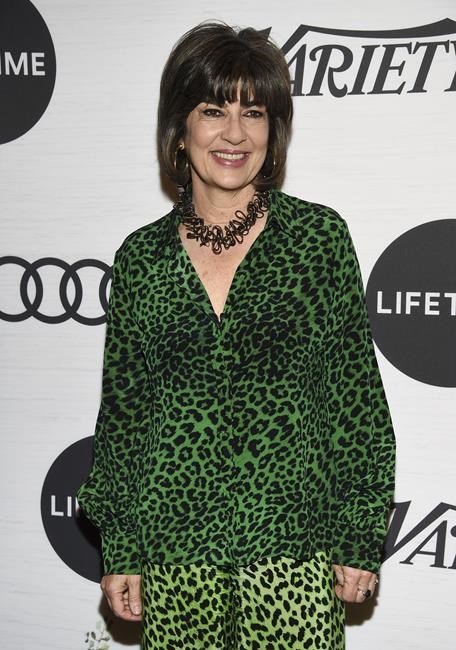
War reporting is “a sense of mission, it’s a sense of purpose, it’s a sense of being able to tell a story,” said Christiane Amanpour, the London-born chief international anchor for CNN. “And women are really very good at it, it seems.”
It’s also a matter of logic, said Holly Williams, the Istanbul-based correspondent for CBS News on assignment in Ukraine.
“I’m acutely aware of the fact that if you don’t tell women’s stories, you’re missing at least half of the picture,” said the Australian-born Williams, who has reported on conflicts in Asia, Europe and the Middle East and worked for BBC News.
Ward, who also has hopscotched across those regions, worked for CBS News prior to joining CNN and, before that, was based in Moscow and Beijing for ABC News.
“Often women do have a different perspective on war, and for a long time that was not really at the forefront of a lot of coverage,” Ward said. She strives to include “the humanity behind the story, the experience of ordinary people who are living in war zones. To me, that is equally as important as the military component.”
The prominence of TV correspondents and the reach of their outlets adds to their impact.
Many of their male colleagues also contribute nuanced reporting, as ABC News veteran Martha Raddatz and others noted. But Raddatz recalls a not-so-distant time when men tended to “love the equipment, love the airplanes.”
Ward and and other female journalists tip their cap to their predecessors, including FitzGerald and the Gellhorn, whose reporting stretched from WWII to the U.S. invasion of Panama in 1989-90. They also praise recent trailblazers, including Amanpour.
Her decades of conflict reporting include the 1991 Gulf War, subsequent clashes in the Middle East region and, in southeastern Europe, the deadly 1992-96 siege of Sarajevo during the war between Bosnia and Herzegovina.
“I think my generation and myself, we were perhaps the last line of the rare woman foreign correspondent,” Amanpour said. In every form of media it’s “exploded into a very female friendly profession.”
But parity has yet to be achieved in pay, Amanpour said. Or in all journalism jobs, according to Ward.
The growing number of female TV correspondents belies “a fairly male-dominated profession in general,” Ward said. “Don’t forget, the person in front of the camera is one person. Then you have, for TV, four people holding the camera, behind the camera, and most of them are still men.”
In journalism overall, men retain a numerical advantage over women even in a changing media industry. according to “The Missing Perspectives of Women in News,” a 2020 report from the Bill & Melinda Gates Foundation. Despite progress, “the majority of journalists in newsrooms globally are men,” the report said, citing several multi-country studies.
Female reporters face additional challenges in non-democratic countries and some regions, Amanpour said.
“They come under a huge amount of societal pressure in many parts of the developing world, and certainly in the Islamic world and other areas of what I call the patriarchy,” she said.
The presence of women reporting in Ukraine is set against a backdrop of traditional roles and expectations, with women and children allowed to flee war’s violence while men are required to stay behind and defend their country.
Yonat Friling, a Jerusalem-based senior producer for Fox News Channel who worked in Ukraine with correspondent Trey Yingst, is aware of how attitudes can vary. In 2004, she was on the international desk for an Israeli TV channel when she asked her boss to switch her to field producer.
“He told me, ‘This is a job for men. Only men can do that,’” recalled the Israeli native. “Then I left, I joined Fox (in 2005). And on several occasions, including this time, I keep texting him, ‘A job for men? Yeah, right.’”
The Ukraine assignment proved deeply emotional for Friling. When she recently joined the stream of refugees leaving Kiev, it was a reminder of grandparents who fled Nazism and Soviet occupiers in Europe in the 1940s.
“I saw children and women, and I (saw) my grandparents in their faces. … I know how much this is going to influence their whole life and the next generations,” she said.
Raddatz, who covered early refugee evacuations and returned to Ukraine on Friday, realizes how much has changed for her and her female colleagues over the years. The chief global affairs correspondent for ABC News covered the Bosnian crisis in the late 1990s and has focused on Iraq and Afghanistan.
“I remember in Iraq, I always thought that if something happened to me, it (the reaction) would be, ‘How could she do that, go over there when she has two children?’ whereas they would never say that with a guy,” she said. “Now, I don’t think they would do that.”
Family needs and concerns add to the burden of war reporting.
NBC News correspondent Erin McLaughlin said that before Russia struck at Ukraine, the threat of what might happen made her parents worry more than they had over her previous assignments, including in Iraq.
“My brother went to stay with them for the weekend because they were so nervous,” McLaughlin said. “It was really tough, but at the same time they understand that this is my calling. It’s an important job, and someone needs to do it.”

Ward, married and with two children, said her work takes an inevitable toll.
“It’s my son’s 4th birthday today, which has been really hard to miss,” Ward said at the end of another draining day in Ukraine, her voice emotional. “There’s the entire juggling act — you’re FaceTiming with your kids and there’s air raid sirens and bombs going off in the distance.”
“I’m not going to pretend this isn’t hard. But I also wouldn’t be anywhere else right now,” she said.
___
Associated Press researcher Jennifer Farrar contributed to this report.
Related Articles
Zelenskyy pleads for more help from Canada
Advertisement Advertise With Us
Advertisement Advertise With Us