Words for wellness
Whether simple or structured, journalling can be great aid for personal growth

Advertisement
Read this article for free:
or
Already have an account? Log in here »
To continue reading, please subscribe:

Digital Subscription
One year of digital access for only $205*
- Enjoy unlimited reading on winnipegfreepress.com
- Read the E-Edition, our digital replica newspaper
- Access News Break, our award-winning app
- Play interactive puzzles
*First annual payment billed as $205.00 + GST for one year. This annual subscription will automatically renew at $233.00 + GST every 52 weeks (10% off the regular annual price of $259.35). Offer available to new and qualified returning subscribers only. Cancel any time.
To continue reading, please subscribe:
Add Free Press access to your Brandon Sun subscription for only an additional
$1 for the first 4 weeks*
- Enjoy unlimited reading on winnipegfreepress.com
- Read the E-Edition, our digital replica newspaper
- Access News Break, our award-winning app
- Play interactive puzzles
*Your next Brandon Sun subscription payment will increase by $1.00 and you will be charged $17.95 plus GST for four weeks. After four weeks, your payment will increase to $24.95 plus GST every four weeks.
Read unlimited articles for free today:
or
Already have an account? Log in here »
Hey there, time traveller!
This article was published 28/02/2022 (1653 days ago), so information in it may no longer be current.
Once the territory of teenagers, journalling has evolved from sticker-covered notebooks to a marker of the so-called self-care movement, alongside meditation and holistic living. And for good reason: scientific studies have shown it to have significant mental and physical health benefits.
There are the obvious benefits, like a boost in memory, mindfulness and communication skills. But studies have also found that writing in a journal can lead to better sleep, a stronger immune system, improved stress management and more self-confidence. And none of these advantages require you to be a good writer.
There are several styles and methods to choose from; however, journalling is essentially creating time in your day to write down whatever comes to mind. Some people use colour-coded pens, a blank notebook or the latest app. Purists may stick to the tried-and-true spiral notebook for journal entries; however, typing entries on a computer or phone can yield similar effects that are just as positive, especially if it’s more convenient for you.

Artist Andrea Schroeder, founder of the Creative Dream Incubator in Winnipeg, has been teaching online journalling and meditation classes for more than a decade.
“A big part of journalling is making space to be with yourself, process your thoughts and feelings, and have more clarity,” she says. “I think journalling helps point people to where they need to make changes but also where they might need support if there’s healing work that needs to be done.”
Schroeder has developed several guided journals and online resources to help people get started, in addition to one-on-one coaching and e-courses.
“When you’re journalling, you’re actually becoming clear on what you really want. I think it’s hard to know what we want a lot of the time,” she says. “We have so many obligations in the world that pull our attention away.”
For Schroeder, journalling is a tool for healing, growing and exploring. Her focus is helping people move towards their goals, but she says a lot of what needs to be focused on first is the “difficult stuff,” such as self-doubt, fear of failure, fear of success, and lack of clarity and focus.
“If you’re trying to figure out if you have a big dream or goal and how you’re going to do that, I feel like, if you’re not journalling about it and really sorting through your thoughts, I don’t really know how you would,” she says. “The good news is that once people work through the stuff that stops them, they are no longer stopped by it.”
There is no right way to write. Structure, frequency and subject matter is your choice and evolves over time. Anything you write — from random ideas to a rigid template of topics — can be valuable.
“There isn’t a way to do it wrong,” Schroeder says. “A lot of people judge, especially when they see Pinterest or Instagram, and think, if it doesn’t look like that, then I’m doing something wrong. And it doesn’t matter what it looks like.”
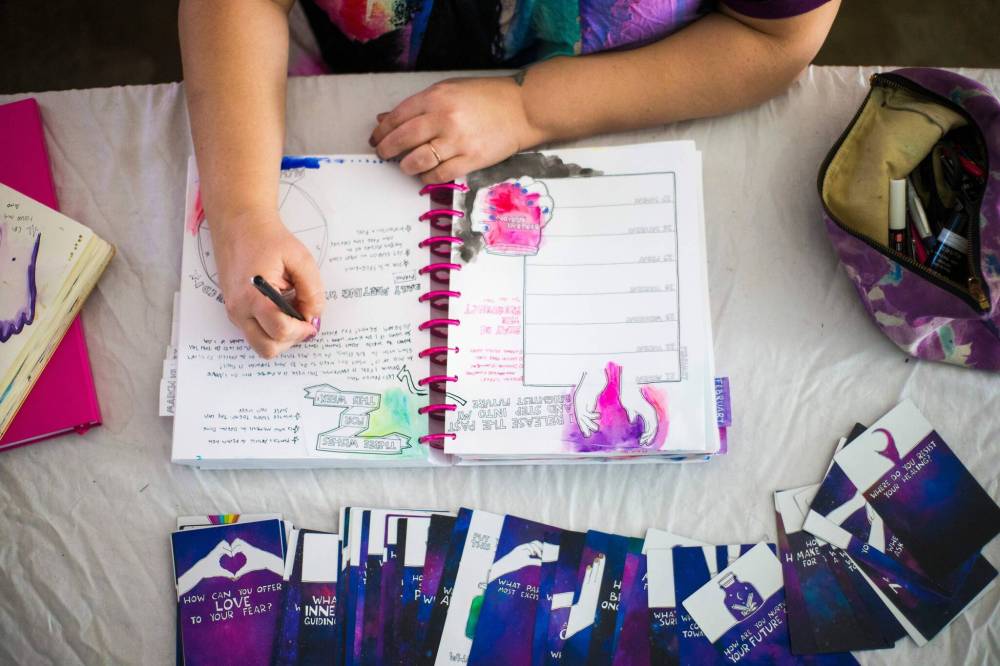
When you begin judging yourself for not writing “well enough,” that’s an opportunity to talk with your inner critic, Schroeder says.
“Write out imaginary conversations with the part of you that judges you. You’re journalling for yourself; there isn’t any criteria,” she says. “We’re judged by the world all the time already. The journal is a place to work through those things.”
Schroeder hosts live journalling and meditation classes over Zoom once each week — people attend from all over the world, including New Zealand, France, England, Hong Kong and throughout the United States. Over the last decade, between her e-courses, live classes and recordings, approximately 10,000 people have used her services.
“(During live classes) people share what comes to them in the meditation, and it helps to hear what other people are learning. The community aspect of it is really interesting,” she says. “I want to help people and make it easier to pursue the things that matter most.”
So what do you write about? Schroeder says that’s often the first question a budding journal writer asks themselves. She says this is where prompts may help. Journal prompts, also known as writing prompts, are journalling ideas that help you to focus on what to write, sort out thoughts and feelings and gather ideas.
To some, journalling may sound cheesy. Or perhaps just a heavily marketed “self-care” tool on Instagram. But it can be a very useful — and cost-effective — mental-health resource. Studies have shown physical and practical benefits to writing about what upsets us and makes us happy.
Donna Daman began journalling a decade ago. The mother of two suffers from depression, and journalling was a recommendation from her doctor.
“It was actually my doctor who said, ‘Why don’t you start a journal?’ Between my doctor and my husband, they both said I should try jotting down the stuff I think of because I don’t like talking,” she says. “I’m not ‘Let’s sit down as girlfriends and I can talk about my problems.’ No, I’m not that kind of girl. So this helped me get my feelings and everything out onto paper.”

At first, Daman was non-committal. She’d go on a stretch of journalling for a week straight and then wouldn’t do it for three months. However, over the last few years, she’s been journalling daily and it’s become part of her routine.
What helped her make it a daily practice? The accountability.
“I found that when I wrote things down on paper — a plan, a goal — then I would accomplish it. It’s part of my daily routine, like brushing my teeth,” she says. “If I didn’t journal it, then it would either be forgotten or not followed through on. So writing it down in a journal made me accountable to myself.”
Journalling allows Daman to get thoughts out of her head, which helps alleviate her anxiety. She writes about how she’s feeling, her plan for the day and what she hopes to accomplish.
“It’s like a brain dump. I always do it in the morning with my coffee. If I write things down and focus, then it’s out of my head,” she says. “I’m not thinking about it and it doesn’t cause me anxiety anymore because it’s actually on a piece of paper. And I deal with that.”
She says journalling was also a way for her to cope during the pandemic.
“It helps me focus my day during these times when it’s a little bit of chaos,” she says. “It might be writing about how I’m feeling about COVID, trying to deal with friends, all that stuff. Just trying to get feelings out on paper definitely makes me feel better.”
A journal is like a roadmap to your personal history — keeping a journal allows you to track patterns, trends and improvements over time. You can look back on previous dilemmas and learn from them. Journalling is also a great memory tool — at some point in the future, your thoughts, activities and goals might be fascinating to look back on. That hits home for Daman.
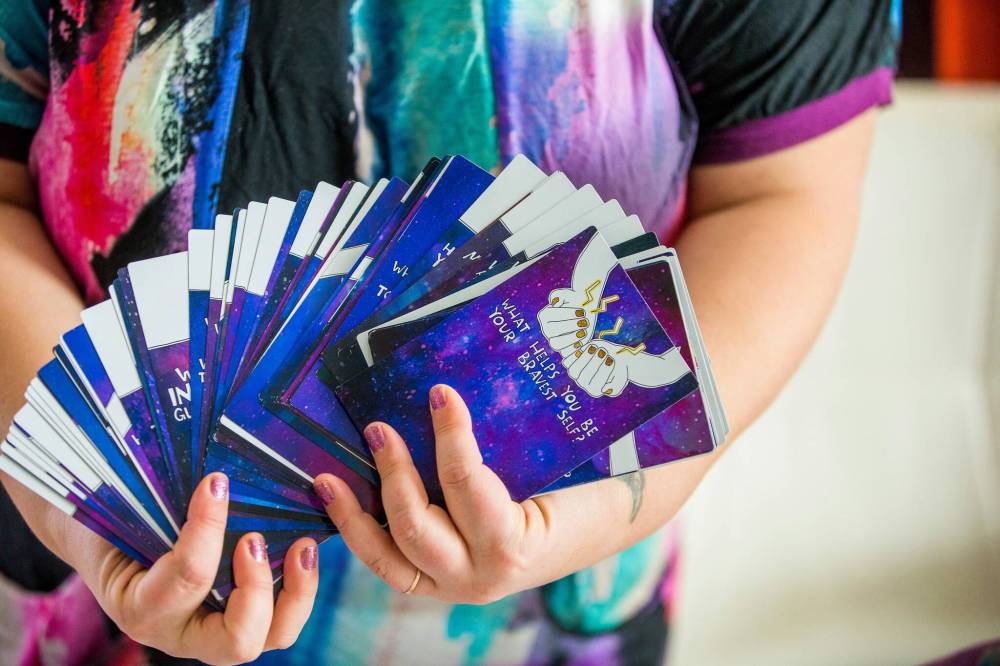

“One great thing about the journal app I’m using is that it has memories. A year or even two years ago will pop up so I can actually see what I was feeling back then,” she says. “(I’ll think to myself) ‘Wow, you think you’re having a hard day today? Two years ago, you were having a really hard day and I’m doing better today.’ That’s a reflection on how far I’ve come.”
Journalling to release and express your thoughts and emotions can be a life-changing habit. If you decide to pursue it, the contents will be personal and different for everyone — notice what time of day you enjoy journalling most, your physical space and what you get the most out of writing about so you can curate a practice that works for you.
So, yes, journalling is good for you — emotionally, physically and mentally. If you find yourself stuck, ditch the guilt of not being consistent or instantly motivated. If you need to start with a single line or detail the specifics of what you had for lunch, do it. Don’t worry about writing the “right” thing because it doesn’t exist — simply start and see where it takes you.
sabrinacarnevale@gmail.com
@SabrinaCsays
Sabrina Carnevale is a freelance writer and communications specialist, and former reporter and broadcaster who is a health enthusiast. She writes a twice-monthly column focusing on wellness and fitness.
Our newsroom depends on a growing audience of readers to power our journalism. If you are not a paid reader, please consider becoming a subscriber.
Our newsroom depends on its audience of readers to power our journalism. Thank you for your support.
Sabrina Carnevale is a freelance writer and communications specialist, and former reporter and broadcaster who is a health enthusiast. She writes a twice-monthly column focusing on wellness and fitness.
Our newsroom depends on a growing audience of readers to power our journalism. If you are not a paid reader, please consider becoming a subscriber.
Our newsroom depends on its audience of readers to power our journalism. Thank you for your support.
Related Articles
Warm and fuzzy for Winnipeg winter



Advertisement Advertise With Us
Advertisement Advertise With Us