Trudeau appoints Bennett as mental health and addictions minister in new cabinet

Advertisement

Advertise with us

OTTAWA - Prime Minister Justin Trudeau's freshly appointed cabinet includes a new ministerial post to tackle his election promises on mental health and addictions.

Read this article for free:


By clicking the button above, an account will be created and you will begin to receive some of our recommended newsletters. You may opt out of any newsletter by visiting your Email and Communication Preferences page or by clicking "unsubscribe" at the bottom of any email.

or

Already have an account? Log in here »

To continue reading, please subscribe:

Digital Subscription

One year of digital access for only $1.44 a week*

  • Enjoy unlimited reading on winnipegfreepress.com
  • Read the E-Edition, our digital replica newspaper
  • Access News Break, our award-winning app
  • Play interactive puzzles

*Billed as $5.77 plus GST every four weeks. After 52 weeks, price increases to the regular rate of $19.95 plus GST every four weeks. Offer available to new and qualified returning subscribers only. Cancel any time.

To continue reading, please subscribe:

Add Free Press access to your Brandon Sun subscription for only an additional

$1 for the first 4 weeks*

  • Enjoy unlimited reading on winnipegfreepress.com
  • Read the E-Edition, our digital replica newspaper
  • Access News Break, our award-winning app
  • Play interactive puzzles
Start now

*Your next Brandon Sun subscription payment will increase by $1.00 and you will be charged $17.95 plus GST for four weeks. After four weeks, your payment will increase to $24.95 plus GST every four weeks.

Hey there, time traveller!
This article was published 26/10/2021 (1824 days ago), so information in it may no longer be current.

OTTAWA – Prime Minister Justin Trudeau’s freshly appointed cabinet includes a new ministerial post to tackle his election promises on mental health and addictions.

Carolyn Bennett, who served recently as minister of Crown-Indigenous relations, has been tapped for the mental health and addictions portfolio.

The role is hived off from the rest of the health portfolio, which will be helmed by former Treasury Board president Jean-Yves Duclos.

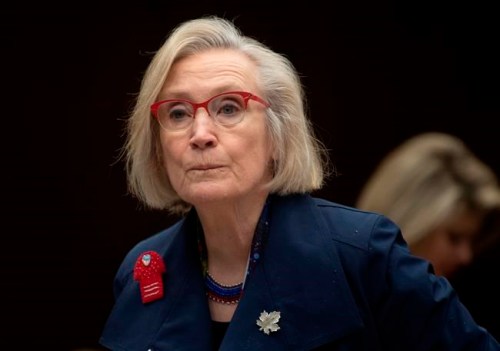
Prime Minister Justin Trudeau has created a new ministry to tackle his elections promises on mental health and additions. Carolyn Bennett, who served recently as Minister of Crown-Indigenous Relation, has been tapped to take on the new minister of mental health and additions role. Bennett is shown in this Tuesday, March 10, 2020 file photo. THE CANADIAN PRESS/Adrian Wyld

“A lot of people, I think, have seen that mental health has become a parallel pandemic and that we actually need to really dive in and make sure there is a mental health strategy across all government departments, but also with the provinces and the territories,” Bennett said at a news conference Tuesday.

The Liberal platform promised a new federal transfer of $4.5 billion over five years to provinces and territories to provide accessible, free mental-health services.

Advocates for mental health, including the Canadian Mental Health Association, applauded the added focus in cabinet on improving mental-health care in Canada.

“We have a unique opportunity in this moment in time to address long-standing gaps in our mental health system: from the lack of timely access and culturally sensitive care, to care gaps in remote locations and patchwork programs,” Margaret Eaton, CEO of the Canadian Mental Health Association, wrote in a statement.

Rates of depression and anxiety have increased across the board during the pandemic, according to the Mental Health Commission of Canada, and isolation measures weighed heavily on those who were already living with mental illness or problematic substance use prior to COVID-19.

“This appointment is a critical step as we work to improve the mental health and substance-use health of all people in Canada,” said Michel Rodrigue, president of the Mental Health Commission of Canada.

Bennett will also be tasked with development of a strategy to end the opioid crisis.

In addition, the promises include eyeing other government policies through a mental health lens.

Trudeau vowed to review access to the disability tax credit, as well as other federal benefits and programs, to ensure mental health challenges are among the qualifications. He also promised to include mental health as a specific element of occupational health and safety under the Canada Labour Code.

NDP Leader Jagmeet Singh said the new position is important “now more than ever” due to the pandemic and its effect on mental well-being.

Conservative MP Todd Doherty tweeted that adding the ministerial position is not a “silver bullet solution.”

“We need urgent and concrete action,” Doherty wrote, calling on the new minister to create a national suicide prevention hotline and stable funding for provincial mental-health care and grassroots mental-health organizations.

Prior to her election in 1997, Bennett, who will also serve as associate minister of health, was a family physician and assistant professor in the department of family and community medicine at the University of Toronto.

Prime Minister Justin Trudeau receives Minister of Mental Health and Addictions and Associate Minister of Health Carolyn Bennett during a Cabinet swearing in ceremony at Rideau Hall in Ottawa, on Tuesday, Oct. 26, 2021. THE CANADIAN PRESS/Justin Tang

She received the first Champion of Mental Health Award from the Canadian Alliance on Mental Illness and Mental Health in 2003.

Meanwhile Duclos, who takes over as health minister from Patty Hajdu, will have to negotiate with provinces and territories that have demanded the federal government accept a greater share of the cost of delivering health care.

Hajdu became the face of the federal government’s response in the early days of the COVID-19 pandemic.

As Canada moves into the next phase of pandemic recovery, the federal government will have to work closely with premiers to come to a new agreement on health-care transfers.

The pandemic has put stress on provinces’ already stretched health systems, leaving intensive care and emergency rooms overcrowded and health workers burnt out.

Premiers seek a meeting with Trudeau to ask the federal government to immediately boost its share of health-care costs from 22 to 35 per cent — an increase of about $28 billion this year.

They’re also asking for minimum funding increases of five per cent annually, arguing the current plan of three-per-cent jumps in spending means transfers don’t keep pace with yearly cost increases.

Duclos was a professor and director of the department of economics at Laval University prior to his election in 2015.

He is also responsible for the Public Health Agency of Canada and will work closely with chief public health officer Dr. Theresa Tam as Canada navigates the fourth wave of the pandemic.

This report by The Canadian Press was first published Oct. 26, 2021.

Report Error Submit a Tip

More Stories

Letters, Oct. 24

6 minute read 2:02 AM CDT

A little background info

Re: Bring Power Smart home (Think Tank, Oct. 21)

Steven Fletcher’s op-ed column overlooks important history behind Efficiency Manitoba and the need to reconsider its targets.

In December 2003, Gary Doer’s NDP government announced plans for a separate agency to co-ordinate energy efficiency, water conservation and waste reduction. Provisionally named Efficiency Manitoba in 2004, the initiative became Green Manitoba, a special operating agency launched in April 2006.

Trudeau makes Bennett new mental health minister

Laura Osman, The Canadian Press 5 minute read Preview

Trudeau makes Bennett new mental health minister

Laura Osman, The Canadian Press 5 minute read Tuesday, Oct. 26, 2021

OTTAWA - Prime Minister Justin Trudeau's freshly appointed cabinet includes a new ministerial post to tackle his election promises on mental health and addictions.

Carolyn Bennett, who served recently as minister of Crown-Indigenous relations, has been tapped for the mental health and addictions portfolio.

The role is hived off from the rest of the health portfolio, which will be helmed by former Treasury Board president Jean-Yves Duclos.

"A lot of people, I think, have seen that mental health has become a parallel pandemic and that we actually need to really dive in and make sure there is a mental health strategy across all government departments, but also with the provinces and the territories," Bennett said at a news conference Tuesday.

Read
Tuesday, Oct. 26, 2021

Fact Check

1 minute read Thursday, Nov. 30, 2023

Fact Check

Having problems with the form?Contact Us Directly |

Winnipeg ER nurse shares her account of the fight against COVID-19

Dan Lett 9 minute read Preview

Winnipeg ER nurse shares her account of the fight against COVID-19

Dan Lett 9 minute read Monday, Apr. 6, 2020

She's a veteran nurse at a Winnipeg hospital who has seen her fair share of medical emergencies. But nothing in her past could have prepared her for what's unfolding on health care's front lines amid the coronavirus crisis.

There are stringent new safety protocols. There's an omnipresent fear of the unknown. It's all become part of the new, frightening reality for Manitoba health-care employees — the foot soldiers in this pandemic fight.

The nurse worked back-to-back shifts last weekend at a Winnipeg ER. The woman, who has requested anonymity, shared her first-person account with columnist Dan Lett.

Heightened anxiety:I was very anxious going into this weekend. I felt like I was going into my first job. I was physically terrified about going into the hospital because of what I was reading and what was going on, and what I perceived was going on. I felt sick, like I was going to pass out. I’m sure my heart rate must have been 140. I don’t think I’ve ever been physically scared in my job and I have seen some violent patients in the emergency over the years.

Read
Monday, Apr. 6, 2020

MPI must evolve to ‘best-in-class’

Kyle Ross 5 minute read 2:02 AM CDT

As a Manitoban, you pay the lowest auto insurance rates in Canada in 2026. (That’s the analysis shared in the Saskatchewan Auto Fund’s 2026 Rate Proposal, in case having your good fortune envied by your neighbours sweetens the news.)

You deal directly with one insurance company — your own — after your vehicle gets hit, rather than chasing the other driver’s company. When it comes to fair and transparent customer service, your insurer has a higher bar to jump than in many other provinces. A private insurance company could just hike your rates; before making rate changes, Manitoba Public Insurance must go through an open and transparent public hearing at the Public Utilities Board, a neutral third party.

It’s worth remembering these points as MPI is slammed in opinion columns, social media posts and water-cooler talk. We have rates and an ease of navigating claims that other Canadians envy. We have a crown corporation that is a crown jewel — or could be.

But the criticism is warranted.

Alberta: More federalist than you thought

David McLaughlin 5 minute read Preview

Alberta: More federalist than you thought

David McLaughlin 5 minute read 2:02 AM CDT

Avert your eyes if you don’t like hard-core. This is a hard-core column about the hard-core Alberta separatists who hijacked a party, corrupted a process and failed in their fevered fervour to break up Canada.

First, be of good cheer. Canada won Monday night’s referendum in Alberta. Decisively. Three-quarters of the votes cast were for Option 1: “Alberta should remain a province of Canada.” Only one in four Alberta voters opted for a referendum on separation.

Alberta won, too. That strong vote against separation means the province can look ahead, confident the independence fever dream is boxed. A true win-win and a sad rarity in politics these days.

Be warned, though. Those hard-core separatists are hard dogs to keep on the porch, as the expression goes. They are already agitating to be taken more seriously than the votes warrant. They intend to flex whatever muscle memory remains to depose Premier Danielle Smith from her leadership of the United Conservative Party. Dis-united Conservative Party, anyone?

Read
2:02 AM CDT