9/11 artifacts share ‘pieces of truth’ in victims’ stories

Advertisement

Advertise with us

NEW YORK (AP) — For nearly six years, Andrea Haberman’s ashen and damaged wallet lay mostly untouched in a drawer at her parents' Wisconsin home, along with a partly melted cell phone, her driver's license, credit cards, checkbook and house keys. Flecks of rust had formed on the rims of her eyeglasses, their lenses shattered and gone.

Read this article for free:


or

Already have an account? Log in here »

To continue reading, please subscribe:

Subscribe and receive a limited-edition Free Press branded hat or tote.

Digital Subscription

One year of digital access for only $205*

  • Enjoy unlimited reading on winnipegfreepress.com
  • Read the E-Edition, our digital replica newspaper
  • Access News Break, our award-winning app
  • Play interactive puzzles

*First annual payment billed as $205.00 + GST for one year. This annual subscription will automatically renew at $233.00 + GST every 52 weeks (10% off the regular annual price of $259.35). Offer available to new and qualified returning subscribers only. Cancel any time.

To continue reading, please subscribe:

Add Free Press access to your Brandon Sun subscription for only an additional

$1 for the first 4 weeks*

  • Enjoy unlimited reading on winnipegfreepress.com
  • Read the E-Edition, our digital replica newspaper
  • Access News Break, our award-winning app
  • Play interactive puzzles
Start now

*Your next Brandon Sun subscription payment will increase by $1.00 and you will be charged $17.95 plus GST for four weeks. After four weeks, your payment will increase to $24.95 plus GST every four weeks.

Hey there, time traveller!
This article was published 08/09/2021 (1823 days ago), so information in it may no longer be current.

NEW YORK (AP) — For nearly six years, Andrea Haberman’s ashen and damaged wallet lay mostly untouched in a drawer at her parents’ Wisconsin home, along with a partly melted cell phone, her driver’s license, credit cards, checkbook and house keys. Flecks of rust had formed on the rims of her eyeglasses, their lenses shattered and gone.

Those everyday items were the remnants of a young life that ended when a hijacked jetliner struck the north tower of the World Trade Center on Sept. 11, 2001. Haberman was 25 and about to be married when she was killed while on a business trip from Chicago — her first visit to New York City.

Her belongings, still smelling of Ground Zero, evoked mostly sorrow for Haberman’s family. To ease their pain, they donated the artifacts to the 9/11 Memorial & Museum.
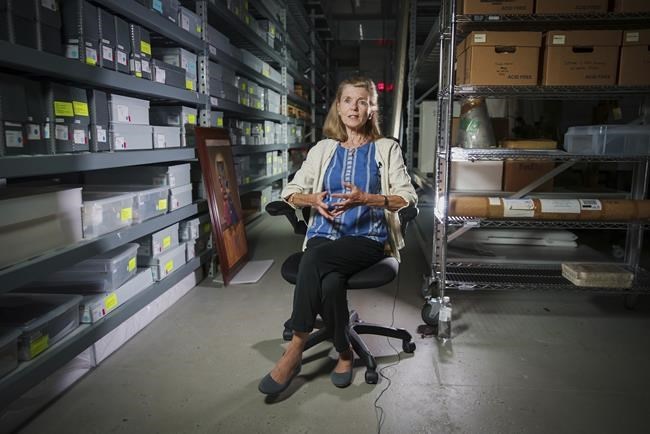
Jan Ramirez, chief curator at the 9/11 Memorial & Museum, sits for an interview inside a warehouse where thousands of artifacts from the 9/11 attacks are archived, July 16, 2021, in Jersey City, N.J. Over the years, the museum has collected some 22,000 personal artifacts to help tell the stories of those who died and those lucky to survive. Many of those personal effects were plucked from the ruins of what was once the Twin Towers. Other items were donated by survivors or by the families of those who perished. (AP Photo/Robert Bumsted)

“These are not the happy things you want to remember someone by,” said Gordon Haberman, her father.

The collection of some 22,000 personal artifacts — some on display at the 9/11 museum, and others on display at other museums around the country — provide a mosaic of lost lives and stories of survival: wallets, passports, baseball gloves, shoes, clothes and rings.

“Each person who makes up part of that tally was an individual who lived a life,” said Jan Ramirez, the museum’s chief curator and director of collections.

“We knew that families — the people that have lost a loved one that day — were going to need to have a place, have a way, to remember the person that never came home from work, that never came home from a flight,” Ramirez said.

Many of those personal effects were plucked from the ruins of what was once the Twin Towers. Other items were donated by survivors or by the families of those who perished.

A woodworking square, screwdriver, pry bar and a toolbelt represent Sean Rooney, a vice president at Aon Corp. who died in the South Tower. Rooney’s essence was that of “a builder,” his sister-in-law Margot Eckert said, making the carpenter’s tools donated to the museum the “perfect antidote to the destruction.”

Rooney had phoned his wife, Beverly Eckert, at their home in Stamford, Connecticut, after being trapped by fire and smoke on the 105th floor. He spent his last breaths recounting happier times, whispering, “I love you,” as he labored for air.

His remains were never found.
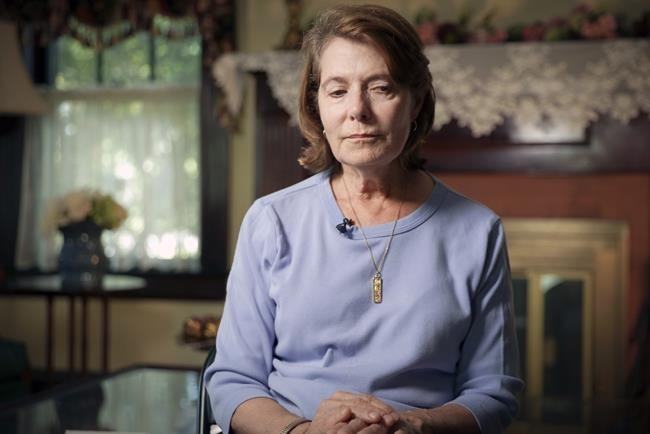
Margot Eckert sits for an interview at her home, Thursday, July 15, 2021, in Springfield, Mass. Her brother-in-law Sean Rooney was killed on 9/11 while working in his office in the South Tower. His wife, Beverly Eckert, Margot's sister, died in a plane crash in 2009. The collection of some 22,000 personal artifacts — some on display at the 9/11 museum, and others on display at other museums around the country — provide a mosaic of lost lives and stories of survival: wallets, passports, baseball gloves, shoes, clothes and rings. (AP Photo/Robert Bumsted)

Beverly died eight years later in a plane crash while traveling to her husband’s high school in Buffalo, New York, to award a scholarship in his honor. Before she died, she had set aside the items she hoped would help tell her husband’s story, that of a weekend carpenter, handyman and volunteer with Habitat for Humanity.

“We have a gravesite for her, we don’t have a gravesite for Sean,” Eckert said. “Artifacts become very important. And artifacts are the facts that someone lived. They are the facts you can touch.”

For Robert Chin’s family, the story was about a love for playing softball. They recounted his first hit — a drive down the third-base line — playing for Fiduciary Trust International. To help savor the moment, his teammates scribbled congratulatory notes on the ball before presenting it to him.

Among the names on the ball were Pedro Francisco Checo and Ruben Esquilin Jr., who also died with Chin that day. That dusty softball Chin had kept at home is included among the trove of keepsakes in the 9/11 museum’s collection.

Not all of the donated artifacts are on behalf of those who died. Some came from those who survived 9/11.

Linda Raisch-Lopez donated her bloodied patent leather heels to represent her will to survive on a day she ran for her life.

As she made her way down a stairwell from the 97th Floor of the South Tower, she slipped out of her heels. and walked through the debris in her bare feet, according to the museum’s account. Somewhere on her way to a Hudson River pier, she had slipped back into her shoes, smearing blood on the tan leather from her cut and blistered feet.
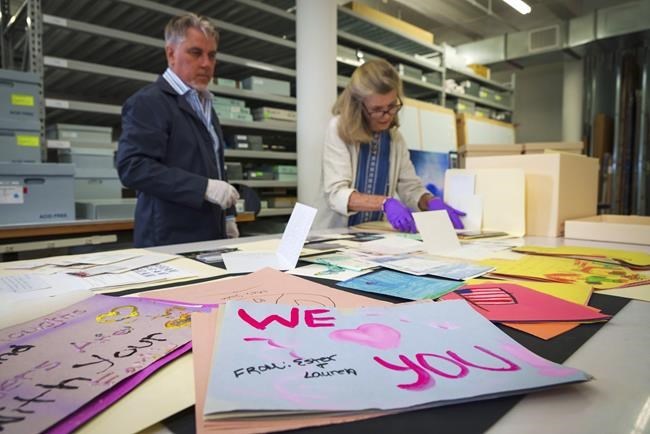
Jan Ramirez, chief curator at the 9/11 Memorial & Museum, right, sifts through a collection of condolence cards for a victim of 9/11 that were donated to the museum's archive, July 16, 2021, in Jersey City, N.J. Over the years, the museum has collected some 22,000 personal artifacts to help tell the stories of those who died and those lucky to survive. Many of those personal effects were plucked from the ruins of what was once the Twin Towers. Other items were donated by survivors or by the families of those who perished. (AP Photo/Robert Bumsted)

Just a small part of the museum’s collection of artifacts is ever on display because there are just too many to show at any one time. When not on display, the artifacts are stored in warehouses, including a hangar at JFK airport and across the Hudson River in New Jersey. Row after row of shelves are stacked with boxes filled with tragedy and remembrance.

“Each piece is a little part of a puzzle,” Ramirez said. “Having those important, little pieces of truth, those palpable pieces of truth — those bridges to allow people to get engaged in the story — is why we do what we do and will continue to do what we do.”

__________

Associated Press journalists Carrie Antlfinger in Milwaukee and Robert Bumsted in New York contributed to this report.

Report Error Submit a Tip

More Stories

Meth-fighting HQ pitched for vacant building

Tessa Vanderhart 7 minute read Preview

Meth-fighting HQ pitched for vacant building

Tessa Vanderhart 7 minute read Tuesday, Jul. 30, 2019

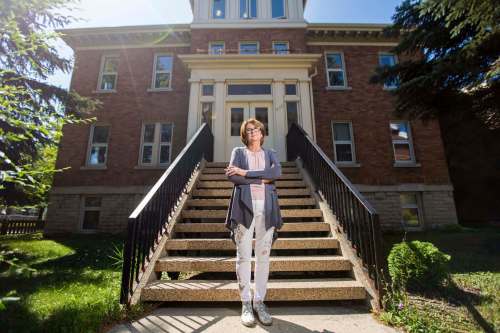
A vacant building that’s costing the province a half-million dollars a year could be ideally suited to be a headquarters in the fight against methamphetamine.

Marion Willis, executive director of St. Boniface Street Links, wants to turn the former Southern Authority Child and Family Services centre at 800 Adele Ave. into a detox facility to help stabilize people getting off meth.

“It’s time to come together to do the right thing,” Willis said Tuesday. “It would be a shame to know that the right thing... exists and is turnkey. But we choose to keep it empty."

There's two connected buildings on the site, including a newer addition, with 10 secure beds and triage units, which Willis wants to turn into a temporary stabilization unit to hold people under the Intoxicated Persons Detention Act.

Read
Tuesday, Jul. 30, 2019

Discourse we’d rather avoid

Tory McNally 8 minute read Preview

Discourse we’d rather avoid

Tory McNally 8 minute read 2:02 AM CDT

We have all been there. A colleague says something that bothers us. A manager is not addressing an issue everyone can see. An employee’s behaviour is becoming increasingly difficult. A misunderstanding has taken on a life of its own. Or perhaps we simply need to have a conversation that we know is going to be uncomfortable.

Our first instinct is often to avoid it.

Honestly, that instinct is understandable. Difficult conversations can make us nervous. We worry about upsetting someone, damaging a relationship, saying the wrong thing or making a situation worse.

Sometimes we tell ourselves the problem will resolve itself. We decide to wait for a better time. We send the email instead of having the conversation. We hope if we give it a little more time, somehow it will become easier.

Read
2:02 AM CDT

Letters, Sept. 5

7 minute read 2:02 AM CDT

Clearing the air

Re: QDoc patients in middle of billing dispute (Sept. 4)

QDoc has been fortunate to have a genuine partner in the Manitoba government over the past several years. Premier Wab Kinew and Health Minister Uzoma Asagwara have been consistently clear that no Manitoban should go without care because of where they live, and that commitment is exactly why virtual care exists as a permanent, publicly available option today. We built MediNav, the province’s online appointment booking system, together with Manitoba Health, and that same collaborative spirit has helped make more than 350,000 patient visits possible through our platform — many of them evenings, overnights and weekends, reaching rural and underserviced communities that need it most.

We want to be direct with the people who rely on us: QDoc is not going anywhere. We continue to see patients today, and we will keep doing so tomorrow. The issue reported this week is a technical billing matter, not a service disruption, and we are actively working with the province to resolve it quickly, so we can keep growing our capacity to serve Manitobans rather than limiting it.

Before her health took a rapid, fatal turn, Genevieve Price was an independent grandmother guided by her faith in God and love for family.

The Winnipeg senior, 82, died last weekend after going to the hospital for what began as swelling in her one of her hands.

Her daughter, Michelle Price, believes she suffered organ failure as a result of spending more than 30 hours in an emergency department hallway at Grace General Hospital as sepsis took hold.

After a Grace ER doctor discovered she had suffered a heart attack, Michelle’s mother was transferred to St. Boniface Hospital, where she died.

Boler sales and rentals happening as soon as they pop up

Ben Waldman  8 minute read Preview

Boler sales and rentals happening as soon as they pop up

Ben Waldman  8 minute read Friday, Aug. 6, 2021

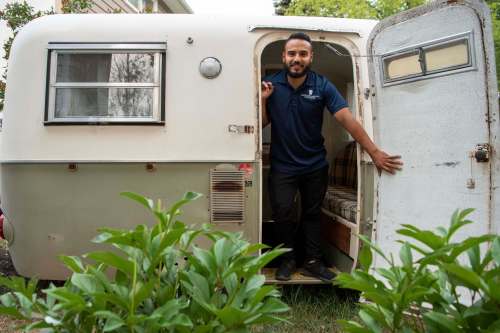
In January, Jorge Torres bought a Boler trailer — a little fiberglass egg on wheels — and brought it to his fiancée’s house to surprise her.

“The opposite of a good surprise is what she had,” laughs Torres, a 30-year-old contractor. “She says, ‘What is this garbage?’”

That garbage, Torres calmly explained, was a cult classic, a lightweight, ovoid escape pod first designed in Winnipeg in 1968, of which only 10,000 were manufactured, making it a valuable commodity and a retro, futuristic objet d’art with room for four sleepers. It was in pretty rough shape: scuffed up, beat up, used. It looked as though it needed a fresh coat of everything.

So to ease his fiancée’s worry, Torres, who had a rough year business-wise owing to the pandemic, found some images of refurbished models. “I’m telling you, I can fix it up and make it look really cool, even nicer than this,” he said, saying they could rent it out. There was a market, and a growing one at that, for camping and seeing the great outdoors after a year-plus spent indoors. She started to come around.

Read
Friday, Aug. 6, 2021

FAQ: Winnipeg’s boil-water advisory

4 minute read Preview

FAQ: Winnipeg’s boil-water advisory

4 minute read Wednesday, Jan. 28, 2015

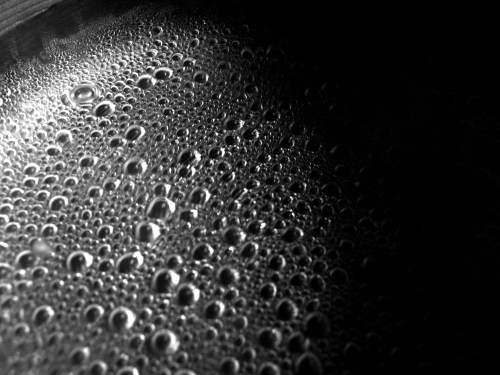
To boil water: Fill a pot with water from the cold-water tap. Heat it until bubbles come from the bottom of the pot to the top. Once the water reaches a rolling boil, let it boil for one minute (kettles with an automatic shutoff feature may not boil for a full minute).

Read
Wednesday, Jan. 28, 2015