Mullah’s rise charts Taliban’s long road back to power

Advertisement

Advertise with us

The Taliban's top political leader, who made a triumphal return to Afghanistan this week, battled the U.S. and its allies for decades but then signed a landmark peace agreement with the Trump administration.

Read this article for free:


or

Already have an account? Log in here »

To continue reading, please subscribe:

Subscribe and receive a limited-edition Free Press branded hat or tote.

Digital Subscription

One year of digital access for only $205*

  • Enjoy unlimited reading on winnipegfreepress.com
  • Read the E-Edition, our digital replica newspaper
  • Access News Break, our award-winning app
  • Play interactive puzzles

*First annual payment billed as $205.00 + GST for one year. This annual subscription will automatically renew at $233.00 + GST every 52 weeks (10% off the regular annual price of $259.35). Offer available to new and qualified returning subscribers only. Cancel any time.

To continue reading, please subscribe:

Add Free Press access to your Brandon Sun subscription for only an additional

$1 for the first 4 weeks*

  • Enjoy unlimited reading on winnipegfreepress.com
  • Read the E-Edition, our digital replica newspaper
  • Access News Break, our award-winning app
  • Play interactive puzzles
Start now

*Your next Brandon Sun subscription payment will increase by $1.00 and you will be charged $17.95 plus GST for four weeks. After four weeks, your payment will increase to $24.95 plus GST every four weeks.

Hey there, time traveller!
This article was published 18/08/2021 (1856 days ago), so information in it may no longer be current.

The Taliban’s top political leader, who made a triumphal return to Afghanistan this week, battled the U.S. and its allies for decades but then signed a landmark peace agreement with the Trump administration.

Mullah Abdul Ghani Baradar is now expected to play a key role in negotiations between the Taliban and officials from the Afghan government that the militant group deposed in its blitz across the country. The Taliban say they seek an “inclusive, Islamic” government and claim they have become more moderate since they last held power.

But many remain skeptical, and all eyes are now on Baradar, who has said little about how the group will govern but has proven pragmatic in the past.
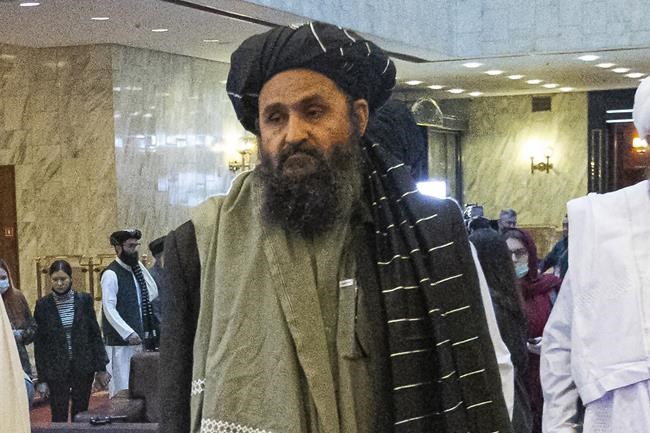
FILE - In this March 18, 2021, file photo, Taliban co-founder Mullah Abdul Ghani Baradar, arrives with other members of the Taliban delegation for an international peace conference in Moscow, Russia. Baradar's biography charts the Taliban's long journey from a pious but brutal Islamic militia to an insurgency that battled the U.S. for two decades, ultimately returning to power through pragmatic diplomacy and military might. His experience also sheds light on the Taliban's complicated relationship with neighboring Pakistan. (AP Photo/Alexander Zemlianichenko, Pool, File)

Baradar’s biography charts the arc of the Taliban’s journey from an Islamic militia that battled warlords during the civil war in the 1990s, ruled the country in accordance with a strict interpretation of Islamic law and then waged a two-decade insurgency against the U.S. His experience also sheds light on the Taliban’s complicated relationship with neighboring Pakistan.

Baradar is the only surviving Taliban leader to have been personally appointed deputy by the late Taliban commander Mullah Mohammed Omar, giving Baradar near-legendary status within the movement. And he is far more visible than the Taliban’s current supreme leader, Maulawi Hibatullah Akhunzada, who is believed to be in hiding in Pakistan and only releases occasional statements.

On Tuesday, Baradar landed in the southern Afghan city of Kandahar, the birthplace of the Taliban movement he helped found in the mid-1990s. Ending 20 years of exile, he was thronged by well-wishers as he stepped off a Qatari government aircraft and drove off in a convoy.

Baradar, who is in his early 50s, was born in the southern Uruzgan province. Like others who would eventually become Taliban leaders, he joined the ranks of the CIA- and Pakistan-backed mujahideen to fight against the Soviet Union during its decadelong occupation of the country that ended in 1989.

In the 1990s, the country slid into civil war, with rival mujahideen battling one another and carving out fiefdoms. Warlords set up brutal protection rackets and checkpoints in which their forces shook down travelers to fund their military activities.

In 1994, Mullah Omar, Baradar and others founded the Taliban, which means religious students. The group mainly consisted of clerics and young, pious men, many of whom had been driven from their homes and had known only war. Their unsparing interpretation of Islam unified their ranks and set them apart from the notoriously corrupt warlords.

Baradar fought alongside Mullah Omar as he led the Taliban through its seizure of power in 1996 and its return to an insurgency following the 2001 U.S.-led invasion.

During the group’s 1996-2001 rule, the president and governing council were based in Kabul. But Baradar spent most of his time in Kandahar, the spiritual capital of the Taliban, and did not have an official government role.

The U.S. invaded Afghanistan after the 9/11 attacks, which had been planned and carried out by Osama bin Laden’s al-Qaida while it was sheltering under Taliban rule. Baradar, Omar and other Taliban leaders fled into neighboring Pakistan.

In the ensuing years, the Taliban were able to organize a potent insurgency based in rugged and semi-autonomous tribal areas along the border. Baradar was arrested in Pakistan’s southern city of Karachi in 2010 in a joint raid by the CIA and Pakistan’s counterterrorism forces.

At the time, he had been making peace overtures to Afghanistan’s then-President Hamid Karzai, but the U.S. was bent on military victory and it appeared that Pakistan wanted to ensure control over any political process. Baradar’s removal empowered more radical leaders within the Taliban who were less open to diplomacy.

Karzai later confirmed the overtures to The Associated Press and said he had twice asked the Americans and the Pakistanis to free Baradar from prison but was rebuffed. Baradar himself refused an offer of release in 2013, apparently because the U.S. and Pakistan conditioned it on his cooperation.

Karzai, who is now involved in talks with the Taliban about shaping the next government, could once again find himself negotiating with Baradar.
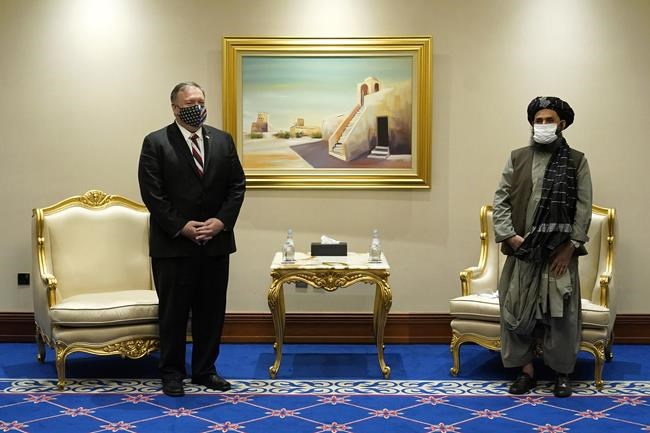
FILE - In this Nov. 21, 2020 file photo, Secretary of State Mike Pompeo meets with Mullah Abdul Ghani Baradar, head of the Taliban's peace negotiation team, amid talks between the Taliban and the Afghan government, in Doha, Qatar. Baradar, the Taliban's top political leader, who made a triumphal return to Afghanistan this week, battled the U.S. and its allies for decades but then signed a landmark peace agreement with the Trump administration. Baradar is now expected to play a key role in negotiations between the Taliban and officials from the Afghan government that the insurgents deposed in their blitz across the country. (AP Photo/Patrick Semansky, Pool, File)

By 2018, the Taliban had seized effective control over much of Afghanistan’s countryside. The Trump administration, looking for a way out of America’s longest war, persuaded Pakistan to release Baradar that year and began pursuing peace talks with the Taliban.

Baradar led the Taliban’s negotiating team in Qatar through several rounds of those talks, culminating in a February 2020 peace agreement. He also met with then-U.S. Secretary of State Mike Pompeo.

Under the deal, the Taliban agreed to halt attacks on international forces and prevent Afghanistan from again becoming a haven for terror groups in return for a full U.S. withdrawal, now planned for the end of the month.

Last week, the Taliban pushed into the country’s cities, seizing nearly all of the country in matter of days and then rolled virtually unopposed into the capital, Kabul.

In his first comment after the capture of Kabul on Sunday, Baradar acknowledged his surprise, saying that “it was never expected that we will have victory in Afghanistan.”

Wearing a black turban and vest over a white robe, the bespectacled Baradar looked straight into the camera.

“Now comes the test,” he said. “We must meet the challenge of serving and securing our nation, and giving it a stable life going forward.”

___

Gannon reported from Guelph, Canada. Associated Press writers Tameem Akhgar in Istanbul and Joseph Krauss in Jerusalem contributed.

Report Error Submit a Tip

The Free Press acknowledges the financial support it receives from members of the city’s faith community, which makes our coverage of religion possible.
More Stories

Refugees share stories of escape from their homelands and triumphs in their new land

By Carol Sanders 14 minute read Preview

Refugees share stories of escape from their homelands and triumphs in their new land

By Carol Sanders 14 minute read Monday, Oct. 26, 2015

Images of Syrian refugees desperate to get to a safe place have the rest of the world wondering what is going to happen to those people.

Where will they go? What will become of them? Decades later, what stories will they have to tell?

Six Winnipeggers who were forced to flee their home countries over the last 70 years share their personal stories — of tragedy and triumph — of coming to Canada. We asked them five questions:

What and why you were fleeing? What, if any, were the dangers of the journey? What has been your experience since coming to Canada? What does it mean to contribute to Canadian society? What are your thoughts on Canada’s immigration policies? They share their personal journeys and their thoughts on the dire situation in Syria. (Some answers have been edited for length and clarity.)

Read
Monday, Oct. 26, 2015

A distant island and a European border

Editorial 4 minute read Preview

A distant island and a European border

Editorial 4 minute read 2:00 AM CDT

It’s at roughly 80°49′35″ North latitude and 66°27′30″West longitude.

Or, you might also know it as being in the Kennedy Channel of the Nares Strait in the high Arctic.

It’s Hans Island, an island that’s split between the Kingdom of Denmark and Canada.

The border was a bone of contention between the two nations for years, but not one that sired threats of annexation. Each simply claimed it as their own.

Read
2:00 AM CDT

Arkells, Air Supply, JD Fortune, Streetheart announce local shows

3 minute read Preview

Arkells, Air Supply, JD Fortune, Streetheart announce local shows

3 minute read 2:00 AM CDT

Hamilton’s Arkells are bringing their Between Us City Takeover tour to Winnipeg Nov. 10-12, playing three shows at three different venues.

The unique tour sees the Juno-winning rock band, known for his including Leather Jacket and Knocking at the Door, playing extended stands in cities across Canada in intimate clubs and theatres instead of arenas.

In Winnipeg, Arkells play South Osborne venues Sidestage (Nov. 10) and the Park Theatre (Nov. 11), and the downtown Burton Cummings Theatre (Nov. 12).

Tickets (prices TBA) go on sale Friday at 10 a.m., with fan pre-sales on now. Fans can sign up for pre-sale access at arkellsmusic.com.

Read
2:00 AM CDT

Free as can be

AV Kitching 6 minute read Preview

Free as can be

AV Kitching 6 minute read Tuesday, Sep. 15, 2026

Katelyn Sawatzky founded Childfree Winnipeg Women in 2021 to bring together women who don’t have kids — be it by choice or circumstance — and do not plan on raising children.

The group is designed to help them share experiences and build meaningful friendships.

The community welcomes cisgender, straight, transgender, bisexual and lesbian women. Parents, including empty nesters and men, are turned away.

“Our group is a safe space where women can hang out with other women without being asked when you’re going to have kids or why you don’t have kids … where you don’t feel like you have to validate or defend your choices in any way, because everyone gets it,” Sawatzky says.

Read
Tuesday, Sep. 15, 2026

New song Let Me Out of Here brings Sierra Noble back after a five-year hiatus

Alan Small 8 minute read Preview

New song Let Me Out of Here brings Sierra Noble back after a five-year hiatus

Alan Small 8 minute read Wednesday, Oct. 13, 2021

Sierra Noble has a new song, a new look and new pronoun but those aren’t the only updates in the singer-songwriter’s life and career they wish to share.

A new single, Let Me Out of Here, addresses the abuse Noble suffered as a teenager, when they became a rising star in the music business.

But in an interview, Noble expands on the lyrics of the tune, the past and a five-year hiatus from recording that ended earlier this month with the song’s release.

“That was in 2016 when I was in Nashville when my body and my mind just said, ‘Enough is enough,’ “ Noble says. “The box is full. You can’t keep putting things in this box. You’ve got to take them all out and look at them and deal with it.”

Read
Wednesday, Oct. 13, 2021

‘Parental rights’ issue resurfaces

Maggie Macintosh 5 minute read Preview

‘Parental rights’ issue resurfaces

Maggie Macintosh 5 minute read 2:00 AM CDT

Trustee campaign material that condemns rainbow flags is being met with outrage of all kinds, written complaints and, in one case, a cease-and-desist order.

“Parental rights,” including questions about classroom diversity, equity and inclusion policies, are resurfacing heading into school board elections across Manitoba.

“People are trying to advance their politics and their issues while simultaneously calling teachers ideologues and brainwashers,” said Shannon Moore, an associate professor at the University of Manitoba who studies sexual health education. “And I find that rich.”

Moore said parents have a right to choose independent school or homeschool, but they do not have a right to dictate curriculum that is currently developed using research and mainstream morals.

Read
2:00 AM CDT