Catholics question relationship with church after residential school grave discovery

Advertisement

Advertise with us

Bob Hilbig's crisis of confidence in the Roman Catholic Church isn't his first reckoning with the institution that shaped his childhood. It's not even his second.

Read this article for free:


or

Already have an account? Log in here »

To continue reading, please subscribe:

Subscribe and receive a limited-edition Free Press branded hat or tote.

Digital Subscription

One year of digital access for only $205*

  • Enjoy unlimited reading on winnipegfreepress.com
  • Read the E-Edition, our digital replica newspaper
  • Access News Break, our award-winning app
  • Play interactive puzzles

*First annual payment billed as $205.00 + GST for one year. This annual subscription will automatically renew at $233.00 + GST every 52 weeks (10% off the regular annual price of $259.35). Offer available to new and qualified returning subscribers only. Cancel any time.

To continue reading, please subscribe:

Add Free Press access to your Brandon Sun subscription for only an additional

$1 for the first 4 weeks*

  • Enjoy unlimited reading on winnipegfreepress.com
  • Read the E-Edition, our digital replica newspaper
  • Access News Break, our award-winning app
  • Play interactive puzzles
Start now

*Your next Brandon Sun subscription payment will increase by $1.00 and you will be charged $17.95 plus GST for four weeks. After four weeks, your payment will increase to $24.95 plus GST every four weeks.

Hey there, time traveller!
This article was published 27/06/2021 (1923 days ago), so information in it may no longer be current.

Bob Hilbig’s crisis of confidence in the Roman Catholic Church isn’t his first reckoning with the institution that shaped his childhood. It’s not even his second.

But the discovery over the past month of what’s believed to be nearly 1,000 bodies in unmarked graves at two former residential schools for Indigenous children could prove to be the last, he said, unless church officials take responsibility.

“I’m really hopeful that there is some transparency and atonement to go around,” Hilbig said. “I’ll be analyzing…I’m going to be paying close attention to how they react.”
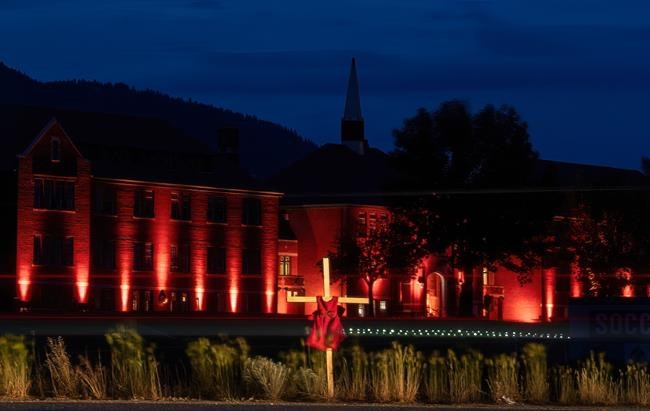
A child’s dress is seen on a cross outside the Kamloops Indian Residential School in Kamloops, B.C., Saturday, June, 13, 2021.Some Catholics -- lapsed and practising alike -- are re-examining their relationship with the institution of the Roman Catholic Church following the discovery of what's believed to be nearly 1,000 bodies in unmarked graves near the sites of two former residential schools.THE CANADIAN PRESS/Jonathan Hayward

The disappointment that came with news of the residential school grave sites carried reminders of past personal letdowns, he said, including the 2005 appointment of ultra-conservative Pope Benedict XVI and the co-ordinated coverups of priests’ sexual abuse of children.

Given that recent history, the 35-year-old Hilbig said, along with what he already knew of the residential school system, the discovery of the suspected remains didn’t come as a surprise.

Hilbig, who lives in Richmond Hill, Ont., is among the lapsed and practising Catholics who are re-examining their relationship with the church given the recent news.

Cowessess First Nation in Saskatchewan announced Thursday that ground-penetrating radar detected 751 unmarked graves at the cite of the former Marieval Indian Residential School. Last month, the Tk’emlups te Secwepemc First Nation said the same technology found what are believed to be the remains of 215 children at a former school site in Kamloops, B.C.

Hilbig said he’s looking to church officials to take accountability, and he’s already seen signs that might happen.

After initial resistance, the Missionary Oblates of Mary Immaculate — the religious order that operated both schools — pledged to release all their records related to all such facilities.

So did the Sisters of St. Ann, an order of nuns whose members worked at residential schools.

Hilbig said those moves give him hope that the institution that was the bedrock of his youth could start to redeem itself.

But Hilbig’s complex relationship with the Roman Catholic Church is distinct from his relationship with God, he noted.

While he’s been given cause to question the former, he knows his faith will remain steady.

When he was 10, Hilbig said, he and his extended family surrounded his grandfather as he died.

“And when he did, he smiled. That’s been a sort of an anchor for me, and it’s rather unshakeable,” he said.

“My relationship with God isn’t bound by the church. It’s informed through the (church’s) teachings, but it’s not bound by it.”

Hilbig said it may be time for governments in Canada to reconsider their relationship with religious institutions as well.

“I hope this is an inflection point for Canada to evolve,” he said.

Shannon Bernard of Toronto is grappling with similar questions.

Her eldest son is wrapping up Grade 1 in Catholic school and her younger boy is due to start junior kindergarten in the fall.

Bernard was adopted into a Catholic family and attended Catholic school as well. She began to question the church as a teenager and no longer considers herself a member of the religion, but decided to enroll her boys in Catholic school at the advice of some teacher friends.

She’s now second-guessing her choice, wondering whether the system will offer her sons the education about residential schools she missed out on when she was a student.

“I definitely have considered maybe a switch out of the school system if it just remains the status quo,” Bernard said. “I’m just hoping to see some changes over the next few months or a year.”

Bernard, who is First Nations and has family members who attended residential schools, said she’s also looking to the church for an apology she doubts will ever come.

Pope Benedict XVI expressed “sorrow” over the residential schools in a statement in 2009, but Bernard said that isn’t enough.

“It was an acknowledgement, not an apology,” she said.

The current pontiff, Francis, has also stopped short of a formal apology, which has disappointed Clara Casucci-McLeod of Niagara Falls, Ont.

The 67-year-old’s first schism with the church came roughly three decades ago when a Catholic priest refused to officiate her marriage to a divorced man.

Casucci-McLeod’s distaste at the drive to convert non-believers to Catholicism — amplified about a decade ago when she started learning about the atrocities committed in the residential school system in God’s name — served to deepen the rift.

But tight family ties to the religion kept her connected to the institution even as her faith changed, so she was watching the last papal conclave with interest.

“I had such high hopes for Pope Francis,” she said. “I remember when he stood on that balcony, and I remember crying when he came out and feeling this overwhelming feeling of, this is such a good person. He is going to make a difference.

“And I believe he has. But he hasn’t gotten far enough. He’s so disappointed me.”

The Indian Residential Schools Resolution Health Support Program has a hotline to help residential school survivors and their relatives suffering with trauma invoked by the recall of past abuse. The number is 1-866-925-4419.

This report by The Canadian Press was first published June 27, 2021.

Report Error Submit a Tip

The Free Press acknowledges the financial support it receives from members of the city’s faith community, which makes our coverage of religion possible.
More Stories

Métis federation opens Louis Riel College campus

Tyler Searle 4 minute read Preview

Métis federation opens Louis Riel College campus

Tyler Searle 4 minute read Wednesday, Jul. 29, 2026

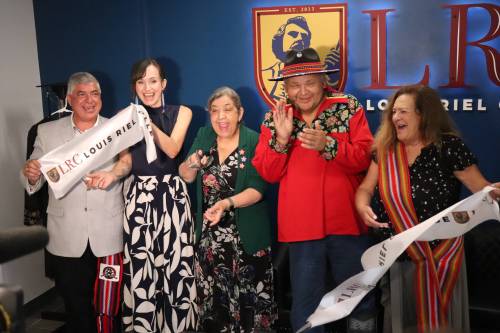
Thirteen years after establishing the Louis Riel College, the Manitoba Métis Federation opened the doors to the school’s first official campus on Wednesday — cutting the ribbon on what it hopes will become a thriving centre for Métis education in Winnipeg.

The campus, which occupies a handful of rooms on the ground floor of the MMF’s building at 200 Main St., primarily offers courses related to health care and Indigenous-focused early childhood education, but will expand its slate of training options, said JoAnne Remillard, the federation’s education minister.

“This new campus represents opportunity, education and a commitment to creating pathways for students to achieve their goals and build successful futures,” she said.

“Everyone is excited about this.”

Read
Wednesday, Jul. 29, 2026

Suspension upheld for teen hockey player involved in hazing

Free Press staff 3 minute read Preview

Suspension upheld for teen hockey player involved in hazing

Free Press staff 3 minute read Sunday, Aug. 9, 2026

A high school hockey player who was found to have been involved in sexualized hazing of rookie teammates lost his suspension appeal.

The youth player was barred from Hockey Canada-sanctioned activities. He was handed the four-year and nine-month suspension from sanctioned hockey after an interim ban issued in March 2024.

He appealed his suspension late last year to the Sport Dispute Resolution Centre of Canada, an independent conflict tribunal, but the centre upheld the youth’s suspension, according to a written decision issued earlier this year.

An independent investigator who probed the hockey player’s actions described the youth as a veteran player who both participated in and co-ordinated the “assigning” of rookie team members to veteran players to perform tasks for them. He himself was “assigned” a rookie, the decision said.

Read
Sunday, Aug. 9, 2026

Retirement has been a rocky road for Osmond

Lori Ewing, The Canadian Press 5 minute read Preview

Retirement has been a rocky road for Osmond

Lori Ewing, The Canadian Press 5 minute read Wednesday, Jan. 8, 2020

TORONTO - For the better part of two decades, Kaetlyn Osmond knew exactly what she'd be doing every day. Her world and her schedule revolved around figure skating.

The 24-year-old announced her retirement last May, and hasn't competed since winning gold at the 2018 world championships. And while she's completely at peace with her decision to walk away when she did, the months since haven't been all smooth sailing.

"It was a big change," Osmond said Wednesday. "Not having the rink to go to every day — the rink was a safe spot for me — skating was my job, it was my hobby, it was all my friends, it was just a great place for me to be. And I knew exactly what my purpose was every single day.

"Losing that was a lot harder than I was expecting it to be. I didn't have a team of 15 people telling me where to be and what to do, I had to figure that out on my own. And it felt like I had to grow up really quickly."

Read
Wednesday, Jan. 8, 2020

Legislation needed on vacant buildings

Editorial 4 minute read Preview

Legislation needed on vacant buildings

Editorial 4 minute read Tuesday, Sep. 29, 2026

There is something deeply backwards about a system that lets a property owner keep a building boarded up indefinitely while neighbours are left to live with the consequences.

In Winnipeg, as long as the owner pays the taxes, follows the city’s vacant-building rules and pays the required fees, there is no hard deadline for the building to be dealt with.

The building can remain a neighbourhood eyesore. It can attract drug use and crime. It can become a fire hazard. And the people living nearby can be left wondering how long they are expected to put up with it.

Yet when Premier Wab Kinew was asked Friday whether his government would change provincial legislation to give Winnipeg the power to impose a time limit on such properties, he declined to answer.

Read
Tuesday, Sep. 29, 2026

Four areas eyed for lower speed limits

Joyanne Pursaga 4 minute read Preview

Four areas eyed for lower speed limits

Joyanne Pursaga 4 minute read Thursday, Mar. 31, 2022

Four Winnipeg neighbourhoods have been recommended for a project to assess the effect of reduced speed limits on residential streets.

After an extensive debate, city staff pinpointed places where the standard 50 km/h residential speed limit should be reduced.

Pending approval by the public works committee, the limit would drop to 30 km/h in two neighbourhoods and 40 km/h in two others. A consultant would decide where each exact limit should apply.

The one-year trials are proposed for the Worthington, Richmond West, Tyndall Park South and Bourkevale neighbourhoods, though locations could change depending on feedback from city hall.

Read
Thursday, Mar. 31, 2022

Being in the black, doesn’t mean being out of the woods

Tom Brodbeck 5 minute read Preview

Being in the black, doesn’t mean being out of the woods

Tom Brodbeck 5 minute read Tuesday, Dec. 10, 2019

The Pallister government may be planning to balance the books in two years. But it doesn’t mean the province will stop borrowing and racking up debt even after it’s in the black. That’s something Premier Brian Pallister alluded to in a year-end press conference Tuesday.

The idea that government still has to borrow money to pay the bills, even with a balanced budget, may sound counterintuitive. But if you look a little deeper into how the province reports its finances, it’s easy to see how the province will still have to borrow money years after it officially balances the books.

That may be disappointing to those who thought a balanced budget — now expected in 2022 — might allow the province to loosen the purse strings. But the way government accounting works, eliminating the deficit doesn’t necessarily mean the province no longer has borrowing requirements.

“We’re not out of the woods yet,” Pallister said Tuesday when talking about the province’s financial status. “We have the highest debt per capita in Canada.”

Read
Tuesday, Dec. 10, 2019