First Nation says 751 unmarked graves found at Saskatchewan residential school site

Advertisement

Advertise with us

Eagleclaw Thom cried on the phone with family members as they shared stories of attending a former Saskatchewan residential school where a search has revealed what are believed to be 751 unmarked graves.

Read this article for free:


By clicking the button above, an account will be created and you will begin to receive some of our recommended newsletters. You may opt out of any newsletter by visiting your Email and Communication Preferences page or by clicking "unsubscribe" at the bottom of any email.

or

Already have an account? Log in here »

To continue reading, please subscribe:

Digital Subscription

One year of digital access for only $1.44 a week*

  • Enjoy unlimited reading on winnipegfreepress.com
  • Read the E-Edition, our digital replica newspaper
  • Access News Break, our award-winning app
  • Play interactive puzzles

*Billed as $5.77 plus GST every four weeks. After 52 weeks, price increases to the regular rate of $19.95 plus GST every four weeks. Offer available to new and qualified returning subscribers only. Cancel any time.

To continue reading, please subscribe:

Add Free Press access to your Brandon Sun subscription for only an additional

$1 for the first 4 weeks*

  • Enjoy unlimited reading on winnipegfreepress.com
  • Read the E-Edition, our digital replica newspaper
  • Access News Break, our award-winning app
  • Play interactive puzzles
Start now

*Your next Brandon Sun subscription payment will increase by $1.00 and you will be charged $17.95 plus GST for four weeks. After four weeks, your payment will increase to $24.95 plus GST every four weeks.

Hey there, time traveller!
This article was published 24/06/2021 (1953 days ago), so information in it may no longer be current.

Eagleclaw Thom cried on the phone with family members as they shared stories of attending a former Saskatchewan residential school where a search has revealed what are believed to be 751 unmarked graves.

Thom said the discovery on the grounds of the Marieval Indian Residential School announced by the Cowessess First Nation on Thursday left a hole in his heart.

Thom, 40, is from the Sakimay First Nation that borders Cowessess and did not attend Marieval, but his father and paternal grandparents did. Some of his siblings attended different schools throughout the province.
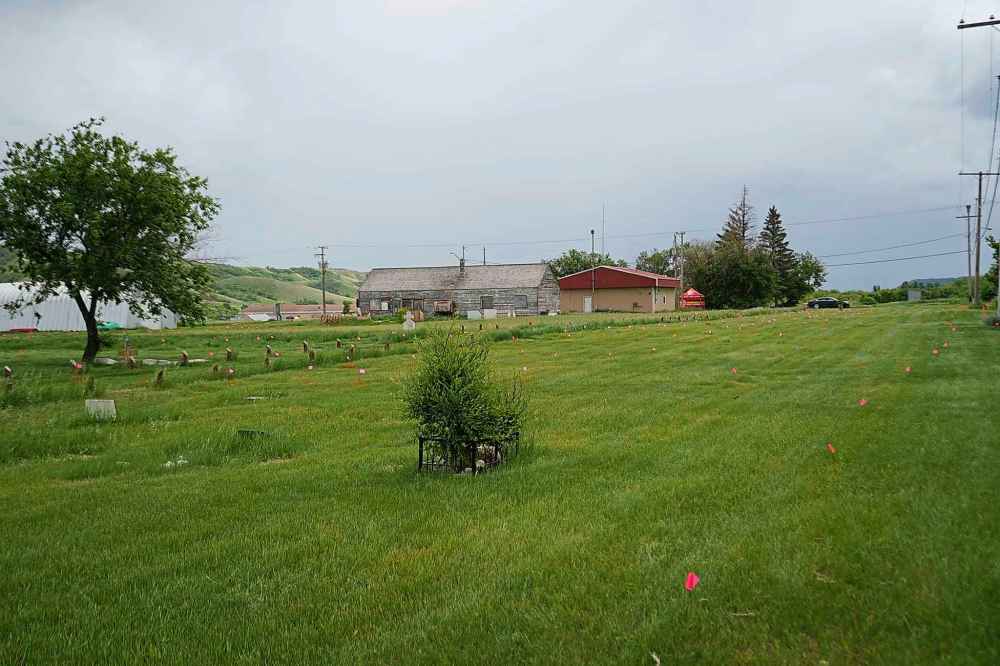
There may have been markers or headstones on the graves at one point, but they were removed in the 1960s, says Cowessess First Nation Chief Cadmus Delorme. (Cowessness First Nation / Facebook)

“People may have been able to leave or escape residential school, but it never left them,” Thom said from Ottawa.

“There was a cultural genocide, but there was also a genocide of our people.”

Cowessess Chief Cadmus Delorme promised that memories of those who died at Marieval will not be wiped out. He said work will be done so a name is placed on each of the unmarked graves he said may have had markers or headstones that were removed in the 1960s.

“The Catholic Church representatives removed these headstones, and today they are unmarked graves,” Delorme said.

“We want to honour our loved ones that lay there today,” he said. “We want to make sure that we keep that place and preserve it so many could come here and heal.”

The Archdiocese of Regina shared a letter it sent to Delorme, which said it has had conversations with the First Nation about abuse at the school, unmarked graves and how one priest destroyed headstones.

“As you have communicated elsewhere, Chief Cadmus, even for those of us who were not there or not involved, it is nonetheless the painful legacy that we need to carry,” Archbishop Don Bolen wrote.

Spokesman Eric Gurash also said the archdiocese contributed $70,000 to the First Nation for cemetery restoration.

The grave search began earlier this month using ground-penetrating radar that recorded 751 hits. The number would be the highest to date found in Canada. Delorme said the technology has a 10 to 15 per cent error rate.

“But we do know there are at least 600 (graves).”

The existence and number of graves does not come as a surprise to those yet living who attended the school, he said.
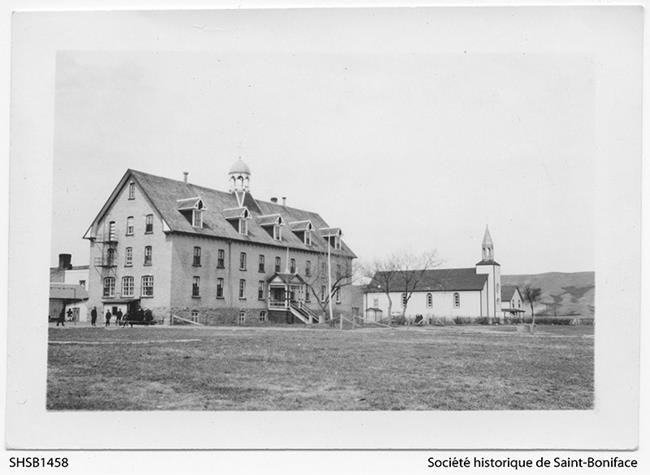
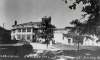
A 1956 photograph of the parish church in Marieval, Sask., is shown in this handout image provided by Société historique de Saint-Boniface. THE CANADIAN PRESS/HO-Société historique de Saint-Boniface *MANDATORY CREDIT*

“Over the past years, the oral stories of our elders, of our survivors and friends of our survivors, have told us they knew these burials were here,” said Delorme.

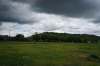
At a virtual news conference, he showed a photo of a grassy field with 751 coloured flags sticking out of the ground.

“The grave site is there and it is real.”

Last month, a First Nation in British Columbia revealed that ground-penetrating radar had found what are believed to be the remains of 215 children buried at a former residential school in Kamloops. The school was once the largest in Canada’s residential school network.

An estimated 150,000 First Nations, Inuit and Métis children attended residential schools between the 1860s and 1996. The Truth and Reconciliation Commission documented stories from survivors and families and issued a report in 2015 which detailed mistreatment, including emotional, physical and sexual abuse. It said there were at least 4,100 deaths.

The Cowessess school, about 160 kilometres east of Regina, was built in 1899 by Roman Catholic missionaries. Delorme said it closed in 1996.

Delorme said he’s hoping to get school records held by the church and has “full faith” they will be released.

The search for remains will continue, he said. The discovery was made within the bounds of a Roman Catholic grave site, but survivors believe people who were not baptized or too young to be baptized were buried outside the grounds, he said.

Prime Minister Justin Trudeau said he was terribly saddened.

“The hurt and the trauma that you feel is Canada’s responsibility to bear, and the government will continue to provide Indigenous communities across the country with the funding and resources they need to bring these terrible wrongs to light,” Trudeau said in a statement.

Chief Bobby Cameron of the Federation of Sovereign Indigenous Nations, which represents 74 First Nations in Saskatchewan, said the graves provide “evidence of what the survivors of the Indian Residential Schools have been saying all along for decades.”
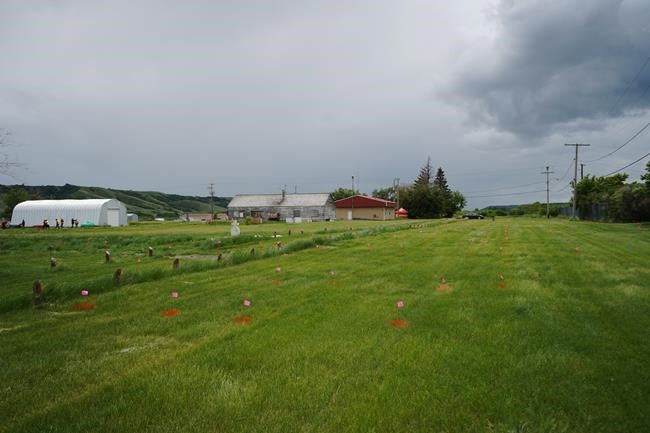
Flags mark where ground-penetrating radar recorded hits of what are believed to be 751 unmarked graves near the grounds of the former Marieval Indian Residential School on the Cowessess First Nation in Saskatchewan in this undated handout photo provided by the Federation of Sovereign Indigenous Nations. THE CANADIAN PRESS/HO, FSIN *MANDATORY CREDIT*

“We are seeing the results of the genocide that Canada committed here,” said Cameron. “Genocide on our treaty lands.”

Cameron said the federation will search every school site as well as the grounds of sanatoriums — so-called “Indian hospitals” — and “all the sites where our people were taken and abused, tortured, neglected and murdered.””

“We will find more bodies and we will not stop until we find all of our children.”

Survivors and their descendants will need time to “heal and get stronger,” he said.

“We are not asking for pity, but we are asking for understanding. We need time to heal, and this country must stand by us.”

The Indian Residential Schools Resolution Health Support Program has a hotline to help residential school survivors and their relatives suffering trauma invoked by the recall of past abuse. The number is 1-866-925-4419.

This report by The Canadian Press was first published June 24, 2021.

Report Error Submit a Tip

The Free Press acknowledges the financial support it receives from members of the city’s faith community, which makes our coverage of religion possible.
More Stories

Indigenous-, newcomer-focused job fair puts opportunity in spotlight

Gabrielle Piché 3 minute read Tuesday, Oct. 27, 2026

Canadian Armed Forces pamphlets grazed the side of Serena Valiquette’s ribbon skirt, as the Grade 9 student clutched the handouts tight.

“When I get to age, I’ll probably apply,” said Serena, 14, joining pockets of students hopping from booth to booth — City of Winnipeg here, Manitoba Public Insurance there — at a job fair in Winnipeg on Tuesday.

The job seekers, present and future, were largely Indigenous and newcomers. It was the demographic organizer Clayton Sandy aimed to attract.

“We have the ability to open doors for young people,” Sandy said. “This is one of the ways we use.”

Director Schrader returns to silver screen with complex view of religion and belief

Alison Gillmor 4 minute read Preview

Director Schrader returns to silver screen with complex view of religion and belief

Alison Gillmor 4 minute read Thursday, Jun. 14, 2018

Bleak, wintry and rigorously controlled — until it’s not — this Book of Job-like drama from American filmmaker Paul Schrader looks at the challenges of faith.

The 71-year-old Schrader, known for scripting four Martin Scorsese films (including Taxi Driver and Raging Bull) and for directing his own (including American Gigolo, Affliction and Auto Focus), grew up in a strict Calvinist home — he famously did not see a film until he was 17 — and has always been drawn to stories of agonizing and uncertain redemption.

As the Rev. Toller (Ethan Hawke) wrestles with what it means to lead a righteous life in our badly broken world, his spiritual fate remains in doubt. It is certain, however, that First Reformed marks a cinematic rebirth for Schrader after recent disasters like The Canyons and Dog Eat Dog. Serious, complex and moving, this is not a perfect film, but even its flaws are powerful.

Toller is a solitary man who has come to the ministry late in life, after a family tragedy and a failed marriage. First Reformed, a historic church in upstate New York that was once a stop on the Underground Railroad, has since been reduced to an austerely beautiful tourist shop, more of a museum than a place of worship.

Read
Thursday, Jun. 14, 2018

No Christmas trees, no Christmas trees — the lots are empty as can be

Doug Speirs  3 minute read Preview

No Christmas trees, no Christmas trees — the lots are empty as can be

Doug Speirs  3 minute read Monday, Dec. 7, 2020

It might take a Christmas miracle to get your hands on even a scraggly Charlie Brown-style tree this holiday season.

Winnipeg garden centre owners interviewed Monday morning said they are totally sold out and they’ve never seen stock vanish this quickly in all their years in the business.

They likened it to the holiday version of panicked shoppers binge-buying toilet paper when the COVID-19 pandemic first arrived in the province back in March.

“I’m sold out,” declared Ray DuBois, owner of Ron Paul Garden Centre on St. Mary’s Road. “I could see it coming back in August. When we placed our order, I bumped it up by 10 per cent.”

Read
Monday, Dec. 7, 2020

City rec facilities crumbling

Ryan Thorpe 7 minute read Preview

City rec facilities crumbling

Ryan Thorpe 7 minute read Monday, Oct. 22, 2018

Throughout Winnipeg, decades-old community assets — pools, arenas and recreation and leisure centres — are deteriorating so quickly that service disruptions are inevitable.

Meanwhile, the city’s community services department, which is responsible for managing those assets, operates with an annual deficit of roughly $80 million, meaning there are scant resources to do little more than bail water on a sinking ship.

Soon, Winnipeggers will have a choice: fewer community services or higher costs.

“It poses a huge challenge because we have very limited dollars that we have to invest in our existing facilities. We also have growing demands for new amenities in new areas. We have to be very strategic,” said Ken McKim, manager of asset management for the department.

Read
Monday, Oct. 22, 2018

Shared Health, heal thyself

Editorial 4 minute read Preview

Shared Health, heal thyself

Editorial 4 minute read 2:00 AM CDT

Doctors are trained to seek out the causes of illness, not just to treat the symptoms.

That is, perhaps, a style of examination that the government of Premier Wab Kinew should be following with the health-care system as a whole.

Because the symptoms are looking a little dire.

Last week, provincial chief medical officer Dr. José François announced he would be leaving his position in January 2027. That means he will be leaving a position he has only held since April 2024 — less than three years.

Read
2:00 AM CDT

Multi-year budget to force councillors, bureaucrats to focus on the big picture

Aldo Santin 12 minute read Preview

Multi-year budget to force councillors, bureaucrats to focus on the big picture

Aldo Santin 12 minute read Tuesday, Feb. 26, 2019

City hall is putting the final touches on the 2019 preliminary budget -- but the real tough job will start after that.

The city is committed to developing a four-year budget beginning with 2020, and having it in place by the end of this year.

It's a process that is filled with uncertainties, trying to balance four successive annual budgets at the same time, using assumptions on revenues and expenses that can change without notice: a provincial government that has frozen funding to city hall at 2016 levels and is reluctant to disclose annual funding commitments or share in unexpected revenues; erratic fuel prices; a possible change in government in Ottawa, which could bring new spending priorities. And in the middle of that four-year span, another civic election where new members of council may have other priorities than those laid out by the current crop of office holders.

Municipal governments across Manitoba are required to approve their annual operating and capital budgets by the end of March each year. But the criticism of decision-making at city hall has been that all the decisions are made on a year-to-year basis, keeping voters happy with an eye on the next election.

Read
Tuesday, Feb. 26, 2019