B.C. outlines plan to end COVID-19 restrictions; eyes September return to normal

Advertisement

Advertise with us

VICTORIA - A four-step plan in British Columbia to ease out of the COVID-19 pandemic could mean people can attend live concerts, watch sports in person and choose whether to wear a mask by Sept. 7.

Read this article for free:


or

Already have an account? Log in here »

To continue reading, please subscribe:

Subscribe and receive a limited-edition Free Press branded hat or tote.

Digital Subscription

One year of digital access for only $205*

  • Enjoy unlimited reading on winnipegfreepress.com
  • Read the E-Edition, our digital replica newspaper
  • Access News Break, our award-winning app
  • Play interactive puzzles

*First annual payment billed as $205.00 + GST for one year. This annual subscription will automatically renew at $233.00 + GST every 52 weeks (10% off the regular annual price of $259.35). Offer available to new and qualified returning subscribers only. Cancel any time.

To continue reading, please subscribe:

Add Free Press access to your Brandon Sun subscription for only an additional

$1 for the first 4 weeks*

  • Enjoy unlimited reading on winnipegfreepress.com
  • Read the E-Edition, our digital replica newspaper
  • Access News Break, our award-winning app
  • Play interactive puzzles
Start now

*Your next Brandon Sun subscription payment will increase by $1.00 and you will be charged $17.95 plus GST for four weeks. After four weeks, your payment will increase to $24.95 plus GST every four weeks.

Hey there, time traveller!
This article was published 25/05/2021 (1959 days ago), so information in it may no longer be current.

VICTORIA – A four-step plan in British Columbia to ease out of the COVID-19 pandemic could mean people can attend live concerts, watch sports in person and choose whether to wear a mask by Sept. 7.

The launch of the restart program Tuesday began with the relaxing of some restrictions on gatherings, sports events and dining, both indoors and outdoors.

Premier John Horgan said B.C.’s strong immunization rate allows the province to slowly bring people back together, with a target date for the final phase of the plan to be implemented the day after Labour Day.
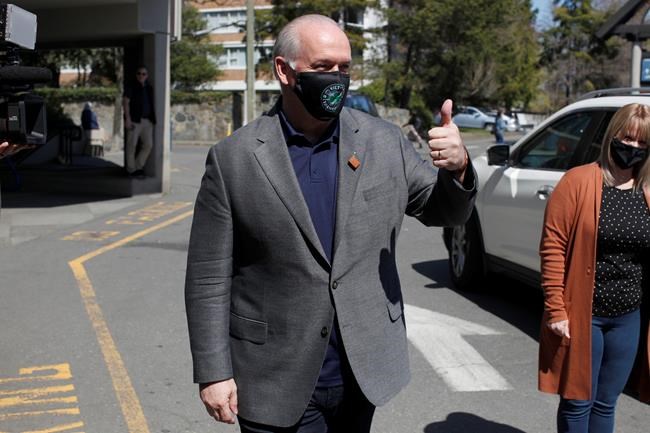
Premier John Horgan arrives to receive a dose of the AstraZeneca COVID-19 vaccine at the pharmacy in James Bay Thrifty's Foods in Victoria, B.C., on Friday, April 16, 2021. British Columbia's plans to restart the province with the methodical lifting of strict COVID-19 health restrictions are set to be announced today. THE CANADIAN PRESS/Chad Hipolito

“It’s an exciting day for all of us,” said Horgan at a news conference. “We’ve made extraordinary sacrifices as a province and a people over the past 15 months.”

But he said the success of the rollout will depend on the province’s progress to reduce COVID-19 infection rates.

Health officials will be watching COVID-19 case counts and possible transmission events to ensure the province can meet the plan’s progressive targets set for June, July and September, Horgan said.

“The way we do that is we make sure our vaccination rates continue to go up,” he said. “I’m very confident, but if there’s anything we’ve learned from COVID-19 is to expect the unexpected. Going forward and slamming back again is not what we want to do.”

Almost three million of the more than four million people eligible to receive COVID-19 immunization in B.C. have had their first shot.

The changes in restrictions will depend on the number of people being vaccinated and as that number rises, more limits will be removed, Horgan said.

The earliest the public health emergency and provincial state of emergency could be lifted would be July 1, he said.

Provincial health officer Dr. Bonnie Henry said the restrictions removed Tuesday include allowing indoor and outdoor dining for up to six people, indoor gatherings with five personal visitors and in-person faith-based gatherings, at reduced capacity.

She said to prevent potential COVID-19 spread in communities, provincial travel restrictions will not be lifted until June 15 at the earliest, with recreational travel permitted only within residents’ regions.

A spokesman for an organization representing Canada’s largest airlines said in a statement B.C.’s plan gives clarity to the industry and consumers.

“The plan provides criteria for the phased reopening of the economy, including regional and domestic travel,” said Mike McNaney, National Airlines Council of Canada president.

The Surrey Board of Trade said timely communication gives businesses a chance to prepare for the staff and supplies they will need in the near future.

“We need to ensure that the majority of British Columbians who are eligible for vaccinations are vaccinated,” said Anita Huberman, president of the Surrey Board of Trade in a statement. “That’s the only way to reach Step 4 of the plan.”

Henry said the province will continue to monitor case counts and the condition of the virus, but expressed confidence vaccines are limiting spread.

“I don’t see a situation where we are going backwards unless things change drastically,” she said. “We’ll be staying flexible because we know this virus still has some tricks up its sleeve.”

On Tuesday, health officials reported 289 new cases of COVID-19, the lowest daily count since late October. One death was also reported, bringing B.C.’s total number of COVID-19 deaths to 1,680 people.

B.C. imposed restrictions at the end of March on indoor restaurant dining and group fitness, while reversing a plan to allow indoor faith services as COVID-19 case numbers soared to new highs.

COVID-19 case counts increased rapidly as variants of the virus began to dominate. Infection rates peaked in early April, while hospital admissions increased and intensive care units filled with patients.

The number of hospitalizations prompted the government to cancel non-urgent surgeries in the Fraser and Vancouver Coastal health regions.

The restrictions were supposed to last until April 19 but were extended as more restrictions on travel were introduced.

This report by The Canadian Press was first published May 25, 2021.

Report Error Submit a Tip

More Stories

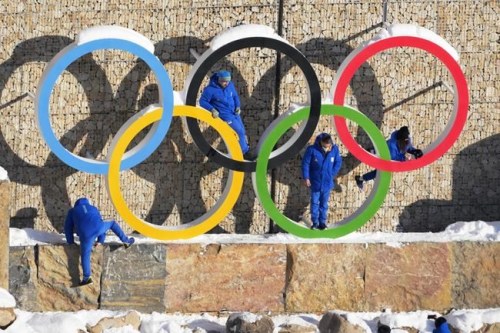
All-Japan committee meets to promote Sapporo Olympic bid

Stephen Wade And Yuri Kageyama, The Associated Press 4 minute read Preview

All-Japan committee meets to promote Sapporo Olympic bid

Stephen Wade And Yuri Kageyama, The Associated Press 4 minute read Tuesday, May. 10, 2022

TOKYO (AP) — Yasuhiro Yamashita, the head of the Japanese Olympic Committee, acknowledged the biggest stumbling block to holding the Olympics is the billions in costs.

However, in another breath on Tuesday at a so-called “All Japan” meeting to promote Sapporo's bid for the 2030 Winter Olympics, he said that if the northern Japanese city lands the Games, little new construction will be needed — a major expense for every Olympics.

“From both inside and outside our country, there are many views about hosting the Olympic and Paralympic Games,” Yamashista said, among politicians and business leaders online — and in Sapporo — talking up the bid. “I realize there are also concerns about the huge costs involved.”

The official cost for last year's delayed Tokyo Olympics was $13.6 billion, although government audits suggest it may have been much more. At least 60% was public money.

Read
Tuesday, May. 10, 2022

Wasteful operations should be held accountable

Barry E. Prentice 5 minute read Preview

Wasteful operations should be held accountable

Barry E. Prentice 5 minute read 2:00 AM CDT

Rising water bills are a top-of-mind issue for residents of Winnipeg going into the fall election. Management of the water and waste system is under question, with citizen’s groups, as well as the Free Press, calling for proper oversight of rates (Time for the PUB to review Winnipeg water rates, Editorial, Sept. 26).

The need to increase rates to build the North End sewage plant is understandable. Siphoning off utility proceeds to make up other tax revenue shortfalls is another matter. But it is not the only questionable practice. If there was Public Utilities Board oversight of Winnipeg’s water and sewer rates, it would certainly be asking why the city is spending more than $3 million annually to operate the 164-kilometre-long, Greater Winnipeg Water District railway (GWWD) on ratepayers’ behalf.

The GWWD has come to the attention of the Railway Relocation Study, led by Lloyd Axworthy. All existing rail lines within the city are under review, as is the feasibility of a new railway bypass.

The GWWD is an example of a railway that has outlived its usefulness and sits on a pocket of land close to downtown that could be converted to higher-value uses.

Read
2:00 AM CDT

HBC closing downtown Bay store in February

Martin Cash 2 minute read Preview

HBC closing downtown Bay store in February

Martin Cash 2 minute read Friday, Oct. 2, 2020

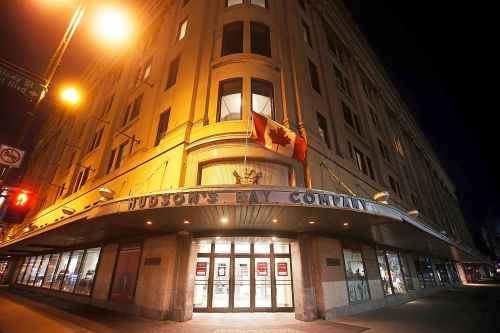
In February, just five years shy of its 100th anniversary, the Portage Avenue Bay store, the mammoth icon of a bygone era of downtown department store shopping, will shut down for good.

HBC's decision to close the 650,000-square-foot store at Portage Avenue and Memorial Boulevard — twice the size of the Winnipeg Ikea store — won't come as a surprise to most people in the city.

Over the years, the company has closed some of the store's six floors and its basement, consolidating stock on just two levels. Last year a company-wide valuation of HBC's real estate holdings valued the downtown Winnipeg building at precisely $0.

"The decision to close this store was a difficult one," said Iain Nairn, president and CEO, Hudson's Bay Co.

Read
Friday, Oct. 2, 2020

Hydro’s planned outages turn out the lights for thousands across province

Nicole Buffie 4 minute read Preview

Hydro’s planned outages turn out the lights for thousands across province

Nicole Buffie 4 minute read Wednesday, Jul. 15, 2026

Business owners in the East Beaches area of Lake Winnipeg hauled out generators Wednesday after a planned Manitoba Hydro outage left thousands of residents and cottagers without power.

Lise Bourassa, who runs several stores in Grand Beach, had to rent generators to accommodate the eight-hour blackout, which affected the area from Beaconia to Victoria Beach as well as Sagkeeng First Nation, while Hydro crews fixed a pole that was damaged by fire in May .

Despite the spare power source, she was only able to open one of her stores during the outage and said it came at a bad time.

“I understand the importance of what Manitoba Hydro is doing, the problem all the businesses in this area are having is that our season is very short and to be shut down for a full day has a fairly big impact, plus they added cost of getting generators,” she wrote in a message to the Free Press. “We also had less than one week to make arrangements, find electricians and generators to be able to keep all the food safe.”

Read
Wednesday, Jul. 15, 2026

Record participation, funds raised in 2026 breast cancer awareness race

Maggie Macintosh 5 minute read Preview

Record participation, funds raised in 2026 breast cancer awareness race

Maggie Macintosh 5 minute read Yesterday at 2:23 PM CDT

It’s become a tradition for the West End Legends to gather, get dressed up in hot pink and gab about their late girlfriend on the first Sunday of Breast Cancer Awareness Month.

“Mary was a beauty, a brain, an athlete and a friend,” said Linda Opalko, a 67-year-old member of the fundraising team founded in honour of Mary Stawychny.

Stawychny’s last breath was taken the same day the group — made up of friends the career teacher maintained since she grew up on Ingersoll Street more than 50 years ago — got together for the 2022 CIBC Run for the Cure.

“We were walking as she was leaving us four years ago,” Opalko said as she and fellow fundraisers strolled down Wellington Crescent on Sunday morning.

Read
Yesterday at 2:23 PM CDT

Not making the grade: rethinking student assessment

Maggie Macintosh 5 minute read Preview

Not making the grade: rethinking student assessment

Maggie Macintosh 5 minute read Thursday, Oct. 5, 2023

As most students in B.C. began the new school year without traditional grades, a former Manitoba teacher living in that province is urging colleagues here to do their homework on modern assessment and experiment with marking.

Starting this year, public and private school teachers in British Columbia are assessing kindergarten through Grade 9 with a scale describing a student’s level of understanding — “emerging,” “developing,” “proficient” or “extending” — instead of letter grades.

Grade 10, 11 and 12 students will continue to receive traditional letter grades and percentages.

“What’s wrong with percentages? There’s nothing wrong with them. They are a wonderful little tool, as long as they stay in their lane,” said Myron Dueck, an education consultant who was born in Winnipeg, where he graduated from teachers’ college in 1994.

Read
Thursday, Oct. 5, 2023