Risk experts say climate change to take big chunk of Canadian economy by 2050

Advertisement

Advertise with us

Canada will be more than $100 billion poorer by 2050 if the world doesn't work harder to fight climate change, says one of the world's largest insurers.

Read this article for free:


By clicking the button above, an account will be created and you will begin to receive some of our recommended newsletters. You may opt out of any newsletter by visiting your Email and Communication Preferences page or by clicking "unsubscribe" at the bottom of any email.

or

Already have an account? Log in here »

To continue reading, please subscribe:

Digital Subscription

One year of digital access for only $1.44 a week*

  • Enjoy unlimited reading on winnipegfreepress.com
  • Read the E-Edition, our digital replica newspaper
  • Access News Break, our award-winning app
  • Play interactive puzzles

*Billed as $5.77 plus GST every four weeks. After 52 weeks, price increases to the regular rate of $19.95 plus GST every four weeks. Offer available to new and qualified returning subscribers only. Cancel any time.

To continue reading, please subscribe:

Add Free Press access to your Brandon Sun subscription for only an additional

$1 for the first 4 weeks*

  • Enjoy unlimited reading on winnipegfreepress.com
  • Read the E-Edition, our digital replica newspaper
  • Access News Break, our award-winning app
  • Play interactive puzzles
Start now

*Your next Brandon Sun subscription payment will increase by $1.00 and you will be charged $17.95 plus GST for four weeks. After four weeks, your payment will increase to $24.95 plus GST every four weeks.

Hey there, time traveller!
This article was published 22/04/2021 (2017 days ago), so information in it may no longer be current.

Canada will be more than $100 billion poorer by 2050 if the world doesn’t work harder to fight climate change, says one of the world’s largest insurers.

That anticipated drop in GDP is much higher than the economic effect the COVID-19 pandemic is projected to have on the country’s gross domestic product, said Jerome Haegeli, chief economist for Swiss Re, a multinational corporation that insures insurance companies, large corporations and governments.

“That’s huge,” Haegeli said from Zurich on Thursday.

Smoke pours from the stacks at the Portlands Energy Centre in Toronto on Thursday January 15, 2009. THE CANADIAN PRESS/Frank Gunn

Swiss Re looked at 48 countries, as well as North America and the European Union as a whole, to try to assess the economic effects of climate change under different scenarios.

If temperatures rise by about 2.6 degrees Celsius, considered to be the most likely scenario under current climate policies, the global economy can expect to see a drop in GDP of 10 per cent within the next 30 years, the study says.

In Canada, the hit would be about seven per cent. Given the size of the economy, that means the country would be about $140 billion poorer than it would be if there were no climate change.

That’s almost as much as this fiscal year’s projected federal deficit of just under $155 billion.

Costs would come from reduced agricultural output, effects on human health,lowerlabour productivity, consequences of a rising sea level, tourism losses and increased household energy demands.

Even if the world is able to bring global warming to within the two-degree limit proposed by the Paris agreement, the study concludes the economic loss would still be about three per cent, or about $600 million, in Canada.

“(Climate change) is the No. 1 risk. There’s no question about it,” Haegeli said.

The good news is that Swiss Re concludes Canada is the fifth-best country in the world when it comes to resiliency. That’s due to our northern latitude and advanced economy and infrastructure.

The study was released on the opening day of a virtual meeting of world leaders convened by U.S. President Joe Biden.

Prime Minister Justin Trudeau announced at the meeting that Canada has increased its goal of reducing greenhouse gas emissions to at least 40 per cent of 2005 levels over the next nine years. The previous target was 36 per cent.

As well as measures that directly cut emissions, governments and corporations have to be much more open about their exposure to climate risks, Haegeli suggested. Many companies have promised their net emissions will be reduced to zero, but few have explained how.

“More needs to be done in the private sector,” he said. “We need to have more regular reporting about how private companies are going to achieve their climate goals.”

Companies also need to release more information on how the fight against climate change will affect their operations, he said. The report concludes a carbon tax of $125 a tonne would cut earnings in North American’s energy sector by 60 per cent.

Haegeli said the world has to get used to factoring climate into all its decisions.

“You need to take climate change into the public balance sheet.”

This report by The Canadian Press was first published April 22, 2021.

— Follow at @row1960 on Twitter

Report Error Submit a Tip

More Stories

Waiting for Cormier verdict the ‘calm before the storm’

Katie May 6 minute read Preview

Waiting for Cormier verdict the ‘calm before the storm’

Katie May 6 minute read Thursday, Feb. 22, 2018

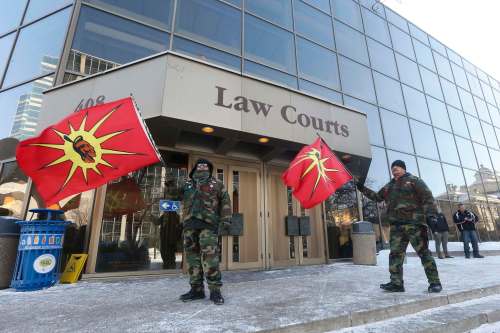
As the jury room door closed behind the seven women and four men who are now deliberating on the evidence against Tina Fontaine’s accused killer, Thelma Favel rose from the chair she’s occupied for most of Raymond Cormier’s second-degree murder trial.

Almost every day over the past three weeks, Favel, the woman who raised 15-year-old Tina, has sat right up front, directly across from the jury box, listening, sobbing and soaking in disturbing details of the teen’s last days that have come to light over the course of Cormier’s second-degree murder trial.

On Wednesday afternoon, after Court of Queen’s Bench Chief Justice Glenn Joyal instructed the jury and sent them off to be sequestered until they decide whether 56-year-old Raymond Cormier is guilty of killing Tina, Favel got up and hugged Crown prosecutor Breta Passler. It was one of many moments, this one shielded from jurors, that have long since proven the emotional impact of the case and the lasting power of Tina’s legacy.

Tina’s death sparked a public outcry that renewed calls for a national inquiry into disproportionately high rates of missing and murdered Indigenous women and girls across Canada, and the criminal trial for the man accused of killing her hasn’t happened in a vacuum.

Read
Thursday, Feb. 22, 2018

Three’s company for new netminder Daws

Mike McIntyre 6 minute read Preview

Three’s company for new netminder Daws

Mike McIntyre 6 minute read 5:09 PM CDT

TAMPA — Nico Daws is still trying to catch his breath.

An unexpected piece of the Connor Hellebuyck blockbuster. A chaotic crash course in his latest hockey home. Joining a fragile club mired in a prolonged losing streak. And now, hitting the road for four tough tests, including one where he will find himself as the last line of defence.

It’s been quite the ride for the newest Winnipeg Jets netminder, who took some time Thursday morning to reflect on the experience.

“A whirlwind of a week. I haven’t even really had time to sit down and digest it,” said Daws.

Read
5:09 PM CDT

Moving past the Indian Act will take time and trust

Niigaan Sinclair 5 minute read Preview

Moving past the Indian Act will take time and trust

Niigaan Sinclair 5 minute read 4:52 PM CDT

If I had a dime for every time a politician has called for the “abolishment”of the Indian Act, I’d be a rich man.

OK, maybe I’d have enough coins to jingle loudly in my pocket.

My point: a Canadian leader calling for the end of the race-based law passed in 1867 that is designed to give the federal government broad and brutal control over First Nations governments, membership, and reserve land is nothing new.

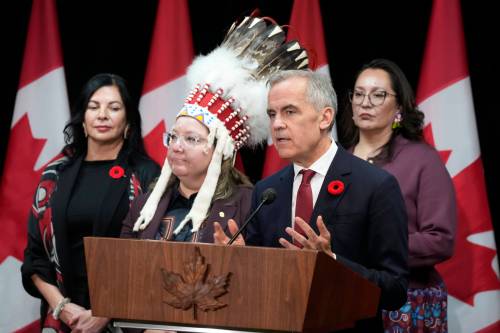
Premier Wab Kinew became the latest to advocate for this, during the First Nations-first ministers meeting in Ottawa this week.

Read
4:52 PM CDT

Railways report more accidents with dangerous goods

Dylan Robertson 6 minute read Preview

Railways report more accidents with dangerous goods

Dylan Robertson 6 minute read Monday, Jan. 20, 2020

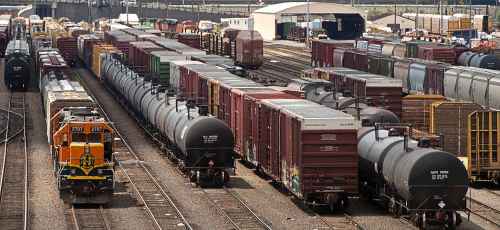
OTTAWA — The number of rail accidents involving dangerous goods more than doubled in Canada in 2018.

There were 25 accidents involving dangerous goods in 2018, involving one death, according to Transport Canada data published Monday.

There were 11 accidents recorded a year prior, and five in 2016.

These accidents involve dangerous goods — flammable or corrosive substances — that either exploded or leaked.

Read
Monday, Jan. 20, 2020

City rec facilities crumbling

Ryan Thorpe 6 minute read Preview

City rec facilities crumbling

Ryan Thorpe 6 minute read Monday, Oct. 22, 2018

Throughout Winnipeg, decades-old community assets — pools, arenas and recreation and leisure centres — are deteriorating so quickly that service disruptions are inevitable.

Meanwhile, the city’s community services department, which is responsible for managing those assets, operates with an annual deficit of roughly $80 million, meaning there are scant resources to do little more than bail water on a sinking ship.

Soon, Winnipeggers will have a choice: fewer community services or higher costs.

“It poses a huge challenge because we have very limited dollars that we have to invest in our existing facilities. We also have growing demands for new amenities in new areas. We have to be very strategic,” said Ken McKim, manager of asset management for the department.

Read
Monday, Oct. 22, 2018

Submit a news tip

1 minute read Monday, Mar. 16, 2026

Submit a news tip