Now not the time to talk about breaking with the monarchy, Trudeau says

Advertisement

Advertise with us

OTTAWA - Prime Minister Justin Trudeau said Tuesday he's eager for a debate over the future of the monarchy in the wake of allegations of racism at Buckingham Palace.

Read this article for free:


By clicking the button above, an account will be created and you will begin to receive some of our recommended newsletters. You may opt out of any newsletter by visiting your Email and Communication Preferences page or by clicking "unsubscribe" at the bottom of any email.

or

Already have an account? Log in here »

To continue reading, please subscribe:

Digital Subscription

One year of digital access for only $1.44 a week*

  • Enjoy unlimited reading on winnipegfreepress.com
  • Read the E-Edition, our digital replica newspaper
  • Access News Break, our award-winning app
  • Play interactive puzzles

*Billed as $5.77 plus GST every four weeks. After 52 weeks, price increases to the regular rate of $19.95 plus GST every four weeks. Offer available to new and qualified returning subscribers only. Cancel any time.

To continue reading, please subscribe:

Add Free Press access to your Brandon Sun subscription for only an additional

$1 for the first 4 weeks*

  • Enjoy unlimited reading on winnipegfreepress.com
  • Read the E-Edition, our digital replica newspaper
  • Access News Break, our award-winning app
  • Play interactive puzzles
Start now

*Your next Brandon Sun subscription payment will increase by $1.00 and you will be charged $17.95 plus GST for four weeks. After four weeks, your payment will increase to $24.95 plus GST every four weeks.

Hey there, time traveller!
This article was published 09/03/2021 (2059 days ago), so information in it may no longer be current.

OTTAWA – Prime Minister Justin Trudeau said Tuesday he’s eager for a debate over the future of the monarchy in the wake of allegations of racism at Buckingham Palace.

Accusations from Prince Harry and Meghan, Duchess of Sussex, that racism was the driving force behind their exit from royal duties and departure from Britain have set off a heated debate within the Commonwealth about future ties to the Queen.”If people want to later talk about constitutional change and shifting our system of government, that’s fine, and they can have those conversations,” Trudeau told reporters Tuesday,

“But right now, I’m not having those conversations. I’m focused on getting us through this pandemic and bringing our economy roaring back.”Trudeau said Canada still has work to do to eliminate discrimination and systemic racism in its institutions, but that’s doesn’t mean casting them aside and starting from scratch.Both the NDP and Bloc Québécois leaders say the allegations are further proof the monarchy is no longer relevant to everyday Canadians and should be abolished.

A man watches a phone screen showing an interview of Prince Harry and Meghan, The Duchess of Sussex, by Oprah Winfrey, in London Monday, March 8, 2021. THE CANADIAN PRESS/Aaron Chown/PA via AP

“I don’t see that the benefit of the monarchy in Canadians’ lives,” Singh said.,

“Now, even more so, with concerns about racism in the institution that were raised and pressures that were placed on Meghan Markle, just again highlight that exists at that institution and that is also horrible.”

In an interview with Oprah Winfrey that aired Sunday, the couple alleged that questions about what skin colour their children would have and a failure by the “institution” to push back against racist coverage in the British press ultimately led them to conclude they had to make a break.

For a time, the duo lived in Canada but when it became clear no security was going to be offered to keep them safe and the borders were about to slam shut around the world due to the pandemic, they decided to move to the United States.

The Liberals are still working on replacing the Queen’s representative in Canada, the governor general, after Julie Payette resigned earlier this year following revelations of a toxic workplace at Rideau Hall.

Intergovernmental Affairs Minister Dominic Leblanc said while he’d hoped to have nailed down a process for choosing a successor to Payette a couple of weeks ago, the final pieces are now being put into place and should be unveiled imminently.

He too refused to comment on the situation now faced by the Queen, also saying he hadn’t watched the interview.This report by The Canadian Press was first published March 9, 2021.

Report Error Submit a Tip

More Stories

AI and the quiet erosion of human judgment

Rod Lastra 5 minute read 2:00 AM CDT

In 1986, Paul Simon sang of “days of miracle and wonder” in the song The Boy in the Bubble, from his Graceland album. It was hardly a hymn to progress. Scientific ingenuity coexisted with violence and vulnerability. The world was becoming more technologically capable but not necessarily wiser.

Four decades later, I find the sentiment difficult to improve upon. Since ChatGPT’s release in November 2022, predictions about AI have arrived in rapid succession. Sam Altman, Dario Amodei, Elon Musk and others in the tech industry’s so-called “broligarchy” have fuelled recent headlines about approaching “superintelligence” and futures ranging from human flourishing to catastrophe. The advances are real but the predictions often carry more confidence than evidence. The future, it seems, is permanently scheduled for an upgrade.

Yet a more immediate question risks being lost — as AI systems become more capable and we delegate increasingly complex work to them, will our capacity to understand, question and oversee their outputs keep pace?

That question begins with understanding what we are delegating. AI is not a single technology. Specialized systems have helped scientists predict protein structures. ChatGPT relies on general-purpose language models trained on vast datasets. The most advanced systems are often called “frontier models”. They can write, translate, analyze and converse across subjects, but fluency does not guarantee accuracy. Success at one task does not establish competence at another.

Fact Check

1 minute read Thursday, Nov. 30, 2023

Fact Check

Having problems with the form?Contact Us Directly |

La lang di Michif ta-pashipiikan

By Melissa Martin and Ruth Bonneville 24 minute read Preview

La lang di Michif ta-pashipiikan

By Melissa Martin and Ruth Bonneville 24 minute read Saturday, Sep. 25, 2010

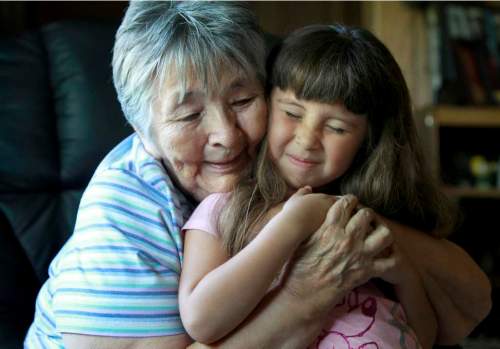
CAMPERVILLE, MAN. -- Seated in the living room of her tiny, impeccably ordered house, Grace Zoldy takes a little girl's hand and begins a language lesson.

"La viande," the woman says, her hazel eyes dancing under a fringe of silver bangs. "That means meat."

"Deux poisson," she says next, a nod to the goldfish circling a nearby tank. The little girl likes to come watch them. "Two fish."

The sounds are familiar to anyone who took elementary-school French. But Zoldy is not French, and her words aren't either: they are something rare, something studied in universities in countries that Grace, when she was learning these words as a toddler in Camperville, didn't know existed.

Read
Saturday, Sep. 25, 2010

Remembering Canada’s first national internment

Peter Manastyrsky 4 minute read Preview

Remembering Canada’s first national internment

Peter Manastyrsky 4 minute read 2:00 AM CDT

Canada’s first national internment operation, from 1914 to 1920, is a part of Canadian history that is at times forgotten. Oct. 28 marks the anniversary of the Canadian government passing an order-in-council (essentially an executive decree) in 1914, under the War Measures Act. The order legally authorized the arrest and internment of Canadian civilians as enemy aliens during the First World War, and thousands of Canadians were sent to internment camps across the country.

The war of 1914-18 created difficulty for new Canadians hoping to become naturalized citizens. Many new immigrants to Canada came from regions of Europe that was under the rule of the Austro-Hungarian Empire at the start of the First World War.

The Canadian government, under Prime Minister Sir Robert Borden introduced internment camps throughout Canada, fearing that many eastern European immigrants would have some form of affiliation with the Austro-Hungarian Empire.

Even though there was never any evidence of disloyalty, people were imprisoned needlessly and forced to do heavy labour in 24 internment camps throughout Canada’s frontier hinterland. There were two identified internment camps in Manitoba, one in Brandon and the other in Winnipeg.

Read
2:00 AM CDT

One-day conference for health-care technology

Free Press staff 1 minute read Yesterday at 2:01 AM CDT

Indigenous leaders and bioscience professionals are gathering this week to promote health-care technology in northern communities.

Bioscience Association Manitoba is hosting its second annual Indigenous Health Innovations conference on Thursday, a day after the World Indigenous Business Forum ends its Winnipeg tenure.

“We fly a lot of people in the North to get access for care for things that technology can actually give them,” said Andrea Ladouceur, Bioscience Association Manitoba’s president.

For example, Manitobans may hop on a plane for a strep throat test when they don’t need to, she said.

Lula’s historic Brazilian election victory

Peter McKenna 5 minute read Preview

Lula’s historic Brazilian election victory

Peter McKenna 5 minute read Yesterday at 2:01 AM CDT

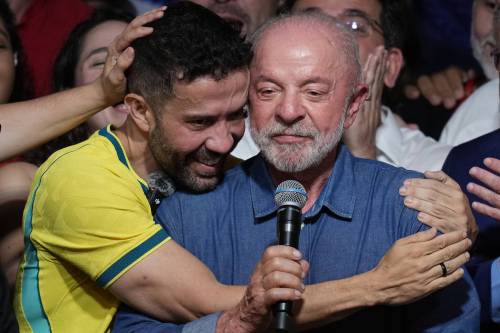
This was supposed to go down as one of the closest presidential elections in Brazilian history — until it wasn’t. In the end, 80-year-old leftist President Luiz Inácio (Lula) da Silva of the Workers Party bested (by some four million votes) Flávio Bolsonaro, the hard-right Liberal Party leader and senator, by a lopsided 3.5 per cent of the popular vote.

Speaking of Brazilian history, it rarely happens that the second-place finisher in the first round ends up winning the second, run-off contest in such a decisive manner. More significant, Lula has now won an unprecedented (non-consecutive) fourth term as an elected Brazilian president.

While Bolsonaro has waffled on making a concession speech (like his father in 2022), the writing on the wall shows clearly that he lost badly. He has evidently taken issue with a ruling by a justice of the Supreme Court that extended polling hours country-wide by an additional two hours in light of high voter turnout and other interruptions.

Flávio’s supporters, many galvanized around the “never Lula” camp, were desperate for change — even if it meant the kind of change that could turn Brazil on its head. So Lula resorted to one of the oldest political tricks in the campaign handbook — namely, using fear of an anti-democratic Bolsonaro to swing voters to his side (along with a host of last-minute announcements involving financial incentives to Brazilians). With a right-leaning Congress, voters were understandably worried that Flávio would go about systematically dismantling Brazil’s democratic ethos and institutions.

Read
Yesterday at 2:01 AM CDT