Province announces $5-M program to help restaurants with code-red delivery costs

Advertisement

Advertise with us

The Progressive Conservative government is providing $5 million to restaurants that have been hard hit by recent code-red restrictions.

Read this article for free:


or

Already have an account? Log in here »

To continue reading, please subscribe:

Subscribe and receive a limited-edition Free Press branded hat or tote.

Digital Subscription

One year of digital access for only $205*

  • Enjoy unlimited reading on winnipegfreepress.com
  • Read the E-Edition, our digital replica newspaper
  • Access News Break, our award-winning app
  • Play interactive puzzles

*First annual payment billed as $205.00 + GST for one year. This annual subscription will automatically renew at $233.00 + GST every 52 weeks (10% off the regular annual price of $259.35). Offer available to new and qualified returning subscribers only. Cancel any time.

To continue reading, please subscribe:

Add Free Press access to your Brandon Sun subscription for only an additional

$1 for the first 4 weeks*

  • Enjoy unlimited reading on winnipegfreepress.com
  • Read the E-Edition, our digital replica newspaper
  • Access News Break, our award-winning app
  • Play interactive puzzles
Start now

*Your next Brandon Sun subscription payment will increase by $1.00 and you will be charged $17.95 plus GST for four weeks. After four weeks, your payment will increase to $24.95 plus GST every four weeks.

Hey there, time traveller!
This article was published 22/12/2020 (2056 days ago), so information in it may no longer be current.

The Progressive Conservative government is providing $5 million to restaurants that have been hard hit by recent code-red restrictions.

The money will be given to dine-in establishments that have had to transform their businesses to a meal-delivery service model due to public health orders.

The funds will cover the delivery costs they’ve incurred since they were forced to shut down their eat-in business in November.
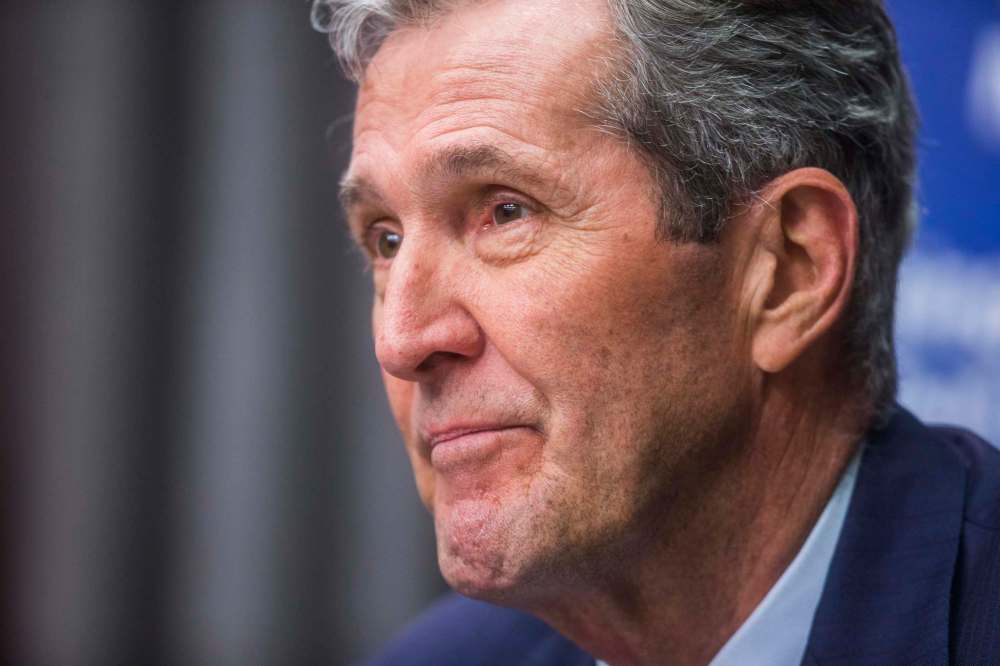
On Tuesday, Premier Brian Pallister announced the $5-million Dine-in Restaurant Relief Program aimed at helping restaurants hit hard by code-red restrictions. (Mikaela MacKenzie / Winnipeg Free Press files)

Premier Brian Pallister said Tuesday the restaurant industry has made significant sacrifices to help halt the spread of COVID-19.

“This will help bridge our businesses through this challenging time,” he said of the initiative.

The Dine-in Restaurant Relief Program will be delivered by the Manitoba Chambers of Commerce in partnership with the Manitoba Restaurant and Foodservices Association.

Chuck Davidson, president and CEO of the chambers of commerce, said business had recommended the measure to government as a way of aiding the struggling restaurant industry.

“We’re pleased that the province agreed with that and we look forward to being able to roll out the details… as soon as possible,” he said.

Restaurants will qualify for rebates on their expenses whether they’ve established their own delivery service or use a third party.

The expectation is that the program will be in place until the code-red restrictions are lifted. The restrictions are currently scheduled to be in place until Jan. 8.

Davidson said an online application form should be available through his organization and the MFRA in about a week. The latter group has about 2,000 members, although not all will qualify for the program. Established meal delivery services will not be eligible for the subsidy.

Once the program is running, restaurants will likely submit invoices for their delivery costs one month at a time, beginning for expenses incurred in November. Payouts would begin in January.

“My goal with this program is, I want to give away the entire $5 million to restaurants that are challenged as a result of code red.” – Chuck Davidson

“My goal with this program is, I want to give away the entire $5 million to restaurants that are challenged as a result of code red,” Davidson said.

Shaun Jefferey, executive director of MFRA, said the program will help lift the spirits of restaurateurs during the holiday season.

“In a time when the restaurant industry in Manitoba has experienced significant revenue losses due to the pandemic and code red restrictions, we are pleased to see our provincial government creating this initiative to ensure some of the additional expenses of operating during this unprecedented time are recognized,” he said in a statement accompanying the announcement.

— with files by Carol Sanders

larry.kusch@freepress.mb.ca

Larry Kusch

Larry Kusch
Legislature reporter

Larry Kusch didn’t know what he wanted to do with his life until he attended a high school newspaper editor’s workshop in Regina in the summer of 1969 and listened to a university student speak glowingly about the journalism program at Carleton University in Ottawa.

Our newsroom depends on a growing audience of readers to power our journalism. If you are not a paid reader, please consider becoming a subscriber.

Our newsroom depends on its audience of readers to power our journalism. Thank you for your support.

History

Updated on Tuesday, December 22, 2020 4:31 PM CST: Adds comments from Shaun Jefferey, Chuck Davidson


Report Error Submit a Tip

More Stories

Israel: the new political divide?

David McLaughlin 5 minute read Preview

Israel: the new political divide?

David McLaughlin 5 minute read Yesterday at 2:02 AM CDT

Abdul won and Avi is thrilled.

Federal NDP Leader Avi Lewis emerged from electoral hiding to tell us how it is “exhilarating to witness” a “wave of progressive populism” in the United States. He was referring to the upset winner of Tuesday’s heavily-watched Michigan Senate primary race, Abdul El-Sayed, who barely prevailed over his establishment opponent for the Democratic nomination.

Premier Wab Kinew’s favourite New Democrat (after himself) steadfastly hesitates to take a risk and run for a House of Commons seat in a byelection to kickstart Canada’s version of progressive populism. No hesitation, though, in Lewis immediately basking in the reflected glory of those international comrades and fellow travellers who do.

Writing about the state of Canada’s New Democrats feels like a hate crime — you hate wasting your time — and this is no exception. A better story is what’s driving this modest but undeniable political movement in U.S. politics and whether it might gain traction here in Canada.

Read
Yesterday at 2:02 AM CDT

Suspension upheld for teen hockey player involved in hazing

Free Press staff 3 minute read Preview

Suspension upheld for teen hockey player involved in hazing

Free Press staff 3 minute read 2:10 PM CDT

A high school hockey player who was found to have been involved in sexualized hazing of rookie teammates lost his suspension appeal.

The youth player was barred from Hockey Canada-sanctioned activities. He was handed the four-year and nine-month suspension from sanctioned hockey after an interim ban issued in March 2024.

He appealed his suspension late last year to the Sport Dispute Resolution Centre of Canada, an independent conflict tribunal, but the centre upheld the youth’s suspension, according to a written decision issued earlier this year.

An independent investigator who probed the hockey player’s actions described the youth as a veteran player who both participated in and co-ordinated the “assigning” of rookie team members to veteran players to perform tasks for them. He himself was “assigned” a rookie, the decision said.

Read
2:10 PM CDT

Cinderella story continues, Sea Bears bounce Bandits in Conference Final

Joshua Frey-Sam 6 minute read Preview

Cinderella story continues, Sea Bears bounce Bandits in Conference Final

Joshua Frey-Sam 6 minute read Yesterday at 7:03 PM CDT

Just days ago, the Winnipeg Sea Bears were at rock bottom.

The losses had piled up, and the star talent had dwindled. The noise around the club grew, and the confidence from outside the building faded by the day.

Players and coaches alike conveyed the belief that persisted internally, but you wouldn’t fault some fans if those words fell on deaf ears.

Less than a week later, the undermanned and underestimated Sea Bears find themselves two wins away from the tippy top of the Canadian Elite Basketball League’s mountain after a second-straight convincing playoff victory, this time a 107-96 decision over the Vancouver Bandits in the Western Conference Final at the Langley Events Centre in British Columbia on Saturday.

Read
Yesterday at 7:03 PM CDT

Watching while we work

Tory McNally 7 minute read Preview

Watching while we work

Tory McNally 7 minute read Yesterday at 2:02 AM CDT

For many employees, the idea that their employer might be tracking how long they spend at their keyboard, how often they move their mouse, or whether they are actively working throughout the day feels unsettling. For many employers, however, workplace surveillance is increasingly viewed as another management tool, particularly as hybrid and remote work become more common. The recent news that TD plans to monitor certain employees’ activity during the workday has reignited a conversation that has been quietly growing for several years: where is the line between legitimate oversight and excessive monitoring?

The reality is that workplace surveillance is nothing new. Employers have long monitored attendance, reviewed security camera footage, tracked company vehicles using GPS, audited expense reports, and reviewed internet usage on company-owned devices. What has changed is the sophistication of the technology. Today’s software can record login times, monitor application usage, track keystrokes, capture screenshots, analyze email activity, and even generate reports ranking employees based on their perceived productivity.

This naturally raises an important question. Does increased surveillance actually make people work harder?

The answer is not nearly as straightforward as many organizations hope.

Read
Yesterday at 2:02 AM CDT

The Latest: Schwarz inspired by Kriechmayr at skiing worlds

The Associated Press 5 minute read Preview

The Latest: Schwarz inspired by Kriechmayr at skiing worlds

The Associated Press 5 minute read Monday, Feb. 15, 2021

CORTINA D'AMPEZZO, Italy - The Latest from the skiing world championships (all times local):

___

4:20 p.m.

Combined champion Marco Schwarz says he was inspired by the two gold medals Austrian teammate Vincent Kriechmayr has won at this year's skiing world championships.

Read
Monday, Feb. 15, 2021

Police conduct code long overdue

Editorial 4 minute read Preview

Police conduct code long overdue

Editorial 4 minute read Tuesday, Mar. 22, 2022

It may come as a surprise to many that Manitoba does not have a province-wide code of conduct for police officers. Most other provinces do. Manitoba has had the authority under the Police Services Act since it was passed in 2009 to establish formal rules around policing activity, including mechanisms to respond to allegations of officer misconduct. For reasons neither the former NDP or current Progressive Conservative governments have explained, none was ever put in place.

What Manitobans are left with is a patchwork system that differs from one municipality to the next. It is neither open and transparent nor does it provide the public with an effective process to hold police officers accountable for their actions. Some allegations of non-criminal misconduct are heard by the province’s Law Enforcement Review Agency. However, most complaints made through LERA (a process that has been widely criticized as dysfunctional and ineffective), rarely receive full hearings and almost never result in officer discipline. Allegations of criminal behaviour are investigated through the province’s Independent Investigation Unit.

Justice Minister Kelvin Goertzen says the province intends to create a new set of rules that will govern the conduct of all police officers in the province. The minister introduced Bill 30 last week, amendments to the Police Services Act, which among other things restates government’s ability to establish a province-wide code of conduct.

The wording in the bill is similar to what already exists in the act. The difference now, at least according to Mr. Goertzen, is there is a stated intention to move forward on creating a province-wide code, although it remains discretionary under the proposed legislation.

Read
Tuesday, Mar. 22, 2022