Restrictions don’t have to crumble your cookie game

The classic oatmeal-chocolate chip goes gluten-free, vegan

Advertisement

Advertise with us

Dietary restrictions can take much of the comfort and joy out of the holidays.

Read this article for free:


By clicking the button above, an account will be created and you will begin to receive some of our recommended newsletters. You may opt out of any newsletter by visiting your Email and Communication Preferences page or by clicking "unsubscribe" at the bottom of any email.

or

Already have an account? Log in here »

To continue reading, please subscribe:

Digital Subscription

One year of digital access for only $1.44 a week*

  • Enjoy unlimited reading on winnipegfreepress.com
  • Read the E-Edition, our digital replica newspaper
  • Access News Break, our award-winning app
  • Play interactive puzzles

*Billed as $5.77 plus GST every four weeks. After 52 weeks, price increases to the regular rate of $19.95 plus GST every four weeks. Offer available to new and qualified returning subscribers only. Cancel any time.

To continue reading, please subscribe:

Add Free Press access to your Brandon Sun subscription for only an additional

$1 for the first 4 weeks*

  • Enjoy unlimited reading on winnipegfreepress.com
  • Read the E-Edition, our digital replica newspaper
  • Access News Break, our award-winning app
  • Play interactive puzzles
Start now

*Your next Brandon Sun subscription payment will increase by $1.00 and you will be charged $17.95 plus GST for four weeks. After four weeks, your payment will increase to $24.95 plus GST every four weeks.

Hey there, time traveller!
This article was published 14/12/2020 (2148 days ago), so information in it may no longer be current.

Dietary restrictions can take much of the comfort and joy out of the holidays.

For those who live with celiac disease and its symptoms, all sorts of Christmas goodies, whether sweet or savoury, are out of the question. So many recipes, whether they are main courses or, especially, desserts, are flour-based.

For those who decide to choose vegan or vegetarian diets, ensuring a dish’s ingredients do not include animal byproducts is no simple matter either. It’s easy to avoid turkey but many dishes that have a large number of ingredients, such as desserts, are often set aside. The use of butter and eggs, for instance, is commonplace.
MIKE DEAL / WINNIPEG FREE PRESS
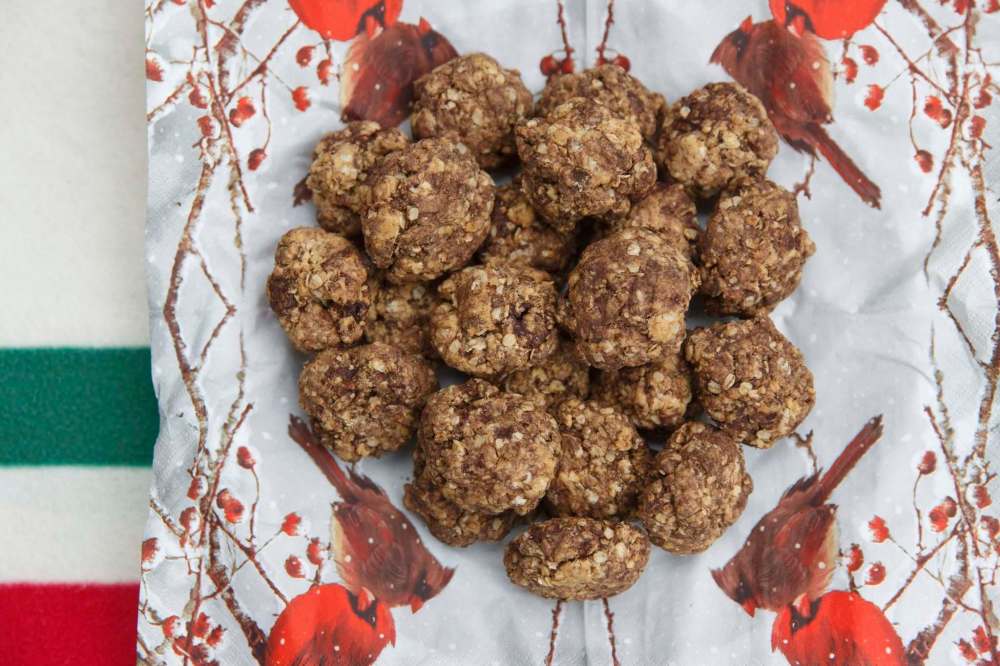
Vegan-friendly, gluten-free chocolate chip cookies
MIKE DEAL / WINNIPEG FREE PRESS Vegan-friendly, gluten-free chocolate chip cookies

Most people on gluten-free diets find out the hard way their bodies are intolerant to the protein found in wheat, barley, rye and other grains.

“I’ve been off of gluten for about 15 years because my doctor did suggest that I was likely glucose intolerant, and in fact it has made all the difference for me,” says Janine LeGal, a writer, English teacher and tutor who began following a gluten-free diet about 15 years ago.

She began following a vegan lifestyle shortly thereafter.

“I was going through a lot of health issues at the time, and as soon as I made the change, everything improved. It made a huge difference in my life. I was kind of miserable for quite some time and I didn’t realize what was happening to me.”

LeGal says she has since taken many food and nutrition classes, not only to eat healthier, but to make her meals more flavourful.

“Just going vegan was challenging because you can be an unhealthy vegan and I was initially that, so I decided to learn,” she says. “I love cooking for people all the time. During the pandemic, my way of cheering people up is to bring them some homemade soup.”

Peer pressure is another factor those with dietary restrictions must confront. There may be less of that this year, with COVID-19 restrictions against gatherings in December, but during a regular holiday season interactions with family, friends or co-workers can add more stress for people who need to avoid products with gluten or those that come from animals.

“That happens a lot at Christmastime and weddings as well. I’ve been to a few weddings where I’ve literally eaten nothing while others around me hoovered down large amounts of food,” LeGal says.

With that in mind, LeGal has shared today’s recipe for the Free Press’s 12 Days of Christmas Cookies, which began Dec. 10 and runs daily in the paper, excluding Sundays, until Dec. 23. It comes from the Delicious Everyday website, which offers readers’ vegan and vegetarian recipes for visitors to try.

This recipe may make among the most standard of cookies — oatmeal chocolate chip — but it uses gluten-free baking flour instead of all-purpose flour and coconut oil instead of butter. But not all recipes can be so easily converted, she says.

“I do find ways of adjusting things, and veganizing things. I do a lot of experimenting, because if a regular recipe isn’t gluten-free and you try to make it such it doesn’t always turn out so well.”

So here is the recipe, which LeGal likes because it is simple and inexpensive. She often adds crushed walnuts, pecans and hemp seeds to boost the cookies’ crunch.
MIKE DEAL / WINNIPEG FREE PRESS
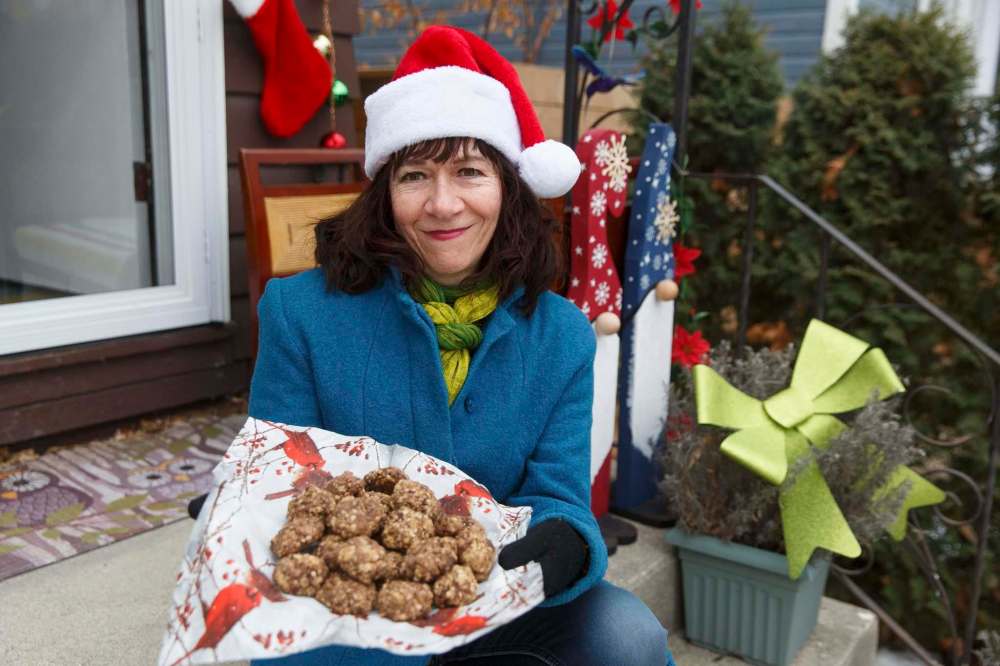
Janine LeGal‘s contribution to the Free Press’s 12 Days of Christmas Cookies is a vegan, gluten-free chocolate chip.
MIKE DEAL / WINNIPEG FREE PRESS Janine LeGal‘s contribution to the Free Press’s 12 Days of Christmas Cookies is a vegan, gluten-free chocolate chip.

Vegan Oatmeal Cookies


  • 250 ml (1 cup) melted coconut oil
  • 375 ml (11/2 cups) quick oats
  • 500 ml (2 cups) gluten free baking flour
  • 180 ml (3/4 cup) brown sugar
  • 5 ml (1 tsp) vanilla extract
  • 2.5 ml (1/2 tsp) salt
  • 5 ml (1 tsp) baking soda
  • 60 ml (1/4 cup) boiling water
  • 250 ml (1 cup) dark chocolate chips


Preheat oven to 175 C (350 F).

Melt the coconut oil. Mix in sugar, vanilla and boiling water.

Fold in oats, flour, salt and baking soda.

Mix in chocolate chips.

Using a 1-inch cookie-dough scoop, form balls of dough and place on baking sheet.

Bake for 10-12 minutes.

Alan Small

Alan Small
Reporter

Alan Small has been a journalist at the Free Press for more than 22 years in a variety of roles, the latest being a reporter in the Arts and Life section.

Our newsroom depends on a growing audience of readers to power our journalism. If you are not a paid reader, please consider becoming a subscriber.

Our newsroom depends on its audience of readers to power our journalism. Thank you for your support.

Report Error Submit a Tip

More Stories

Truckers convoy: How a TikToker, oil advocates and a Wexit organizer helped fire up the ‘Freedom Rally’ that’s heading to Ottawa

Kieran Leavitt - Edmonton Bureau,Alex McKeen - Vancouver Bureau, Toronto Star 7 minute read Preview

Truckers convoy: How a TikToker, oil advocates and a Wexit organizer helped fire up the ‘Freedom Rally’ that’s heading to Ottawa

Kieran Leavitt - Edmonton Bureau,Alex McKeen - Vancouver Bureau, Toronto Star 7 minute read Monday, Jan. 24, 2022

A GoFundMe raised more than $3 million to help the truckers with fuel, food and lodging.

Read
Monday, Jan. 24, 2022

Ottawa announces $500 million for North End sewage plant upgrade

Joyanne Pursaga 5 minute read Preview

Ottawa announces $500 million for North End sewage plant upgrade

Joyanne Pursaga 5 minute read Friday, Oct. 30, 2026

The federal government will provide $500 million to help complete the major upgrade to Winnipeg’s North End sewage treatment plant.

Winnipeg South MP Terry Duguid confirmed the total funding at a news conference at the plant Friday, calling the work critical to Winnipeg’s future.

“The stakes could not be higher. Without expanded wastewater treatment, Winnipeg would run out of capacity to build new homes and accommodate new industries within six years,” said Duguid.

The commitment offers the final funding needed to cover the $1.57-billion third and final phase of the upgrade. The city and province will also pay $500 million each for the work.

Read
Friday, Oct. 30, 2026

Listening after decades of hearing

Melissa Martin 7 minute read Preview

Listening after decades of hearing

Melissa Martin 7 minute read Friday, Oct. 1, 2021

It seemed that all of Canada glowed orange, in act or in mind. On the streets of Winnipeg, a sea of people marched in orange shirts, carrying orange signs. On social media, people shared text posts on orange backgrounds, urging more attention to the Truth and Reconciliation Commission's 94 calls to action.

Even city buses — though not orange — marked the day on their digital signs.

If you'd come to me 10 years ago and told me this week would happen, I wouldn't have believed you. If you'd told me that on the last day of September 2021, everything from a cocktail bar to a Botox clinic would close to remember the children and survivors of residential schools, I would have said you were telling me about a dream.

Not the kind we seek to create, but the kind that disintegrates upon waking.

Read
Friday, Oct. 1, 2021

The new normal in Canadian politics

David McLaughlin 5 minute read Preview

The new normal in Canadian politics

David McLaughlin 5 minute read Yesterday at 2:01 AM CDT

“Nothing happening, all at once.”

Welcome to the new normal of Canadian politics, where normality is the new normal. Routine and stable are in; disruptive and excessive are out. Exhibits A and B are the Alberta referendum and the British Columbia election. Voters opted for stability over volatility.

The opposite of being normal is being different from the norm. In politics that means different from where we’ve been and what we’ve come to expect. Two competing trends have dominated our politics for the past decade and a half — progressivism and populism. Think Justin Trudeau and liberal, progressive identity politics in Canada, and Donald Trump and conservative, populist MAGA politics in America. We are now experiencing a swing away from both those trends.

Representing this “new normal” are Prime Minister Mark Carney, for one, and newly elected British Columbia premier, Lorne Doerksen, for another. Both are considered normal because they talk and act like adults in a childish political world. Their political flair is to not have any political flair. They stand out for not standing out.

Read
Yesterday at 2:01 AM CDT

A little toponder, a lot to celebrate

Erna Buffie 5 minute read Yesterday at 2:01 AM CDT

Well, another civic election season has come and gone, and I have to say it was a doozy. The most surprising event was the steady climb in support for young mayoral candidate Noah Redden, who started out with just four per cent public support in September but had reached a solid 14 per cent support in October.

On election day, Redden nearly came in second, less than one percentage point behind Kevin Klein, an experienced politician.

Indeed, the 27-year-old’s accomplishment was nothing short of astonishing. Particularly given that his shoestring campaign was given very little coverage — largely, according to one pundit, because he didn’t send out any press releases.

This when Redden’s unwritten press releases were there for everyone to see on Instagram, as he popped up in locations across the city, posting videos about what he hoped to achieve as mayor.

Imperialist crusades: 21st-century style

John R. Wiens 5 minute read Preview

Imperialist crusades: 21st-century style

John R. Wiens 5 minute read Wednesday, Jul. 8, 2026

In the 11th century and lasting into the 13th, the papacy launched a series of at least eight military campaigns we now refer to as the Crusades, or Holy Wars. They were an imperialistic call to arms for Christians to retake Jerusalem, which was at the time under Muslim rule.

Spiritual rewards for participation were implied, and other incentives offered, to dull the extra taxation demanded to fund the campaigns. Over time, the “crusades” morphed to become massacres of not only Muslims but also Jews and Christian dissidents — in other words, any enemies of the papacy. If today’s news sounds like déjà vu all over again, it probably should.

The stories keep repeating themselves in many forms. We now know that two 20th century world wars, global in scope, were caused by imperialistic ambitions, changes in the balance of international powers and corresponding arms races. The first was attributed to the assassination of the heir to the Austro-Hungarian throne by a Bosnian Serb, a kind of “regime change” initiative. The second resulted from rising tensions between Allied and Axis powers, triggered by the rise of European fascism and Japanese militarism. The human toll of both was unimaginable.

In the First World War, 15 to 22 million people, including soldiers and civilians, were killed and another 23 million were wounded. These numbers do not account for those otherwise affected — victims of chemical warfare whose compromised health shortened their lives; of the subsequent Spanish flu epidemic amplified by the displacement of peoples; others who died from other diseases caused by war conditions; and those who were malnourished or starved. Nor do they account for the ongoing trauma and resentments passed on intergenerationally to this day.

Read
Wednesday, Jul. 8, 2026