Mayor urges Torontonians to stay home as COVID-19 cases rise in the city

Advertisement

Advertise with us

Toronto's mayor wants city residents to stay home unless it's absolutely necessary to go out.

Read this article for free:


By clicking the button above, an account will be created and you will begin to receive some of our recommended newsletters. You may opt out of any newsletter by visiting your Email and Communication Preferences page or by clicking "unsubscribe" at the bottom of any email.

or

Already have an account? Log in here »

To continue reading, please subscribe:

Digital Subscription

One year of digital access for only $1.44 a week*

  • Enjoy unlimited reading on winnipegfreepress.com
  • Read the E-Edition, our digital replica newspaper
  • Access News Break, our award-winning app
  • Play interactive puzzles

*Billed as $5.77 plus GST every four weeks. After 52 weeks, price increases to the regular rate of $19.95 plus GST every four weeks. Offer available to new and qualified returning subscribers only. Cancel any time.

To continue reading, please subscribe:

Add Free Press access to your Brandon Sun subscription for only an additional

$1 for the first 4 weeks*

  • Enjoy unlimited reading on winnipegfreepress.com
  • Read the E-Edition, our digital replica newspaper
  • Access News Break, our award-winning app
  • Play interactive puzzles
Start now

*Your next Brandon Sun subscription payment will increase by $1.00 and you will be charged $17.95 plus GST for four weeks. After four weeks, your payment will increase to $24.95 plus GST every four weeks.

Hey there, time traveller!
This article was published 12/11/2020 (2178 days ago), so information in it may no longer be current.

Toronto’s mayor wants city residents to stay home unless it’s absolutely necessary to go out.

John Tory focused Thursday on a renewed call for people to limit their movements to help curb the spread of COVID-19.

Tory said he understands that Ontario’s shift to a new colour-coded tiered system for COVID-19 restrictions, as well as measures imposed by the city, may have left people confused as to what they can and can’t do.

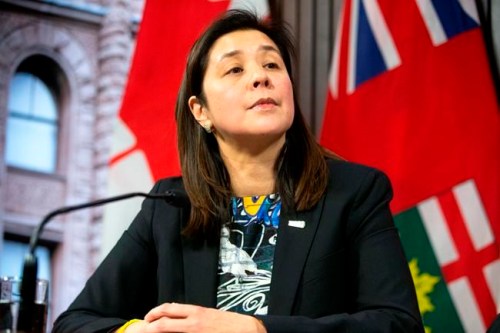
Dr. Eileen de Villa, Medical Officer of Health for the City of Toronto attends a news conference in Toronto, Monday, Jan. 27, 2020. Toronto Mayor John Tory and Dr. De Villa urging people to stay home this weekend and for the foreseeable future amid rising cases of COVID-19. THE CANADIAN PRESS/Chris Young

The key, he said, was to cut down on interactions with others to limit the transmission of the virus.

“I wanted to focus today not on the red or the green or the yellow or the Stage 1, 2, 6, 12, purple, none of that stuff – just stay home,” Tory said.

“Take every opportunity to stay home that you possibly can.”

The mayor went on to explain that if people have to leave their home for work then they should commute directly to and from their place of employment and not make any social calls or unnecessary stops along the way.

Outside of going to work, only a weekly trip to the grocery store or a visit to the pharmacy for needed supplies were advisable, said Tory.

Dr. Eileen De Villa, the city’s chief medical officer of health, echoed Tory’s sentiment, telling Torontonians “don’t become a case.”

“The best way to do that is to follow the steps for self-protection, especially now,” said De Villa. “Try to limit your contact to only the people you live with.”

The strong message came as Toronto is set to move to Ontario’s red zone of tiered restrictions on Saturday while imposing measures of its own that will extend certain restrictions that have been in place.

Indoor dining at bars and restaurants will remain closed in the city. Meeting spaces, movie theatres, and casinos in Toronto will also be ordered to remain closed.

Ontario announced a record high of 1,575 new COVID-19 cases on Thursday. Of those, 472 were in Toronto, with neighbouring regions Peel and York accounting for 448 and 155 new cases respectively.

Tory said his comments about the province’s colour-coded system of restrictions were not a criticism of Ontario’s policies, but an attempt to simplify them for the average person.

De Villa also unveiled a new automated calling service that will inform people if they have been in contact with someone who has COVID-19.

The list of phone numbers the automated system would call are generated from contact details of customers kept by businesses in case an outbreak is linked to the location.

This report by The Canadian Press was first published Nov. 12, 2020.

Report Error Submit a Tip

More Stories

Toronto mayor urges people to stay home

John Chidley-Hill, The Canadian Press 3 minute read Preview

Toronto mayor urges people to stay home

John Chidley-Hill, The Canadian Press 3 minute read Thursday, Nov. 12, 2020

Toronto's mayor wants city residents to stay home unless it's absolutely necessary to go out.

John Tory focused Thursday on a renewed call for people to limit their movements to help curb the spread of COVID-19.

Tory said he understands that Ontario's shift to a new colour-coded tiered system for COVID-19 restrictions, as well as measures imposed by the city, may have left people confused as to what they can and can't do.

The key, he said, was to cut down on interactions with others to limit the transmission of the virus.

Read
Thursday, Nov. 12, 2020

Is Canada headed for time chaos this weekend?

Michelle Bastian 5 minute read 2:00 AM CDT

When Manitoba Premier Wab Kinew declared Sept. 17 that the province would remain on permanent daylight time, he suggested it was a historical moment people would share with their “great-great-grandkids.” But, while Sunday, Nov. 1 has been heralded as the date many Canadians will stop changing their clocks, there are rumblings behind the scenes suggesting this will actually cause more trouble than ever before.

There are, of course, the warnings from chrono-biologists and sleep scientists about the damage permanent daylight time will do. The lighter evenings will mean many more dark mornings. But there is another set of problems in the offing in the critical infrastructure that underpins our digital lives.

While it used to be common to spend the Sunday morning after a time change going around our homes updating the clocks, we now wake up to devices that have already adjusted to the new time. These automatic updates occur regularly for daylight time, as well as when we travel to new time zones.

Our clocks are able to change by themselves owing to the hard work of a group of volunteers who were recently named in a list of the people who hold up the internet. This group, led by Paul Eggert, a computer scientist at UCLA, maintains a little-known tool called the Time Zone Database. Since the 1980s, it has kept track of regional, national and international debates about clock time and provided an up-to-date table of what time it should be on our walls.

A timeline of the WE Charity controversy

The Canadian Press 9 minute read Wednesday, Aug. 19, 2020

OTTAWA - A timeline of events regarding the Canada Student Service Grant program, based on public documents, events and statements from cabinet ministers, government officials, and WE Charity:

March 6, 2020: WE Charity staff prepare a concept paper on service learning for public servants at Employment and Social Development Canada.

April 5: Finance Minister Bill Morneau and Prime Minister Justin Trudeau talk over the phone about how to help students whose summer job and volunteer opportunities were vanishing due to the COVID-19 pandemic. Finance Department officials are tasked with considering options the next morning.

April 7: Small Business Minister Mary Ng and WE co-founder Craig Kielburger have an introductory phone call in which Ng asks WE to send what it calls a ``pre-established proposal'' to help young people launch businesses.

Must-see Folk Fest workshops

16 minute read Preview

Must-see Folk Fest workshops

16 minute read Thursday, Jul. 5, 2018

Workshops have always been an integral part of the Winnipeg Folk Festival.

They are magic-moment makers; a curated group of musicians — sometimes friends, sometimes strangers — on one stage playing together, supporting each other, creating something that will only exist for an hour or two. No one knows what will come out of the collaboration, but usually it’s something special.

When the Free Press spoke to Winnipeg Folk Festival artistic director Chris Frayer ahead of the lineup release in early March, he noted he would be paying some extra attention to workshops this year, as some of the special projects occurring during the past couple of festivals had pulled some of his attention away.

And with 37 workshops on the books, it would seem he followed through on his promise.

Read
Thursday, Jul. 5, 2018

Building healthier Canadians

Jason M. Sutherland 4 minute read 2:00 AM CDT

Ottawa is betting that billions of taxpayer dollars spent on steel, asphalt and concrete will secure Canada’s economic future and prosperity. Through the $51 billion Build Communities Strong fund, the federal government is paying for roads, bridges, water systems and transit to boost productivity and attract capital from Europe and Asia.

As the shovels hit the ground from Halifax to Vancouver, Canadians should be asking themselves: What good does it do to build a stronger country if we are not building healthier Canadians?

The fund’s $5 billion allocation for health infrastructure is welcome news, as many of our hospitals and long-term care homes across the country are showing severe signs of aging, and modern care centres are much needed. But pouring concrete for new facilities is not the same as building a healthy population.

A ribbon-cutting at a modern hospital does not guarantee you see a family doctor when you need one, keep a rural emergency department open overnight, or shorten the wait for a knee replacement keeping someone off the job or robbing a retiree of independence.

Manitoba family adopts Ukrainian children just before Russian invasion

Chris Kitching 7 minute read Preview

Manitoba family adopts Ukrainian children just before Russian invasion

Chris Kitching 7 minute read Wednesday, Mar. 30, 2022

When Trish Braun sees horrific images of Russia’s attack on Ukraine, the Manitoba mother is thankful she had enough time to flee from the country with her three adopted children.

Other Canadian families weren’t as fortunate, as Ukraine halted intercountry adoptions due to the Kremlin’s unprovoked invasion and war.

“I’m so thankful we were able to get out, but lots (of Ukrainians) don’t have the option of getting to leave,” said Braun, who lives in Grunthal, about 50 kilometres southeast of Winnipeg. “It’s hard to adjust to life here while our hearts are over there.”

Just days before Russia began its assault, Braun was staying in the Odesa region with the three Ukrainian children — siblings Daniel, 16, Lewis, 10, and Paige, 6 — that she and her husband, Mike, 43, had adopted from an orphanage.

Read
Wednesday, Mar. 30, 2022