Sub-zero cycling spikes
Winter pedallers now a common sight on city roads

Advertisement
Read this article for free:
or
Already have an account? Log in here »
To continue reading, please subscribe:
Digital Subscription
One year of digital access for only $1.44 a week*
- Enjoy unlimited reading on winnipegfreepress.com
- Read the E-Edition, our digital replica newspaper
- Access News Break, our award-winning app
- Play interactive puzzles
*Billed as $5.77 plus GST every four weeks. After 52 weeks, price increases to the regular rate of $19.95 plus GST every four weeks. Offer available to new and qualified returning subscribers only. Cancel any time.
To continue reading, please subscribe:
Add Free Press access to your Brandon Sun subscription for only an additional
$1 for the first 4 weeks*
- Enjoy unlimited reading on winnipegfreepress.com
- Read the E-Edition, our digital replica newspaper
- Access News Break, our award-winning app
- Play interactive puzzles
*Your next Brandon Sun subscription payment will increase by $1.00 and you will be charged $17.95 plus GST for four weeks. After four weeks, your payment will increase to $24.95 plus GST every four weeks.
Read unlimited articles for free today:
or
Already have an account? Log in here »
Hey there, time traveller!
This article was published 02/11/2020 (2178 days ago), so information in it may no longer be current.
Mia Douchant calls her chariot Red Lightning.
By her admission, it’s a “very old” Raleigh bike that she bought second-hand. The brakes, she says, are “a little questionable.” But this winter, whenever the library assistant commutes from downtown Winnipeg to the University of Manitoba, Red Lightning will carry her there. She normally carpools, but her co-pooler, a librarian, is still working from home.
“So it was either I drive myself, which I didn’t want to do, take the bus, which I didn’t want to do, or bicycle,” she says. With the pandemic raging, and public transit a bit overwhelming, Douchant chose the latter option — pedalling forward into several months of powder and slush in hopes of staying in shape and getting to work on time.
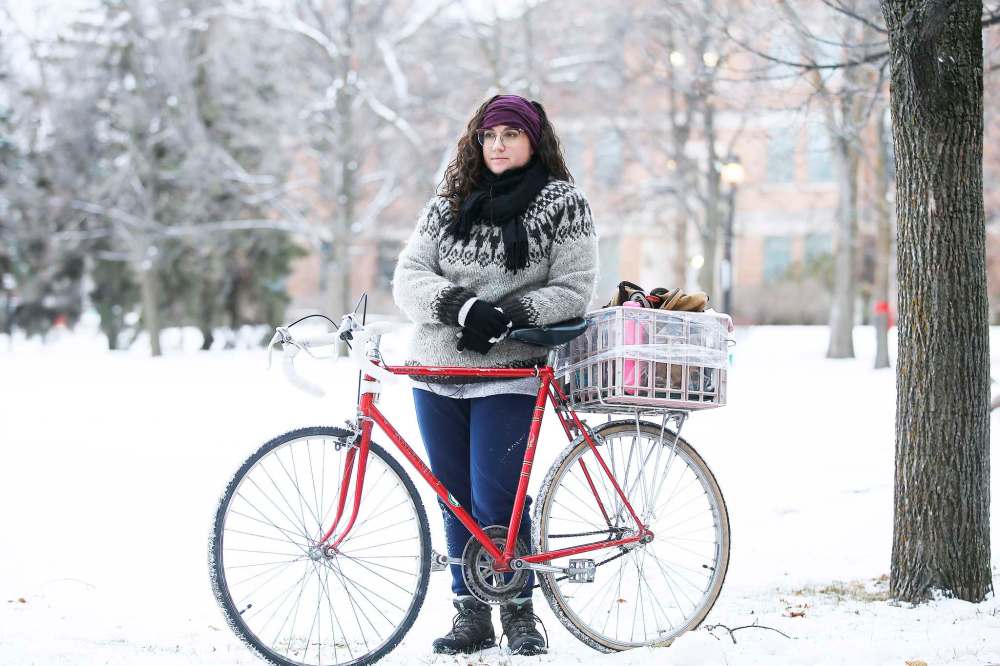
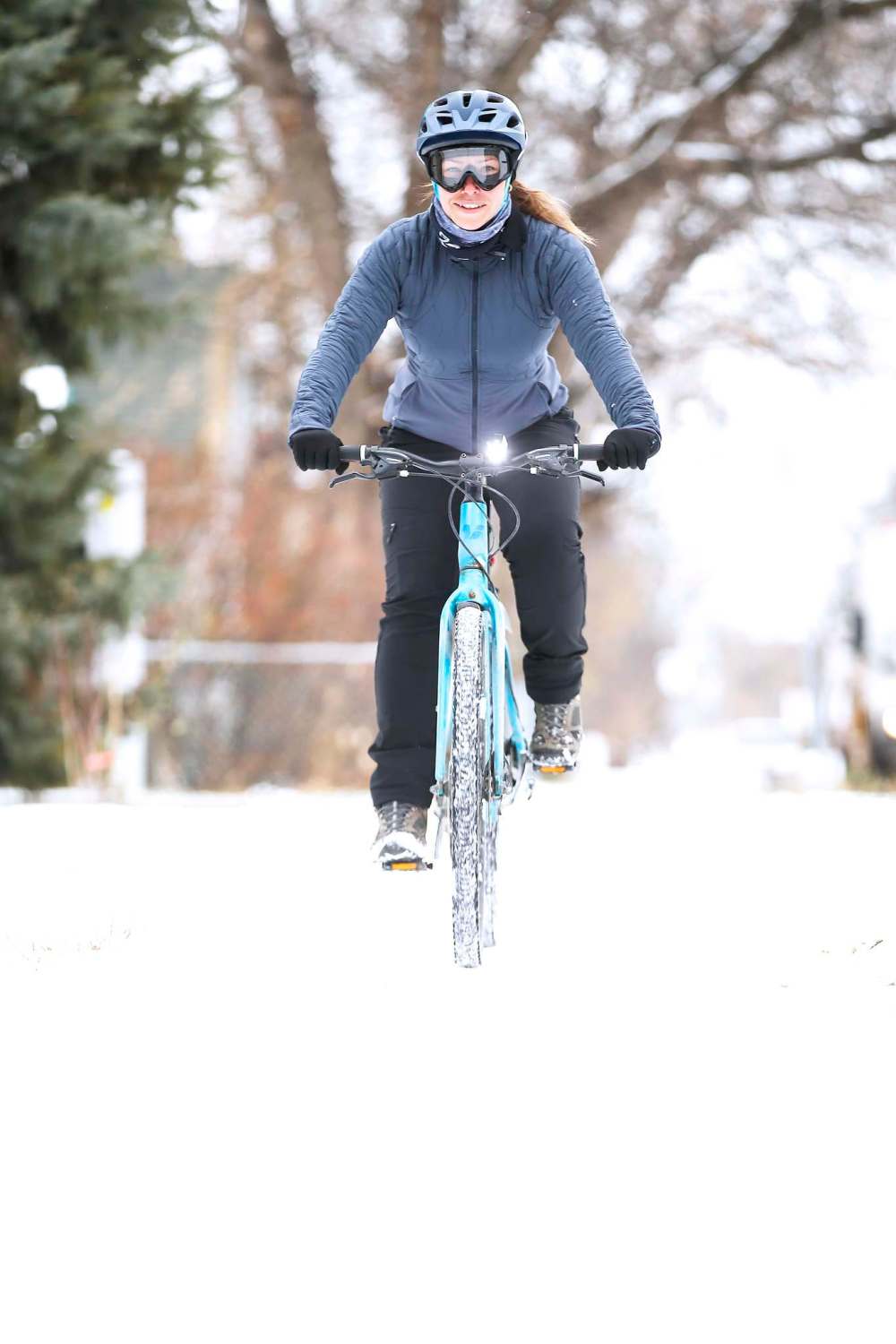
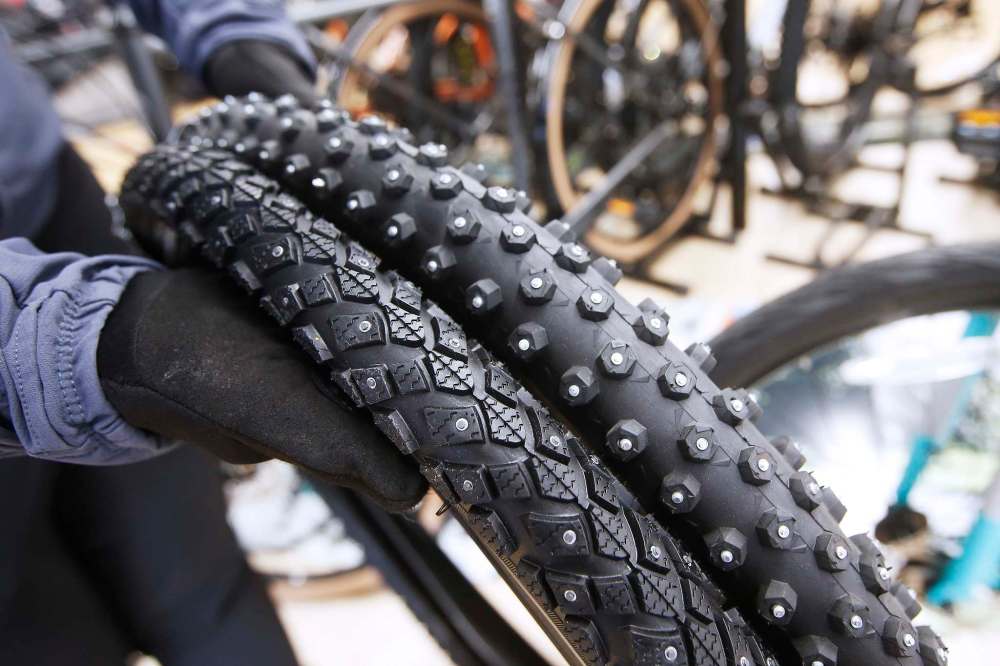
After getting wider tires, a studded front wheel, and converting her two-wheeler into a single-speed drivetrain, Douchant started riding to and from work — a 10-kilometre trek each way — in the snow. “It’s tough so far, but online, everyone says it gets better,” she says.
There might have been a time when Red Lightning stood out on the city’s roadways, but winter cycling has gone from obscurity to commonality in recent years. Much of that has to do with upgrades to the biking grid and the proliferation of “fat” bikes, rides with wider, stable tires, local enthusiasts say, but just as much has to do with the fact those riding during the winter no longer feel quite as alone out there.
“I don’t recall getting any sideways looks,” says Karin McSherry, who’s been riding in the winter since 1997. “But I don’t recall too many others out there.” Now, watch a snow-covered street for a few minutes, and you’ll likely see a bike roll on by.
This winter, the number of winter cyclists has no doubt been increased by the pandemic: many people, like Douchant, have had to rethink their means of conveyance, and others, like Eric Timperman, were inspired to make the change when co-workers weren’t calling it quits when the snow fell.
Timperman, a double bassist with the Winnipeg Symphony Orchestra, said he also wanted to drive less, saving money on parking and gas while also reducing his ecological footprint. (He doesn’t plan on carrying his instrument while biking, sparing himself a hernia). “It just seemed to be a good time to dip my toes in the water,” he said. “I’m a total beginner.”
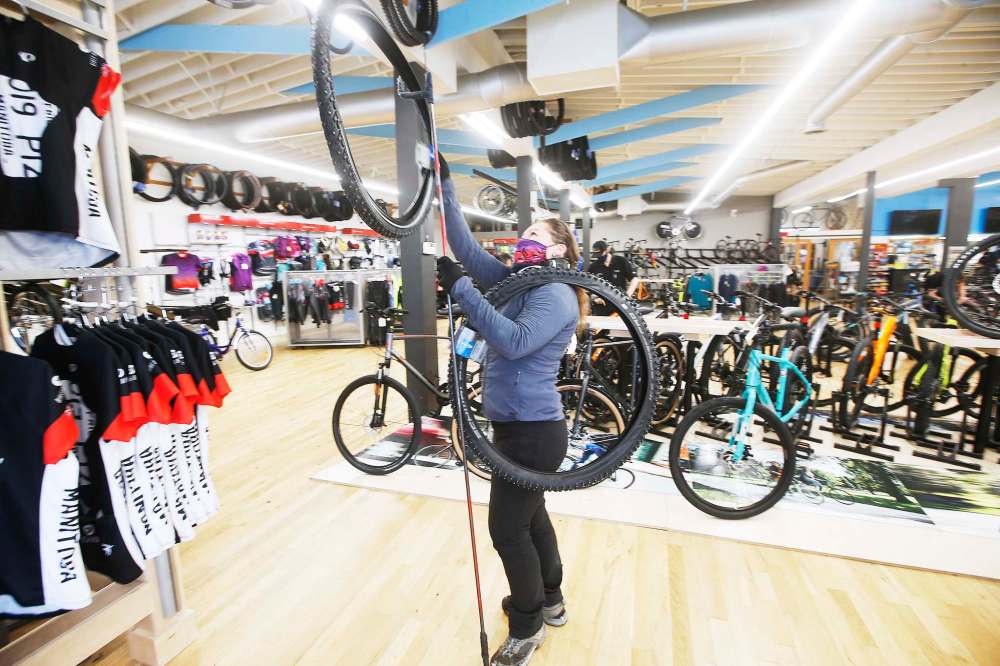
Last week, Timperman went with a colleague to Bikes and Beyond on Henderson Highway to take stock of the stock. They settled on a Norco Indie4 with studded tires and mechanical brakes, which work better in the cold. It’s ordered, and Timperman is both excited and apprehensive to take it for a spin.
Emily Payne, a salesperson at the store, says there has been a lot of interest in winter cycling, something she took up in 2017.
“I used to think you had to be a Nordic god to do it,” she says. But after winterizing your bike, she said, you have to winterize yourself, preparing for the conditions and conditioning yourself to handle the change in terrain. It turns out even mortals can conquer the task.
And many mere mortals are trying it out this year, says Alter Ego Sports’ Rick Yaschyshyn, who’s been a winter cyclist for decades. Yaschyshyn said this year’s sales have been busier than ever, and he attributes the bump to COVID-19. During the summer, many rediscovered the joy of cycling, and when winter came, didn’t want to stop feeling it. In particular, fat bikes have been a quick mover.
When Yaschyshyn started riding, people thought he was crazy. (In 2018, city councillor Jeff Browaty famously called winter cyclists “extreme cyclists,” an honorific some now wear with pride). “Now they realize it’s just what I do,” he said. “That’s Rick, and he rides his bike year-round.”
Currie Gillespie leads a winter ride for Woodcock Cycle called Fat Fridays, when riders of the fat-tired bicycles — which are considerably more expensive than a converted bike but offer more stability — get together to explore the city.

“I don’t think the question is, ‘Why should I ride in the winter,’” he says. “The question is ‘Why not?’”
Some reasons might be timidity about the terrain, ultra-cold temperatures, and fear of sharing the road with drivers, but Payne, Gillespie and Yaschyshyn all say experience helps allay those concerns.
Douchant has some concerns of her own: bike lanes are often not cleared or salted, and the conditions are proving to be a little more difficult than she anticipated, she says. But even though she really feels each of the 10 kilometres, she’s satisfied with her decision so far.
“And I haven’t wiped out yet,” she says with some pride.
ben.waldman@freepress.mb.ca
Ben Waldman covers a little bit of everything for the Free Press.
Our newsroom depends on a growing audience of readers to power our journalism. If you are not a paid reader, please consider becoming a subscriber.
Our newsroom depends on its audience of readers to power our journalism. Thank you for your support.
Ben Waldman covers a little bit of everything for the Free Press.
Our newsroom depends on a growing audience of readers to power our journalism. If you are not a paid reader, please consider becoming a subscriber.
Our newsroom depends on its audience of readers to power our journalism. Thank you for your support.
Related Articles
Warm and fuzzy for Winnipeg winter



Advertisement Advertise With Us
Advertisement Advertise With Us