Season of change Churchill has lurched from economic boom to bust over turbulent history; cautious hope for port's future flashes inside climate reality's cloud of uncertainty
Read this article for free:
or
Already have an account? Log in here »
To continue reading, please subscribe:
Digital Subscription
One year of digital access for only $1.44 a week*
- Enjoy unlimited reading on winnipegfreepress.com
- Read the E-Edition, our digital replica newspaper
- Access News Break, our award-winning app
- Play interactive puzzles
*Billed as $5.77 plus GST every four weeks. After 52 weeks, price increases to the regular rate of $19.95 plus GST every four weeks. Offer available to new and qualified returning subscribers only. Cancel any time.
To continue reading, please subscribe:
Add Free Press access to your Brandon Sun subscription for only an additional
$1 for the first 4 weeks*
- Enjoy unlimited reading on winnipegfreepress.com
- Read the E-Edition, our digital replica newspaper
- Access News Break, our award-winning app
- Play interactive puzzles
*Your next Brandon Sun subscription payment will increase by $1.00 and you will be charged $17.95 plus GST for four weeks. After four weeks, your payment will increase to $24.95 plus GST every four weeks.
Read unlimited articles for free today:
or
Already have an account? Log in here »
Hey there, time traveller!
This article was published 23/10/2020 (2192 days ago), so information in it may no longer be current.
His dark pickup truck slows and bumps across the train tracks heading out of Churchill towards the river. Mayor Mike Spence is driving out to the neighbourhood on the river’s east bank known as the Flats, where he grew up.
“It was the best place to grow up. You just look out and see the beluga whales,” Spence says. “But even then, discrimination played a role because we lived on the so-called poor side of town.”
That never swayed him from the love of this breathtaking place. These days he lives in a bigger house casting a shadow on the site of his former childhood home. He still has water trucked in since this area was never hooked up to the town’s water system.
“Now we see people coming over and saying, ‘Oh, this is nice.’ It’s always been nice,” he says.

Standing on the riverbank as the fog rolls across the landscape, Spence recalls growing up watching local men hunting the belugas for the whale-processing factory that was just a stone’s throw away.
Another industry that picked up, then died. One more adjustment the town had to make along the way.
Churchill is, at its core, a frontier town. Once upon a time, that was rooted in the fur trade. But the big shop in town isn’t Hudson’s Bay Co. anymore. The interests that drew people to this community have shifted dramatically over time.
For years during the Cold War, Churchill’s population ballooned to 5,000-plus residents as the Canadian and American military complexes descended on northern Manitoba — pursuing everything from secret military communications programs to experimental launches at the now-defunct rocket range.
Climate change now offers up the latest obstacle that will force this town to reimagine its identity and economic future.
● ● ●
Fast-forward to 2020, and tourism is the main industry, focused on travellers who are seeking out aurora borealis, beluga whales and, of course, the main attraction: polar bears. But polar bears face an uncertain future in this community and it isn’t the best basket in which to place all of the town’s economic eggs.
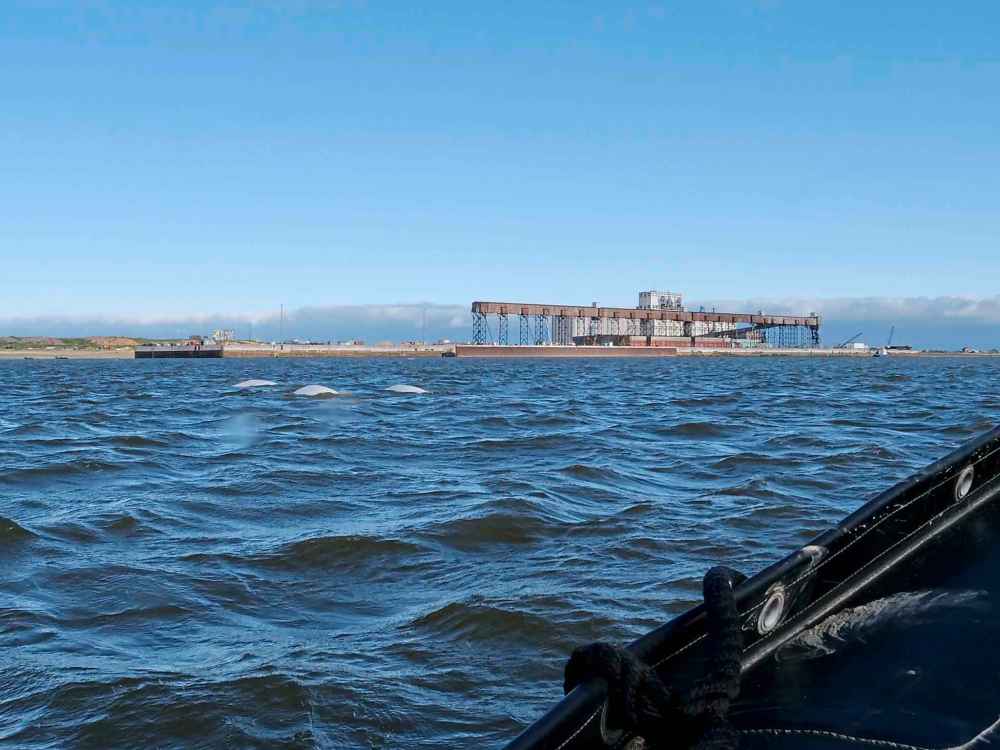
Spence is well aware of this. In addition to being the mayor since 1996, he also owns the Seaport Hotel and restaurant, where we now sit, sipping coffee. He and his brother also own Watchee Lodge, which is the sole tourist operator permitted to operate inside Wapusk National Park that borders Hudson Bay east of Churchill, giving guests the unique opportunity to observe mother polar bears emerging from their dens in the spring with their newborn cubs.
No one has to convince Spence the climate is changing, he sees it in the snow quality and the severity of the storms. He knows the bears are abundant now, but what will it look like in 20 or 30 years?
“We’re the polar bear capital of the world. How long does that tag go on for?”
– Churchill Mayor Mike Spence
“We’re the polar bear capital of the world,” he says. “How long does that tag go on for?”
John Gunter is the CEO of Frontiers North Adventures, one of the biggest tourism outfits in Churchill with a hotel, restaurant and polar bear tours all operating under the same umbrella.
This summer, before the pandemic struck, was supposed to be the year Frontiers North branched into conservation-oriented beluga tours. Gunter says he’s making this move, at least in part, because he understands there’s a need to diversify the tourism business and watch where the business is moving, where future opportunity lies.
“We’ve known for decades that scientists predict that in the relatively near future polar bears will be regionally extinct in west Hudson Bay, so this isn’t news,” he says.
“Right now, our identity is tied very closely to polar bears, but beluga whale touring, and appreciating the northern lights are experiences that have been around for as long as polar bear tours.”
“At Frontiers North, we refer to ourselves as a tourism company, not a polar bear tourism company.”
● ● ●
On Saturday nights the tourists eating a late dinner are hustled out of the Tundra Inn pub. It’s the locals’ time to shine in Tundra Trivia, and since there’s a cap on attendance, it’s really a matter of who you know in town as to whether or not you can swing an invite. Researchers from the study centre outside of town drive in, and all the seasonal employees file in too; faces that become familiar within days of arriving in Churchill.
The town feels busy, it feels vibrant. But for young people who grew up here, work prospects are bleak and the prospect of new opportunities elsewhere looms large.
“There’s really not much for good, permanent, full-time jobs here,” says 25-year-old Jeremy Allen, a fifth-generation Churchillian who left town briefly for school. He returned, and works seasonally as a beluga guide as well as a shop worker for one of the polar bear tour companies.
“I want to spend all my time here, I absolutely love it here. It’s my favourite place in the world. But for most people my age, they don’t like it here. That’s because they don’t understand what they’ve got.”
– Jeremy Allen, a fifth-generation Churchillian
“I want to spend all my time here, I absolutely love it here. It’s my favourite place in the world,” Allen says, swirling a glass of rye and 7-Up. “But for most people my age, they don’t like it here. That’s because they don’t understand what they’ve got.
“Most of my friends growing up, they wanted to move away. They move away and then they immediately realize, ‘Oh, I hate it down south.’”
Many of the friends who wanted to establish conventional careers had to leave. The Town of Churchill and the hospital are two of the biggest year-round employers, and many residents aren’t particularly interested in the seasonal employment opportunities the tourism sector offers, which is why so many people travel here to work for the peak tourist seasons.
The reality is, that for a lot of people who want to stay, social assistance is a way of life, Allen says.
“It seems like the people that stay in town kind of stagnate, and the people who leave do well. But the problem is, why should you have to leave to do well, right?”
● ● ●
The 2006 census reported Churchill’s population at 923 (down 4.2 per cent from 2001), with an unemployment rate of 14.5 per cent (the national unemployment rate in 2006 was 6.6 per cent). A decade later, the population continued its decline to 899 people, down 2.6 per cent. Meanwhile, the unemployment rate rose to 15.1 per cent.
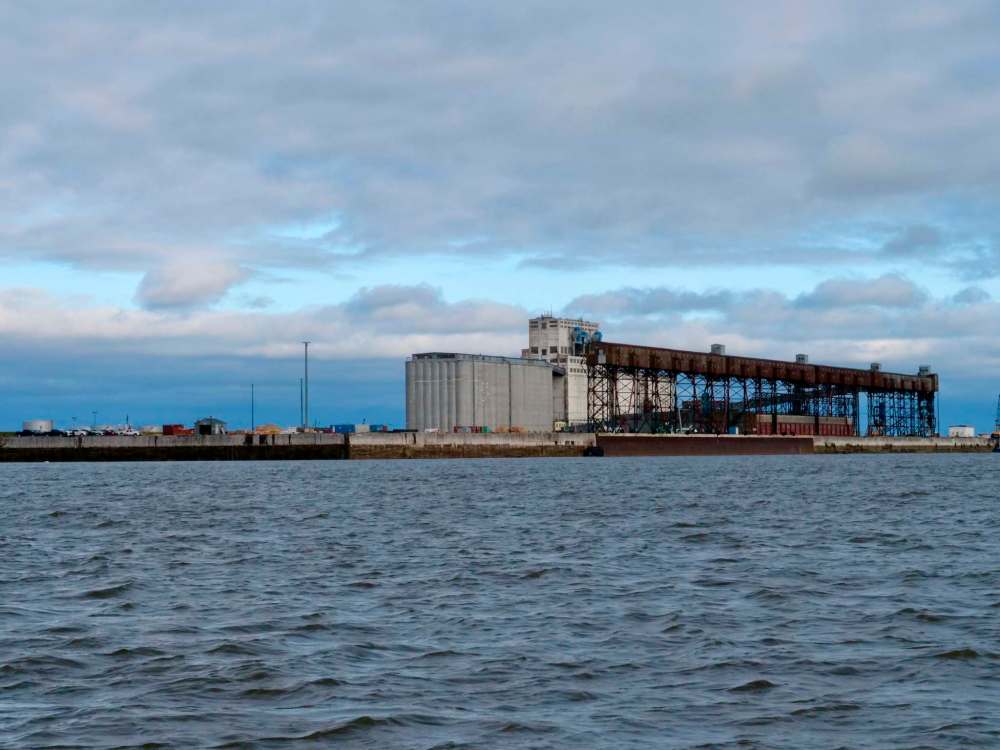
The Port of Churchill was, at one point, a major employer. Even recently, between 2004 and 2014, the port saw, on average, 19 or 20 shipments of grain every year, sent off to international destinations in a shipping season that typically ran between August and October. Empty re-supply ships arrived to be loaded with goods for communities further north in western Hudson Bay.
This year, only a handful of ships came into port for either purpose. And while the sight of a grain train arriving in town in late August to await the cargo ship generated some excitement, there is faint hope the shipping industry will pick up steam any time soon. Yet, this is one of the industries that stands to make gains as the ice-free season in Hudson Bay becomes longer as a result of climate change.
In Hudson Bay, and locally in the Churchill region, the ice-free season has lengthened by a significant amount. Between 1981 and 1985, the median number of ice-free days was 130. Between 1996 and 2000, it was 149 days. Between 2010 and 2014, it was 155 days. The ice-free season is growing even faster in the Hudson Strait, which connects Hudson Bay to Labrador Sea and the Atlantic Ocean. For the local region around Churchill, researchers found the ice-free season is growing at a slightly slower rate because ice often accumulates near the town during the ice break up.
“There’s both ecosystem impacts of sea-ice loss, there’s climate system impacts of sea-ice loss, and there’s, I guess you’d call it, economic impacts. And those ones are quite mixed, because for a place like Churchill, that has a history of shipping, reduced sea ice actually improves access to northern communities,” says Chris Derksen, a research scientist with Environment and Climate Change Canada.
Derksen outlines that the effects are a double-edged sword of sorts as northern communities very much rely on sea ice for local transportation in the winter, as well as for traditional hunting. However, in the summer, increases in shipping traffic could have negative impacts on the environment, including beluga whales and increased water pollution. But for employment opportunities in Churchill, it could prove fruitful.
“It’s really a mixed pros-and-cons list when it comes to shipping,” Derksen says.
The economic potential is being considered carefully by the leadership of Arctic Gateway Group, owners of the rail line and port, which brought together northern community members and First Nations who represent 50 per cent of the consortium, alongside Fairfax Financial. Because of the ownership structure, continued investment in the port could mean great advancements for First Nations in the province, says Opaskwayak Cree Nation Chief Christian Sinclair, who sits on the AGG board of directors.
“As Indigenous people, we always say you have to plan for the next seven generations, and this is part and parcel of bringing our Indigenous perspective to this investment and also recognizing the fact that (more than) 70 per cent of the population in northern Manitoba is First Nations,” Sinclair says.
“As Indigenous people, we always say you have to plan for the next seven generations.”
– Opaskwayak Cree Nation Chief Christian Sinclair
The benefits reach far beyond Churchill itself as the company’s strategic plan would see future investment in inland port facilities and storage, increased movement of grain through the northern train routes, plus it increases access for mining development in and outside of Manitoba’s borders. Shipment of oil through the port is something that the group may consider in the future, but nothing concrete has been proposed at this point.
But before any of that can be realized, there must be investment in the rail line, Sinclair says, because without reliable trains, attracting customers to the port will be much more of a challenge. Permafrost thaw will impact the railbed, and the cost of the current and future repairs must be factored into their projections, he adds.
After the line washed out between Gillam and Churchill in 2017 (when it was owned by Omnitrax) the federal government spent $74 million to acquire the line, fund repairs up until the end of 2020 and transfer its ownership to AGG. An additional $43 million was allocated for repairs in the coming decade, as well. During the summer, amid the pressures of the pandemic, AGG asked the feds for more money as the cost of repairs was found to be “much higher than expected.”
“This needs to be a real partnership with our industry partners and with our government partners — both federal and provincial — moving forward. If they don’t (come forward) that (demonstrates) short-sightedness at the loss of a long-term benefit to the country as a whole,” Sinclair says.
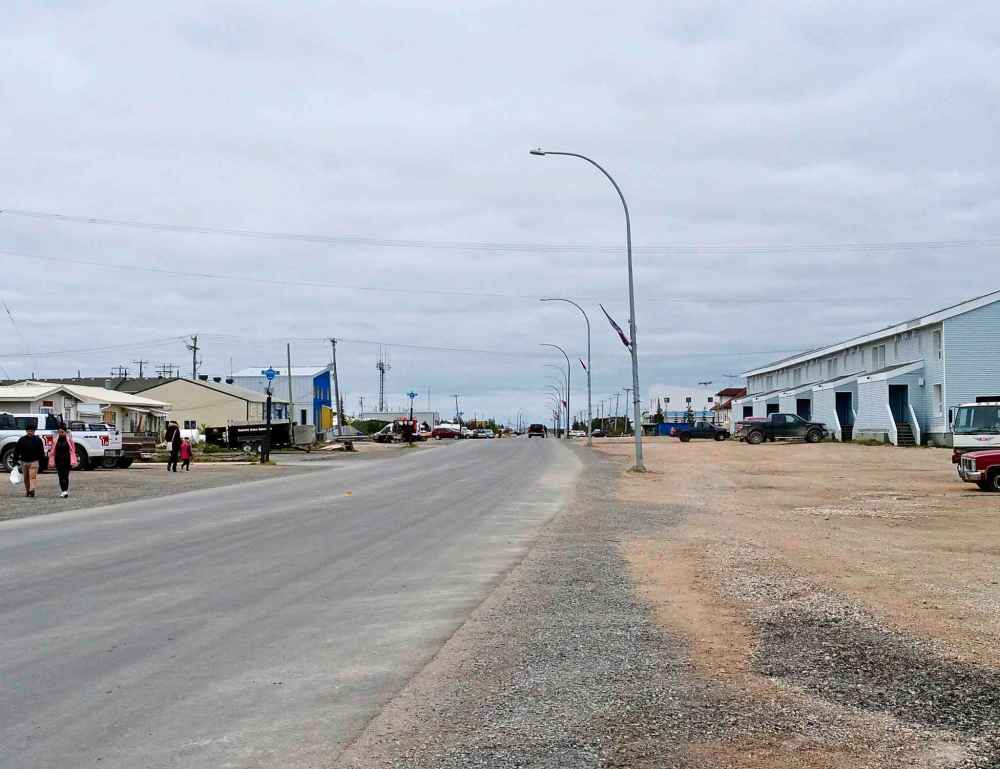
The mayor, who also sits on AGG’s board of directors, said that he has faith in the current federal government to step up and recognize the opportunity; that Prime Minister Justin Trudeau has done better than previous governments.
“Ten years ago, I challenged prime minister Stephen Harper to find a community with as much to offer as Churchill,” Spence says. “We have a land link to Nunavut, a rail terminus, a deep-water port and the largest northern aviation runway. I told him, ‘You’re not going to find another community like it.’”
But on the provincial side of the equation, Spence has been disappointed.
“We’re north, but not north enough, in a sense. You know, we do get support from this federal government in terms of recognizing where Churchill is, and the responsibility it will have in terms of Arctic policy, and (the) role it will play. And yet, on the provincial side, we have a premier that doesn’t even know that Churchill exists other than being a tourism destination,” Spence says.
“I just wish our premier would play a better role, a leadership role in developing a stronger province. We’re not there.”
In response to the mayor’s words, a spokesperson in Premier Brian Pallister’s office said that the government’s investments in the North over the past 4 1/2 years prove how important the region is to this government.
“In 2016 we launched Look North, a long-term vision and plan to unleash the economic potential of the North for future generations. Last spring we launched a new provincial tourism strategy aimed at increasing tourist expenditures to $2.2 billion by 2022, of which will have a significant positive impact for the Churchill tourism sector.”
The spokesperson also pointed to other investments, including the purchase of propane for the community during the rail outage, investments in upgrades to the Churchill Town Centre Complex, support for the construction of a new research facility spearheaded by the University of Manitoba, and upgrades along the road that leads to the Churchill Wildlife Management Area.
Certainly opportunity in Churchill is ripe for picking, says University of Manitoba research associate David Babb.
“It’s just a matter of if the opportunity is taken advantage of,” he says.

Churchill does stand in a unique position as it is Canada’s only deep-water port, and with four loading berths, it is built to handle vessels between 60,000 and 80,000 tonnes.
Babb worked with Transport Canada to study the operations of the Port of Churchill prior to AGG’s takeover. Shipping across the Arctic is growing, he says. One of the areas he’s watching most closely is the increased access to potential Arctic mines that could be accessed through Hudson Bay and Hudson Straight. Mining that might not have been economically viable if equipment had to be flown in now has a potential new mechanism for access.
There are a lot of moving parts, and while many of the issues at hand might look bleak for Churchill, the mayor does not feel that it’s all doom and gloom. He chooses to find hope in watching the young entrepreneurs in town and the expansion of Indigenous tourism outfits in the North. Through the constant presence of researchers in town, and their growing importance as the climate changes, he also expects young people here will grow up wanting to take on those roles.
Wherever the chance for growth exists, he knows Churchill will rise to the occasion.
“We, as a community, are pretty good at adapting to change,” Spence said. “For this community to succeed, (we’re) going to have to look at everything that there is to really shape it as climate change continues to play a role in changing the opportunities that may be there.”
sarah.lawrynuik@freepress.mb.ca