No Small accomplishment

Winnipeg-born netminder recalls her time backstopping Canada's powerhouse women's hockey team

Advertisement

Advertise with us

There’s nothing that brings more pure joy to a hockey goaltender than a great glove save. Watch the magic when they scoop out of mid-air, with super speed and a delicious flourish, a circle of frozen rubber meant to humiliate them. The shooter is left open-mouthed, incredulous that the puck didn’t go in, as the one who stopped it flashes an unseen smile inside their mask.

Read this article for free:


By clicking the button above, an account will be created and you will begin to receive some of our recommended newsletters. You may opt out of any newsletter by visiting your Email and Communication Preferences page or by clicking "unsubscribe" at the bottom of any email.

or

Already have an account? Log in here »

To continue reading, please subscribe:

Digital Subscription

One year of digital access for only $1.44 a week*

  • Enjoy unlimited reading on winnipegfreepress.com
  • Read the E-Edition, our digital replica newspaper
  • Access News Break, our award-winning app
  • Play interactive puzzles

*Billed as $5.77 plus GST every four weeks. After 52 weeks, price increases to the regular rate of $19.95 plus GST every four weeks. Offer available to new and qualified returning subscribers only. Cancel any time.

To continue reading, please subscribe:

Add Free Press access to your Brandon Sun subscription for only an additional

$1 for the first 4 weeks*

  • Enjoy unlimited reading on winnipegfreepress.com
  • Read the E-Edition, our digital replica newspaper
  • Access News Break, our award-winning app
  • Play interactive puzzles
Start now

*Your next Brandon Sun subscription payment will increase by $1.00 and you will be charged $17.95 plus GST for four weeks. After four weeks, your payment will increase to $24.95 plus GST every four weeks.

Hey there, time traveller!
This article was published 10/10/2020 (2200 days ago), so information in it may no longer be current.

There’s nothing that brings more pure joy to a hockey goaltender than a great glove save. Watch the magic when they scoop out of mid-air, with super speed and a delicious flourish, a circle of frozen rubber meant to humiliate them. The shooter is left open-mouthed, incredulous that the puck didn’t go in, as the one who stopped it flashes an unseen smile inside their mask.

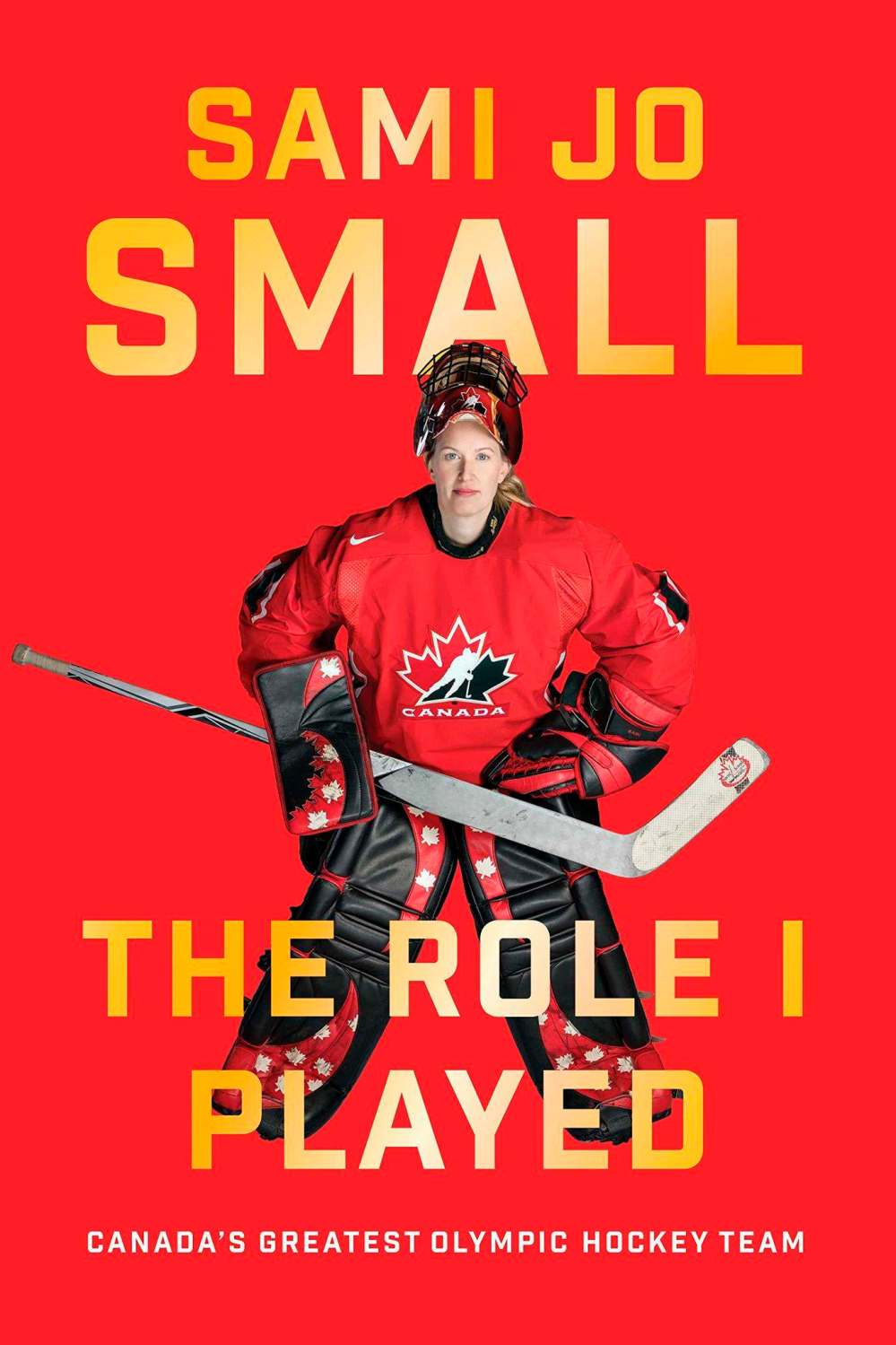
Crackerjack world-class goaltender Sami Jo Small doesn’t say so in her memoir, The Role I Played, but hockey goalies per se could well be this country’s romantic, fearless and armoured symbol of civilized combat.

Clearly Small, at her peak, was one of the best to strap on the pads. She was on Canada’s women’s hockey team for 10 years from 1998, when women’s ice hockey first became an Olympic sport, and earned three medals (one silver, two gold) in Olympic competition. She also was a five-time world champion for Canada in International Ice Hockey Federation (IIHF) women’s competition, and was twice named best goalie of that tournament in 1999 and 2000.
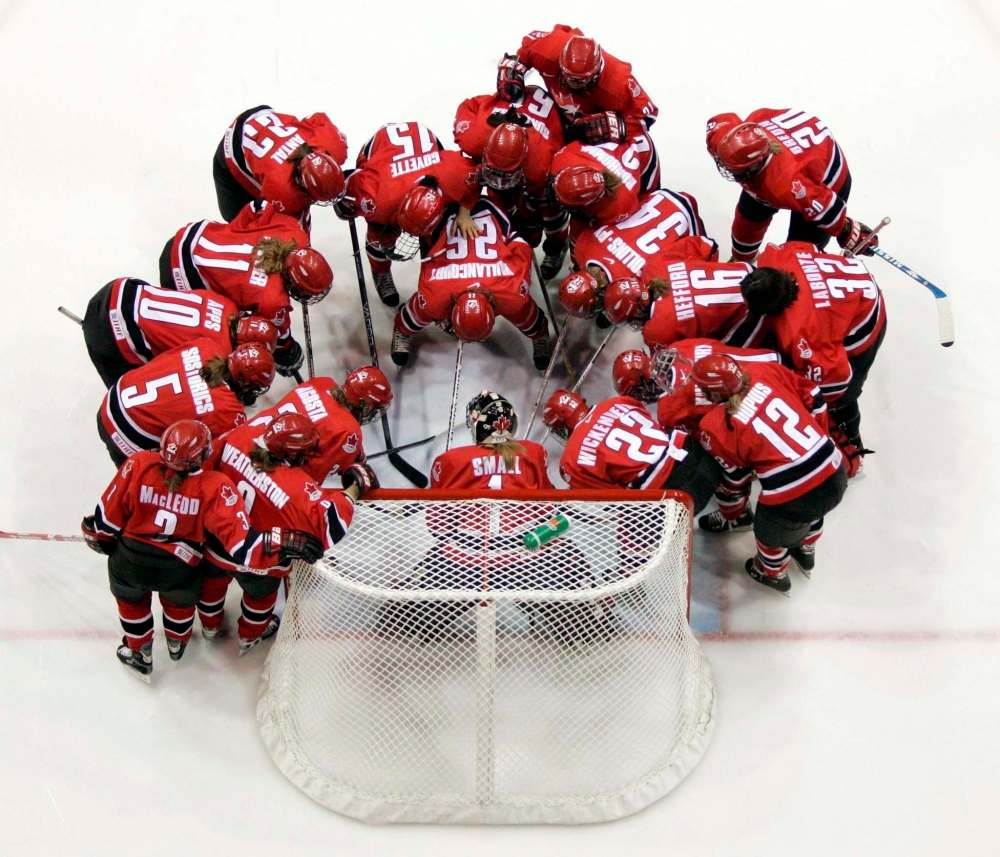
Jonathan Hayward / The Canadian Press files
In this 2004 photo, members of Team Canada huddle around goaltender Sami Jo Small prior to their game against Finland at the Four Nations Hockey Tournament in Lake Placid, N.Y.
Jonathan Hayward / The Canadian Press files In this 2004 photo, members of Team Canada huddle around goaltender Sami Jo Small prior to their game against Finland at the Four Nations Hockey Tournament in Lake Placid, N.Y.

Small believes Canada’s Olympic women’s hockey team in her time (which started in 1997 and spanned the better part of the next decade) was the greatest ever, and continued to be after she left the team. The squad became famous for a record-setting 24-game winning streak and winning four consecutive Olympic golds between 2002 and 2014.

The 44-year-old Small, who was born and grew up in Winnipeg, now lives with her sledge-hockey champion husband and young daughter outside Toronto.

The format chosen to present her writing is sometimes irksome — the book kind of bounces back-and-forth between segments of her life in no chronological order, something like a hockey game that starts after it’s begun and ends before it’s over.

However, if you can put aside the distraction, The Role I Played is worth it to two kinds of people — hockey buffs and those who yearn for inspiration. Small takes the reader on a look inside elite dressing rooms at world championships and Olympics, at managerial conflicts, what Canada’s very best women players are like, the politics of the game and the frustrations of dealing with them, particularly when they make no sense. She also writes about referee mistakes, her disappointments and her recovery from them, the hijinks in off-hours at the Olympics and her insight of where women’s hockey is going and what formidable challenges are ahead.

The personable hockey icon is such a team player — not just in hockey, but also in life. She is now a professional motivational speaker. She also runs hockey schools.

One of the most significant things Small notes in her book is just how far women’s hockey has come, from the days of cultural disapproval (in a tut-tut-nice-girls-don’t-do-that sort of way) to widespread acceptance and booming popularity. There’s such confidence among female players today that Small unabashedly observes in print something that will make men on skates howl at the moon: that after playing hockey with so many men and boys, it’s more difficult for a goalie to face a female shooter than a male one — at least for her.
“I understand how most guys shoot. They use their strength to control their shots, often trying to overpower the goaltender. I know what to look for and when to anticipate the shot,” Small explains. “Women are stealthier. They don’t have the power the men have so they hold onto the puck longer. They use angles to their advantage and find openings with pinpoint accuracy.”

Small began playing hockey in Winnipeg at a time when the only choice was to play with boys. She was the only female in the dressing room on a boy’s team at the Norberry Community Centre at age nine, when she decided to try goaltending (using loaned equipment) and never looked back. She went on to play goal in male peewee and bantam, becoming the first female to play in the Manitoba Major Junior Hockey League.

In 2016 the rink in Winnipeg she grew up on was renamed the Sami Jo Small Hockey Facility.

Sami Jo has a degree in mechanical engineering from the prestigious Stanford University outside San Francisco. She went there on a track and field scholarship (discus and javelin), then after injury played goal for the Stanford men’s hockey team before getting the chance to join Canada’s women’s team for the first-ever female hockey Olympics.

She seems to have superhuman energy. When her team won the world championships in Finland in 1999 she had to rush back to Toronto and then on to San Francisco and Stanford University, because her final exams for that semester were only 11 hours after her arrival.

Heather Pollock photo
Small was the first female to play in the Manitoba Major Junior Hockey League.
Heather Pollock photo Small was the first female to play in the Manitoba Major Junior Hockey League.

If Small tackled those exams as she did goaltending and life, she probably aced every one of them.

Barry Craig was a goalie. So is his granddaughter, Ashley. She’ s good. He played as if on Workers’ Compensation… and without a mask.

Report Error Submit a Tip

More Stories

Messi, Mbappe give Qatar the perfect World Cup ending

James Robson, The Associated Press 7 minute read Preview

Messi, Mbappe give Qatar the perfect World Cup ending

James Robson, The Associated Press 7 minute read Monday, Dec. 19, 2022

DOHA, Qatar (AP) — When it comes to soccer, money can buy the world.

It can pay for the World Cup. And the world’s best players. And it can bundle them all up into a perfect package and present it to a global audience of millions.

The power of money was on full display in the Qatari city of Lusail on Sunday as Argentina beat France 4-2 on penalties to become world champion for the third time and end Lionel Messi's pursuit of the one major trophy that had eluded him in his storied career.

One of the most thrilling finals in the tournament's 92-year history finished 3-3 through extra time, with Messi scoring twice and Kylian Mbappé completing a hat trick.

Read
Monday, Dec. 19, 2022

Increasingly cited financial term, ‘nut,’ is worth knowing, says best-selling author

Joel Schlesinger 6 minute read Preview

Increasingly cited financial term, ‘nut,’ is worth knowing, says best-selling author

Joel Schlesinger 6 minute read Yesterday at 2:01 AM CDT

It’s nuts. That might be some folks’ reaction if they knew their “nut” in the financial sense of the word.

If that stirs visions of squirrels fighting over acorns, you are not far off.

Nut is increasingly used in popular culture, especially in the United States as the struggle increases for millions of consumers with each passing day.

A couple of high-profile TV examples are South Park and Your Friends & Neighbors, where the nut is discussed in the context of what someone’s spend rate is based on their lifestyle.

Read
Yesterday at 2:01 AM CDT

Women wearing appropriate clothes to gym not asking for men’s opinions

Jen Zoratti 4 minute read Preview

Women wearing appropriate clothes to gym not asking for men’s opinions

Jen Zoratti 4 minute read Yesterday at 2:01 AM CDT

Prior to last Saturday, I was the blissful sort of person who could say “who is that, again?” when I heard the name Shane Gillis.

Now, I know him as the comedian who said “women just dress like whores now” at the gym during his opening monologue on Saturday Night Live — a show that fired him in 2019, by the way, for being racist and homophobic on a podcast yet continues to invite him back as a host for some reason.

Gillis also likened women’s short shorts (the kind one might wear to lift weights, say) to neon fishing lures.

“And don’t look. You’re not allowed to look. For real, don’t look, because they are filming,” he said.

Read
Yesterday at 2:01 AM CDT

Faces of the aboriginal community

31 minute read Preview

Faces of the aboriginal community

31 minute read Saturday, Dec. 29, 2012

MatonabbeeBorn in 1737 at the Prince of Wales fort, he was taken in by the chief factor to live there after his father died. He became a "leading Indian" of Churchill and became the middleman between the Hudson's Bay Co. traders and the aboriginal people. He guided Samuel Hearne to the Coppermine River in the Northwest Territories from 1770 to 1772 and was credited with making the expedition a success because he helped the explorers live off the land. He committed suicide in 1782 after he witnessed the French destroy the fort.


Chief PeguisHe was born in 1774 near present-day Sault Ste. Marie before leading his people west to settle at Netley Creek. He was a friend to the Selkirk Settlers and warned Governor Semple about plans by the Nor'westers to destroy the Red River Settlement, advice that Semple ignored, costing him and 20 others their lives at the Battle of Seven Oaks. Peguis later helped Lord Selkirk make treaties with the Cree and Saulteaux and was presented with a treaty medal for his help. He later was given an annual pension from the Hudson's Bay Co. A missionary persuaded Peguis and some of his people to settle in the St. Peter's area north of present-day Selkirk. After being baptized into the Anglican Church, he took the name William King, and his children used the last name Prince. He died in 1864.


Read
Saturday, Dec. 29, 2012

Team president locked out, day after speaking out on arena’s closure

Morgan Modjeski 5 minute read Preview

Team president locked out, day after speaking out on arena’s closure

Morgan Modjeski 5 minute read Friday, Oct. 16, 2026

A longtime team official in Manitoba’s hockey community says he’s being punished by the City of Winnipeg for speaking out about the poor condition of one of its rinks.

Barry Bonni, president of the River East Royal Knights, has occupied an office at Terry Sawchuk Memorial Arena for more than four decades.

On Friday, he was locked out.

“They’re on the war path,” Bonni said.

Read
Friday, Oct. 16, 2026

There's worse ways to go than dying while doing what you love

Doug Speirs 11 minute read Preview

There's worse ways to go than dying while doing what you love

Doug Speirs 11 minute read Saturday, Apr. 20, 2019

All comedians dream of leaving them laughing — and that’s exactly what Ian Cognito did.

The British comedian made headlines around the world earlier this month when he dropped dead onstage minutes after joking with the audience about dying.

Cognito, 60, a British comedy veteran whose real name was Paul Barbieri, died during his stand-up show at the Atic bar in Bicester, an English town north of Oxford.

The show’s host, Andrew Bird, told the BBC that Cognito was not feeling well before going onstage, but insisted on performing. He said the comic even joked onstage: “Imagine if I died in front of you lot here.”

Read
Saturday, Apr. 20, 2019