Trudeau government passes confidence test with support from New Democrats

Advertisement

Advertise with us

OTTAWA - The federal Liberal government avoided defeat with help from the NDP on Wednesday as the two joined forces to pass a multibillion-dollar spending bill in the House of Commons and avert a summer election.

Read this article for free:


By clicking the button above, an account will be created and you will begin to receive some of our recommended newsletters. You may opt out of any newsletter by visiting your Email and Communication Preferences page or by clicking "unsubscribe" at the bottom of any email.

or

Already have an account? Log in here »

To continue reading, please subscribe:

Digital Subscription

One year of digital access for only $1.44 a week*

  • Enjoy unlimited reading on winnipegfreepress.com
  • Read the E-Edition, our digital replica newspaper
  • Access News Break, our award-winning app
  • Play interactive puzzles

*Billed as $5.77 plus GST every four weeks. After 52 weeks, price increases to the regular rate of $19.95 plus GST every four weeks. Offer available to new and qualified returning subscribers only. Cancel any time.

To continue reading, please subscribe:

Add Free Press access to your Brandon Sun subscription for only an additional

$1 for the first 4 weeks*

  • Enjoy unlimited reading on winnipegfreepress.com
  • Read the E-Edition, our digital replica newspaper
  • Access News Break, our award-winning app
  • Play interactive puzzles
Start now

*Your next Brandon Sun subscription payment will increase by $1.00 and you will be charged $17.95 plus GST for four weeks. After four weeks, your payment will increase to $24.95 plus GST every four weeks.

Hey there, time traveller!
This article was published 17/06/2020 (2327 days ago), so information in it may no longer be current.

OTTAWA – The federal Liberal government avoided defeat with help from the NDP on Wednesday as the two joined forces to pass a multibillion-dollar spending bill in the House of Commons and avert a summer election.

The result had been considered a foregone conclusion after the Liberals assured the New Democrats’ support — and their own survival — by extending Tuesday the $2,000-a-month Canada Emergency Response Benefit another eight weeks.

In return, the NDP supported the government in passing the supplementary spending estimates — some $87 billion in planned government spending, most of which is aimed at pandemic-related support for Canadians and businesses.

Prime Minister Justin Trudeau rises during a meeting of the Special Committee on the COVID-19 Pandemic in the House of Commons on Parliament Hill in Ottawa, on Tuesday, June 16, 2020. THE CANADIAN PRESS/Justin Tang

Only about $6 billion actually involves new spending; the other $81 billion had already been approved by Parliament.

Because the Liberals hold only a minority of seats in the House of Commons, they needed the support of at least one party to pass the spending bill or risk plunging the country into an election.

Any bill involving government spending is typically considered a confidence matter. A government that fails to win a vote of confidence in the Commons is deemed defeated.

“The prime minister says he has heard us and is extending support through CERB through the summer,” NDP Leader Jagmeet Singh said in a statement prior to the estimates being approved.

“This is what we were calling for in the short term. We’ll keep working to make sure help is there for Canadians who need it in the long term.”

Trudeau announced Tuesday that the CERB would be extended to a maximum of 24 weeks instead of 16 weeks for people who lost their jobs or saw their hours slashed due to the pandemic.

The extension means the first cohort of applicants who signed up in April and were set to max out their payment periods in early July won’t have to worry if they have no jobs to go back to over the summer or are unable to work because of health reasons.

Yet while the supplementary estimates were approved — on division, which means with some opposition but no recorded vote — there was still no resolution to an emergency aid bill that stalled last week as the government butted heads with opposition parties.

That bill included measures to deliver a one-time, tax-free benefit of up to $600 to Canadians with disabilities, an expansion to the wage subsidy program and fines or jail time for Canadians who deliberately defraud the CERB program.

The government needed unanimous consent to quickly pass the bill in a matter of hours last week but none of the opposition parties would support it.

It then offered to deal with the disability benefit separately, which was supported by the NDP and the Bloc but the Conservatives blocked that idea.

The bill remained on the order paper Wednesday, meaning the government could have theoretically tried again, but that wasn’t in the cards.

The government will instead try to work out other ways to deliver the disability benefit and other measures without needing legislation.

The approval of the supplementary estimates followed almost five hours of parliamentary debate that was preceded by Singh being kicked out of the House of Commons for calling a Bloc Quebecois MP racist over an NDP motion on systemic racism in the RCMP.

The debate coincided with news that Canada had lost its bid to win a temporary seat at the United Nations’ Security Council, which prompted several sharp exchanges between the Conservatives and Liberals over the cost of the campaign.

The prime minister was not present for the proceedings, which mark the end of an unprecedented parliamentary sitting that saw the House of Commons — like much of the rest of the country — all but shut down because of COVID-19.

Trudeau instead left it to his ministers to respond to opposition questions and concerns, including Conservative complaints about a lack of transparency and accountability over the government’s response to the pandemic.

The Conservatives and Bloc had been calling for the resumption of Parliament rather than the special COVID-19 committee that has been holding hybrid hearings for the past few weeks with some MPs attending in person and others virtually.

The Liberals announced Wednesday that they will provide a “snapshot” of the country’s economy on July 8.

This report by The Canadian Press was first published June 17, 2020.

Report Error Submit a Tip

More Stories

Provincial budget fails to chart new course

Editorial 4 minute read Preview

Provincial budget fails to chart new course

Editorial 4 minute read Wednesday, Apr. 13, 2022

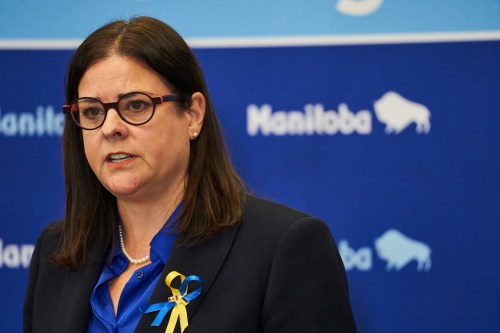
If the 2022 Manitoba budget was intended to provide a lifeline for the Progressive Conservative government, it must surely be considered a failure.

Prior to the budget’s release, Premier Heather Stefanson and her government were teetering on the edge of the political abyss. Manitobans are profoundly unhappy with the government’s performance on most issues, including pandemic management. National polls show Ms. Stefanson is Canada’s least popular premier.

That political context made this budget a high-priority project for the Tories. It was, simply put, their best chance to shed the lingering burden left by former premier Brian Pallister, and rebuild the party brand under a new leader.

Unfortunately, Ms. Stefanson’s first budget remains shackled to the deeply flawed fiscal and political logic that defined the Pallister years. And no single budgetary measure embodies that failure more than the premier’s decision to continue cutting education property taxes.

Read
Wednesday, Apr. 13, 2022

Nine more deaths, 107 new COVID-19 cases in Manitoba

Katie May 6 minute read Preview

Nine more deaths, 107 new COVID-19 cases in Manitoba

Katie May 6 minute read Monday, Dec. 28, 2020

Manitoba is restarting its COVID-19 vaccination efforts, following a five-day break — and amidst questions about the delay.

The planned pause over Christmas was in the name of efficiency, a provincial government spokesman says, offering no other explanation on the reasoning behind the decision not to vaccinate anyone Dec. 24-28.

On Monday, the province announced nine more pandemic deaths and 107 new cases of the novel coronavirus.

As part of Manitoba's vaccination plan, the most recent immunization clinic happened Dec. 23; the next was set to start Dec. 29.

Read
Monday, Dec. 28, 2020

One-on-one Journalism Training

0 minute read Wednesday, Jun. 18, 2025

The new normal in Canadian politics

David McLaughlin 5 minute read Preview

The new normal in Canadian politics

David McLaughlin 5 minute read 2:01 AM CDT

“Nothing happening, all at once.”

Welcome to the new normal of Canadian politics, where normality is the new normal. Routine and stable are in; disruptive and excessive are out. Exhibits A and B are the Alberta referendum and the British Columbia election. Voters opted for stability over volatility.

The opposite of being normal is being different from the norm. In politics that means different from where we’ve been and what we’ve come to expect. Two competing trends have dominated our politics for the past decade and a half — progressivism and populism. Think Justin Trudeau and liberal, progressive identity politics in Canada, and Donald Trump and conservative, populist MAGA politics in America. We are now experiencing a swing away from both those trends.

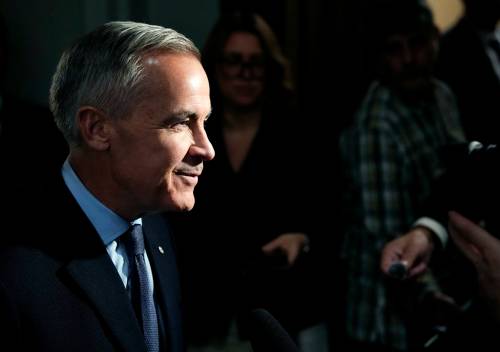
Representing this “new normal” are Prime Minister Mark Carney, for one, and newly elected British Columbia premier, Lorne Doerksen, for another. Both are considered normal because they talk and act like adults in a childish political world. Their political flair is to not have any political flair. They stand out for not standing out.

Read
2:01 AM CDT

The long and winding road

Editorial 4 minute read Preview

The long and winding road

Editorial 4 minute read 2:01 AM CDT

As theatre goes, it sent a strong message.

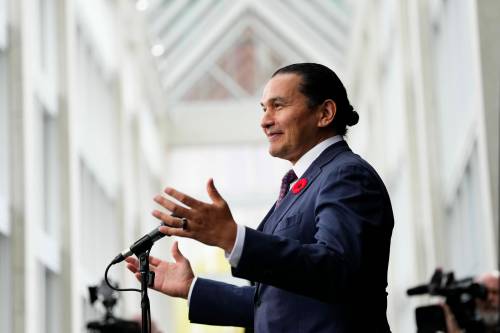
Manitoba Premier Wab Kinew, standing in front of microphones and television cameras, holding up his Indigenous status card and saying that he didn’t feel Canada should have “a race-based form of identification in this country, but that is a reality,” adding that it was time to abolish the Indian Act.

“I think it’s time to abolish the Indian Act, get rid of the Indian Act, move past the Indian Act, and it needs to be done with First Nations people and First Nations governments, of course. I think it’s long overdue that we have a relationship with Indigenous Peoples in Canada that reflects who we are as Canadians today,” he said.

The Indian Act — the name alone suggests how out-dated and out of place the law has become. Originally dating from 1876, the law was put in place to “amend and consolidate the laws respecting Indians” and gave the Minister of the Interior the responsibility to “control and management of the reserves, lands, moneys and property of Indians in Canada.”

Read
2:01 AM CDT

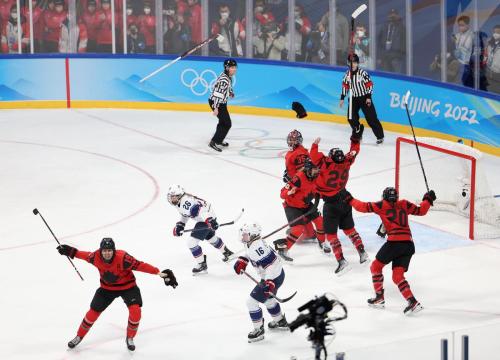
Olympics Overnight: Canada reclaims gold in women’s hockey, Thompson wins silver in ski cross, and Kamila Valieva struggles in women’s free skate

Richie Assaly - Toronto Star, Toronto Star 8 minute read Preview

Olympics Overnight: Canada reclaims gold in women’s hockey, Thompson wins silver in ski cross, and Kamila Valieva struggles in women’s free skate

Richie Assaly - Toronto Star, Toronto Star 8 minute read Thursday, Feb. 17, 2022

Here’s what you missed overnight at Day 13 of the 2022 Beijing Olympics.

Read
Thursday, Feb. 17, 2022