Victoria Day marks subdued start to cottage season during COVID-19: officials
Advertisement
Read this article for free:
or
Already have an account? Log in here »
To continue reading, please subscribe:
Digital Subscription
One year of digital access for only $1.44 a week*
- Enjoy unlimited reading on winnipegfreepress.com
- Read the E-Edition, our digital replica newspaper
- Access News Break, our award-winning app
- Play interactive puzzles
*Billed as $5.77 plus GST every four weeks. After 52 weeks, price increases to the regular rate of $19.95 plus GST every four weeks. Offer available to new and qualified returning subscribers only. Cancel any time.
To continue reading, please subscribe:
Add Free Press access to your Brandon Sun subscription for only an additional
$1 for the first 4 weeks*
- Enjoy unlimited reading on winnipegfreepress.com
- Read the E-Edition, our digital replica newspaper
- Access News Break, our award-winning app
- Play interactive puzzles
*Your next Brandon Sun subscription payment will increase by $1.00 and you will be charged $17.95 plus GST for four weeks. After four weeks, your payment will increase to $24.95 plus GST every four weeks.
Read unlimited articles for free today:
or
Already have an account? Log in here »
Hey there, time traveller!
This article was published 16/05/2020 (2358 days ago), so information in it may no longer be current.
Life looks to stay fairly quiet in Canada’s cottage country this Victoria Day long weekend.
The COVID-19 pandemic has slowed the traditional influx of urbanites in many resort towns for the first big cottage weekend of the year, with some provinces barring pilgrimages to the lake altogether.
Local officials say seasonal visitors have for the most part respected precautions to keep year-round residents safe, but recognize the restrictions on May Two-Four festivities could forbore a tough summer for businesses that depend on tourism to keep their doors open.
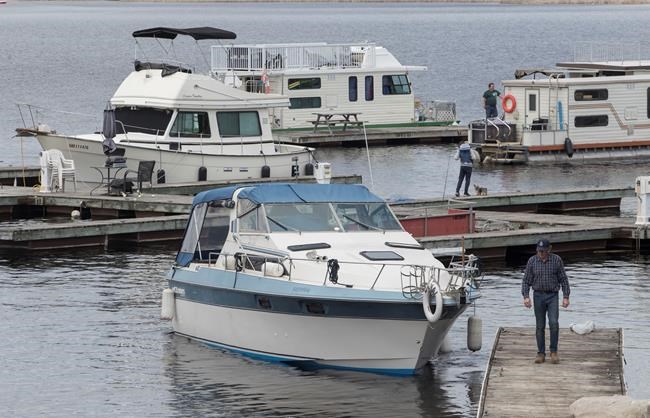
In the District of Sechelt, about 50 kilometres northwest of Vancouver, beaches would typically be bustling with revellers ready to light up the skies with fireworks to ring in the start of cottage season, says Mayor Darnelda Siegers.
But come Monday, Siegers expects both the sands and skies to be clear, perhaps with the exception of rain.
“There won’t be any fireworks on the Sunshine Coast,” Siegers said, referring to the coastal region on British Columbia’s southern mainland.
Siegers said the district has enlisted “community ambassadors” to patrol popular spots over the weekend to ensure people are following physical distancing policies.
She’s echoed the urgings of B.C. authorities to avoid non-essential travel. “Now is not the time to travel for tourism or recreation,” the province’s website reads.
While ferries are operating at 50-per-cent passenger capacity, Siegers said that hasn’t stopped a slow trickle of visitors from coming to Sechelt since Easter weekend.
The people have for the most part been responsible about sticking to their properties and minimizing contact with locals, Siegers said.
Roughly half of Sechelt’s full-time residents are seniors, she said, putting them at higher risk of COVID-19 complications if city dwellers bring the novel coronavirus with them to the cottage.
Still, she recognizes the frustrations of cottage owners who have been denied access to their properties, for which they pay taxes.
Business owners are also having a rough go, said Siegers.
“It’s a tough place to be in for everybody,” she said. “None of us know what this is going to look like going forward.”
Similar concerns have turned cottage country into tricky territory for some lawmakers as the COVID-19 outbreak has pitted the rights of property holders against concerns about overwhelming rural health-care systems.
For example, New Brunswick reopened campgrounds and other recreational businesses earlier this week, drawing ire from out-of-province cottagers who remain barred from crossing the border.
Alberta is also allowing “responsible travel” to campgrounds, summer homes, cabins and cottages within the province, prompting local officials in two popular Rocky Mountain destinations to take action to keep people safe.
Banff Mayor Karen Sorensen tweeted a video last Monday urging visitors to hold off until June to give the town time to implement proper public health protocols.
“Our message will soon change from ‘stay home and stay safe’ to ‘help keep Banff safe,'” Sorensen said.
In Canmore, about 100 kilometres west of Calgary, Mayor John Borrowman warned that the “allure of a long weekend” could draw in visitors, and the town must prepare accordingly.
Borrowman said Thursday that officials are considering making the town’s main drag pedestrian-only so people can stroll through downtown while maintaining a two-metre distance from others. He said the temporary measure would coincide with the reopening of campgrounds on June 1.
“We are in this together,” Borrowman said in a statement on the town’s website. “Reopening is a positive step to recovery, but we all need to continue to do our part to stop the spread.”
Meanwhile, about 230 kilometres north of Toronto, Muskoka Lakes Mayor Phil Harding said traffic on the roads and on the water has picked up, but there’s nowhere near the “beehive of activity” the town typically sees this time of year.
Seasonal residents comprise roughly 80 per cent of the town’s population, said Harding. While some have come to check in on their boats and homes, Harding said most part-timers haven’t strayed from their properties, and have brought their own groceries to prevent strain on local resources.

Harding said he hasn’t seen many tourists, noting that they’d be hard pressed to keep themselves busy with so many businesses shut down.
While communal gatherings remain prohibited, Harding said residents are welcome to ring in Victoria Day by sparking up fireworks on their own property since Ontario lifted its regional fire ban Friday.
The COVID-19 restrictions may make for more muted celebrations to mark the unofficial start to the summer, said Harding, but cottage country isn’t a retreat from the risks of the novel coronavirus.
“We need to really treat this as businesses unusual,” Harding said. “We all need to isolate wherever we are.”
This report by The Canadian Press was first published May 16, 2020.
Advertisement Advertise With Us
Advertisement Advertise With Us