While Air Canada to implement fever scanners, they’re no ‘magic bullet’
Advertisement
Read this article for free:
or
Already have an account? Log in here »
To continue reading, please subscribe:

Digital Subscription
One year of digital access for only $205*
- Enjoy unlimited reading on winnipegfreepress.com
- Read the E-Edition, our digital replica newspaper
- Access News Break, our award-winning app
- Play interactive puzzles
*First annual payment billed as $205.00 + GST for one year. This annual subscription will automatically renew at $233.00 + GST every 52 weeks (10% off the regular annual price of $259.35). Offer available to new and qualified returning subscribers only. Cancel any time.
To continue reading, please subscribe:
Add Free Press access to your Brandon Sun subscription for only an additional
$1 for the first 4 weeks*
- Enjoy unlimited reading on winnipegfreepress.com
- Read the E-Edition, our digital replica newspaper
- Access News Break, our award-winning app
- Play interactive puzzles
*Your next Brandon Sun subscription payment will increase by $1.00 and you will be charged $17.95 plus GST for four weeks. After four weeks, your payment will increase to $24.95 plus GST every four weeks.
Read unlimited articles for free today:
or
Already have an account? Log in here »
Hey there, time traveller!
This article was published 08/05/2020 (2342 days ago), so information in it may no longer be current.
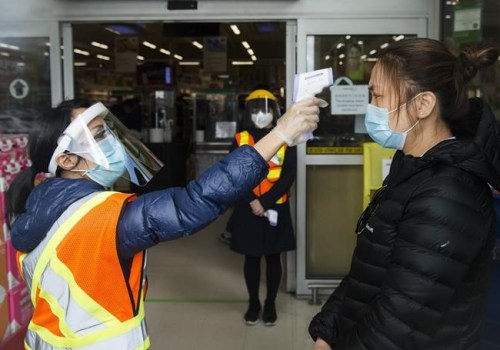
Only a few months ago they looked like something out of a sci-fi film, but fever scanners are now becoming regulation for some Canadian businesses such as Air Canada in the battle against COVID-19.
Running a fever? You’re grounded.
But experts say body temperature is far from foolproof in detecting the novel coronavirus, and determining who can fly or shop or show up to a shift at a factory based on temperature could be as much about perception and peace of mind as it is a reliable tool to weed out the sick.
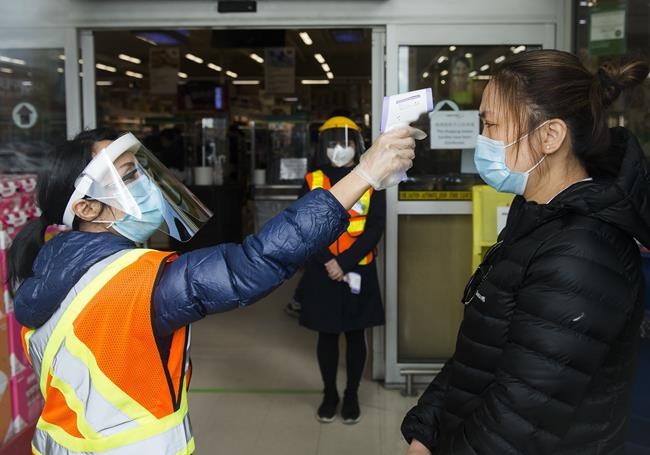
“It’s a lot about optics. People trust technology,” said Dr. Dominik Mertz, medical director of infection prevention and control at Hamilton Health Sciences. “People feel reassured if they go in somewhere and temperature is being measured, they feel like ‘Oh, great. This is a safe space.'”
Air Canada announced this week that in addition to asking health-related questions and making masks mandatory, it will soon screen temperatures before allowing passengers to board. Similar checks were implemented in April at T&T Supermarket locations, and they’re part of visitor screening protocol at some health clinics.
Employers in the United States including Amazon and Walmart said they’ll begin using temperature scanners to test employees, while Home Depot is giving employees thermometers to use at home.
The Korean Baseball League, which resumed its delayed season on Tuesday, is doing regular temperature checks on players, and North American pro leagues such as the NBA have told players and staff to prepare for such a measure when and if they resume practice.
On their own however, temperature checks will not allow gatekeepers to weed out COVID-19 cases, Canada’s chief public health officer said earlier this week.
Dr. Theresa Tam said the more that is understood about the novel coronavirus, the more it becomes clear that temperature taking is “not effective at all” to identify people who have it.
“Even if you are infected, we know that the likelihood of picking up someone who is symptomatic is sort of, relatively, inefficient,” she added.
When the pandemic first emerged, health officials said fever was one of the main telltale symptoms, which is why temperature checks were first implemented. But the proportion of patients is variable.
“It’s not a magic bullet,” said Colin Furness, an infection control epidemiologist and assistant professor at the University of Toronto.
Several weeks ago when airports were screening people upon arrival, particularly from countries such as China, Furness said he believed fever scanners were useful tools if it meant detecting even one ill passenger.
“My answer at the time was it’s a smart step, because some people will be sick, they’ll have a fever, they may not notice or they may not care. And… one case that is detected is going to stop all kinds of other cases from then being spawned,” he said.
“But we shouldn’t pretend it’s going to catch everything.”
Air Canada has said it will turn away passengers with temperatures above 37.5 C. Normal body temperature is 37 C, however this is just an average, and it can fluctuate for numerous reasons.
False positives and false negatives are both possibilities — an individual could have a temperature above 37.5 without having a fever, while someone with a slight fever could pass through undetected.
“If they have a fever, the fever could be due to something else (such as) the seasonal flu,” said Thomas Tenkate, associate professor and director of Ryerson University’s School of Occupational and Public Health.
“Measuring body temperature without taking into account other symptoms and a person’s exposure history could lead to a false diagnosis,” Tenkate said. “For businesses who are using this as their only measure of whether to let someone in or not, it could lead to either letting in asymptomatic but infectious people, or it could lead to refusing people who are not infectious with the coronavirus.”Mertz suggested body temperature rises with exertion — we sweat to regulate our temperature.
A bike ride, a brisk walk, or a sprint through an airport terminal to catch a flight could see a spike in temperature, which is particularly problematic, said Mertz, if the threshold temperature for considering a fever is low.
“Now with summer coming, sweating (to regulate temperature) will not suffice, so you probably will need to wait outside for certain time period until your body temperature is back down, and then you can enter the store or wherever that thermal sensor is,” said Mertz, an associate professor at McMaster University.
A woman’s menstrual cycle also causes temperature fluctuations due to changing hormone levels, but Mertz said the numbers are negligible.
Complicating matters is temperature sensors aren’t perfect, with a margin of error typically between .3 and .5 C, Mertz said.
Testing both for body temperature and blood oxygen level would be a more effective screening measure, Furness said.
“Silent hypoxia” is a coronavirus symptom that is baffling doctors. In many cases, people feel fine when they’re actually very ill.
“It works a little bit more like carbon monoxide poisoning where the lungs just aren’t taking in oxygen, but people don’t notice,” Furness said. “Your blood oxygen level drops way down, and that’s really dangerous; you’re breathing harder, but you don’t even really notice. And you’re definitely contagious.”
While a temperature reading won’t catch those people, a pulse oximetry test — or pulse ox — could, he said. A pulse oximeter is an electric device that goes over the finger. It’s needle-free, inexpensive, can be purchased at most pharmacies, and gives a reading of oxygen saturation in just seconds.

He expects to see pulse-ox screenings to take root in coming weeks as businesses are itching to re-open.
Would pulse ox and body temperature combined catch everyone?
“Probably not. We don’t know,” Furness said. “But if you can catch (some) cases, even if you’re not catching all of them, you could be doing a world of good for everybody.
“These (two tests) are non-invasive, they’re sustainable, they’re not brutally expensive, they’re immediate. So these are the sorts of hallmarks that say: Well, yeah, we can integrate this into the workflow, be it shift change, or people getting onto an airplane.”
This report by The Canadian Press was first published May 8, 2020.
Related Articles
Frustration mounts over airline refund policy
Advertisement Advertise With Us
Advertisement Advertise With Us