Canada takes baby steps toward normalcy; Quebec passes 2,000 COVID deaths

Advertisement

Advertise with us

TORONTO - Canada took further baby steps toward post-pandemic normalcy on Friday as Atlantic provinces began easing rigid restrictions imposed to curb the COVID-19 scourge, while Quebec's death toll climbed past 2,000 as it set to ease its measures.

Read this article for free:


or

Already have an account? Log in here »

To continue reading, please subscribe:

Subscribe and receive a limited-edition Free Press branded hat or tote.

Digital Subscription

One year of digital access for only $205*

  • Enjoy unlimited reading on winnipegfreepress.com
  • Read the E-Edition, our digital replica newspaper
  • Access News Break, our award-winning app
  • Play interactive puzzles

*First annual payment billed as $205.00 + GST for one year. This annual subscription will automatically renew at $233.00 + GST every 52 weeks (10% off the regular annual price of $259.35). Offer available to new and qualified returning subscribers only. Cancel any time.

To continue reading, please subscribe:

Add Free Press access to your Brandon Sun subscription for only an additional

$1 for the first 4 weeks*

  • Enjoy unlimited reading on winnipegfreepress.com
  • Read the E-Edition, our digital replica newspaper
  • Access News Break, our award-winning app
  • Play interactive puzzles
Start now

*Your next Brandon Sun subscription payment will increase by $1.00 and you will be charged $17.95 plus GST for four weeks. After four weeks, your payment will increase to $24.95 plus GST every four weeks.

Hey there, time traveller!
This article was published 01/05/2020 (2332 days ago), so information in it may no longer be current.

TORONTO – Canada took further baby steps toward post-pandemic normalcy on Friday as Atlantic provinces began easing rigid restrictions imposed to curb the COVID-19 scourge, while Quebec’s death toll climbed past 2,000 as it set to ease its measures.

Elective surgeries and other non-urgent health-care services, including physiotherapy and optometry, restarted in Prince Edward Island, as did outdoor gatherings of up to five people from different households and non-contact outdoor recreational activities.

Nova Scotia reopened garden centres and nurseries, along with trails and provincial and municipal parks. It also allowed single families to head to their cottages. New Brunswick had already OK’d interactions between two families, a return to school for post-secondary students, as well as golfing, fishing and hunting.
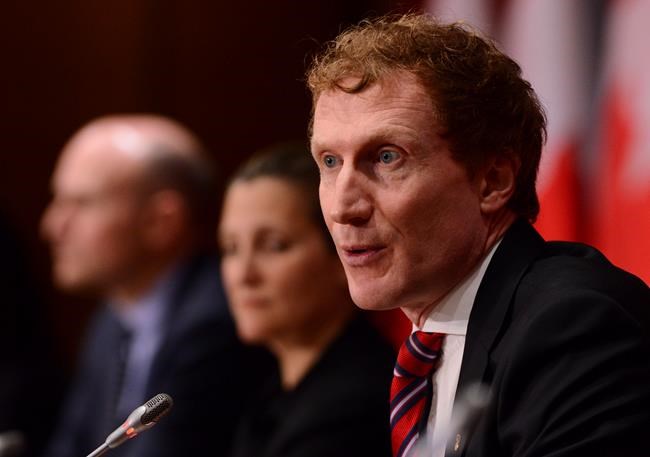
Minister of Indigenous Services Marc Miller joins fellow ministers and Government of Canada officials as they hold a news conference to provide an update on COVID-19 on Parliament Hill in Ottawa on Thursday, April 30, 2020. THE CANADIAN PRESS/Sean Kilpatrick

Quebec, with the largest number of COVID-19 cases and deaths in Canada, was set to reopen retail stores outside Montreal on Monday, despite reporting 163 new COVID fatalities going into the weekend. The province also said it aimed to double testing — to 14,000 a day — by the end of next week.

Ontario, which reported 421 new cases and 39 more deaths, most in long-term care facilities, also said some workplaces and businesses can restart Monday. Those include garden centres with curb-side pickup, lawn-care and landscaping services, and automatic car washes.

“Our patience is paying off,” said Premier Doug Ford, who urged people to maintain physical distancing regardless. “We’re getting closer and closer to opening things up.”

Many non-essential businesses in Manitoba — retail stores and hair salons among them — are also set to open their doors on Monday.

The stiff stay-home restrictions that have idled much of the economy have plunged the country into a recession, according to a new report by the C.D. Howe Institute. Still, federal and provincial governments have called for a gradual and phased approach to a return to normalcy informed by public health concerns.

When it comes to reopening schools and child-care centres, Canada’s top public health officer, Dr. Theresa Tam, said distancing restrictions and strict cleaning were crucial for protecting adults who work in them, even if the virus appears to be less dangerous for the youngsters themselves.

Tam has also warned about the risk coronavirus disease poses to Indigenous communities, which are considered vulnerable due to often overcrowded living conditions and a lack of health-care services. To date, reserves have seen at least 129 cases and Inuit communities 16. Saskatchewan reported a jump of 26 cases, 19 of which were from in and around La Loche, a Dene village 600 kilometres northwest of Saskatoon.

What the government has been doing to prevent COVID-19 from ripping through the communities was the subject of a standing committee on Friday, with members of Parliament putting cabinet ministers on the hot seat. Indigenous Services Minister Marc Miller conceded the $15 million in emergency funding earmarked to help organizations that service Indigenous urban populations was not enough.

The Senate, meanwhile, passed legislation authorizing $9 billion worth of emergency financial support for students who can’t find or are unable to work this summer due to the pandemic. The bill received royal assent shortly thereafter.

Under the new Canada Student Emergency Benefit, eligible students will receive $1,250 per month student benefit from May through August. Those with dependents or permanent disabilities will receive $2,000 per month.

The contagious SARS-CoV-2 virus, which has now killed more than 3,220 people in Canada and 270,000 globally, is believed to have originated in China. U.S. President Donald Trump has suggested Beijing withheld information about its epidemic from the World Health Organization and that the agency tried to cover up the initial outbreak.

Trump supporters have also pushed a conspiracy theory that the pandemic originated in a laboratory in Wuhan, China.

In Ottawa, Beijing’s ambassador praised Canada’s “cool-headed” co-operation in battling the spread of the disease. The United States, according to Ambassador Cong Peiwu, was “smearing” his country.

“To shift the blame, some U.S. politicians try to launch a stigmatization campaign against China,” the envoy said. “Attacking and discrediting other countries will not save the time and lives lost.”

In other developments, Newfoundland and Labrador has released 65 inmates under the public health emergency declared on March 18. So far, the province’s jails have been COVID-free but at least 285 federal prisoners, one of whom has died, and 82 guards have tested positive.

In Chatham-Kent, Ont., police said someone hacked an online meeting for a local charity this week and broadcast child pornography to 200 participants.

-With files from Canadian Press staff across the country.

This report by The Canadian Press was first published May 1, 2020.

Report Error Submit a Tip

More Stories

Canada taking more baby steps toward normalcy

Colin Perkel, The Canadian Press 5 minute read Preview

Canada taking more baby steps toward normalcy

Colin Perkel, The Canadian Press 5 minute read Friday, May. 1, 2020

TORONTO - Canada took further baby steps toward post-pandemic normalcy on Friday as Atlantic provinces began easing rigid restrictions imposed to curb the COVID-19 scourge, while Quebec's death toll climbed past 2,000 as it set to ease its measures.

Elective surgeries and other non-urgent health-care services, including physiotherapy and optometry, restarted in Prince Edward Island, as did outdoor gatherings of up to five people from different households and non-contact outdoor recreational activities.

Nova Scotia reopened garden centres and nurseries, along with trails and provincial and municipal parks. It also allowed single families to head to their cottages. New Brunswick had already OK'd interactions between two families, a return to school for post-secondary students, as well as golfing, fishing and hunting.

Quebec, with the largest number of COVID-19 cases and deaths in Canada, was set to reopen retail stores outside Montreal on Monday, despite reporting 163 new COVID fatalities going into the weekend. The province also said it aimed to double testing — to 14,000 a day — by the end of next week.

Read
Friday, May. 1, 2020

Luxurious by design

Todd Lewys 5 minute read Preview

Luxurious by design

Todd Lewys 5 minute read 2:01 AM CDT

When it comes to designing a luxury home, it’s critically important that builders pick and choose when to weave in the wow factor.

The reason taking a measured approach is simple. As much as a builder’s goal is to impress prospective buyers with fancy finishes and design details, too much wow can be overwhelming.

Overdone, it can cause people to quickly rule out the home and move on to find something more suitable and less overwhelming.

Gino’s Homes sales manager Cam Ftoma says Gino’s new 2026 Fall Parade of Homes show home at 111 Bullrush Bay in Sage Creek is all about tasteful luxury.

Read
2:01 AM CDT

Building Northern Manitoba right

Morris Beardy 4 minute read Yesterday at 2:00 AM CDT

I had the pleasure of attending the recent celebrations welcoming grain shipments back to the Port of Churchill, alongside business leaders, port workers, community members and government partners. We find ourselves at an important and pivotal moment and there is a lot of optimism about Northern Manitoba.

Whether it’s the Port of Churchill Plus, all-weather roads and trade corridors, new mines and exploration, a transmission line to Nunavut or billions going into modernizing our hydro-electric systems, one thing is clear: Northern Manitoba needs to be prepared for a potential boom in development.

Now more than ever, Canada and Manitoba have to get this right.

Prime Minister Carney and Canada’s premiers have met with some of the world’s largest investors to discuss nation-building projects that will shape our country’s future.

Family account spiced with magic realism, geopolitical intrigue and a ghost story

Reviewed by Zilla Jones 4 minute read Preview

Family account spiced with magic realism, geopolitical intrigue and a ghost story

Reviewed by Zilla Jones 4 minute read 2:01 AM CDT

Tom Lin’s second novel Babylon, South Dakota moves beyond a historical account of an immigrant family’s struggle, delightfully blending and bending genres.

Lin is a Chinese-born novelist whose family emigrated to the U.S. when he was four years old. His debut novel, The Thousand Crimes of Ming Tsu, won the 2022 Andrew Carnegie Medal for Excellence in Fiction, making him the youngest ever recipient of that award. He earned a PhD in English from the University of California Davis and is currently an assistant professor of English and creative writing at the University of Iowa.

Babylon, South Dakota takes place in an unspecified time period that can be understood to be during the Mao era — likely the 1950s or ’60s. A young Chinese couple, the Hsuis, immigrate to the rural community that gives the book its title. They take the names Saul and Mei and settle on a 160-acre homestead left to them by a distant relative.

Saul’s dream is to breed and sell chrysanthemums from seeds he brought from China, while Mei wants to raise livestock. They speak no English, know nothing of life in the United States, are unprepared for the harshness of winter and the isolation of the farm and bring nothing with them except some gold, which Mei hides around the house for emergencies. Their only link to the outside world is a discarded and marginally functioning TV set, which Saul rescues and rigs up.

Read
2:01 AM CDT

A distant island and a European border

Editorial 4 minute read Preview

A distant island and a European border

Editorial 4 minute read Thursday, Sep. 17, 2026

It’s at roughly 80°49′35″ North latitude and 66°27′30″West longitude.

Or, you might also know it as being in the Kennedy Channel of the Nares Strait in the high Arctic.

It’s Hans Island, an island that’s split between the Kingdom of Denmark and Canada.

The border was a bone of contention between the two nations for years, but not one that sired threats of annexation. Each simply claimed it as their own.

Read
Thursday, Sep. 17, 2026

Canadian politicians speaking with one voice

Editorial 4 minute read Preview

Canadian politicians speaking with one voice

Editorial 4 minute read 2:01 AM CDT

It was something that seems unusual in politics in recent years: politicians of different stripes taking the same side and together supporting what Canada needs to do, and is doing, to address U.S. trade attacks.

Take former prime minister Stephen Harper, closing out a major Toronto investment meeting set up by Prime Minister Mark Carney with a speech where Harper said he not only supported Carney’s decision to walk away from trade talks with the U.S., but that he would have done the same thing.

The deal the Americans were demanding “leaves no choice but for Canada to pursue diminished reliance on the U.S.,” Mr. Harper said. “There will be significant costs to this effort, but those are costs that I hope and believe Canadians are able and prepared to accept.”

And, Harper said, Canada has plenty to offer to other countries that want to trade with us: integrity.

Read
2:01 AM CDT