Trudeau, premiers to focus on topping up pay for workers in long-term care homes

Advertisement

Advertise with us

OTTAWA - Prime Minister Justin Trudeau and provincial and territorial leaders will speak tonight about ways to better protect those in long-term care facilities, which have been hardest hit by the COVID-19 pandemic in Canada.

Read this article for free:


By clicking the button above, an account will be created and you will begin to receive some of our recommended newsletters. You may opt out of any newsletter by visiting your Email and Communication Preferences page or by clicking "unsubscribe" at the bottom of any email.

or

Already have an account? Log in here »

To continue reading, please subscribe:

Digital Subscription

One year of digital access for only $1.44 a week*

  • Enjoy unlimited reading on winnipegfreepress.com
  • Read the E-Edition, our digital replica newspaper
  • Access News Break, our award-winning app
  • Play interactive puzzles

*Billed as $5.77 plus GST every four weeks. After 52 weeks, price increases to the regular rate of $19.95 plus GST every four weeks. Offer available to new and qualified returning subscribers only. Cancel any time.

To continue reading, please subscribe:

Add Free Press access to your Brandon Sun subscription for only an additional

$1 for the first 4 weeks*

  • Enjoy unlimited reading on winnipegfreepress.com
  • Read the E-Edition, our digital replica newspaper
  • Access News Break, our award-winning app
  • Play interactive puzzles
Start now

*Your next Brandon Sun subscription payment will increase by $1.00 and you will be charged $17.95 plus GST for four weeks. After four weeks, your payment will increase to $24.95 plus GST every four weeks.

Hey there, time traveller!
This article was published 16/04/2020 (2388 days ago), so information in it may no longer be current.

OTTAWA – Prime Minister Justin Trudeau and provincial and territorial leaders will speak tonight about ways to better protect those in long-term care facilities, which have been hardest hit by the COVID-19 pandemic in Canada.

Topping the agenda for the weekly first ministers’ conference call is Trudeau’s promise of federal support to top up the wages of personal support workers and other front-line health workers in long-term care homes.

The objective is to encourage more of those essential workers to stay on in those higher-risk jobs, and compensate them for orders in some provinces banning them from working in multiple facilities.

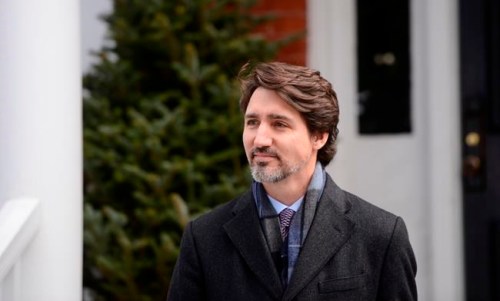
Prime Minister Justin Trudeau addresses Canadians on the COVID-19 pandemic from Rideau Cottage in Ottawa on Thursday, April 16, 2020. THE CANADIAN PRESS/Sean Kilpatrick

Roughly half of Canada’s more than 1,000 deaths from COVID-19 have occurred in long-term care facilities.

Trudeau promised Wednesday that the federal government would provide financial assistance to essential workers who earn less than $2,500 a month.

But the federal government wants to co-ordinate its support with measures taken by provincial governments.

Quebec has already announced it will top up the wages of essential workers in nursing homes.

Ontario Premier Doug Ford says his province will follow suit but first he wants to see what Ottawa intends to offer.

“It’s very simple. These people are working day in and day out and they need to have their wages enhanced, in my opinion,” Ford said Thursday.

“So we need their support, we need the federal support. Yes, we’ll come to the table as well, but I want to see what the federal government has to offer.”

Ontario has issued an emergency order, starting April 22, that will prevent long-term care staff from working at multiple homes. The province has acknowledged some outbreaks in those facilities were the result of staff who work in two or three homes and inadvertently spread the virus between facilities.

Health-care workers’ unions have long raised the issue, saying staff often work at multiple facilities because they’re unable to get full-time positions.

At his daily briefing earlier Thursday, Trudeau said he’ll be talking with premiers later in the day “about how to ensure better protection for our elders in long-term care.”

“It is impossible to imagine the anguish that families and indeed our elders are going through in this situation. There is so much fear, so much uncertainty,” he said.

“We need to do a better job of being there for them. The federal government is looking at ways to support the provinces as they deal with this issue. We’re discussing pay top-ups for people who work in those situations because the conditions are getting more and more difficult.”

Trudeau added that there are also “more regulations” that can be discussed to better protect the most vulnerable. He did not elaborate.

One measure the premiers have ruled out, however, is having the federal government invoke the never-before-used Emergencies Act, which would give it sweeping powers to override the provinces and restrict the flow of goods and people, among other things.

Saskatchewan Premier Scott Moe, chair of the premiers’ council, sent Trudeau a letter Wednesday saying provincial and territorial leaders are agreed that the act is not needed. They believe provincial and federal governments already have all the powers they need to address the pandemic.

Trudeau has said he hopes the act, which he’s called a “last resort,” will never be needed.

This report by The Canadian Press was first published April 16, 2020.

Report Error Submit a Tip

More Stories

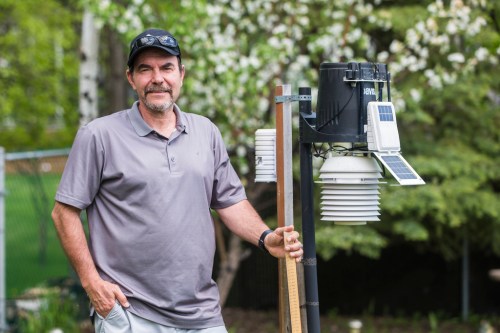
Meteorologist behind Rob’s Obs is moving weather station to Ontario

Ben Waldman 7 minute read Preview

Meteorologist behind Rob’s Obs is moving weather station to Ontario

Ben Waldman 7 minute read Monday, Jun. 13, 2022

In a Winnipeg winter, there are always at least two certainties: it will be cold, and it will snow. A third certainty: the people will talk endlessly about how frigid the temperature is, and argue about how much snow is cloaking their driveways. Is it colder than it ever has been? Is there more snow today than the same time last year?

Rob Paola likely knows the answers to those questions.

Paola possesses no super powers. He is but a man with a metre stick and 40 years of professional meteorological experience, in the midst of a lifelong love affair with Mother Nature, a most turbulent mistress who rarely, if ever, reciprocates.

Each year when snow begins to fall, Paola heads outside his Charleswood home to figure out how much. He sticks his ruler in the ground, grabs his clipboard, and clicks his pen. In neat script, he records the temperature, what time precipitation began, how deep the powder is stacked. Then, he shares his data and insights online with thousands of followers who want a clear answer to the eternal questions: Why is this happening? When will it stop? How much snow has fallen in the city of Winnipeg?

Read
Monday, Jun. 13, 2022

Moving past the Indian Act will take time and trust

Niigaan Sinclair 5 minute read Preview

Moving past the Indian Act will take time and trust

Niigaan Sinclair 5 minute read 4:52 PM CDT

If I had a dime for every time a politician has called for the “abolishment”of the Indian Act, I’d be a rich man.

OK, maybe I’d have enough coins to jingle loudly in my pocket.

My point: a Canadian leader calling for the end of the race-based law passed in 1867 that is designed to give the federal government broad and brutal control over First Nations governments, membership, and reserve land is nothing new.

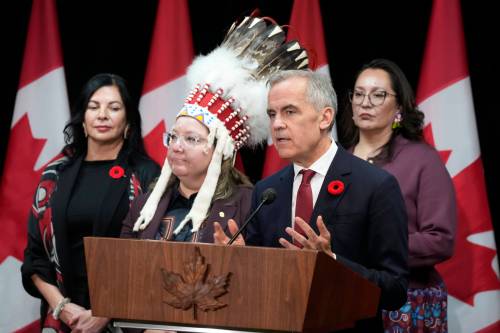
Premier Wab Kinew became the latest to advocate for this, during the First Nations-first ministers meeting in Ottawa this week.

Read
4:52 PM CDT

First ministers to focus on long-term care crisis

The Canadian Press 4 minute read Preview

First ministers to focus on long-term care crisis

The Canadian Press 4 minute read Thursday, Apr. 16, 2020

OTTAWA - Prime Minister Justin Trudeau and provincial and territorial leaders will speak tonight about ways to better protect those in long-term care facilities, which have been hardest hit by the COVID-19 pandemic in Canada.

Topping the agenda for the weekly first ministers' conference call is Trudeau's promise of federal support to top up the wages of personal support workers and other front-line health workers in long-term care homes.

The objective is to encourage more of those essential workers to stay on in those higher-risk jobs, and compensate them for orders in some provinces banning them from working in multiple facilities.

Roughly half of Canada's more than 1,000 deaths from COVID-19 have occurred in long-term care facilities.

Read
Thursday, Apr. 16, 2020

Transit driver killed in knife attack on U of M campus

8 minute read Preview

Transit driver killed in knife attack on U of M campus

8 minute read Tuesday, Feb. 14, 2017

A Winnipeg Transit driver was killed early this morning after he was stabbed by the only passenger on his bus at the University of Manitoba campus.

Irvine Jubal Fraser, 58, was rushed to hospital in critical condition but later died, police said.

The attack occurred at about 2 a.m. in the area of Dafoe Road West and Gillson Street.

Witnesses pointed officers led by the canine unit in the direction of the Red River, where a 22-year-old suspect trying to cross to the St. Vital side was arrested and taken into custody.

Read
Tuesday, Feb. 14, 2017

Railways report more accidents with dangerous goods

Dylan Robertson 6 minute read Preview

Railways report more accidents with dangerous goods

Dylan Robertson 6 minute read Monday, Jan. 20, 2020

OTTAWA — The number of rail accidents involving dangerous goods more than doubled in Canada in 2018.

There were 25 accidents involving dangerous goods in 2018, involving one death, according to Transport Canada data published Monday.

There were 11 accidents recorded a year prior, and five in 2016.

These accidents involve dangerous goods — flammable or corrosive substances — that either exploded or leaked.

Read
Monday, Jan. 20, 2020

Indigenous-, newcomer-focused job fair puts opportunity in spotlight

Gabrielle Piché 3 minute read Tuesday, Oct. 27, 2026

Canadian Armed Forces pamphlets grazed the side of Serena Valiquette’s ribbon skirt, as the Grade 9 student clutched the handouts tight.

“When I get to age, I’ll probably apply,” said Serena, 14, joining pockets of students hopping from booth to booth — City of Winnipeg here, Manitoba Public Insurance there — at a job fair in Winnipeg on Tuesday.

The job seekers, present and future, were largely Indigenous and newcomers. It was the demographic organizer Clayton Sandy aimed to attract.

“We have the ability to open doors for young people,” Sandy said. “This is one of the ways we use.”