Nova Scotia schools cancel international student trips as coronavirus precaution

Advertisement

Advertise with us

HALIFAX - Education administrators in Nova Scotia have decided to cancel all school-organized student trips to international destinations until April 30 because of the evolving situation around the novel coronavirus.

Read this article for free:


or

Already have an account? Log in here »

To continue reading, please subscribe:

Subscribe and receive a limited-edition Free Press branded hat or tote.

Digital Subscription

One year of digital access for only $205*

  • Enjoy unlimited reading on winnipegfreepress.com
  • Read the E-Edition, our digital replica newspaper
  • Access News Break, our award-winning app
  • Play interactive puzzles

*First annual payment billed as $205.00 + GST for one year. This annual subscription will automatically renew at $233.00 + GST every 52 weeks (10% off the regular annual price of $259.35). Offer available to new and qualified returning subscribers only. Cancel any time.

To continue reading, please subscribe:

Add Free Press access to your Brandon Sun subscription for only an additional

$1 for the first 4 weeks*

  • Enjoy unlimited reading on winnipegfreepress.com
  • Read the E-Edition, our digital replica newspaper
  • Access News Break, our award-winning app
  • Play interactive puzzles
Start now

*Your next Brandon Sun subscription payment will increase by $1.00 and you will be charged $17.95 plus GST for four weeks. After four weeks, your payment will increase to $24.95 plus GST every four weeks.

Hey there, time traveller!
This article was published 04/03/2020 (2381 days ago), so information in it may no longer be current.

HALIFAX – Education administrators in Nova Scotia have decided to cancel all school-organized student trips to international destinations until April 30 because of the evolving situation around the novel coronavirus.

Education Minister Zach Churchill says he fully supports the move made Wednesday by the province’s regional centres for education.

Churchill says cancelling all trips for the time being is considered a “low-risk approach,” and the move was decided after the regional centres consulted with the province’s chief medical officer of health.

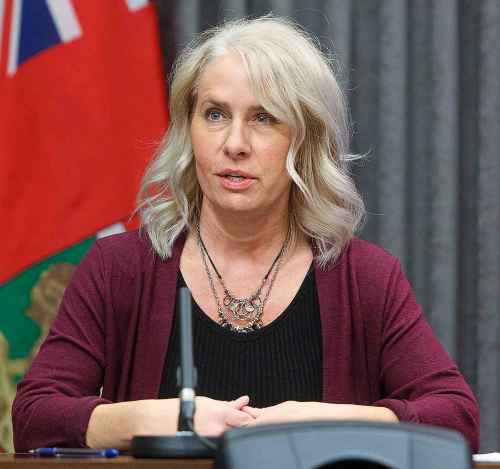
Nova Scotia Education Minister Zach Churchill speaks during a press conference in Halifax on Wednesday, January 24, 2018. Churchill says the government will move ahead with a recommendation to eliminate all of the province's seven English language regional school boards. THE CANADIAN PRESS/Darren Calabrese

The minister says the idea to prohibit travel, even to areas of the world that are not currently deemed a high risk, is to minimize the overall risk of moving through international airports.

Churchill says because the situation with the novel coronavirus is fluid, the ban will be reviewed once it expires.

He says school principals are in the process of informing families about the decision.

This report by The Canadian Press was first published March 4, 2020.

Report Error Submit a Tip

More Stories

South Winnipeg neighbourhood will be first to go geothermal

Chris Kitching 4 minute read Preview

South Winnipeg neighbourhood will be first to go geothermal

Chris Kitching 4 minute read Updated: 5:07 PM CDT

A new neighbourhood in south Winnipeg will be Manitoba’s first to use a shared, large-scale geothermal system to heat and cool hundreds of homes over coming decades.

The province is giving up to $4 million to the developers of Southwood Circle, just north of the University of Manitoba’s Fort Garry campus, for a district geothermal system as part of the NDP’s goal to reach net-zero greenhouse gas emissions by 2050.

“It means a whole neighbourhood can tap into geothermal, which means low-carbon heating and cooling for at least 1,000 homes,” Premier Wab Kinew said at a news conference Wednesday.

Geothermal systems, equipped with pumps and pipes, use underground temperatures to heat and cool one or more buildings. Proponents point to long-term energy and cost savings compared with conventional heating and cooling systems.

Read
Updated: 5:07 PM CDT

Winnipeg close to ICU capacity, surgeries cancelled as cases rise, death toll hits 61

Danielle Da Silva 7 minute read Preview

Winnipeg close to ICU capacity, surgeries cancelled as cases rise, death toll hits 61

Danielle Da Silva 7 minute read Wednesday, Oct. 28, 2020

Only six intensive-care beds were available in Winnipeg Wednesday as the spike in COVID-19 cases further taxed the hospital system, forced health-care workers into self-isolation and required the cancellation of 43 surgeries.

The province reported three additional deaths — raising the death toll to 61 — and 170 new cases, the third-highest daily tally of the pandemic.

Lanette Siragusa, chief nursing officer with Shared Health, said intensive care unit capacity on Wednesday was at 92 per cent, and continues to be stretched, as more people become sick with COVID-19 and hospital outbreaks swell.

“The way the numbers are going, we do expect that critical care is going to continue to be congested,” Siragusa said at a news conference. “If we have to go over capacity, we already are looking at what those models of care would be and how we would support patients.

Read
Wednesday, Oct. 28, 2020

Battling agencies would have far greater impact on homeless crisis by working together

Dan Lett 5 minute read Preview

Battling agencies would have far greater impact on homeless crisis by working together

Dan Lett 5 minute read 3:14 PM CDT

In the midst of one of the most concerted efforts to reduce, if not eliminate, homelessness, why are two of Winnipeg’s more prominent social service agencies fighting each other?

This week, city councillors Cindy Gilroy and Ross Eadie accused Main Street Project of trying to derail efforts by another agency — St. Boniface Street Links — to find housing for people living in homeless encampments. Gilroy and Eadie said as Street Links outreach workers started efforts to move encampment residents into more stable housing, MSP workers arrived to tell the same residents they did not have to leave if they preferred to stay where they were.

This is not the first time these two organizations have clashed, reportedly over the same issue.

In July 2024, Coun. Janice Lukes told the Free Press she called Street Links to help the residents of a Southwood encampment find permanent housing, but as its outreach workers were collecting personal information, MSP outreach workers arrived and told residents they didn’t have to leave.

Read
3:14 PM CDT

There is a better way

Hersh Seth 4 minute read Saturday, Aug. 29, 2026

Hal Turner is correct about the challenges posed by winter and drought to our energy grid (The right plan for reliable energy, Think Tank, Aug. 11). But the ongoing debate is really about how we manage them.

Manitoba Hydro’s chief operating officer wants that debate to stay focused on facts, and his summary is fair. Demand is going up. The toughest times are still the coldest nights, and dry years put the most strain on the system. Wind power is unpredictable, solar is weakest when our days are shortest, and batteries alone cannot get Manitoba through a drought. The province also already buys wind power, is growing Indigenous-led supply and still has one of the cleanest and most affordable grids in North America. We’re not arguing with these points.

The real issue is not whether Manitoba needs reliable winter power. It is about whether building a $3-billion gas plant in Brandon is the only or best way to bridge the forecasted energy gap.

Almost all of our electricity, about 99.7 per cent, already comes from water, wind and biomass. We emit about 1.3 tonnes of carbon per gigawatt-hour. By comparison, the average Canadian utility emits approximately 121, and the American average is ~350.

DNA on beer can helps solve killing

Dean Pritchard 5 minute read Preview

DNA on beer can helps solve killing

Dean Pritchard 5 minute read 2:00 AM CDT

Two years after 74-year-old James Monaghan was stabbed in his Sherburn Street home, DNA found on a beer can led police to his killer.

Shara Harper, 29, pleaded guilty to manslaughter and on Tuesday was sentenced to six years in prison.

A neighbour found Monaghan dead in his home on July 29, 2022. He had been stabbed twice in the chest and back.

The investigation into Monaghan’s killing had stalled until June 2024, when DNA found on an empty beer can in Monaghan’s home was confirmed to be a match for Harper.

Read
2:00 AM CDT

All that glitters … could work here

Editorial 4 minute read Preview

All that glitters … could work here

Editorial 4 minute read Yesterday at 2:00 AM CDT

Sometimes, it’s hard to even suggest a change, because it seems there is always a plethora of people ready to tell you that your idea just won’t work.

But a unique program is working in Portland, Ore. and some version of that program could work in Winnipeg as well. Something that glitters may just be a small nugget of gold.

G.L.I.T.T.E.R. stands for Ground Score Leading Inclusivity Together Through Environmental Recovery.

It’s a long handle for a simple concept. Launched in 2021, the program hires people who are either unhoused or have recently been unhoused to do litter collection and tentside garbage collection for homeless encampments in the Portland region.

Read
Yesterday at 2:00 AM CDT