Fed’s Powell faces a puzzling crisis with no simple solution

Advertisement

Advertise with us

WASHINGTON - Jerome Powell is confronting his stiffest test yet as head of the Federal Reserve in an atmosphere vastly altered from what his predecessors faced. It makes an uncertain situation even more challenging.

Read this article for free:


By clicking the button above, an account will be created and you will begin to receive some of our recommended newsletters. You may opt out of any newsletter by visiting your Email and Communication Preferences page or by clicking "unsubscribe" at the bottom of any email.

or

Already have an account? Log in here »

To continue reading, please subscribe:

Digital Subscription

One year of digital access for only $1.44 a week*

  • Enjoy unlimited reading on winnipegfreepress.com
  • Read the E-Edition, our digital replica newspaper
  • Access News Break, our award-winning app
  • Play interactive puzzles

*Billed as $5.77 plus GST every four weeks. After 52 weeks, price increases to the regular rate of $19.95 plus GST every four weeks. Offer available to new and qualified returning subscribers only. Cancel any time.

To continue reading, please subscribe:

Add Free Press access to your Brandon Sun subscription for only an additional

$1 for the first 4 weeks*

  • Enjoy unlimited reading on winnipegfreepress.com
  • Read the E-Edition, our digital replica newspaper
  • Access News Break, our award-winning app
  • Play interactive puzzles
Start now

*Your next Brandon Sun subscription payment will increase by $1.00 and you will be charged $17.95 plus GST for four weeks. After four weeks, your payment will increase to $24.95 plus GST every four weeks.

Hey there, time traveller!
This article was published 03/03/2020 (2434 days ago), so information in it may no longer be current.

WASHINGTON – Jerome Powell is confronting his stiffest test yet as head of the Federal Reserve in an atmosphere vastly altered from what his predecessors faced. It makes an uncertain situation even more challenging.

On Tuesday, Powell announced a surprise half-point interest rate cut that shrank the Fed’s key rate to a range of just 1% to 1.25%. It marked the first time the central bank has cut rates between scheduled policy meetings since the 2008 financial crisis. And it’s the steepest rate cut the Fed has made since then.

The Fed’s unusual move was a response to economic fears and dizzying stock market plunges that are unnervingly reminiscent of the crisis that nearly toppled the financial system in 2008. Yet the circumstances are radically different. For one thing, the uncertainty about the impact of the virus — How bad will it get? How long will it last? — makes it particularly difficult to devise a solution.
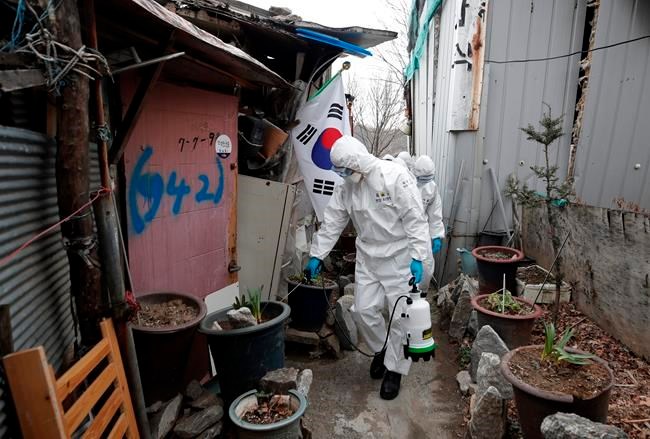
Soldiers wearing protective gear spray disinfectant in neighborhood alleyways as a precaution against the new coronavirus in Seoul, South Korea, Tuesday, March 3, 2020. (AP Photo/Lee Jin-man)

What’s more, Powell has a more contentious relationship with President Donald Trump than his predecessors Ben Bernanke and Janet Yellen had with Presidents George W. Bush and Barack Obama. That threatens to make it harder to develop a unified response.

International co-operation with other central banks could also prove more elusive now because most other major industrialized economies have already slashed borrowing rates into negative territory and have limited room to manoeuvr.

“The unfolding nature of the coronavirus threat — both real and perceived — is not yet quantifiable,” said Mark Haefele, chief investment officer for Swiss bank UBS. That makes it hard for policymakers around the world to know if they have gone far enough in supporting their economies.

For now, the Fed chairman enjoys a stock of bipartisan goodwill on Capitol Hill that eluded Bernanke and Yellen, partly because the U.S. economy — and the job market in particular — have shown enduring strength during his first two years in office.

That could all unravel should the economy succumb to pressures resulting from the coronavirus. Most economists still say they think the U.S. economy can avoid a recession if the virus remains relatively contained. But they have been sharply cutting their forecasts for this year.

Economists at Goldman Sachs now expect growth to barely reach a 0.5% annual rate in the first half of 2020. Most analysts expect the U.S. economy to grow, at best, about 1.5% this year. That would be the weakest yearly expansion since the Great Recession ended in 2009.

The many unknowns about the impact of the virus make it particularly vexing for the Fed, economists said. Will consumers avoid sports events, movie theatres, and other public places? Will their spending, which drives more than two-thirds of the U.S. economy, steadily weaken?
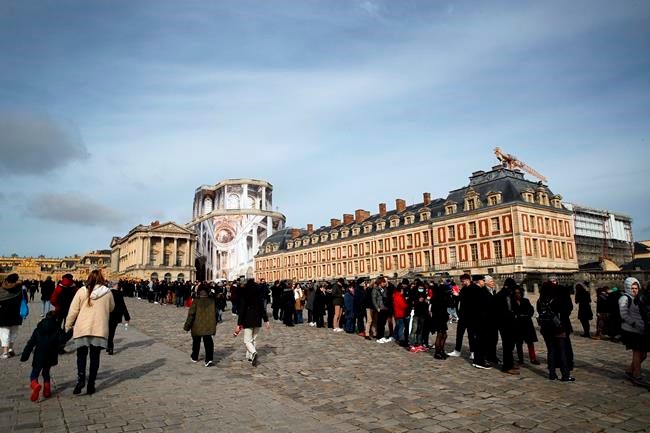
Visitors stand in line to enter the Chateau de Versailles, west of Paris, Tuesday, March 3, 2020. The Chateau de Versailles remains open after management met with staff worried about the spread of the new virus. (AP Photo/Christophe Ena)

One problem for the Fed and other central banks is that there are limits to their ability to deal with the economic repercussions of the virus — from closed factories to cancelled business travel to disrupted company supply chains. Lower borrowing rates don’t directly address those problems.

Such uncertainties contributed to another sharp fall in stock markets Tuesday. The Dow Jones industrial average sank 786 points, or 2.9%, after a brief surge immediately after the Fed announced its sharp rate cut Tuesday morning.

Bond yields also fell, with the yield on the 10-year note dropping below 1% for the first time in history. Investors around the world bid up bond prices — which move in the opposite direction of yields — as they sought safety from the stock market’s turmoil.

A stark example of the altered world Powell is operating in came just hours after he announced the cut, when Trump sent out a characteristically critical tweet demanding that the Fed do “more easing and cutting!”

For Trump himself, the coronavirus has ignited the most serious economic challenge of his presidency — one that could peak in the midst of his re-election campaign. Trump has regularly touted the stock market’s health as a barometer of the success of his economic policies.

Later Tuesday, on the White House lawn, Trump complained that Powell gave “a very bad signal” during his news conference when, according to the president’s interpretation, Powell “hinted they’re not going to do more.” In fact, many economists expect the Fed to cut rates at least twice more, at its next meetings in March and April.
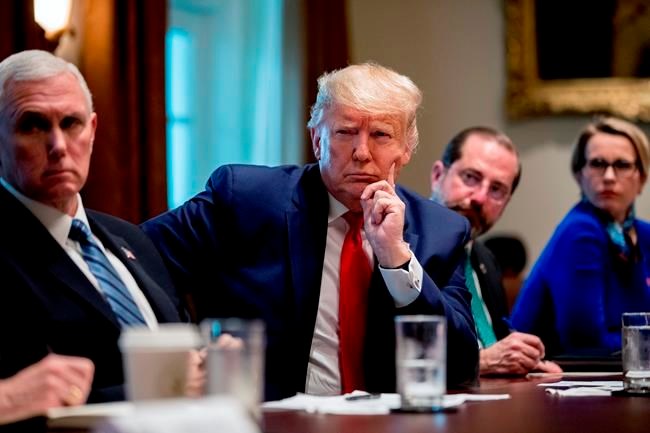
From left, Vice President Mike Pence, President Donald Trump, Health and Human Services Secretary Alex Azar, meet with GlaxoSmithKline CEO Emma Walmsley, right, and other pharmaceutical executives in the Cabinet Room of the White House, Monday, March 2, 2020, in Washington. (AP Photo/Andrew Harnik)

During the 2007-2009 financial crisis and Great Recession, Presidents Bush and Obama never publicly attacked Bernanke, who worked closely with Treasury secretaries from both administrations in fashioning remedies for the financial crisis.

At his news conference, Powell said the central bank is focused on its goal of supporting the economy and added, “We’re never going to consider any political considerations whatsoever.”

Many analysts had expected that other central banks might act in concert with the Fed this week, cutting their own rates and presenting investors and businesses with a united front that might have delivered an extra boost of confidence.

Instead, the Fed is acting mostly on its own, for now. On Tuesday, Australia’s central bank said it was cutting its official rate to a record low of 0.5%. But several leading central banks, including the European Central Bank, the Bank of Japan, and Swiss National Bank, already have lowered their borrowing rates into negative territory. The ECB and BoJ are also buying bonds and other financial assets to try to jump-start their economies. They face greater opposition to further cuts.

“The Fed judged that it could not wait until the ECB in particular was ready to move,” Krishna Guha and Ernie Tedeschi, analysts at Evercore ISI, said in a research note.

The last time the Fed took action between its policy meetings, it co-ordinated with five other central banks. In November 2011, the six central banks agreed to make it cheaper for overseas banks to borrow in dollars.

Powell tried to strike a balanced tone at his news conference, by making it clear that the Fed was aware of the threat and stood ready to bolster the economy, while also emphasizing that U.S. economic fundamentals are sound.
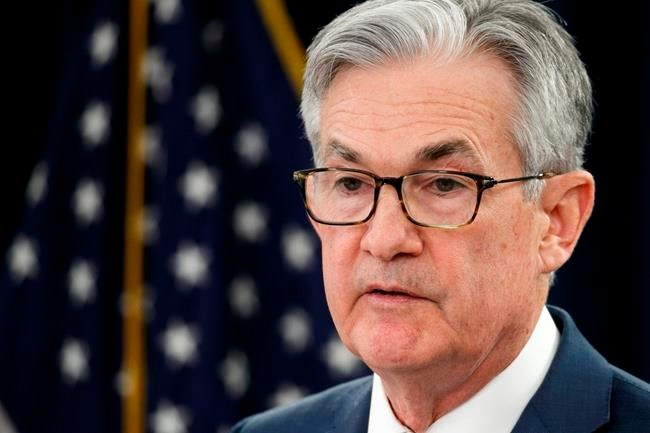
Federal Reserve Chair Jerome Powell speaks during a news conference, Tuesday, March 3, 2020, to discuss an announcement from the Federal Open Market Committee, in Washington. In a surprise move, the Federal Reserve cut its benchmark interest rate by a sizable half-percentage point in an effort to support the economy in the face of the spreading coronavirus. Chairman Jerome Powell noted that the coronavirus “poses evolving risks to economic activity.
Federal Reserve Chair Jerome Powell speaks during a news conference, Tuesday, March 3, 2020, to discuss an announcement from the Federal Open Market Committee, in Washington. In a surprise move, the Federal Reserve cut its benchmark interest rate by a sizable half-percentage point in an effort to support the economy in the face of the spreading coronavirus. Chairman Jerome Powell noted that the coronavirus “poses evolving risks to economic activity."  (AP Photo/Jacquelyn Martin)

“The virus and the measures that are being taken to contain it will surely weigh on economic activity both here and abroad for some time,” he said. “So, we saw a risk to the economy, and we chose to act.”

Separately, members of the U.S. Congress are finalizing a $7.5 billion emergency bill to fund the government’s response to the coronavirus outbreak in a rare act of bipartisan co-operation.

The legislation would speed development of a coronavirus vaccine, pay for preparedness by states and localities, help other countries fight the outbreak and seek to ensure that the vaccine is affordable when it’s ready, though that could take a year.

Powell said lower rates can help keep credit flowing, particularly to struggling businesses already laden with debt that would otherwise face higher borrowing costs. And he suggested that the Fed’s intervention would boost consumer and business confidence and provide “a meaningful boost to the economy.”

Across the world, business is slowing and in some places stopping altogether as a consequence of the virus. Factories in China have been struggling to grind slowly back to life. Many European vacation destinations have been all but deserted as leisure and corporate travel has diminished. And major companies around the world bracing for the risk that the economic landscape could worsen before it improves.

Earlier Tuesday, seven major economies had pledged to use “all appropriate tools” to deal with the spreading coronavirus but announced no immediate actions.
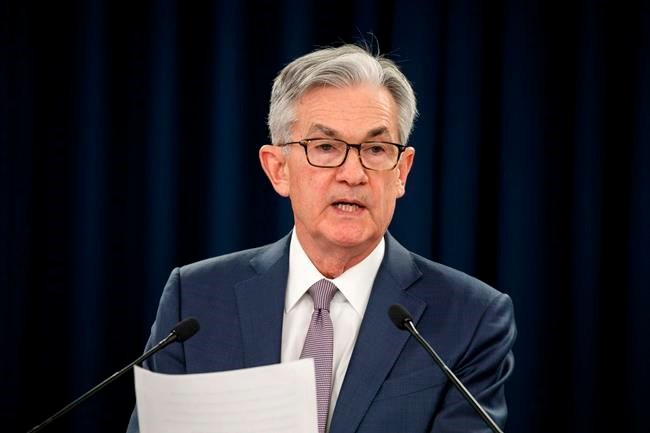
Federal Reserve Chair Jerome Powell speaks during a news conference, Tuesday, March 3, 2020, to discuss an announcement from the Federal Open Market Committee, in Washington. In a surprise move, the Federal Reserve cut its benchmark interest rate by a sizable half-percentage point in an effort to support the economy in the face of the spreading coronavirus. Chairman Jerome Powell noted that the coronavirus “poses evolving risks to economic activity.
Federal Reserve Chair Jerome Powell speaks during a news conference, Tuesday, March 3, 2020, to discuss an announcement from the Federal Open Market Committee, in Washington. In a surprise move, the Federal Reserve cut its benchmark interest rate by a sizable half-percentage point in an effort to support the economy in the face of the spreading coronavirus. Chairman Jerome Powell noted that the coronavirus “poses evolving risks to economic activity."  (AP Photo/Jacquelyn Martin)

The group of major industrial countries, referred to as the G-7, said it was “ready to take actions, including fiscal measures where appropriate, to aid in the response to the virus and support the economy.”

___

AP Economics Writer Martin Crutsinger contributed to this report.

Report Error Submit a Tip

More Stories

Has the political wind changed?

Gwynne Dyer 5 minute read Yesterday at 2:01 AM CDT

It has been quite a week. First we had “Lula” – Luiz Inácio da Silva (as nobody but his mother ever called him) – defying everybody’s expectations. After winding up two million votes behind his challenger, Flávio Bolsonaro, in the first round of the Brazilian presidential election, he made a “miraculous” comeback in the second.

It was like a man going into a revolving door behind you and coming out in front. At the end of the first round, Lula was two million votes behind; at the end of the second round on Oct. 25 he was four million votes ahead. So how did he win a fourth term without cheating?

That’s what Bolsonaro claims he did, having fled to the United States; Trump, Flávio’s mentor, hints at the same. But Lula’s victory was not miraculous. He only learned to read when he was 10, and at 80 he still refused to have a mobile phone. His team finally made him get one and use it.

He wouldn’t do social media videos, so they created a WhatsApp channel called Lula’s Army, and made him appear on it at least daily. The channel went from zero to 10.8 million viewers in two weeks, and Lula won.

Letters, Oct. 31

6 minute read Yesterday at 2:01 AM CDT

Civic election a missed opportunity

The outcome of the latest municipal election in Winnipeg is nothing short of baffling. The decline of what was once a proud, beautiful prairie hub is impossible to ignore.

Winnipeg is rapidly sliding into a state of structural and social dilapidation, yet voters have inexplicably chosen to hand incumbent Mayor Scott Gillingham a second term. The decision smells of complacency, and sadly, it represents a massive missed opportunity for real urban renewal.

Walking through downtown Winnipeg today is an exercise in heartbreak. A city centre that should be a bustling economic and cultural core has instead transformed into an absolute eyesore. Encampments and tents are permitted to dot the heart of the city. Streets that used to thrive are now dominated by the tragic, visible reality of severe addiction, with individuals wandering and staggering through public spaces without adequate intervention or care.

Say What?! Sports guys travel to new destination

Steve Lyons and Paul Wiecek 16 minute read Preview

Say What?! Sports guys travel to new destination

Steve Lyons and Paul Wiecek 16 minute read Thursday, Jan. 30, 2020

Say What?! is an email conversation between sports editor Steve Lyons and sports columnist Paul Wiecek. Look for us regularly but intermittently on the Free Press website.


Steve Lyons: Heya. How you doing? How’s 2020 treating you so far?

Few things to get us started:

Read
Thursday, Jan. 30, 2020

‘We’re just all thankful to have some baseball’

Mike McIntyre 6 minute read Preview

‘We’re just all thankful to have some baseball’

Mike McIntyre 6 minute read Wednesday, Jun. 24, 2020

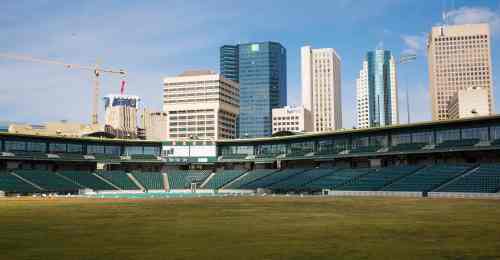
Driving more than 2,000 kilometres in less than a day might seem like the equivalent of getting a root canal to many. But it's a journey Winnipeg Goldeyes manager Rick Forney was happy to make this week, one that started from his residence in Maryland and ended in his most unusual temporary baseball home of Fargo, N.D.

Unable to play games at Shaw Park this summer owing to COVID-19 restrictions banning large gatherings for sporting events until at least September, the Fish will instead fly in enemy territory. An abbreviated spring training gets underway Thursday followed by an abbreviated 60-game American Association baseball season starting July 3.

Forney's 24th season with the Goldeyes, including the past 15 as skipper, is going to be unlike any other.

"It's not ideal, but it's not a reason to not work. If the Goldeyes are going to operate in any fashion, then I want to be a part of it," Forney said by telephone as he passed the midway point of his solo trek just outside Chicago.

Read
Wednesday, Jun. 24, 2020

SNC planned U.S. move if no deal: documents

Jordan Press and Christopher Reynolds, The Canadian Press 5 minute read Preview

SNC planned U.S. move if no deal: documents

Jordan Press and Christopher Reynolds, The Canadian Press 5 minute read Thursday, Mar. 28, 2019

OTTAWA - SNC-Lavalin warned federal prosecutors last fall about a possible plan to split the company in two, move its offices to the United States and eliminate its Canadian workforce if it didn't get a deal to avoid criminal prosecution, newly obtained documents show.

The documents, part of a PowerPoint presentation obtained by The Canadian Press, describe something called "Plan B" — what Montreal-based SNC might have to do if it can't convince the government to grant a so-called remediation agreement to avoid criminal proceedings in a fraud and corruption case related to projects in Libya.

Under that plan, SNC would move its Montreal headquarters and corporate offices in Ontario and Quebec to the U.S. within a year, cutting its workforce to just 3,500 from 8,717, before eventually winding up its Canadian operations.

“The government of Canada needs to weigh the public interest impact of the prosecution of SNC-Lavalin," the presentation reads.

Read
Thursday, Mar. 28, 2019

B.C. declares state of emergency over wildfires

Amy Smart, The Canadian Press 5 minute read Preview

B.C. declares state of emergency over wildfires

Amy Smart, The Canadian Press 5 minute read Wednesday, Jul. 21, 2021

VANCOUVER - British Columbia's public safety minister has declared a provincial state of emergency over the growing wildfire threat to prepare for potential mass evacuations and help secure accommodation that might be needed by evacuees.

Mike Farnworth said he made the decision based on information from officials that weather conditions will lead to more severe fire behaviour and the potential for more evacuations.

"In a briefing last night, I received word that we'll be facing a few days of very difficult weather in the Interior," Farnworth said in a statement.

The state of emergency goes into effect on Wednesday and gives government agencies, the fire commissioner and the RCMP the authority to take whatever action they deem is necessary to fight the wildfires and protect people and communities.

Read
Wednesday, Jul. 21, 2021