Canadians at forefront of COVID-19 research as SARS outbreak informs response
Advertisement
Read this article for free:
or
Already have an account? Log in here »
To continue reading, please subscribe:

Digital Subscription
One year of digital access for only $205*
- Enjoy unlimited reading on winnipegfreepress.com
- Read the E-Edition, our digital replica newspaper
- Access News Break, our award-winning app
- Play interactive puzzles
*First annual payment billed as $205.00 + GST for one year. This annual subscription will automatically renew at $233.00 + GST every 52 weeks (10% off the regular annual price of $259.35). Offer available to new and qualified returning subscribers only. Cancel any time.
To continue reading, please subscribe:
Add Free Press access to your Brandon Sun subscription for only an additional
$1 for the first 4 weeks*
- Enjoy unlimited reading on winnipegfreepress.com
- Read the E-Edition, our digital replica newspaper
- Access News Break, our award-winning app
- Play interactive puzzles
*Your next Brandon Sun subscription payment will increase by $1.00 and you will be charged $17.95 plus GST for four weeks. After four weeks, your payment will increase to $24.95 plus GST every four weeks.
Read unlimited articles for free today:
or
Already have an account? Log in here »
Hey there, time traveller!
This article was published 03/03/2020 (2408 days ago), so information in it may no longer be current.
VANCOUVER – The potential for a worldwide pandemic has kept scientists in Canada at the ready and placed them at the forefront of the global response to the outbreak of the new coronavirus, several prominent researchers say.
Dr. Srinivas Murthy was among those experts who gathered at the World Health Organization’s headquarters in Geneva, Switzerland, last month to discuss how to combat the virus.
The outbreak of viruses with the potential to become pandemics is going to be “our new reality,” said Murthy, a professor at the University of British Columbia’s department of pediatrics and an infectious disease specialist at the B.C. Children’s Hospital.
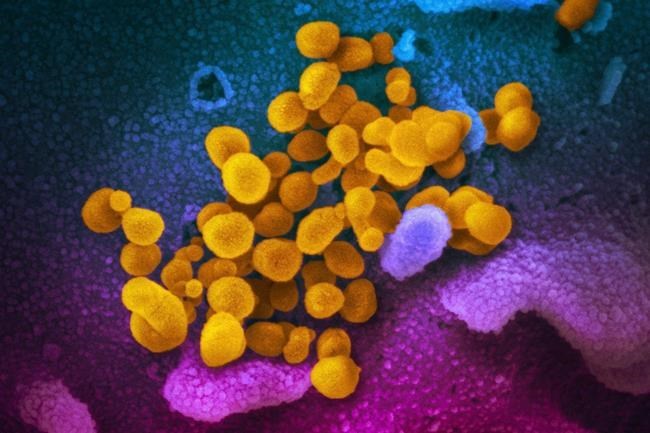
“We just have to start getting used to this in some way (and) also be able to respond aggressively and effectively.”
Murthy is serving as co-chair of the WHO’s clinical research committee for the new virus, which is looking to establish better descriptions of COVID-19 including what causes it, who gets sick and why some individuals might become sicker.
The committee is also exploring how to help people recover from the novel coronavirus and establish how to determine whether a patient has recovered.
“I think if you were a betting person, you would say there is high risk of this continuing to spread in various parts of the world,” said Murthy, adding that it’s speculative to say how exactly it might progress.
The good news, he said, is that global collaboration has been expedited like never before, and experts have learned a lot since severe acute respiratory syndrome, or SARS, first broke out in 2002.
Canada was pivotal in describing SARS, largely because Ontario was hit hard by the virus, said Murthy, but at the time, research that would have helped the response to the outbreak was minimal. After SARS, researchers recognized that coronaviruses could be a problem in the future, said Murthy.
“We’ve learned quite a bit over the past 17 years.”
The Canadian Institute for Health Research — a funding body for health research in the country — has been “imperative” in helping to co-ordinate the global response to the new coronavirus as it relates to research priorities, such as the development of a preventative vaccine and therapeutic treatments, he said.
Charu Kaushic, the scientific director for the institute’s infection and immunity division, said the CIHR was able to put together a “rapid response” to COVID-19, making $6.75 million available for research into the new virus, a number she said will rise significantly when the total amount is announced in the coming days.
Kaushic agreed with Murthy that SARS was a catalyst for change in Canada.
“Since then, we’ve learned so many lessons,” said Kaushic, who also teaches in the department of pathology and molecular medicine at McMaster University in Hamilton. “We are much better prepared, both from a public health perspective, but also from a research perspective.”
Dr. Josef Penninger, who worked at Toronto’s Princess Margaret Hospital during the SARS outbreak, said he is “totally amazed” at the speed with which scientists and some biotech companies have responded to COVID-19.
Penninger, the director of UBC’s Life Sciences Institute and Canada 150 chair in functional genetics, helped find the pathway through which SARS entered human cells and began to replicate — the protein ACE2 — which led to the development of a drug that could now help treat COVID-19.
“It turns out the new coronavirus uses exactly the same mechanism,” to enter cells, he said, adding that the drug, APN01, has already been tested on humans.
“We have ample data in humans already showing this protein we made is a therapy. It does exactly as we assumed it should do.”
But APN01 must still be tested in carefully controlled clinical trials before it is approved, he said.
Penninger is part of an international team working with Austrian biotech company Apeiron Biologics, which he co-founded, to conduct a pilot clinical trial in China involving 24 patients with severe cases of COVID-19.
The drug has arrived in China, he said, and the trial could start any day now. Half of the patients will receive the drug and half will receive a placebo with the results analyzed by an international panel of exerts, said Penninger, who hopes the drug will move quickly into a larger and definitive trial.
“It was all started in Canada,” Penninger said.
But multiple preventative and therapeutic treatments will be needed for the virus, which could be here to stay, he said.
“Hopefully it won’t, but there’s epidemiologists predicting this virus will stay with us and move around the globe like the flu in the future,” he added.
Matthias Gotte, chair of the medical microbiology and immunology department at the University of Alberta, has been working with his team to find out how another drug initially developed to treat Ebola might also work against coronaviruses.
American biotechnology company Gilead Sciences developed the drug remdesivir as a response to the Ebola epidemic in West Africa, where it was tested in a clinical trial, said Gotte.
Results showed that several other treatments were more effective against Ebola, but testing on monkeys infected with MERS — the Middle East respiratory syndrome-related coronavirus — suggested the drug could be effective against coronaviruses, explained Gotte.

The first patient diagnosed with COVID-19 in the United States received remdesivir for compassionate use, which allows the use of an unapproved drug to treat a seriously ill patient when no other treatments are available. The patient had been admitted to the intensive care unit and received the drug on the seventh day of illness, and the next day the patient showed a marked improvement and symptoms eventually disappeared altogether, Gotte said.
Last week, Gilead Sciences announced two clinical studies to evaluate the safety and efficacy of remdesivir in about 1,000 adults diagnosed with COVID-19. The company said the randomized studies will begin this month in countries across Asia and in other countries where COVID-19 has been diagnosed in higher numbers.
Gotte said no matter the results of the studies, his team will examine how the drug interacts with the new virus.
“Once we know how it works, we can make the drugs better.”
This report by The Canadian Press was first published March 3, 2020.
Related Articles
COVID-19 ups odds of BoC rate cut, experts say

Advertisement Advertise With Us
Advertisement Advertise With Us