An incommunicable illness: the difficulties in naming the latest viral outbreak

Advertisement

Advertise with us

TORONTO - The "Chinese Flu." The "Wuhan virus." The "Wuhan coronavirus."

Read this article for free:


or

Already have an account? Log in here »

To continue reading, please subscribe:

Subscribe and receive a limited-edition Free Press branded hat or tote.

Digital Subscription

One year of digital access for only $205*

  • Enjoy unlimited reading on winnipegfreepress.com
  • Read the E-Edition, our digital replica newspaper
  • Access News Break, our award-winning app
  • Play interactive puzzles

*First annual payment billed as $205.00 + GST for one year. This annual subscription will automatically renew at $233.00 + GST every 52 weeks (10% off the regular annual price of $259.35). Offer available to new and qualified returning subscribers only. Cancel any time.

To continue reading, please subscribe:

Add Free Press access to your Brandon Sun subscription for only an additional

$1 for the first 4 weeks*

  • Enjoy unlimited reading on winnipegfreepress.com
  • Read the E-Edition, our digital replica newspaper
  • Access News Break, our award-winning app
  • Play interactive puzzles
Start now

*Your next Brandon Sun subscription payment will increase by $1.00 and you will be charged $17.95 plus GST for four weeks. After four weeks, your payment will increase to $24.95 plus GST every four weeks.

Hey there, time traveller!
This article was published 30/01/2020 (2409 days ago), so information in it may no longer be current.

TORONTO – The “Chinese Flu.” The “Wuhan virus.” The “Wuhan coronavirus.”

These are some of the names major media outlets have applied to a new illness originating in Wuhan, China whose official name doesn’t exactly roll off the tongue — “2019-nCoV.”

Mainstream media more often refer to it as a “novel coronavirus” or “new coronavirus,” while tweeters and bloggers have been more willing to posit their own colourful — and often culturally inappropriate — labels.
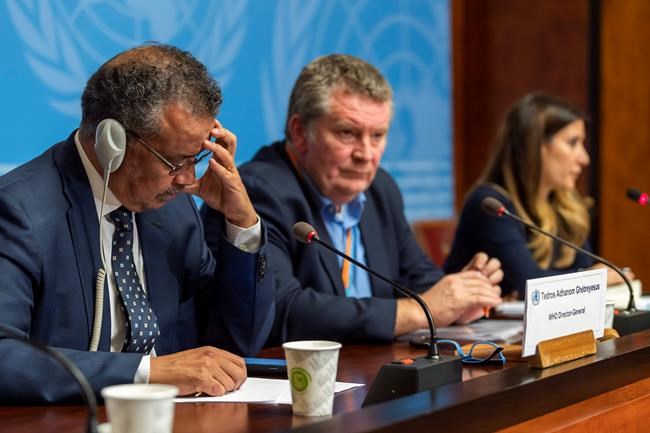
WHO executives, from left, Tedros Adhanom Ghebreyesus, Director General of the World Health Organization (WHO) with Michael Ryan, Executive Director, WHO Health Emergencies Programme, and Maria van Kerkhove, Head of the Outbreak Investigation Task Force, during a press conference about the new Coronavirus, at the European headquarters of the United Nations in Geneva, Switzerland, Wednesday, Jan. 29, 2020. Efforts to contain a new and deadly virus have intensified Wednesday, as quarantine facilities are set up, many airlines have suspended or significantly cut back flights from China and efforts continue to find a medical remedy. (Martial Trezzini/Keystone via AP)

The World Health Organization says it “temporarily” dubbed this new virus “2019-nCoV” (pronounced “20-19-en-koh-VEE'”), a step the WHO employs for very new diseases “so that inappropriate names do not become established.”

Despite those intentions, the absence of a snappy handle is the very reason we’ve seen an array of monikers that are not always politically correct or accurate, say observers.

“The problem is [2019-nCoV] a little clunky to use and people aren’t really going to adopt it. And the longer the WHO wait before they come up with a conventional name that people use, the greater the risk that they’ll lose control over naming it,” says Steven Taylor, a clinical psychologist and author of “The Psychology of Pandemics: Preparing for the next global outbreak of infectious disease.”

Taylor says names in general hold great psychological importance because they operate on several levels: they impart information about the disease, can imply the degree of threat involved, and invite the general public to learn about often complex health issues.

But they can also cause unnecessary cultural, regional or economic offence. Wuhan is already suffering a financial blow from the quarantine and a name like “Wuhan Flu” is unlikely to help.

In the spirit of the Hippocratic Oath “first, do no harm,” experts agree the name of a new disease should not single out ethnic or racial groups, geographic locales, trade and industry groups, or negatively impact animal welfare.

This is the presiding principle of the WHO’s 2015 guidelines on naming infectious diseases, which stress the importance of picking names that don’t offend “while balancing science, communication, and policy.”

That’s a difficult bar to meet, says Nicola Bragazzi, a medical doctor and research chair at York University’s Natural Sciences and Engineering Research Council. Just look at the substantial number of names in wide circulation that are inspired by towns, cities, people, animals, jobs and groups: the Spanish flu, Legionnaires disease, Japanese encephalitis, and bird flu, among them.

Controversies abound, but these names are so well-established in the public consciousness there’s no way to roll them back now, says Bragazzi.

Even inadvertent offence is tough to avoid, he adds, noting that “norovirus” drew ire for unintentionally containing the widespread Japanese family name “Noro.” And this was after the diarrhea-causing bug was initially named the “Norwalk Agent,” in reference to the town of Norwalk, Ohio, where an outbreak emerged among schoolchildren in 1968.

In 2011, the flap pushed the International Committee on Taxonomy of Viruses — which oversees the creation and naming of virus species, genus and families — to strongly encourage the media, national health authorities and scientific community to use the name “Norwalk virus” instead.

Naming viruses after the scientists who discovered them would seem to be a safe bet — such as the Epstein-Barr virus, named after Michael Anthony Epstein and Yvonne Barr. But this too, was problematic, because it failed to acknowledge the contributions of a third scientist, Bert Achong, says Bragazzi.

“According to the World Health Organization guidelines, most names of viruses sound inappropriate,” he says, suggesting it may be best to stick to characteristics of the illness rather than where it originated or who it first affected.

This is tough for something as new as 2019-nCoV, whose exceedingly clinical moniker was derived from the few irrefutable facts at hand: It emerged in 2019, it is “novel” or new, and it is part of a family of coronaviruses that can cause a variety of conditions.

Of course the problem with calling something “novel” is that it becomes obsolete as soon as another new pathogen of that type appears, says Taylor.

Allison McGeer, director of the Infectious Diseases Epidemiology Research Unit at Mount Sinai Hospital and a professor at the University of Toronto’s Dalla Lana School of Public Health, says there are bigger issues to contend with than a virus’ name.

“The truth of matter is that we call bacteria by very complex and difficult names and we live with that all the time,” says McGeer, who contracted SARS when she was on the front lines of the Toronto outbreak in 2003.

“I understand the desire for acronyms that roll off your tongue, but it’s not necessarily what we should be doing.”

McGeer says there is an international coronovirus group that has named new illnesses — including SARS, or Severe Acute Respiratory Syndrome — but there is no formal body that is responsible for new human viruses and it’s not clear when, or if, a new name for 2019-nCoV is coming.

The WHO says final names for diseases are set by the International Classification of Diseases.

Most agree that if you want a new disease to resonate with the general public its name should be memorable, short and easy to pronounce, such as “rabies” or “polio.”

“It all gets down to what you want your name to do, or what impact you want it to have on people. If you give it a technical name, it’s only going to have meaning to the people who are involved in the study and treatment of the disease,” says Taylor, also a professor in the University of British Columbia’s psychiatry department.

“If we want people to stop eating wild animals, which are a reservoir of viruses, (then) you can call it something like ‘Wild Meat Coronavirus.'”

There’s little chance that would fly, Taylor quickly adds, noting that name could lead some fearful citizens to start culling wild animals to avoid the virus’s spread.

Naming a new virus in this day and age is no easy task, he agrees.

“There are all kinds of complexities that need consideration.”

This report by The Canadian Press was first published Jan 30, 2020.

Note to readers: This is a corrected story. A previous version referred to norovirus as the flu.

Report Error Submit a Tip

More Stories

Comic creator unleashes talent with book bound for festival

Sheldon Birnie 6 minute read Preview

Comic creator unleashes talent with book bound for festival

Sheldon Birnie 6 minute read 2:01 AM CDT

For Glenn Hares, comic books — specifically, superhero comics — have always been a refuge, a way to both understand and escape the world.

Now, he’s prepared to release his own into the world.

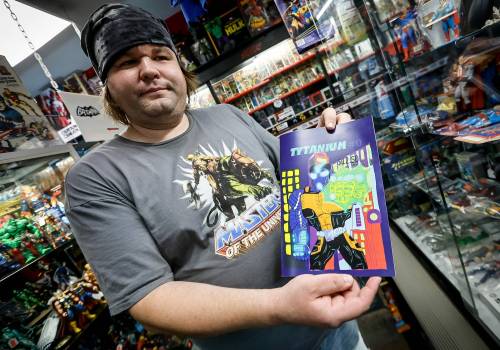
“When I was in high school, I started creating characters, like this guy here,” says Hares, 40, showing a reporter a copy of the self-published Tytanium No. 0.

“Originally, he was just named Jerry Wolfe. Recently, my aunt suggested I make him neurodivergent because I based him on myself. A lot of superheroes have extraordinary, fantastic, out-of-the-ordinary powers, but they’re also just people. They live imperfect lives.”

Read
2:01 AM CDT

Canadians urged to remember all who served

Lee Berthiaume, The Canadian Press 6 minute read Preview

Canadians urged to remember all who served

Lee Berthiaume, The Canadian Press 6 minute read Monday, Nov. 11, 2019

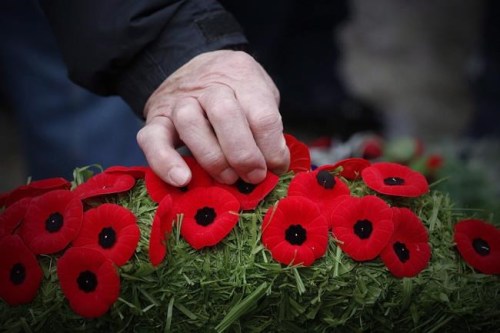
OTTAWA - Thousands of Canadians braved sub-zero temperatures in the nation's capital on Monday to honour and remember all those — no matter their background — who offered up their lives to defend Canada, its values and its principles.

Reminders of that common cause among those who served this country and died for it figured prominently during this year's Remembrance Day ceremony alongside calls from spiritual leaders for peace instead of war, unity rather than division, and respect for diversity.

"Let us continue to make Canada worthy of their dedication and sacrifice, a country in which respect, harmony, inclusion, responsibility and kindness fill the air," Rabbi Reuven Bulka told the assembled crowd, speaking of those who had given their lives for Canada.

He went on to note that this year marked the 75th anniversary of D-Day, when Canada and its allies launched a massive amphibious assault on France that marked the beginning of the end of Nazi Germany in the Second World War, before suggesting every day should be a D-Day of sorts.

Read
Monday, Nov. 11, 2019

Stastny gave $1,000 to convoy protesters

Jeff Hamilton 7 minute read Preview

Stastny gave $1,000 to convoy protesters

Jeff Hamilton 7 minute read Tuesday, Mar. 1, 2022

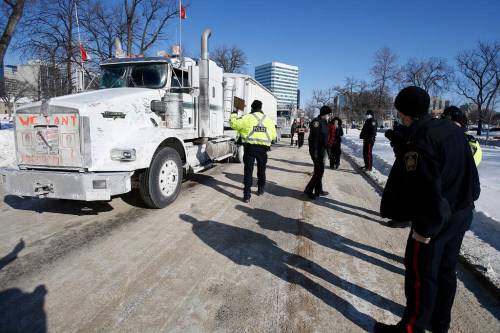
GLENDALE, Ari. – Paul Stastny said he donated to the convoy protests against COVID-19 vaccine mandates because of serious concerns he has for the future of those closest to him and what he believes could be a turning point for Canada.

The Winnipeg Jets forward was one of tens of thousands of people exposed in a leaked list of donors that financially supported the so-called “freedom convoy.” Stastny, under a registered company Walnuts, LLC, committed US$1,000 on Feb. 8, according to the leaked documents.

“Being the son of immigrants that left a communist country to come to Canada and have a future where they had their own decisions and do-what-they-want type of freedom is something that’s always been instilled in me,” Stastny told the Free Press, speaking for the first time on the topic. “And then I know what Canada was like, and I can see where Canada is going, and I think that’s what scares me.”

He added: “For me, it’s not about myself or my wife. It’s more about our kids’ futures, and you want their future to always be better than yours.”

Read
Tuesday, Mar. 1, 2022

‘We’re just all thankful to have some baseball’

Mike McIntyre 6 minute read Preview

‘We’re just all thankful to have some baseball’

Mike McIntyre 6 minute read Wednesday, Jun. 24, 2020

Driving more than 2,000 kilometres in less than a day might seem like the equivalent of getting a root canal to many. But it's a journey Winnipeg Goldeyes manager Rick Forney was happy to make this week, one that started from his residence in Maryland and ended in his most unusual temporary baseball home of Fargo, N.D.

Unable to play games at Shaw Park this summer owing to COVID-19 restrictions banning large gatherings for sporting events until at least September, the Fish will instead fly in enemy territory. An abbreviated spring training gets underway Thursday followed by an abbreviated 60-game American Association baseball season starting July 3.

Forney's 24th season with the Goldeyes, including the past 15 as skipper, is going to be unlike any other.

"It's not ideal, but it's not a reason to not work. If the Goldeyes are going to operate in any fashion, then I want to be a part of it," Forney said by telephone as he passed the midway point of his solo trek just outside Chicago.

Read
Wednesday, Jun. 24, 2020

Police conduct code long overdue

Editorial 4 minute read Preview

Police conduct code long overdue

Editorial 4 minute read Tuesday, Mar. 22, 2022

It may come as a surprise to many that Manitoba does not have a province-wide code of conduct for police officers. Most other provinces do. Manitoba has had the authority under the Police Services Act since it was passed in 2009 to establish formal rules around policing activity, including mechanisms to respond to allegations of officer misconduct. For reasons neither the former NDP or current Progressive Conservative governments have explained, none was ever put in place.

What Manitobans are left with is a patchwork system that differs from one municipality to the next. It is neither open and transparent nor does it provide the public with an effective process to hold police officers accountable for their actions. Some allegations of non-criminal misconduct are heard by the province’s Law Enforcement Review Agency. However, most complaints made through LERA (a process that has been widely criticized as dysfunctional and ineffective), rarely receive full hearings and almost never result in officer discipline. Allegations of criminal behaviour are investigated through the province’s Independent Investigation Unit.

Justice Minister Kelvin Goertzen says the province intends to create a new set of rules that will govern the conduct of all police officers in the province. The minister introduced Bill 30 last week, amendments to the Police Services Act, which among other things restates government’s ability to establish a province-wide code of conduct.

The wording in the bill is similar to what already exists in the act. The difference now, at least according to Mr. Goertzen, is there is a stated intention to move forward on creating a province-wide code, although it remains discretionary under the proposed legislation.

Read
Tuesday, Mar. 22, 2022

Getting back on track

Mitch Calvert 6 minute read Saturday, May. 10, 2025

We’re cracking open the ol’ Mitch Mailbag to tackle a handful of questions I’ve been getting from clients lately — questions a lot of people wrestle with on their fat-loss journey.

If you’ve ever felt stuck, confused or like you’re doing everything “right” but the scale won’t budge… let’s start there.

Q: I’m doing everything right but my fat loss has stalled — what gives?

A: Most plateaus aren’t real. They’re death by a thousand bites — literally. The easiest way to burn calories is to not eat too many of them in the first place.