New federal climate think tank looking for a road map to zero emissions

Advertisement

Advertise with us

OTTAWA - A new climate change think tank funded by the federal government says Canadians should expect to face the harsh realities of a changing climate even under the most aggressive global efforts to cut greenhouse gas emissions.

Read this article for free:


By clicking the button above, an account will be created and you will begin to receive some of our recommended newsletters. You may opt out of any newsletter by visiting your Email and Communication Preferences page or by clicking "unsubscribe" at the bottom of any email.

or

Already have an account? Log in here »

To continue reading, please subscribe:

Digital Subscription

One year of digital access for only $1.44 a week*

  • Enjoy unlimited reading on winnipegfreepress.com
  • Read the E-Edition, our digital replica newspaper
  • Access News Break, our award-winning app
  • Play interactive puzzles

*Billed as $5.77 plus GST every four weeks. After 52 weeks, price increases to the regular rate of $19.95 plus GST every four weeks. Offer available to new and qualified returning subscribers only. Cancel any time.

To continue reading, please subscribe:

Add Free Press access to your Brandon Sun subscription for only an additional

$1 for the first 4 weeks*

  • Enjoy unlimited reading on winnipegfreepress.com
  • Read the E-Edition, our digital replica newspaper
  • Access News Break, our award-winning app
  • Play interactive puzzles
Start now

*Your next Brandon Sun subscription payment will increase by $1.00 and you will be charged $17.95 plus GST for four weeks. After four weeks, your payment will increase to $24.95 plus GST every four weeks.

Hey there, time traveller!
This article was published 21/01/2020 (2474 days ago), so information in it may no longer be current.

OTTAWA – A new climate change think tank funded by the federal government says Canadians should expect to face the harsh realities of a changing climate even under the most aggressive global efforts to cut greenhouse gas emissions.

The $20-million Canadian Institute for Climate Choices officially launches Tuesday with an inaugural report warning Canada will not be able to avoid the global economic shifts that adapting to climate change will bring.

It also says change is coming whether the world shifts quickly to low and zero-emitting energy sources, or continues as it is and then also has to face the social, economic and environmental disruptions that ensue.

A flare stack lights the sky from the Imperial Oil refinery in Edmonton on December 28, 2018. A new climate change think tank funded by the federal government says Canadians should expect to face the harsh realities of a changing climate even under the most aggressive global efforts to curb fossil fuel use and cut greenhouse gas emissions. THE CANADIAN PRESS/Jason Franson

“I think there is no question that the game is changing,” said CEO Kathy Bardswick. “The realities of Canada’s position in the world, and how we’re going to ensure our prosperity going forward, is changing. How we provide value as a country is changing.”

The institute will be at arm’s length from the government but fulfils a 2018 federal budget commitment to hire outside experts to assess the government’s climate policies and provide advice on new options.

The institute has mainly a virtual existence, with staff and experts spread across the country conferring with each other mostly through various online platforms. The board has met in person twice thus far, and there was an opening summit in November where members met in regional groups.

The institute will produce at least three major reports a year across the three main areas of climate action: adapting to a lower-carbon reality, mitigating against the effects of a changing climate and developing and producing the clean technology needed for both of those things.

More than four dozen experts are on board to provide input, including former oil executive Dave Collyer, economist Don Drummond, and World Resources Institute climate resilience director Christina Chan, along with a whose who of Canadian climate scientists and economic experts.

Bardswick said everyone at the institute is aware of the anxieties and divisions that climate policies can create. She said the hope is that if the institute can help develop a clear road map for Canada’s role, it could help calm everyone down.

The report says Canada has to prepare for the impacts that climate change will have on weather systems even if global emissions reduce rapidly, because those changes are already underway.

It also says if the world is going to meet the emissions cuts suggested in the commitment Canada made at the Paris meeting in 2015, it will “trigger an economic transformation on a scale not seen since the first and second industrial revolutions.”

If the first industrial revolution brought about machine factories, steam and water power and iron production, and the second brought about petroleum and the common use of electricity, the climate revolution will mostly electrify almost everything the world uses.

It won’t happen overnight. The report points out that even under some of the most aggressive decarbonization attempts, fossil fuels are expected to play some role for many decades.

But Bardswick said the signs from investors, even in the last few weeks, suggest the changes could start to come quite quickly.

BlackRock, the world’s largest money manager, said Jan. 14 it plans to make climate risk a key part of its investment strategies, including divesting of investments in thermal coal production.

Three days later tech giant Microsoft announced plans to switch all its buildings and data centres to renewable energy by 2025. It also wants to be taking more emissions out of the atmosphere than it is putting into it by 2030.

The report says Canada can either jump on board in the early stages, or risk massive job losses and economic pain when other countries pour money and time into the technology and manufacturing systems of the future.

This report by The Canadian Press was first published Jan. 21, 2020.

Report Error Submit a Tip

More Stories

Three in-custody fatalities trigger inquests

Free Press staff 2 minute read Preview

Three in-custody fatalities trigger inquests

Free Press staff 2 minute read Yesterday at 1:50 PM CDT

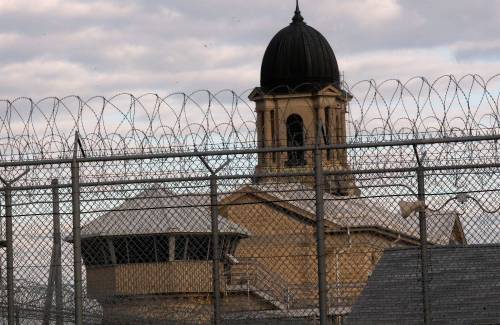
The province’s chief medical examiner has called inquests into the deaths of three men, including two who died by suicide in correctional facilities earlier this year.

Craig Flett, 32, was found hanging in his cell in the Stony Mountain Institution prison on Feb. 10 this year.

Corrections officers were able to cut him down and tried to resuscitate him, but he later died of a brain injury. Flett was serving a life sentence at the time.

Sebastian Atkinson, a 25-year-old inmate at the Winnipeg Remand Centre, was found hanging in his cell by a linen sheet tied to a metal bar about five feet from the floor.

Read
Yesterday at 1:50 PM CDT

Cabbie, passenger dead after Salter Street collision

Free Press staff 2 minute read Preview

Cabbie, passenger dead after Salter Street collision

Free Press staff 2 minute read Updated: Yesterday at 5:46 PM CDT

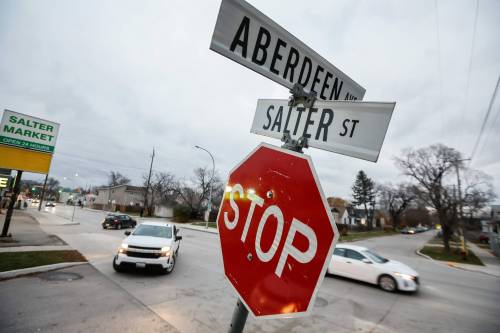
Two men died in a Wednesday morning collision between a taxi and a sedan on Salter Street near Aberdeen Avenue, police said Thursday.

Winnipeg Police Service officers were sent to the intersection at about 6:30 a.m., where they found the cab driver, a man in his 40s, and his passenger, a man in his 50s, in critical condition. Paramedics took the men to hospital, where they later died.

The sedan driver, a woman in her late teens, and an adult passenger, had minor injuries.

Traffic investigators believe the sedan was travelling west on Aberdeen when it collided with the cab that was southbound on Salter.

Read
Updated: Yesterday at 5:46 PM CDT

Longtime councillor Eadie ‘knew it was going to be close,’ but expected to finish on top in Mynarski

Scott Billeck 5 minute read Preview

Longtime councillor Eadie ‘knew it was going to be close,’ but expected to finish on top in Mynarski

Scott Billeck 5 minute read Updated: Yesterday at 1:56 PM CDT

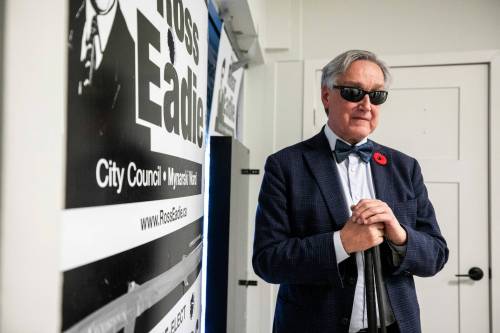
Ross Eadie knew his re-election bid would be close, but he didn’t anticipate losing in the neighbourhoods where he grew up.

The 16-year Mynarski councillor, who was defeated Wednesday by political newcomer Natalie Smith, said Thursday the result was difficult to accept because some of his strongest losses were in Luxton, St. John’s Park and surrounding neighbourhoods.

“I knew it was going to be close,” Eadie said. “But I thought it was going to be close with me in first place.”

“I really lost it where I live. So that’s the worst part of it.”

Read
Updated: Yesterday at 1:56 PM CDT

Health officials ponder next steps as COVID cases surge in Southern Health region

Katie May 5 minute read Preview

Health officials ponder next steps as COVID cases surge in Southern Health region

Katie May 5 minute read Wednesday, Nov. 3, 2021

Public-health officials say they're trying to avoid ordering another lockdown in southern Manitoba, where COVID-19 infection rates are surging.

Deputy chief provincial public health officer Dr. Jazz Atwal told a news conference Wednesday he doesn't anticipate more lockdowns and suggested he will prioritize keeping schools open when considering future restrictions.

But he couldn't say what the next step will be in an area of the province where hospitalizations among unvaccinated residents are on the rise.

Average daily case counts in the southern part of the province are higher now than they were before lockdown measures went into effect last November, and officials are still figuring out what to do.

Read
Wednesday, Nov. 3, 2021

Record number of women elected in Manitoba municipal elections

Chris Kitching 5 minute read Preview

Record number of women elected in Manitoba municipal elections

Chris Kitching 5 minute read Yesterday at 3:33 PM CDT

A record number of women were elected to municipal office in Manitoba in elections held across the province Wednesday.

The Association of Manitoba Municipalities said 213 of 339 women candidates were voted in, accounting for almost 25 per cent of elected municipal officials — up from 20 per cent in 2022.

Portage la Prairie Mayor Sharilyn Knox, who applauded the increase, said there has been progress to reduce barriers that impede women’s participation in local government, “but I don’t think we’re where we need to be yet.”

“I think representation matters. When women see other women sitting around council tables, chairing meetings and taking on leadership roles, it helps them see themselves doing the same thing,” she said.

Read
Yesterday at 3:33 PM CDT

A timeline of the WE Charity controversy

The Canadian Press 9 minute read Wednesday, Aug. 19, 2020

OTTAWA - A timeline of events regarding the Canada Student Service Grant program, based on public documents, events and statements from cabinet ministers, government officials, and WE Charity:

March 6, 2020: WE Charity staff prepare a concept paper on service learning for public servants at Employment and Social Development Canada.

April 5: Finance Minister Bill Morneau and Prime Minister Justin Trudeau talk over the phone about how to help students whose summer job and volunteer opportunities were vanishing due to the COVID-19 pandemic. Finance Department officials are tasked with considering options the next morning.

April 7: Small Business Minister Mary Ng and WE co-founder Craig Kielburger have an introductory phone call in which Ng asks WE to send what it calls a ``pre-established proposal'' to help young people launch businesses.