Experts urge frank, empathetic talk with youth reeling from Iran plane crash

Advertisement

Advertise with us

TORONTO - Among the many painful details that have emerged about downed Ukraine International Airlines Flight PS752 is the preponderance of young victims, and their deaths have sent waves of grief through schools and university campuses across the country.

Read this article for free:


or

Already have an account? Log in here »

To continue reading, please subscribe:

Subscribe and receive a limited-edition Free Press branded hat or tote.

Digital Subscription

One year of digital access for only $205*

  • Enjoy unlimited reading on winnipegfreepress.com
  • Read the E-Edition, our digital replica newspaper
  • Access News Break, our award-winning app
  • Play interactive puzzles

*First annual payment billed as $205.00 + GST for one year. This annual subscription will automatically renew at $233.00 + GST every 52 weeks (10% off the regular annual price of $259.35). Offer available to new and qualified returning subscribers only. Cancel any time.

To continue reading, please subscribe:

Add Free Press access to your Brandon Sun subscription for only an additional

$1 for the first 4 weeks*

  • Enjoy unlimited reading on winnipegfreepress.com
  • Read the E-Edition, our digital replica newspaper
  • Access News Break, our award-winning app
  • Play interactive puzzles
Start now

*Your next Brandon Sun subscription payment will increase by $1.00 and you will be charged $17.95 plus GST for four weeks. After four weeks, your payment will increase to $24.95 plus GST every four weeks.

Hey there, time traveller!
This article was published 10/01/2020 (2439 days ago), so information in it may no longer be current.

TORONTO – Among the many painful details that have emerged about downed Ukraine International Airlines Flight PS752 is the preponderance of young victims, and their deaths have sent waves of grief through schools and university campuses across the country.

Young people attempting to process such senseless tragedy can vary wildly in their understanding of mass violence, say grief experts.

Confusion, rage, despondency, withdrawal and fear are some of the things parents and caregivers may see to various degrees in young children, grade-schoolers and adolescents, says Leeat Granek, who encourages families to offer frank but empathetic conversations about death in times like these.
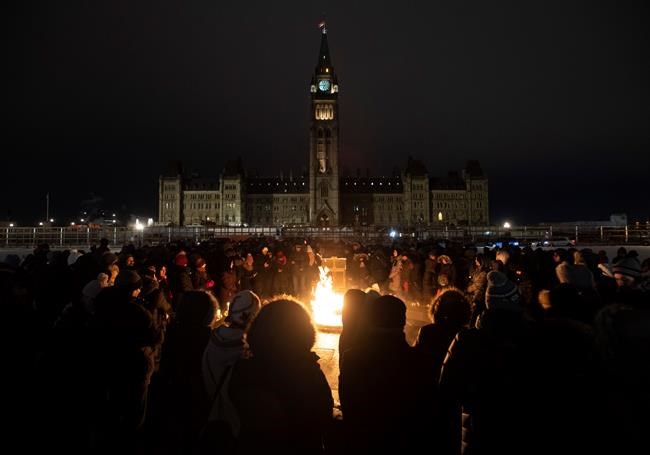
Several hundred people gather around the Centennial flame for a candle light vigil to remember those killed on Ukraine International Airlines Flight on Thursday January 9, 2020 in Ottawa. Among the many painful details that have emerged about the downed airliner in Iran is the preponderance of young victims, and their deaths have sent waves of grief through schools and university campuses across the country. THE CANADIAN PRESS/Adrian Wyld

“With all children of all ages, being open and honest and very clear is very, very, very important,” says Granek, a health psychologist and associate professor at York University’s school of health policy and management.

Out of the 176 dead passengers — 138 of whom were bound for Canada — at least 75 were younger than 30 when the Boeing 737 dropped from the sky near Tehran. About a third of those younger victims had not yet reached their teens.

Among the tips various school boards, principals and university advisors have offered parents this week are: listen to what your child tells you, ask them to describe their emotions, and respond to their concerns.

Use words and concepts that are age-appropriate, and don’t overwhelm younger kids with details they may have trouble understanding, adds Granek.

Those younger than two don’t understand death or its permanency, and even kids approaching age six can struggle with the concept, she says. Strive for concrete terms and avoid metaphors.

“If you tell a three-year-old, ‘This person has gone to sleep,’ they’re going to think that they’re going to wake up and they’re also going to develop some anxieties about when they go to sleep or when their loved ones go to sleep.”

Those aged five to 10 can understand death is final, but may not grasp that all people die or that they will die, says Granek, who stresses the need to include developmentally appropriate details, lest kids fill in the gaps with “very incorrect things.”

Tanya Sharpe, a social work professor at the University of Toronto, adds that little kids may wet the bed, become overly attached or cry. This age group tends to ask caregivers two things: Is that going to happen again? How are you going to keep me safe?

Sharpe advises parents focus conversations on decreasing anxiety — acknowledge bad things happen to good people, and emphasize the support of family and commitment to caring for kids.

“It’s really stopping them in that moment and grounding them in the presence of your voice, making them feel secure,” says Sharpe.

Meanwhile, teens may express shock, numbness, denial, hyper-vigilance, and night terrors, she says.

Because teens often turn to friends instead of family, Sharpe says parents should make the effort to raise the topic themselves — but do so over dinner or another activity so it doesn’t come across as too invasive on sensitive psyches.

Adolescents may be withdrawn, or stay in their room a little bit more. You may see grades slip, or they may self-medicate with substance abuse. Be on alert for signs your child has pulled away from recreational activities or peers, because that could signal the need for professional help, says Sharpe.

At Northern Secondary School in Toronto, a condolence book and photo of Grade 10 student Maya Zibaie greets visitors. Principal Adam Marshall says many staff and students have vacillated from “disbelief” to “despair” over the teen’s death.

Marshall sent a letter to parents detailing ways to help their children, noting that many adult staff members were “really devastated.”

“Be patient and really make sure you hear them out. You need to listen carefully and really respond to what’s being said,” he tells caregivers. “Almost mirror what you’re hearing so that you’re not automatically giving advice.”

At the University of Toronto, biology professor and associate dean Fiona Rawle says she’s fielded numerous calls, emails and visits from classmates of a victim the U of T identifies as Zeynab Asadi Lari, who was set to graduate this spring in biology. In the airline’s list of passengers she’s named as Zeynab Asadilari, born in 1998.

“The most common phrases that I hear are, ‘It’s not fair.’ And, ‘We can’t believe this has happened,’ and ‘We are all studying for our future and she doesn’t have a future to study for,'” Rawle says.

In response, she urges students to think about what set Lari apart — her academic drive and collaborative nature.

“One thing we really put our focus on right now is making sure students get the support that they need, and really emphasizing that it’s OK to reach out for support.”

This report by The Canadian Press was first reported Jan. 10, 2020

Note to readers: This is a corrected story. A previous version misstated the number of victims bound for Canada.

Report Error Submit a Tip

More Stories

Premier touts Port of Churchill opportunities at Canadian investment summit

Free Press staff 3 minute read Preview

Premier touts Port of Churchill opportunities at Canadian investment summit

Free Press staff 3 minute read 12:17 PM CDT

Premier Wab Kinew announced Monday that major capital investments in the Port of Churchill Plus project will receive an exemption from Manitoba’s seven per cent retail sales tax.

Kinew made the announcement at the start of the two-day Canada investment summit in Toronto. The premier made the pitch to a room of 250 Canadian and global investors representing more than US$13 trillion in assets.

“We are here in Toronto to tell global investors that the Port of Churchill is open and ready to expand,” Kinew said in a provincial government news release.

“These new capital incentives make it easier for investors to get in on the ground floor of the largest project featured at the Canada investment summit. The grain and critical minerals we are already shipping out of the port are reaching Europe faster than the Port of Vancouver. With the right investments we can ship commodities year-round, strengthening trade between reliable partners and creating good jobs,” the premier said.

Read
12:17 PM CDT

50 years ago, we thought we could change the world

Robert Milan and Miriam Cooley 8 minute read Preview

50 years ago, we thought we could change the world

Robert Milan and Miriam Cooley 8 minute read 2:00 AM CDT

Winnipeg, 50 years ago.

We began as a small loose unorganized group of teaching friends and educators who shared the same political and social convictions.

We defined ourselves as socialists, feminists and political activists. We were a cross section of educational minds — language arts and social studies teachers, an art teacher, an early childhood educator, a Winnipeg school trustee, a school principal — making our group quite representative of school culture at the time.

Our questions and discussions about politics, education and society arose from a diversity of backgrounds, yet reflected a progressive cohesiveness. The political climate in Manitoba helped bring us together. Sterling Lyon was premier and his Conservative government was pursuing policies that we strongly opposed. To us, his government represented a determined assault on many of the social and political values we believed in, particularly related to education. Eventually we decided that perhaps we should do more than talk. And so the Socialist Teachers Education Movement — STEM — was born.

Read
2:00 AM CDT

Beware invasive, ‘frightening’ waterhemp

Laura Rance-Unger 4 minute read Preview

Beware invasive, ‘frightening’ waterhemp

Laura Rance-Unger 4 minute read Saturday, Aug. 29, 2026

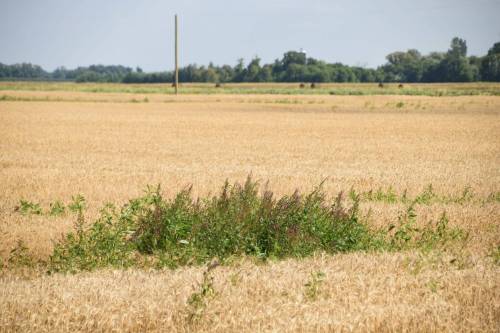
There’s a threat lurking on the edge of Manitoba farmers’ fields this fall that’s even scarier than the escalating trade war with their biggest customer.

Provincial extension advisers are warning farmers to watch for a weed known as “tall waterhemp,” which, true to its name, may already be towering above ready-to-harvest crops.

Those wispy tentacles waving in the breeze look pretty innocuous from a distance. But this highly invasive member of the pigweed family produces hundreds of thousands of seeds that are just itching for dispersal through farmers’ combines and across their fields.

Each of those tiny seeds — one small pill container filled halfway holds 44,000 — can produce plants with stems the width of saplings and heights of two to five metres. One or two plants can quickly turn into a patch. If waterhemp takes over a field, it can choke out the growing crop and cut yields by more than 90 per cent.

Read
Saturday, Aug. 29, 2026

Drug recovery centre opens office in ‘heart of the city’

Morgan Modjeski 4 minute read Preview

Drug recovery centre opens office in ‘heart of the city’

Morgan Modjeski 4 minute read Saturday, Sep. 12, 2026

Richard Halverson found his freedom from addiction through Adult & Teen Challenge and, six years later, he hopes a new Winnipeg location will bring hope to the city.

Dozens gathered Saturday morning to mark the grand opening of the recovery centre’s community services office on Main Street.

Located inside the former Wojcik funeral home, the bright-white building — which was also formerly a liquor store — will serve as an access point for people fighting drug addiction. That includes connecting them to addictions support, housing and training.

“For me, I always start with: ‘What’s your story?’” said Halverson, who now works for the faith-based organization.

Read
Saturday, Sep. 12, 2026

250 years ago Thomas Jefferson and the American Declaration of Independence

Allan Levine 5 minute read Preview

250 years ago Thomas Jefferson and the American Declaration of Independence

Allan Levine 5 minute read Saturday, Jul. 4, 2026

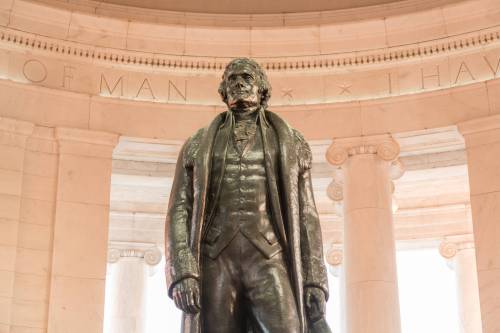
In the 16th and 17th centuries, countries and territories such as the Netherlands and Portugal boldly declared their independence from Spain. But 250 years ago, on July 4, 1776, the American Declaration of Independence — marked in the U.S. by the semiquincentennial celebrations — was the first time an overseas colony (the 13 colonies, in this case) had set out in an official document its reasons for breaking away from its mother country.

Because the Declaration ultimately gave birth to the United States, it is considered one of the greatest of historical treatises. Thomas Jefferson, its primary author, later explained that his main aim was “not to find out new principles, or new arguments, never before thought of … but to place before mankind the common sense of the subject; in terms so plain and firm as to command their assent.”

He did so brilliantly, creating, in theory at least, an enlightened argument for American independence based on the political, economic, social and philosophical thinking of the era.

Influenced by such philosophers as John Locke and Montesquieu, Jefferson, then 33 years old, a lawyer, landowner, Virginia politician and a delegate to the Second Continental Congress which met in Philadelphia, passionately believed in natural law — that all human beings were born free and equal and that no king or ruler could abolish these rights. It was a key point he made in the Declaration’s well-known preamble.

Read
Saturday, Jul. 4, 2026

COVID-19 tracking apps raise concerns: watchdogs

Nick Wells, The Canadian Press 6 minute read Preview

COVID-19 tracking apps raise concerns: watchdogs

Nick Wells, The Canadian Press 6 minute read Saturday, May. 2, 2020

VANCOUVER - Privacy watchdogs are voicing concerns over proposals across the country to implement smartphone apps to help track COVID-19.

New Brunswick, Manitoba, Newfoundland and Labrador, and Saskatchewan are among the provinces looking at or planning on creating smartphone apps that would track a user's whereabouts.

Alberta is the first province to launch an app.

Known as contact tracing, the apps track those who the user comes in to contact with, commonly by monitoring a device's Bluetooth signal.

Read
Saturday, May. 2, 2020