Into the wild

Novelist's latest offering a riveting fictional account of missionaries' plight

Advertisement

Advertise with us

In 1955, five American missionary couples set out to evangelize the Waorani, an Indigenous people group of the Ecuadorian rainforest that had never had contact with the outside world. They dubbed their mission “Operation Auca.”

Read this article for free:

or

Already have an account? Log in here »

To continue reading, please subscribe:

Subscribe and receive a limited-edition Free Press branded hat or tote.

Digital Subscription

One year of digital access for only $205*

  • Enjoy unlimited reading on winnipegfreepress.com
  • Read the E-Edition, our digital replica newspaper
  • Access News Break, our award-winning app
  • Play interactive puzzles

*First annual payment billed as $205.00 + GST for one year. This annual subscription will automatically renew at $233.00 + GST every 52 weeks (10% off the regular annual price of $259.35). Offer available to new and qualified returning subscribers only. Cancel any time.

To continue reading, please subscribe:

Add Free Press access to your Brandon Sun subscription for only an additional

$1 for the first 4 weeks*

  • Enjoy unlimited reading on winnipegfreepress.com
  • Read the E-Edition, our digital replica newspaper
  • Access News Break, our award-winning app
  • Play interactive puzzles
Start now

*Your next Brandon Sun subscription payment will increase by $1.00 and you will be charged $17.95 plus GST for four weeks. After four weeks, your payment will increase to $24.95 plus GST every four weeks.

Hey there, time traveller!
This article was published 07/09/2019 (2523 days ago), so information in it may no longer be current.

In 1955, five American missionary couples set out to evangelize the Waorani, an Indigenous people group of the Ecuadorian rainforest that had never had contact with the outside world. They dubbed their mission “Operation Auca.”

After a few months of airdropping gifts, the five men — Jim Elliot, Peter Fleming, Nate Saint, Ed McCully and Roger Youderian — opted to set up camp on a beach near a Waorani settlement. Just a few days later, they were all speared to death. Thanks to the swift arrival of a Life magazine photographer, the brutal conclusion to Operation Auca became global news.

In her new novel, Five Wives, Winnipeg writer Joan Thomas tells this story again.

Ecuador is the primary setting of Winnipeg author Joan Thomas’s new novel. (Esther de Jong / The Associated Press files)

“In the missionaries’ memoirs, ‘God’s leading’ explains almost every impulse,” Thomas writes in a postscript. “I set out to peer behind that, to explore in human terms actions that astonished me.”

Because Thomas was reluctant to discuss people still living, Five Wives treats the original generation — Jim and Elizabeth Elliot et al. — fictionally, meaning the novel remains faithful to facts and timelines, while imagining these individuals’ interiority and motivations. Subsequent generations are entirely fictionalized.

In choosing to tell this story, Thomas signed up for weighty material. Five Wives is not an exposé (though Thomas certainly did her research), but it does take a critical point of view. Not for nothing has this novel been compared to Barbara Kingsolver’s The Poisonwood Bible. From the outset, Thomas risks alienating any among her audience who have Christian roots, because the story of Nate Saint, Jim Elliot and the others is beloved by evangelicals, and Thomas has no interest in further romanticizing it.

It’s a sad, sad story from any point of view, both for the horror of the murders and the effects foreign interests had on Ecuador. It’s a fact, for example, that missionaries helped usher the oil industry into Ecuador and played a direct hand in Waorani disenfranchisement. Missionaries were instrumental in preserving Waorani language but also, early on, in cementing the Waorani’s global reputation as cultureless “savages” (“Auca” is actually a misnomer for “Waorani,” meaning “savages”). Following contact, many of the Waorani were wiped out by viruses against which they had no immunity. Today, they are only beginning to regain a political voice.

It’s not a Waorani voice that Thomas takes up in Five Wives, but those of the women left behind after that terrible day on the beach.
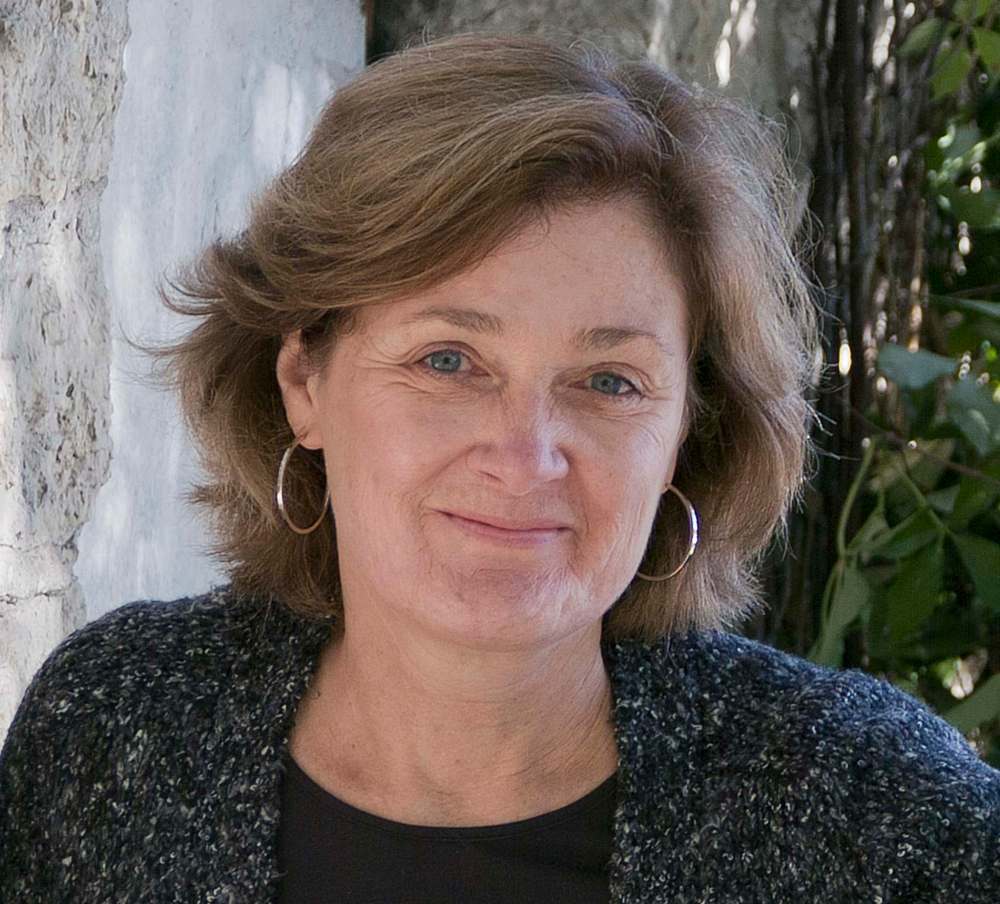
Thomas imagines what it would have been like for the missionaries’ widows in the field, forced to put on a brave face for their children. (Bruce Thomas Barr photo)

They are Elizabeth Elliot, Olive Fleming, Marjorie Saint, Rachel Saint (Nate’s sister), Marilou McCully and Barb Youderian. Some of them are newly married when they arrive in Ecuador, some have little children and some are opposed to the mission from the start. In the days after their husbands are murdered, all of them stick to the story that the deaths aren’t a tragedy but rather an opportunity for God to expand “His” work in Ecuador.

Thomas imagines, with great effect, how it would feel to be widowed on the mission field, forced to continue making sandwiches for the children while turning a brave, believing face to the world.

“I don’t want you to think I’m questioning God,” a distraught Marjorie tells the Life photographer when her control breaks.

Contemporary chapters are narrated by Saint’s fictional son, David, as well as a granddaughter named Abby. With such a large cast of characters, the narration in Five Wives is occasionally spread too thin, and some intriguing narrators — like Olive Fleming — are left by the wayside. Sections in which 19-year-old Abby wrestles with her family’s legacy are especially poignant; her earnestness calls to mind characters Thomas has written before (Lily in 2008’s Reading by Lightning and Sylvie in 2014’s The Opening Sky). Abby’s questions serve as a corrective to the other characters’ fervour, and Five Wives could have stood more of them.

But such is Thomas’s skill that she also finds nuance in the fervour, as when the widowed Elizabeth Elliot meditates on the significance of being chosen as Jim’s partner in life and in missions: “She felt the deep gladness of this, and also its weight. It was of a scale too big to be reckoned up, his martyrdom and God’s purposes. Consciously or unconsciously, she had followed Jim into mystery.”
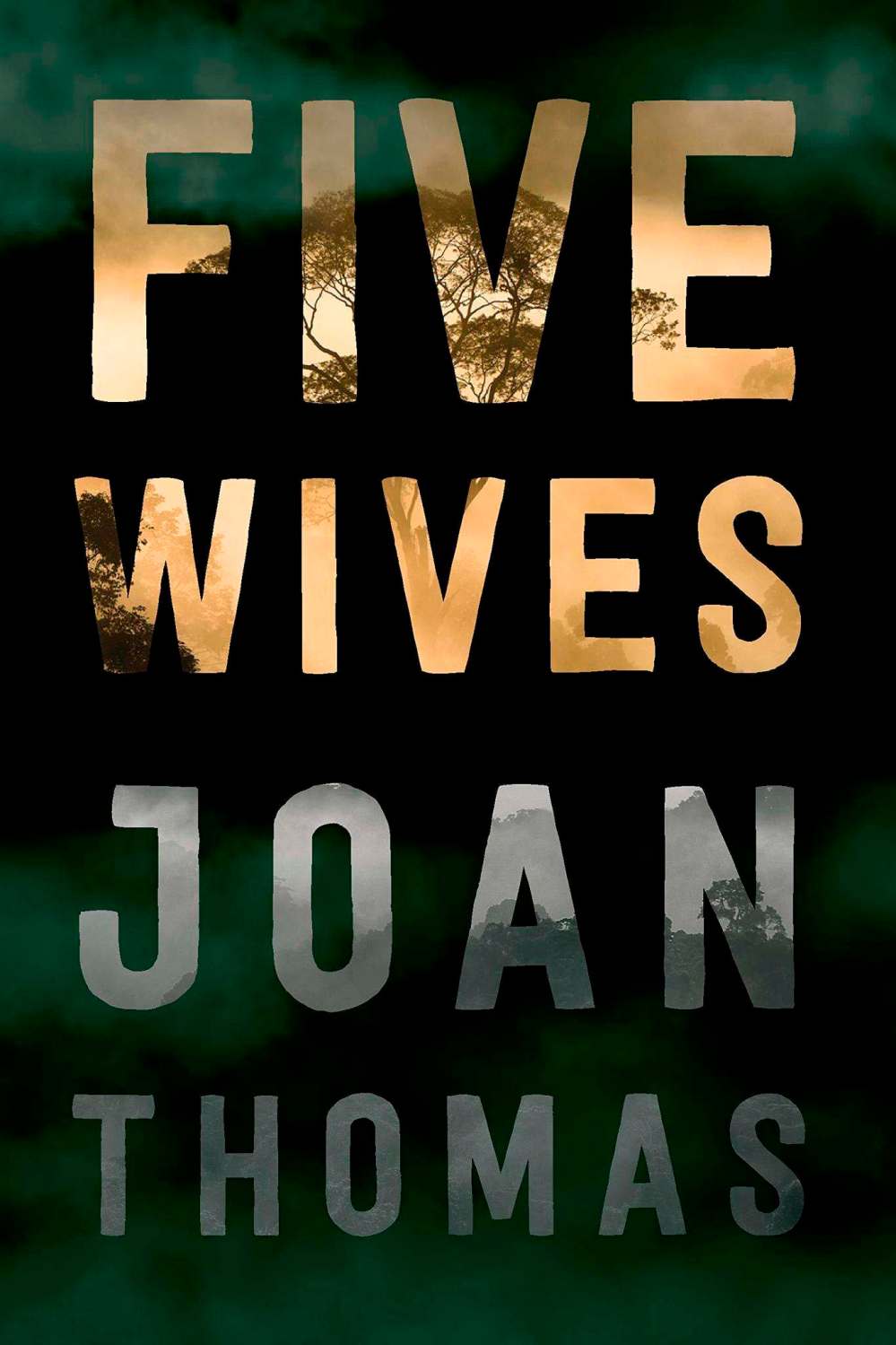
Five Wives is an engrossing, thoughtful read, and a fresh testament to Thomas’s narrative powers — and her ability to locate a human pulse under the often-deafening drumbeats of religious and cultural tradition.

Julienne Isaacs is a Winnipeg writer.
The Associated Press files
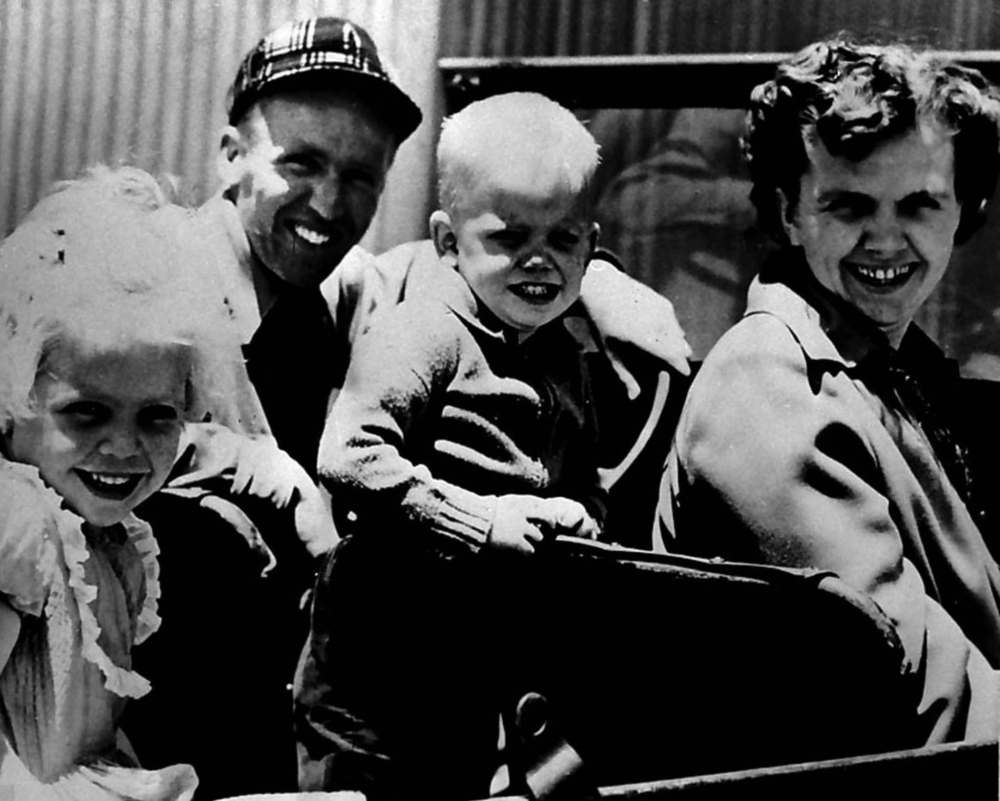
In this 1956 photo, American missionary Nate Saint, wearing a hat, poses with his daughter, Kathy (left), son Steve, and wife, Marjorie, just days before Nate was killed. In her novel, Thomas creates a fictional son for Saint, David, who narrates the contemporary sections of her book.
The Associated Press files In this 1956 photo, American missionary Nate Saint, wearing a hat, poses with his daughter, Kathy (left), son Steve, and wife, Marjorie, just days before Nate was killed. In her novel, Thomas creates a fictional son for Saint, David, who narrates the contemporary sections of her book.
Report Error Submit a Tip

More Stories

‘Sewing angels’ come to Folklorama pavilion’s rescue after Ghana dancers’ costumes stolen

Chris Kitching 5 minute read Preview

‘Sewing angels’ come to Folklorama pavilion’s rescue after Ghana dancers’ costumes stolen

Chris Kitching 5 minute read 2:50 PM CDT

Parents and volunteers had tears in their eyes when dozens of young dancers took to the stage for their opening performances at Folklorama’s Ghana pavilion Sunday night.

For a week-long run of shows, the dancers are wearing new outfits sewn by a team of volunteers, including strangers, who answered a call for help after the originals were stolen days before the festival began.

“Seeing all these kids and their excitement over the outfits, and then watching them on stage, I was very emotional,” said Jaelynne Wormenor, a pavilion volunteer whose three children are among about 40 youth dancers who perform multiple times per night during Folklorama.

“There was a really special feeling. It felt like it was a celebration. Something really bad happened, but then there was hope, there was resilience.”

Read
2:50 PM CDT

Salvation Army trio focuses on others' well-being during frigid overnight shift in pandemic

Ryan Thorpe, Photography by John Woods 14 minute read Preview

Salvation Army trio focuses on others' well-being during frigid overnight shift in pandemic

Ryan Thorpe, Photography by John Woods 14 minute read Monday, Dec. 28, 2020

The night begins with a prayer, an incantation from the lips of three faithful members of the flock, standing in dim light with clasped hands as they implore God to direct them where help is needed most.

Read
Monday, Dec. 28, 2020

Official finds low risk of lead poisoning at schoolyard

Larry Kusch 5 minute read Preview

Official finds low risk of lead poisoning at schoolyard

Larry Kusch 5 minute read Friday, Sep. 14, 2018

A local health official is reassured the risk of lead poisoning for students at Weston School is "very low".

Dr. Lisa Richards, medical officer of health with the Winnipeg Regional Health Authority, visited the school's grounds on Friday. She said the playground is covered either with sod, concrete or pea gravel.

"I didn't see a lot of exposed soil. So, I believe that the risk to the students and the public at large is very low as a result of the lead levels that were documented a decade ago," she said in an interview.

On Thursday, it was revealed that 2007 and 2008 soil test results in several Winnipeg neighbourhoods previously found to have elevated areas of lead were not disclosed to the public by the former NDP government. At a number of locations, including Weston School, as well as in Point Douglas, Minto and Wolseley, lead concentrations in soil exceeded national guidelines.

Read
Friday, Sep. 14, 2018

The latest on protests in support of Wet'suwet'en

The Canadian Press 10 minute read Preview

The latest on protests in support of Wet'suwet'en

The Canadian Press 10 minute read Thursday, Feb. 27, 2020

Here is the latest news on protests across Canada over a natural gas pipeline project in British Columbia (All times Eastern):

9:15 p.m. ET

A meeting between Wet'suwet'en hereditary chiefs and federal and B.C. ministers has ended for the day in Smithers, B.C., with a plan to resume Friday morning.

Federal Crown-Indigenous Relations Minister Carolyn Bennett and B.C. Indigenous Relations Minister Scott Fraser didn't provide details of what was discussed when the meeting ended, less than three hours after it began.

Read
Thursday, Feb. 27, 2020

Letters, Aug. 4

7 minute read 2:01 AM CDT

Charge highlights need for action

The recent reporting regarding a Winnipeg Fire Paramedic Service employee accused of violating a protection order, following previous convictions related to criminal harassment and breaches of court orders against former partners, raises concerns that extend beyond a single individual.

I believe this case highlights important questions about how public institutions assess and respond to risks associated with intimate partner violence, stalking, coercive control and repeated violations of court-imposed conditions.

Gender-based violence is a public safety issue. Survivors are encouraged to seek protection orders and to call emergency services for safety and support. When those orders are breached, organizations have a responsibility to carefully consider workplace safety, public safety and survivor safety in their decision-making. Manitobans deserve confidence that public institutions have clear, consistent processes to assess risk and respond appropriately.

Give parents space to work out the details

Maureen Scurfield 4 minute read 2:01 AM CDT

DEAR MISS LONELYHEARTS: My mom has shocked me and my brother (we’re both teenagers) by getting a new boyfriend so soon after breaking up with our dad — a really nice guy.

I just told my dad about her new boyfriend, and he said, “Oh, I think that guy’s been on the scene a while.”

I went back to my mom and asked if her new “friend” (that’s what she calls him) had been on the scene a while, like dad told me.

She said, “Just a very little while.” What is that supposed to mean?”