WEATHER ALERT

Fighting phosphorus

Citizen scientists gather data to help keep Lake Winnipeg healthy

Advertisement

Advertise with us

Volunteers from across Manitoba are heading to local waterways to help the Lake Winnipeg Foundation (LWF) collect data they hope will help improve the health of the province’s great lake.

Read this article for free:

or

Already have an account? Log in here »

To continue reading, please subscribe:

Subscribe and receive a limited-edition Free Press branded hat or tote.

Digital Subscription

One year of digital access for only $205*

  • Enjoy unlimited reading on winnipegfreepress.com
  • Read the E-Edition, our digital replica newspaper
  • Access News Break, our award-winning app
  • Play interactive puzzles

*First annual payment billed as $205.00 + GST for one year. This annual subscription will automatically renew at $233.00 + GST every 52 weeks (10% off the regular annual price of $259.35). Offer available to new and qualified returning subscribers only. Cancel any time.

To continue reading, please subscribe:

Add Free Press access to your Brandon Sun subscription for only an additional

$1 for the first 4 weeks*

  • Enjoy unlimited reading on winnipegfreepress.com
  • Read the E-Edition, our digital replica newspaper
  • Access News Break, our award-winning app
  • Play interactive puzzles
Start now

*Your next Brandon Sun subscription payment will increase by $1.00 and you will be charged $17.95 plus GST for four weeks. After four weeks, your payment will increase to $24.95 plus GST every four weeks.

Hey there, time traveller!
This article was published 03/08/2019 (2549 days ago), so information in it may no longer be current.

Volunteers from across Manitoba are heading to local waterways to help the Lake Winnipeg Foundation (LWF) collect data they hope will help improve the health of the province’s great lake.

“We all have to do our part,” says Jim Duthie, a Birds Hill resident and LWF citizen scientist. “This is one small thing I am doing, but it’s all part of a bigger picture as we look for bigger strategies to help keep Lake Winnipeg healthy.”

Duthie currently collects water samples at the mouth of Bird Lake near his family cottage. He is one of the more than 100 volunteers currently working as a citizen scientist with the Lake Winnipeg Community-Based Monitoring Network.
Lake Winnipeg Foundation
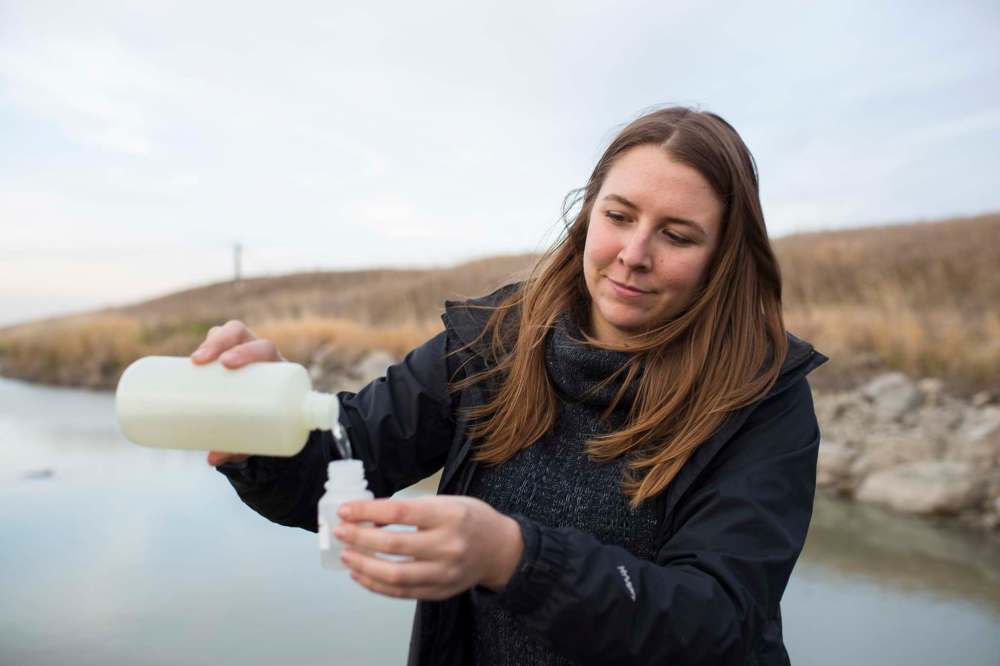
Chelsea Lobson, Lake Winnipeg Community-Based Monitoring Network co-ordinator, takes part in water sampling near Cooks Creek.
Lake Winnipeg Foundation Chelsea Lobson, Lake Winnipeg Community-Based Monitoring Network co-ordinator, takes part in water sampling near Cooks Creek.

The network is helping the foundation collect data about phosphorus levels in Manitoba waterways.

In 2016, LWF started to put together a coalition of citizen scientists, and those volunteers have spent the past three years collecting water samples from bodies of water that make up the Lake Winnipeg watershed.

The samples are then tested to determine phosphorus concentrations, as phosphorus is the nutrient responsible for blue-green algae blooms on Manitoba’s lakes, notably Lake Winnipeg.

With LWF seeking as much data on phosphorus levels as possible, it decided it couldn’t simply rely on environmental scientists or government bodies to do this kind of testing.

“The original idea came from a data deficit in phosphorus data in the watershed, so we saw this as an opportunity to collect more data while also engaging citizens in the process,” says Chelsea Lobson, co-ordinator of the monitoring network.

Volunteers across Manitoba head out during spring, summer and fall to test phosphorus levels.

“With this kind of data, it is really important to collect samples during the spring melt and after big rain events,” Lobson says.

“And citizens allow the network to be nimble and responsive; the volunteers work or live or commute near their samples areas, so they can sample frequently during the spring melt, and also collect samples at a moment’s notice after a big rain event.”

LWF hopes the information it has gathered will lead to solutions to the problem of algae blooms in Lake Winnipeg, Lobson says.

“So we all know that phosphorus causes algae, but in order to reduce that phosphorus, we need to know where it’s coming from, and the network is giving us those answers,” Lobson says.

“They’re collecting phosphorus samples to identify phosphorus hot spots and looking for areas contributing more relative to other areas, and once we know where those hot spots are, we are able to target them.”

With that data now in its hands, executive director Alexis Kanu says, the foundation can work at developing strategies to combat phosphorus in Manitoba waterways.

“It has really been beneficial,” Kanu says. “It is showing us some really interesting stuff, and it is complementary to what we know from government monitoring programs.”
Lake Winnipeg Foundation
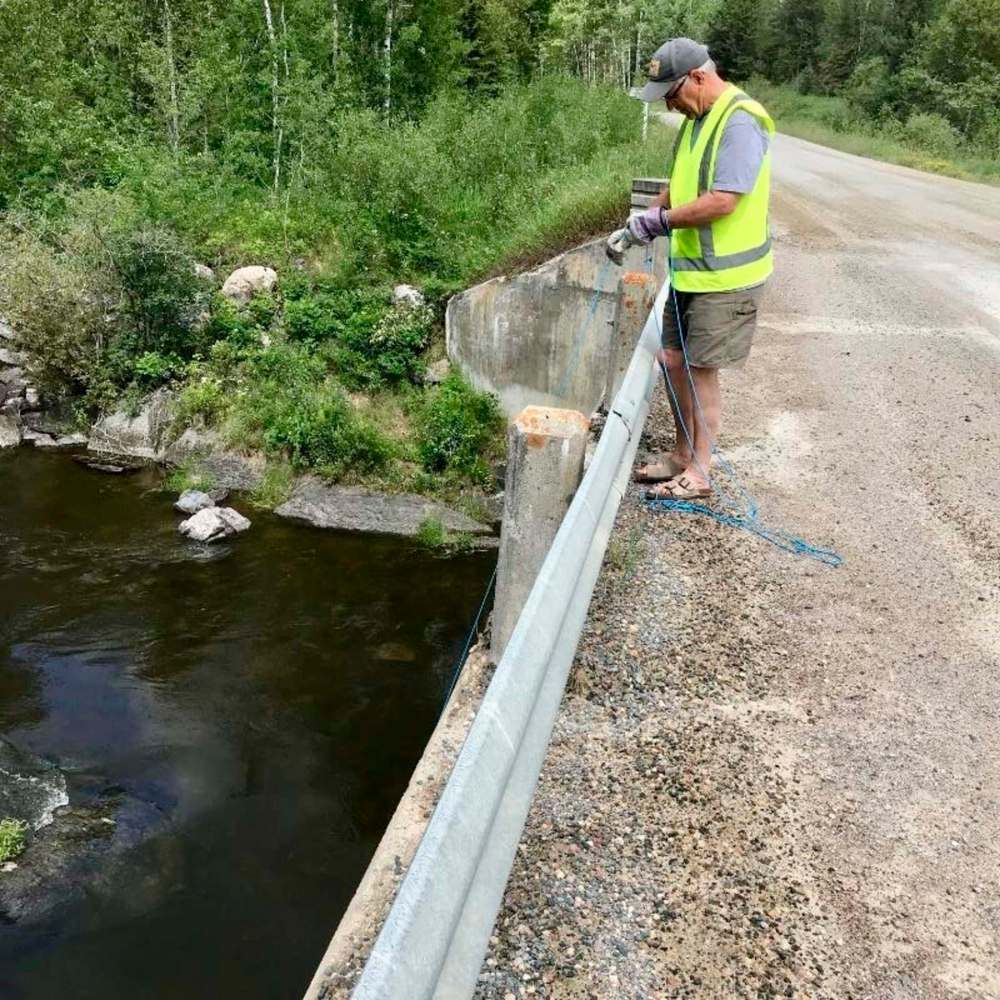
Jim Duthie, a citizen scientist with the Lake Winnipeg Community-Based Monitoring Network, takes water samples at Bird Lake.
Lake Winnipeg Foundation Jim Duthie, a citizen scientist with the Lake Winnipeg Community-Based Monitoring Network, takes water samples at Bird Lake.

A number of phosphorus hot spots were detected in Manitoba in 2017, which was a higher-precipitation year, according to Kanu.

“So when we can find those phosphorus hot spots, then we know that is where we need to be doing the work to reduce phosphorus loading,” she says.

“We obviously want to be working in the landscapes that are contributing the most phosphorus, because there is the most to be gained by reducing phosphorus there.”

Phosphorus hot spots that were discovered in 2017 did not reappear in 2018 — a much drier year — and that tells LWF that runoff plays a big factor in phosphorus levels, Kanu says.

“What that tells us is 2018 was a dry year, so when we have low water levels and low water flows, then less phosphorus is getting into the lake, so if we can replicate dry conditions by keeping water back on the land by holding it behind dams or in retention ponds or in natural wetlands, we can replicate the dry conditions that lead to low phosphorus loading,” Kanu says.

“We were expecting the data to show us where to do the work, but now it’s starting to hint at possible solutions, and anything that helps us tackle this problem by narrowing our focus and making sure we are being strategic is going to go a long way.”

Kanu says it has been the hard work but also the passion of their volunteers that has so far made the monitoring program a success.

“It isn’t something that we could do on our own, and it isn’t anything that any of our partners could do on their own,” Kanu says. “It depends on people coming together and deciding they are going to be a part of this larger network and become part of us discovering the bigger picture.

“I can say that I have been completely inspired by how engaged volunteers are and how committed they are to this.”

For more information on volunteering with the Lake Winnipeg Community-Based Monitoring Network, contact Chelsea Lobson at cbm@lakewinnipegfoundation.org, or visit lakewinnipegfoundation.org.

Report Error Submit a Tip

More Stories

PM overhauls cabinet, moves most senior ministers

Joan Bryden, The Canadian Press 7 minute read Preview

PM overhauls cabinet, moves most senior ministers

Joan Bryden, The Canadian Press 7 minute read Tuesday, Oct. 26, 2021

OTTAWA - Justin Trudeau asserted Tuesday that he intends to lead the Liberals the next time Canadians head to the polls, as he undertook a major cabinet overhaul aimed at rapidly delivering on his top priorities during his third term as prime minister.

There were nine new faces in the slightly larger cabinet roster. Three previous members were dropped from cabinet and most other senior ministers were moved to new posts.

Trudeau sought to put to rest speculation that he's focused on creating a legacy for himself before exiting the political fray ahead of the next election.

Asked if he intends to lead the Liberals in the next election, he answered simply and categorically: "Yes."

Read
Tuesday, Oct. 26, 2021

Flooding triggers evacuations in Peguis

Katlyn Streilein 6 minute read Preview

Flooding triggers evacuations in Peguis

Katlyn Streilein 6 minute read Monday, May. 2, 2022

Though much of Manitoba is free from the recent storm, the finish line is not yet in sight for communities across southern parts of the province that continue to combat overflowing rivers, swollen ditches and washed-out roads.

Severe flooding in the Fisher River, almost 200 kilometres north of Winnipeg, has triggered major evacuations in Peguis First Nation. Roughly a quarter of the community’s homes have been impacted by flooding, Chief Glenn Hudson of Peguis First Nation said Sunday afternoon.

“The fact is the water is starting to take over the community,” Hudson said. “It’s all about evacuation right now.”

Peguis First Nation had evacuated 150 residents to hotels in Gimli and Winnipeg as of Sunday morning. Though the community has managed the flooding on its own until now, Hudson says he is strongly considering calling on the military for support if conditions don’t stabilize soon.

Read
Monday, May. 2, 2022

Ryan Thorpe

2 minute read Preview

Ryan Thorpe

2 minute read Sunday, Aug. 14, 2022

Ryan Thorpe likes the pace of daily news, the feeling of a broadsheet in his hands and the stress of never-ending deadlines hanging over his head.

Read
Sunday, Aug. 14, 2022

Community’s compassion shelters family every step of painful journey

Melissa Martin  5 minute read Preview

Community’s compassion shelters family every step of painful journey

Melissa Martin  5 minute read Wednesday, May. 8, 2019

Outside the courthouse, in the light of a cool spring day, George and Melinda Wood stood facing the quiet half-circle of reporters. Around them were gathered dozens of family and supporters, a halo of love as united here, at the end of the journey, as it had been just over a week ago when the trial started. 

It hadn’t been a long trial, which is a kind of blessing. The trial of the man accused of Christine Wood’s murder was expected to last up to three weeks; it took just nine days. The jury reached a unanimous verdict in less than two hours Wednesday. 

As they sat waiting to hear the accused’s fate, George and Melinda clutched their hands together tightly. When the jury foreman rose to make the pronouncement — guilty, second-degree murder — those interlaced hands shot upward in unison, moved by the same surge of raw feeling that sent cries of relief ringing through the room.  

At the front of the public gallery, Melinda’s mother, Gladys, held up a spray of green flowers. They were so bright they drew eyes to them, beaming in vivid contrast to the subdued hues of the court. The colour of life. The colour of hope.

Read
Wednesday, May. 8, 2019

Local dressage duo getting to know each other while pursuing Olympics dream

Jason Bell 1 minute read Preview

Local dressage duo getting to know each other while pursuing Olympics dream

Jason Bell 1 minute read Tuesday, Sep. 15, 2020

He’s hardly what you'd call Ariana Chia’s latest flame, some recent connection on a matchmaking site such as e-(quine) harmony.

In fact, Manitoba’s top equestrian rider and her horse, Fiderflame, have been an item for a decade, from the first time she saw the chestnut foal with the four white socks and chalky mark on his muzzle resembling a fire emoji.

The now 10-year-old Oldenburg gelding has come a long way from that breeding farm south of Hamburg, Germany, and with Chia atop is out to gain national and international prominence in the intricate sport of dressage.

While the postponement of the Tokyo Olympics burst the bubble of athletes around the world, it might turn out to be a blessing in disguise for Chia and her horse.

Read
Tuesday, Sep. 15, 2020

Protests hit B.C. legislature, Canada's rail lines

Laura Kane, The Canadian Press 6 minute read Preview

Protests hit B.C. legislature, Canada's rail lines

Laura Kane, The Canadian Press 6 minute read Tuesday, Feb. 11, 2020

Protests in support of Indigenous hereditary chiefs who oppose a major pipeline project flared across Canada for a fifth day on Tuesday, disrupting British Columbia's legislature and forcing the cancellation of dozens of commuter and freight trains.

Hundreds blocked the entrances to the B.C. legislature before Premier John Horgan's government delivered its throne speech. Protesters, who have been camping outside the building since Friday, chanted "Shame" as politicians tried to enter the building with help from security.

Shaylynn Sampson, 20, said demonstrators plan to remain outside the legislature until the province agrees to pressure the RCMP and a natural gas company to withdraw from Wet'suwet'en traditional territories in northern B.C.

"My ancestors have been doing this for hundreds of years. I'm willing to do this as long as it takes," said Sampson, who has Gitxsan and Wet'suwet'en heritage.

Read
Tuesday, Feb. 11, 2020