Debate forces Juno writer to reconsider film

Cody looks back at landmark movie as restrictive abortion bills move through U.S. state legislatures

Advertisement

Advertise with us

When Diablo Cody set out to write her first screenplay more than a decade ago, she said her inspiration came from one question: “What’s a story that’s never been told?”

Read this article for free:


or

Already have an account? Log in here »

To continue reading, please subscribe:

Subscribe and receive a limited-edition Free Press branded hat or tote.

Digital Subscription

One year of digital access for only $205*

  • Enjoy unlimited reading on winnipegfreepress.com
  • Read the E-Edition, our digital replica newspaper
  • Access News Break, our award-winning app
  • Play interactive puzzles

*First annual payment billed as $205.00 + GST for one year. This annual subscription will automatically renew at $233.00 + GST every 52 weeks (10% off the regular annual price of $259.35). Offer available to new and qualified returning subscribers only. Cancel any time.

To continue reading, please subscribe:

Add Free Press access to your Brandon Sun subscription for only an additional

$1 for the first 4 weeks*

  • Enjoy unlimited reading on winnipegfreepress.com
  • Read the E-Edition, our digital replica newspaper
  • Access News Break, our award-winning app
  • Play interactive puzzles
Start now

*Your next Brandon Sun subscription payment will increase by $1.00 and you will be charged $17.95 plus GST for four weeks. After four weeks, your payment will increase to $24.95 plus GST every four weeks.

Hey there, time traveller!
This article was published 24/05/2019 (2692 days ago), so information in it may no longer be current.

When Diablo Cody set out to write her first screenplay more than a decade ago, she said her inspiration came from one question: “What’s a story that’s never been told?”

With that, the 2007 Oscar-winning film Juno was born — a coming-of-age comedy chronicling the ups and downs in the life of a 16-year-old girl who gets pregnant unexpectedly and decides to give her baby up for adoption.

But as several U.S. states are passing or working to pass highly restrictive abortion bills this week, Cody appears to be rethinking the movie that launched her career.
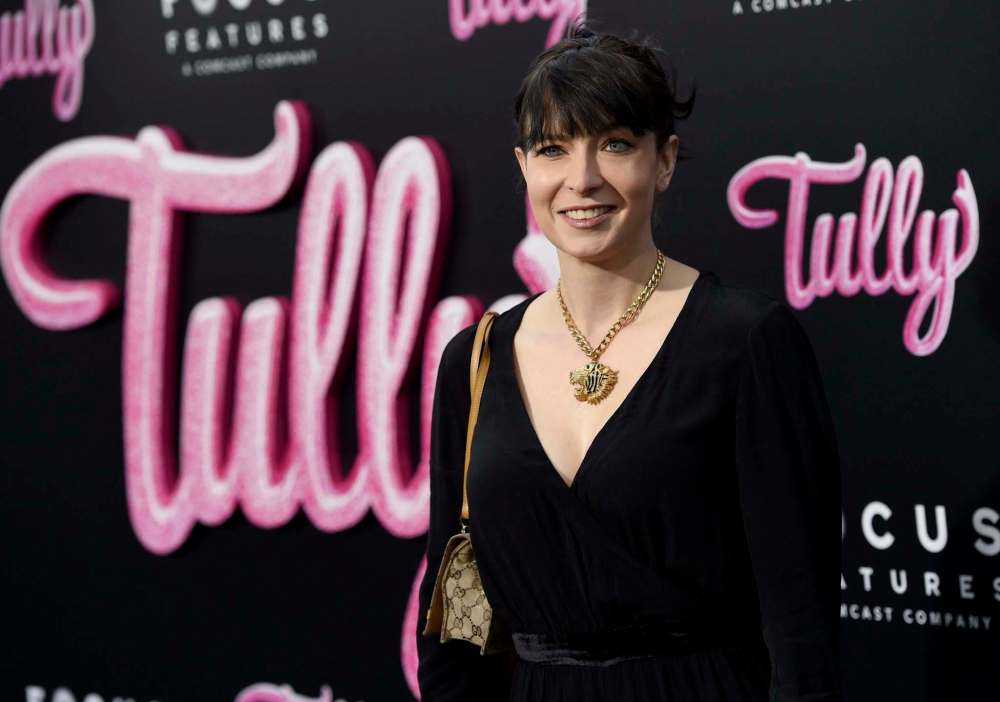
Chris Pizzello / Invision files
Writer Diablo Cody won an Oscar for her 2007 film Juno, which focuses on the life of a 16-year-old girl who gets pregnant and decides to give her baby up for adoption.
Chris Pizzello / Invision files Writer Diablo Cody won an Oscar for her 2007 film Juno, which focuses on the life of a 16-year-old girl who gets pregnant and decides to give her baby up for adoption.

“I don’t even know if I would have written a movie like Juno if I had known that the world was going to spiral into this hellish alternate reality that we now seem to be stuck in,” the 40-year-old said in an interview on the Keep It podcast.

Last week, Alabama Gov. Kay Ivey signed off on the U.S.’s strictest abortion legislation, which does not include exceptions for victims of rape and incest.

Last week, Georgia Gov. Brian Kemp signed a “heartbeat bill” into law banning abortions after doctors can detect a “fetal heartbeat in the womb,” which usually occurs at around six weeks. At that point, many women don’t even know whether they are pregnant.

“The Georgia thing is horrifying,” Cody said on the podcast. “It’s honestly something I’ve been kind of thinking about continuously in an endless dark feedback loop. It sucks so… bad.”

When she was asked if a modern-day rewrite of Juno, which was set in Minnesota, would instead feature the main character grappling with Georgia’s abortion law, Cody hesitated.

“I think I probably would have just told a different story in general,” she said.

Since the film’s 2007 debut, debate has swirled around the message the film sends about abortion because its protagonist, Juno MacGuff, played by Ellen Page, forgoes the procedure in favour of adoption. Anti-abortion proponents have reportedly praised the film’s “strong pro-life message,” while others have interpreted Juno’s actions as indicative of her freedom to choose what she thinks is best.

For Cody though, who has been vocal about being an abortion rights advocate, having her breakout movie be associated with anti-abortion messaging is a regret that has troubled her for years.

“In a way I feel like I had a responsibility to maybe be more explicitly pro-choice, and I wasn’t,” Cody said during a Planned Parenthood benefit event in 2017 marking the film’s 10th anniversary, Vanity Fair reported.

“I think I took the right to choose for granted at the time.”

In the film’s pivotal near-abortion scene, Juno is headed into a clinic when she runs into her classmate Su-Chin protesting outside.

“All babies want to get borned!” Su-Chin plaintively chants. She’s toting a homemade sign that reads, “No babies like murdering,” in block letters.

A determined Juno continues toward the building, but Su-Chin tries to get her to stop by spouting facts about unborn fetuses, all of which go unheeded until she shouts, “It has fingernails.”

Once inside, it doesn’t take Juno long to run out, and the rest of the movie follows her quest to find a worthy couple to adopt her baby. Though not everything goes exactly as planned, by the end, Juno’s son has a loving home and she’s back to life as a normal teenager.

“I don’t feel I was clear enough in terms of why Juno chose to not have an abortion,” Cody told the Guardian last year.

“It was simply because she did not want to.”

Still, the ambiguity opened doors for critics to weigh in on the film with their own explanations behind its meaning.

Shortly after the film’s release, in an article for Slate, Ann Hulbert praised its handling of abortion in the face of Cody’s personal views, plot needs and potential concerns about alienating anti-abortion supporters.

“It’s a tension the screenplay finesses deftly, undercutting both pro-life and pro-choice purism,” Hulbert wrote.

But, Ross Douthat, then writing for the Atlantic, had a different takeaway. Douthat drew attention to how Juno “certainly seems to be moved by the unremitting grossness of the abortion clinic… and more importantly, by the declaration, from a pro-life Asian classmate keeping a lonely vigil outside the clinic, that her child-to-be ‘already has fingernails.’”

“None of this means that movie is a brief for overturning Roe v. Wade; far from it,” Douthat wrote.

“But… it’s decidedly a brief for not getting an abortion.”

Two years after the film was released, then-congresswoman Jean Schmidt announced plans to introduce the “Juno Bill,” which she said would provide a tax credit to women who wanted to give their babies up for adoption, so they wouldn’t “have to worry about the consequences or the costs involved,” CNN reported at the time.

During Wednesday’s interview, Cody said that when she was writing the screenplay, she never thought it would actually become a film.

“I didn’t think it was ever going to get made,” she said. “I wasn’t thinking as an activist. I wasn’t thinking politically at all.”

The result? A letter from her Catholic high school thanking her for “writing a pro-life movie,” she said, describing it as the “most horrifying thing.”

“I was like, I… hate all of you, and I’m as pro-choice as a person can possibly be,” she said.

— Washington Post
Report Error Submit a Tip

More Stories

Pimp sentenced to 11 years in prison

Erik Pindera 5 minute read Preview

Pimp sentenced to 11 years in prison

Erik Pindera 5 minute read 2:00 AM CDT

A man who picked up a vulnerable 17-year-old child-welfare ward on the streets of Winnipeg and coerced her into providing sexual services for several months has been sent to prison for more than a decade.

After a trial, Hassan Kargbo, who’s in his early 30s, was found guilty of sexual exploitation, making child sexual abuse and exploitation material, receiving a material benefit from sexual services provided by a person under 18, procuring a person under 18 and advertising sexual services.

Provincial court Judge Julie Frederickson sentenced him to 11 years behind bars late last month.

“Mr. Kargbo picked up a young Indigenous girl walking over the Osborne Street bridge and quickly got her involved in drug use and escorting,” Frederickson said in a written decision.

Read
2:00 AM CDT

Chinese city at centre of virus outbreak is major crossroads

Elaine Kurtenbach, The Associated Press 3 minute read Preview

Chinese city at centre of virus outbreak is major crossroads

Elaine Kurtenbach, The Associated Press 3 minute read Friday, Jan. 24, 2020

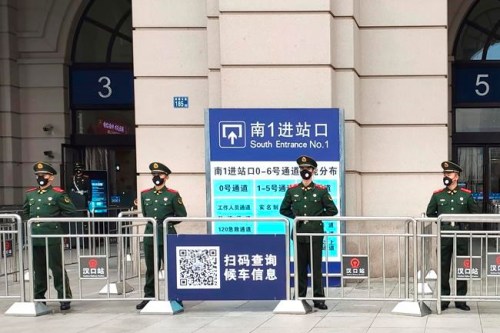
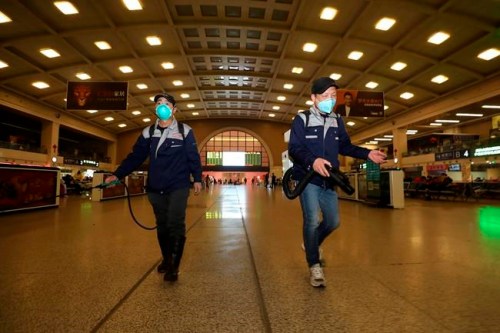
The city of Wuhan is one of China's largest industrial hubs and a major crossroads. The capital of Hubei province has 11 million people and is under an unprecedented, open-ended lockdown to try to prevent the spread of a virus that first appeared in the city last month.

HISTORY: An inland port on the north bank of the Yangtze River, which stretches from far western China to Shanghai, Wuhan is said to be about 3,500 years old. It came under British control in the 1800s as a treaty port and like much of China was occupied by the Japanese during World War II. It was the site of the Wuchang uprising in 1911 that eventually brought on the downfall of the Qing dynasty and the founding of the modern Republic of China. That government was vanquished by communist forces in 1949, leading to the current People's Republic of China.

INDUSTRY: Wuhan is the birthplace of China's steel industry, drawing on iron ore and coal from nearby mines. It's also a major manufacturing centre for textiles, machinery, trucks and consumer products. Given its central location, it's the main distribution point in central China for river, railway, road and other transport. The local government says 300 of the world's top corporations have invested in the city. That includes companies like Walmart and automakers such as Honda, Nissan and PSA Citroen Pugeot.

HIGHLIGHTS: The city has high levees protecting it from flooding along the Yangtze and one of its most famous landmarks is the scenic but heavily polluted East Lake. The ancient, five-story Yellow Crane Tower, rebuilt several times, is featured in famous Tang dynasty poems. Wuhan is called one of the “furnaces" of the Yangtze, thanks to its extremely hot and humid summers.

Read
Friday, Jan. 24, 2020

Olympic soccer, boxing qualifiers in China affected by virus

The Associated Press 2 minute read Preview

Olympic soccer, boxing qualifiers in China affected by virus

The Associated Press 2 minute read Wednesday, Jan. 22, 2020

KUALA LUMPUR, Malaysia - Olympic qualifying events in two sports were moved from the Chinese city of Wuhan on Wednesday because of an outbreak of a deadly viral illness.

A four-nation Asian qualifying group for the women’s soccer tournament was switched from the city at the centre of the health scare to Nanjing.

The Asia-Oceania boxing qualifying tournament scheduled for Feb. 3-14 in Wuhan was cancelled. No new plans were announced.

The decisions followed Chinese health authorities telling people in Wuhan to avoid crowds and public gatherings.

Read
Wednesday, Jan. 22, 2020

Scare up some social reconnection this fall

Maureen Scurfield 4 minute read 2:00 AM CDT

DEAR MISS LONELYHEARTS: I’m an emotional mess. My lesbian girlfriend and I broke up in August, and now I hold the lease on the apartment we shared. It’s a great big old place with two spacious balconies.

I just got new roommates — two younger friends who really love it here — but secretly I’m still feeling lonely. Every minute of living here reminds me of my girlfriend because we decorated the place together and hung out on the balconies to sunbathe in the summer.

Would it help to move out of my beloved old block with its memory triggers? Maybe, but what if I died of loneliness in a new place? I need people around me, and no one but my ex-girlfriend has really been the right person. Please help. I feel sick about this.

— Love-Nest Sadness, Winnipeg

City emergency crews to administer drug that stops opioid withdrawal symptoms

Joyanne Pursaga 5 minute read Preview

City emergency crews to administer drug that stops opioid withdrawal symptoms

Joyanne Pursaga 5 minute read Monday, Aug. 10, 2026

Winnipeg Fire Paramedic Service crews will soon give out a medication that stops withdrawal symptoms after someone is treated for an opioid overdose.

Emergency workers will be administering a drug called buprenorphine, after Health Canada granted WFPS permission to use the controlled substance.

“Buprenorphine is a medication that offers people who are in active addiction — so those people who have received naloxone as a result of an overdose and those that are experiencing significant and, at times, dangerous withdrawal symptoms — just a bit of a reprieve … (It) reduces cravings and prevents those immediate withdrawal symptoms, which allows more time to connect those patients to further care,” said Michelle Long, WFPS assistant chief of paramedic operations.

The treatment option is in response to a persistently high number of WFPS opioid calls.

Read
Monday, Aug. 10, 2026

Report calls for schools to add more ‘sensory rooms’

Maggie Macintosh 6 minute read Preview

Report calls for schools to add more ‘sensory rooms’

Maggie Macintosh 6 minute read Wednesday, Jul. 15, 2026

Manitoba schools are being urged to set up more “sensory rooms” and use the spaces — which can feature mood lighting, flexible seating and fidget toys — to address growing concerns about student outbursts and related injuries.

A new report from the Manitoba Federation of Labour is renewing calls to better protect educational assistants, teachers and other public-sector employees.

One of its 10 recommendations, published on Monday, focuses on tackling overcrowding in community facilities and establishing “safe spaces in schools to respond to violence.”

“It’s become the norm: kids having meltdowns that require you have to evacuate the classroom,” said Jane Allison, an educational assistant in Winnipeg.

Read
Wednesday, Jul. 15, 2026