CBC president Tait warns of cultural imperialism danger from Netflix

Advertisement

Advertise with us

OTTAWA - There are parallels to be drawn between the growing influence and availability of Netflix programming around the world and the colonialism of the British and French empires, CBC president Catherine Tait said Thursday.

Read this article for free:


By clicking the button above, an account will be created and you will begin to receive some of our recommended newsletters. You may opt out of any newsletter by visiting your Email and Communication Preferences page or by clicking "unsubscribe" at the bottom of any email.

or

Already have an account? Log in here »

To continue reading, please subscribe:

Digital Subscription

One year of digital access for only $1.44 a week*

  • Enjoy unlimited reading on winnipegfreepress.com
  • Read the E-Edition, our digital replica newspaper
  • Access News Break, our award-winning app
  • Play interactive puzzles

*Billed as $5.77 plus GST every four weeks. After 52 weeks, price increases to the regular rate of $19.95 plus GST every four weeks. Offer available to new and qualified returning subscribers only. Cancel any time.

To continue reading, please subscribe:

Add Free Press access to your Brandon Sun subscription for only an additional

$1 for the first 4 weeks*

  • Enjoy unlimited reading on winnipegfreepress.com
  • Read the E-Edition, our digital replica newspaper
  • Access News Break, our award-winning app
  • Play interactive puzzles
Start now

*Your next Brandon Sun subscription payment will increase by $1.00 and you will be charged $17.95 plus GST for four weeks. After four weeks, your payment will increase to $24.95 plus GST every four weeks.

Hey there, time traveller!
This article was published 31/01/2019 (2831 days ago), so information in it may no longer be current.

OTTAWA – There are parallels to be drawn between the growing influence and availability of Netflix programming around the world and the colonialism of the British and French empires, CBC president Catherine Tait said Thursday.

Tait compared Netflix’s rise across the globe to the “beginning of a new empire” during her appearance on a panel organized by the Canadian Media Producers Association in Ottawa, alongside Stephane Cardin, Netflix’s director of public policy for Canada.

The content giant boasts on its website that its streaming service is available in virtually every country except China. Netflix says the company’s revenues grew 35 per cent in 2018 to US$16 billion.

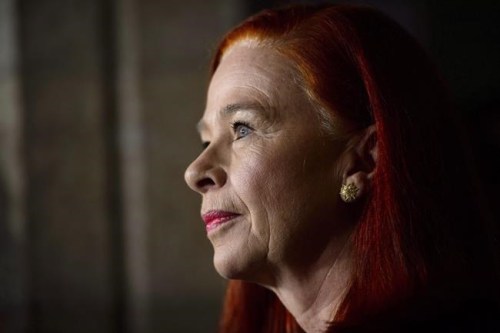
President and CEO of CBC/Radio-Canada Catherine Tait looks on during a press conference in the foyer of the House of Commons on Parliament Hill in Ottawa on April 3, 2018. THE CANADIAN PRESS/Sean Kilpatrick

“So I’m going to just go a little off script,” Tait told the audience, “because I was thinking about the British Empire, and how if you were there and you were the Viceroy of India, you would feel that you were doing only good for the people of India.”

“If you were in French Africa,” she continued, “you would think, ‘I’m educating them, I’m bringing their resources to the world and I am helping them.’ “

She admitted that Netflix’s rise has contributed to today being “probably the most exciting time for screened entertainment … so for this, we are very grateful to Netflix.” But, she warned, a foreign company taking up an increasingly larger role in a country’s cultural industry comes with a price.

“Fast forward to what happens after imperialism and the damage that can do to local communities,” Tait said. “So all I would say is, let us be mindful of how it is we as Canadians respond to global companies coming into our country.”

Fellow panellist Cardin appeared to shake his head as she compared the streaming service to past empires. Members of the audience were heard expressing their disagreement with Tait’s comments.

Meanwhile, Netflix refused to comment on a unanimous motion adopted Wednesday in the House of Commons demanding the company remove all images of the Lac-Megantic tragedy from its fiction catalogue and compensate victims of the disaster.

The company drew rebukes in Quebec after it was revealed at least two fictional productions available on its streaming platform included stock footage of the derailment and explosion that killed 47 people in 2013.

“We do not have any comment about this subject,” a spokesperson for the company responded by email.

Quebec Culture Minister Nathalie Roy and Lac-Megantic Mayor Julie Morin had also asked Netflix to remove the images.

Netflix has apologized, however, saying it was not aware of the source of the footage, and has agreed to take steps to avoid using it in future productions.

Report Error Submit a Tip

More Stories

The long and winding road

Editorial 4 minute read Preview

The long and winding road

Editorial 4 minute read Yesterday at 2:01 AM CDT

As theatre goes, it sent a strong message.

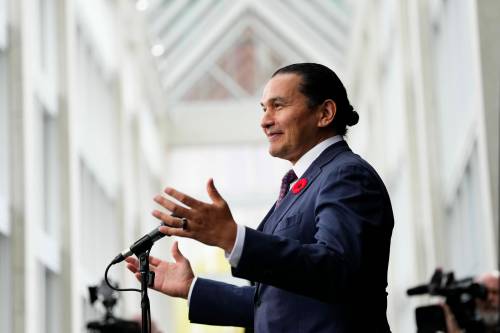
Manitoba Premier Wab Kinew, standing in front of microphones and television cameras, holding up his Indigenous status card and saying that he didn’t feel Canada should have “a race-based form of identification in this country, but that is a reality,” adding that it was time to abolish the Indian Act.

“I think it’s time to abolish the Indian Act, get rid of the Indian Act, move past the Indian Act, and it needs to be done with First Nations people and First Nations governments, of course. I think it’s long overdue that we have a relationship with Indigenous Peoples in Canada that reflects who we are as Canadians today,” he said.

The Indian Act — the name alone suggests how out-dated and out of place the law has become. Originally dating from 1876, the law was put in place to “amend and consolidate the laws respecting Indians” and gave the Minister of the Interior the responsibility to “control and management of the reserves, lands, moneys and property of Indians in Canada.”

Read
Yesterday at 2:01 AM CDT

CBC head likens Netflix to colonial empires

Melanie Marquis, The Canadian Press 3 minute read Preview

CBC head likens Netflix to colonial empires

Melanie Marquis, The Canadian Press 3 minute read Thursday, Jan. 31, 2019

OTTAWA - There are parallels to be drawn between the growing influence and availability of Netflix programming around the world and the colonialism of the British and French empires, CBC president Catherine Tait said Thursday.

Tait compared Netflix's rise across the globe to the "beginning of a new empire" during her appearance on a panel organized by the Canadian Media Producers Association in Ottawa, alongside Stephane Cardin, Netflix's director of public policy for Canada.

The content giant boasts on its website that its streaming service is available in virtually every country except China. Netflix says the company's revenues grew 35 per cent in 2018 to US$16 billion.

"So I'm going to just go a little off script," Tait told the audience, "because I was thinking about the British Empire, and how if you were there and you were the Viceroy of India, you would feel that you were doing only good for the people of India."

Read
Thursday, Jan. 31, 2019

Sharpton decries 'stench of racism' in Daunte Wright's death

Aaron Morrison, Tim Sullivan And Tammy Webber, The Associated Press 5 minute read Friday, Apr. 23, 2021

MINNEAPOLIS - Daunte Wright, the young Black man shot by an officer during a traffic stop in suburban Minneapolis, was not “just some kid with an air freshener,” but a “prince” whose life ended too soon at the hands of police, the Rev. Al Sharpton said Thursday during an emotional funeral.

Hundreds of people wearing COVID-19 masks packed into Shiloh Temple International Ministries to remember Wright, a 20-year-old father of one who was shot by a white police officer on April 11 in the small city of Brooklyn Center. The funeral was held just two days after former Minneapolis police Officer Derek Chauvin was convicted in the death of George Floyd and amid a national reckoning on racism and policing.

“The absence of justice is the absence of peace,” Sharpton said. “You can’t tell us to shut up and suffer. We must speak up when there is an injustice.”

The civil rights leader's thundering eulogy included a stinging rebuke of the possibility that Wright was pulled over for having air fresheners dangling from his mirror. Wright’s mother has said her son called her after he was stopped and told her that was the reason. Police said it was for expired registration.

Imperialist crusades: 21st-century style

John R. Wiens 5 minute read Preview

Imperialist crusades: 21st-century style

John R. Wiens 5 minute read Wednesday, Jul. 8, 2026

In the 11th century and lasting into the 13th, the papacy launched a series of at least eight military campaigns we now refer to as the Crusades, or Holy Wars. They were an imperialistic call to arms for Christians to retake Jerusalem, which was at the time under Muslim rule.

Spiritual rewards for participation were implied, and other incentives offered, to dull the extra taxation demanded to fund the campaigns. Over time, the “crusades” morphed to become massacres of not only Muslims but also Jews and Christian dissidents — in other words, any enemies of the papacy. If today’s news sounds like déjà vu all over again, it probably should.

The stories keep repeating themselves in many forms. We now know that two 20th century world wars, global in scope, were caused by imperialistic ambitions, changes in the balance of international powers and corresponding arms races. The first was attributed to the assassination of the heir to the Austro-Hungarian throne by a Bosnian Serb, a kind of “regime change” initiative. The second resulted from rising tensions between Allied and Axis powers, triggered by the rise of European fascism and Japanese militarism. The human toll of both was unimaginable.

In the First World War, 15 to 22 million people, including soldiers and civilians, were killed and another 23 million were wounded. These numbers do not account for those otherwise affected — victims of chemical warfare whose compromised health shortened their lives; of the subsequent Spanish flu epidemic amplified by the displacement of peoples; others who died from other diseases caused by war conditions; and those who were malnourished or starved. Nor do they account for the ongoing trauma and resentments passed on intergenerationally to this day.

Read
Wednesday, Jul. 8, 2026

Submit a news tip

1 minute read Monday, Mar. 16, 2026

Submit a news tip

A little toponder, a lot to celebrate

Erna Buffie 5 minute read Yesterday at 2:01 AM CDT

Well, another civic election season has come and gone, and I have to say it was a doozy. The most surprising event was the steady climb in support for young mayoral candidate Noah Redden, who started out with just four per cent public support in September but had reached a solid 14 per cent support in October.

On election day, Redden nearly came in second, less than one percentage point behind Kevin Klein, an experienced politician.

Indeed, the 27-year-old’s accomplishment was nothing short of astonishing. Particularly given that his shoestring campaign was given very little coverage — largely, according to one pundit, because he didn’t send out any press releases.

This when Redden’s unwritten press releases were there for everyone to see on Instagram, as he popped up in locations across the city, posting videos about what he hoped to achieve as mayor.