WEATHER ALERT

Free from the sugar high that is Facebook

Advertisement

Advertise with us

Welcome to Jen Tries, a semi-regular feature in which Free Press columnist Jen Zoratti will try something new and report back. In this instalment, Jen Tries... quitting Facebook: Part 2.

Read this article for free:

or

Already have an account? Log in here »

To continue reading, please subscribe:

Subscribe and receive a limited-edition Free Press branded hat or tote.

Digital Subscription

One year of digital access for only $205*

  • Enjoy unlimited reading on winnipegfreepress.com
  • Read the E-Edition, our digital replica newspaper
  • Access News Break, our award-winning app
  • Play interactive puzzles

*First annual payment billed as $205.00 + GST for one year. This annual subscription will automatically renew at $233.00 + GST every 52 weeks (10% off the regular annual price of $259.35). Offer available to new and qualified returning subscribers only. Cancel any time.

To continue reading, please subscribe:

Add Free Press access to your Brandon Sun subscription for only an additional

$1 for the first 4 weeks*

  • Enjoy unlimited reading on winnipegfreepress.com
  • Read the E-Edition, our digital replica newspaper
  • Access News Break, our award-winning app
  • Play interactive puzzles
Start now

*Your next Brandon Sun subscription payment will increase by $1.00 and you will be charged $17.95 plus GST for four weeks. After four weeks, your payment will increase to $24.95 plus GST every four weeks.

Opinion

Hey there, time traveller!
This article was published 13/04/2018 (3025 days ago), so information in it may no longer be current.

Welcome to Jen Tries, a semi-regular feature in which Free Press columnist Jen Zoratti will try something new and report back. In this instalment, Jen Tries… quitting Facebook: Part 2.


Earlier this week, Facebook founder and CEO Mark Zuckerberg testified before U.S. Congress, concerning the Cambridge Analytica data scandal. I’m sure you’ve seen all the memes. He really does look like Data from Star Trek: The Next Generation.
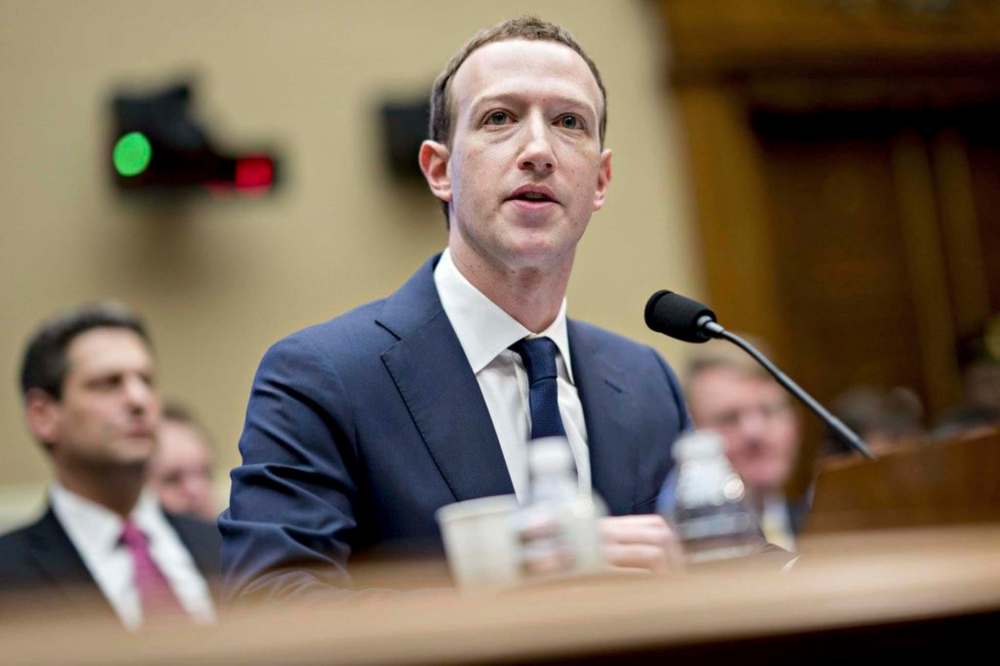
As Facebook CEO Mark Zuckerberg took part in a 10-hour grilling session in Washington, D.C., Jen Zoratti was reflecting on her two-week hiatus from the social-media site. (Andrew Harrer / Bloomberg)

I saw all the memes because Zuckerberg’s 10-hour grilling session in Washington, D.C., happened to dovetail with the end of my two-week Facebook hiatus. You may recall my March 23 Jen Tries column, in which I decided to take a short break from the social-media site I’ve been using for more than a decade, not because I was particularly concerned about my privacy, but because Facebook wasn’t fun any more.

The verdict: consider the following a letter of recommendation for getting off Facebook, even temporarily.

On the big day, a Saturday, I didn’t deactivate or delete my account. I posted my column and then I just… logged off, without ceremony. And then I stayed logged off for 14 days. Now, I’m not a big believer in deprivation-based challenges, nor in the boot-camping of one’s life. But I did quit sugar for 11 days in 2014 while I was trying to rule out food sensitivities, and quitting Facebook is a lot like quitting sugar: hard for the first few days and then the cravings subside. Your palate changes and when you go back to it, it no longer has the same grip it once did.

Obviously, I still eat sugar from time to time. And I probably will still use Facebook, though I will use it much less. My relationship to it changed, markedly, in just two weeks. Facebook was not available to me as a distraction/procrastination device, so I was able to get more done, more quickly — not just at work, but at home, too. I couldn’t get sucked into arguments or conversations or The Scroll. I felt like I had found time, a sensation akin to discovering a $10 bill in the pocket of your parka.

And then, unencumbered by screens, I sat down and read Infinite Jest, cover to cover. By candlelight. Kidding! I probably just watched something on Netflix. But the point is: I did feel better. And I did make it to the gym more. I walked the dog more. Instead of checking Facebook when I struggled through a paragraph, I… I don’t know, looked out a window or something.

But I also had the sense I was missing out. My colleagues and friends would have a new meme or piece of gossip or viral article and say, “Did you see this?” No, I did not see it. I also felt less socially connected. Facebook gives us a false sense of closeness; it’s easy to be tricked into believing we see our friends and family more often than we do. The act of “catching up” with someone is becoming as obsolete as talking on the telephone. Facebook has a way of blunting in-person conversations. I already know your big news because I saw it on the newsfeed.

Being off Facebook also made me reassess the currency placed on “Likes.” Those encouraging little thumbs-up are called Likes for a reason; they capitalize on a human desire for approval and validation. I always thought I was someone who didn’t care about being liked. Turns out, I did care about being liked — on Facebook. The more time I spent off the site, the less important those Likes became.

I heard from many Free Press readers who had quit Facebook. Like, really quit. They reported feeling less anxious and more happy. One woman took up volunteering. I was reminded of a column I wrote years ago about a local man who quit all technology for 30 days, and how he found “the white space in his mind again.” I felt the same way. My margins were no longer crowded with bits and pieces of unprocessed information. 

When I logged back into Facebook after two weeks, I was met with 41 new notifications, blaring at me in their siren red. Almost none of them were really for me. So-and-so’s birthday was on April 3. So-and-so and 18 other friends are interested in an event near you. I missed a few messages, but I’ve learned through this experiment that most messages aren’t as urgent as your phone’s insistent push notifications make them seem. If someone really needed me, they could find a way get a hold of me.

After all, Facebook or no Facebook, no one is really truly unavailable anymore — and people will remember you exist, even if you don’t regularly appear in their newsfeed.

jen.zoratti@freepress.mb.ca Twitter: @JenZoratti

Jen Zoratti

Jen Zoratti
Columnist

Jen Zoratti is a Winnipeg Free Press columnist and author of the newsletter, NEXT, a weekly look towards a post-pandemic future.

Our newsroom depends on a growing audience of readers to power our journalism. If you are not a paid reader, please consider becoming a subscriber.

Our newsroom depends on its audience of readers to power our journalism. Thank you for your support.

Report Error Submit a Tip

More Stories

Jazz fest's pop-up venue an experiment in sound design and architecture

Erin Lebar 6 minute read Preview

Jazz fest's pop-up venue an experiment in sound design and architecture

Erin Lebar 6 minute read Tuesday, Jun. 18, 2019

The Winnipeg International Jazz Festival prides itself on being a downtown event with Old Market Square serving as its hub for six days of free concerts and headlining acts filling venues such as the Burton Cummings Theatre and the Centennial Concert Hall.

But this year, the festival is expanding its boundaries by collaborating with RAW:Gallery to create RAW:JazzFest, a pop-up venue just outside of the downtown borders in St. Boniface at Parc Elzéar Goulet on Taché Avenue overlooking the Red River.  

"It felt like a unique opportunity to create a concert experience for Winnipeggers that they haven’t had before, and to also kind of be part of making a cool building. There’s unique value in that," says jazz fest artistic director Mike Falk.

"We love having music in small spaces; I think that when people are crushed together a bit more their kinetic energy bounces around and makes for good shows, so I think with this project it’s definitely designed to both animate the space and animate the people, and have some fun, as well."

Read
Tuesday, Jun. 18, 2019

National Newspaper Week recognizes efforts of the journalists keeping small-town papers alive

Malak Abas 8 minute read Preview

National Newspaper Week recognizes efforts of the journalists keeping small-town papers alive

Malak Abas 8 minute read Wednesday, Oct. 7, 2020

On the evening of Oct. 14, 2007, the Cartwright Community Centre arena burned to the ground.

Fondly referred to as the Clipperdome, it was a communal space in the small Manitoba town of Cartwright, about 180 kilometers southwest of Winnipeg. It was especially lively in the winter, when the hockey arena was a busy hub for locals to connect, many of whom were members or knew members of the Cartwright Clippers senior hockey team.

“Sorrow” was the word Vicki Wallace — the editor, publisher and sole reporter of Cartwright weekly newspaper the Southern Manitoba Review — used when describing the fire and the community’s response.

“I’ll tell you right now, you made me cry,” she told a Free Press reporter when recalling the time.

Read
Wednesday, Oct. 7, 2020

Researchers aim to help teachers de-stress

Maggie Macintosh 4 minute read Preview

Researchers aim to help teachers de-stress

Maggie Macintosh 4 minute read Monday, Apr. 27, 2020

For Cori Wiebe, teaching math using online tools is getting a little bit easier every day.

At the same time, work is even more difficult — every day classes are suspended, she misses her students more.

“I’d love to be back in the classroom to have that social contact. (The distance) does make you appreciate what you had,” said Wiebe, a Grade 6-7 math teacher at Westdale School, before starting to cry during an interview about her last five weeks on the job, away from her 120 students.

Read
Monday, Apr. 27, 2020

Rallies, moments of silence honor George Floyd a year later

Mohamed Ibrahim And Doug Glass, The Associated Press 9 minute read Preview

Rallies, moments of silence honor George Floyd a year later

Mohamed Ibrahim And Doug Glass, The Associated Press 9 minute read Tuesday, May. 25, 2021

MINNEAPOLIS (AP) — A family-friendly street festival, musical performances and moments of silence were held Tuesday to honor George Floyd and mark the year since he died at the hands of Minneapolis police, a death captured on wrenching bystander video that galvanized the racial justice movement and continues to bring calls for change a year later.

Floyd’s sister Bridgett and other family members held a moment of silence at a “Celebration of Life” event at a downtown Minneapolis park that included music, food trucks, an inflatable bouncy house and a pop-up vaccination stand.

A few miles away, at the site of the intersection where Floyd died, dozens of people gathered around a steel fist sculpture and kneeled for several minutes — symbolic of the 9 minutes, 29 seconds during which Floyd was pinned to the ground.

“It’s been a troubling year, a long year,” Bridgett Floyd told the crowd in downtown Minneapolis. “But we made it. ... The love is very outpouring today. The love is here. George is here."

Read
Tuesday, May. 25, 2021

Ignoring the facts makes for a better budget story

Dan Lett 6 minute read Preview

Ignoring the facts makes for a better budget story

Dan Lett 6 minute read Tuesday, Sep. 29, 2020

In Premier Brian Pallister's world, the public accounts for the 2019-2020 fiscal year serve as the ultimate good news story.

The final accounting of government revenues and expenditures, the public accounts show a small surplus of $5 million. According to Pallister, this was accomplished without much pain for Manitobans, who can now share in the knowledge that finally, mercifully, the books are balanced.

Of course, in accentuating the positive, Pallister had to ignore a few things.

Such as tens of thousands of government workers who have gone without a pay increase for three years. And a health-care system that, despite an influx of funds last year, continues to suffer from three years of crippling underfunding. And infrastructure spending that has been cut back by hundreds of millions of dollars. And an education system in chaos from the dual pressures of austerity and pandemic upheaval.

Read
Tuesday, Sep. 29, 2020

Dropping the gloves to make the point

Editorial 4 minute read Preview

Dropping the gloves to make the point

Editorial 4 minute read 2:01 AM CDT

In hockey parlance, it’s called “shedding,” the moment in a game when you are forced to deal with an instigator by dropping (shedding) your gloves for an all-out brawl.

That term is a deep cut from hockey culture that Prime Minister Mark Carney — he of the “elbows up” phenomenon — may need to not only embrace but practise more often in the face of yet another round of overly punitive tariffs imposed by United States President Donald Trump.

To be fair, under Carney’s leadership, Canada has not exactly rolled over in the face of Trump’s bully-boy tactics.

Yes, Canada has made concessions to placate Trump to further a new continental trade agreement: investing more money to combat the cross-border flow of fentanyl that isn’t actually happening, stalling efforts to tax streaming companies as most European countries already do, and — most recently — giving Trump a cut of profits from the Canadian-made, Canadian-paid Gordie Howe bridge between Windsor and Detroit.

Read
2:01 AM CDT