Beef barbacoa tacos to please any Pothead
Advertisement
Read this article for free:
or
Already have an account? Log in here »
To continue reading, please subscribe:
Digital Subscription
One year of digital access for only $1.44 a week*
- Enjoy unlimited reading on winnipegfreepress.com
- Read the E-Edition, our digital replica newspaper
- Access News Break, our award-winning app
- Play interactive puzzles
*Billed as $5.77 plus GST every four weeks. After 52 weeks, price increases to the regular rate of $19.95 plus GST every four weeks. Offer available to new and qualified returning subscribers only. Cancel any time.
To continue reading, please subscribe:
Add Free Press access to your Brandon Sun subscription for only an additional
$1 for the first 4 weeks*
- Enjoy unlimited reading on winnipegfreepress.com
- Read the E-Edition, our digital replica newspaper
- Access News Break, our award-winning app
- Play interactive puzzles
*Your next Brandon Sun subscription payment will increase by $1.00 and you will be charged $17.95 plus GST for four weeks. After four weeks, your payment will increase to $24.95 plus GST every four weeks.
Read unlimited articles for free today:
or
Already have an account? Log in here »
Hey there, time traveller!
This article was published 24/01/2018 (3199 days ago), so information in it may no longer be current.
The Instant Pot, which originally made its debut in late 2010, has been steadily gaining popularity in the multi-cooker home-appliance category because of its speed and ease of use. It’s been called a game-changer for scores of busy cooks.
Sales of multi-cookers for a 12-month period ending in September were US$978 million, according to market research firm NPD Group, an increase of 29 per cent. (NPD considers electric pressure cookers, food steamers, fryers, multi-cookers, other cookers, rice cookers, roaster ovens and slow cookers as multi-cookers.)
While multi-cooker sales, which includes the Instant Pot, grew 56 per cent, NPD Group says slow-cooker sales declined five per cent. So it seems that the Instant Pot may be stealing a little shine from a culinary favourite.
“Historically with multi-cookers, they’d talk about rice cooking, slow cooking and sautéing,” says Joe Derochowski, NPD’s home industry adviser.
“The Instant Pot brought the speed and pressure cooking and it hit well with consumers’ needs.”
Derochowski pegs the explosive popularity of the Instant Pot to growth in the home category overall.
“The home has become more important and the kitchen has become important,” he says. “ … More people are trying to be healthier and entertaining more.” And the biggest thing is we are eating more at home, and eating more homemade meals and healthier meals.
We tried the Instant Pot out recently, here’s some of what we learned:
Pressure cooking is one of the Instant Pot’s highlights, which is where the speed comes in. Pressure cookers cook food under a good amount of pressure in less time than the oven or stove top. For example, a pot roast using three pounds of beef chuck takes about four hours in the oven. Under pressure, it cooks in just more than an hour. But cooking with pressure cookers of old made people wary and afraid of the pot exploding — which was common. Pressure cookers these days have better safety mechanisms, and the Instant Pot does too.
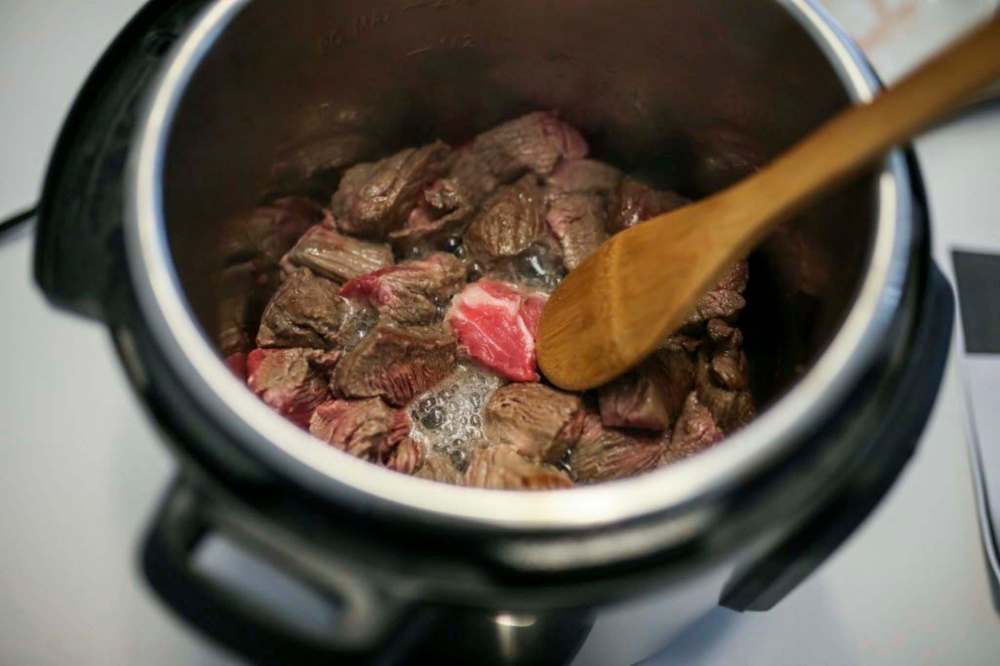
Browning meat is something a slow cooker can’t do. Our first attempt at browning a pork roast using the sauté function turned out extremely well. And another try didn’t disappoint. So there was no need to dirty another pot or skillet just to brown meat.
The rice-cooking function is basically set it and forget it. It also cooks brown rice in nearly half the time compared to cooking it on the stove top — about 30 minutes versus 60 minutes. Our first attempt at making brown rice was a gummy flop because we used too much water; the second batch, using less water, was better. Like anything, you’ll need to experiment. And make sure you read the instruction manual carefully — it’s a must.
While testing the Instant Pot, we also tried a risotto dish. Those who’ve made risotto the traditional way know it can take time and constant stirring. The risotto we made in the Instant Pot required no stirring and half the time.
You can set the Instant Pot for multi-grain cooking for soups and stews. These are preset functions with most rely on pressure cooking.
What the Instant Pot doesn’t do is make things crisp. You can cook a whole chicken in it, but the skin won’t get crispy. It will be brown, but not crisp.
The only downside with pressure cooking is the time it takes for the inner pot to come up to pressure. Once it does, the actual cooking time begins.
— Detroit Free Press
Beef Barbacoa Tacos
Serves 6
Salty, spicy, and slightly tangy, this dish delivers flavour on multiple levels. The tender shredded beef showcases the power of the pressure cooker to turn out in just an hour a meal that would ordinarily take hours of slow cooking.
60 ml (1/4 cup) apple cider vinegar
30 ml (2 tbsp) freshly squeezed lime juice
3 cloves garlic, minced 1 chipotle chili in adobo, minced
10 ml (2 tsp) ground cumin
10 ml (2 tsp) dried oregano
5 ml (1 tsp) salt
2.5 ml (1/2 tsp) freshly ground black pepper
1 ml (1/4 tsp) ground cloves
30 ml (2 tbsp) vegetable oil
1.125 kg (2 1/2 pounds) boneless beef chuck roast, trimmed of most fat and cut into large chunks
125 ml (1/2 cup) reduced-salt chicken broth or stock
2 bay leaves
Small 15-cm or 6-inch corn tortillas
FOR SERVING
Salsa or pico de gallo
Cotija cheese
In a small bowl, whisk together the vinegar, lime juice, garlic, chipotle, cumin, oregano, salt, pepper and cloves in a medium bowl.
Press Sauté and use the sauté or adjust button to select the highest temperature (“More”). Place the vegetable oil in the inner pot. Wait until the display reads “Hot,” about 5 minutes, then add the beef. Cook with the lid off, turning the beef every 2 minutes, until the beef is browned on most sides, about 8 minutes.
Add the vinegar sauce and the chicken broth (be careful — steam may whoosh up!), and then the bay leaves. Stir to combine.
Close and lock the lid. Set the valve to Sealing. Press Cancel, then press Manual or Pressure Cook and use the Pressure or Pressure Level button to select High Pressure. Set the time to 30 minutes.

When the cooking cycle ends, press Cancel. Allow the appliance to cool and release pressure naturally, about 20 minutes. (The pressure is released when the small metal float valve next to the pressure-release valve sinks back into the lid and the lid is no longer locked.)
Remove the lid. Discard the bay leaves. Use tongs or a large spoon to remove the beef from the inner pot and place it on a cutting board. Shred the beef using two forks: Use one fork to pull off a chunk and then use two forks to shred that piece, holding down the meat with one fork and pulling at it with the other. Repeat with the remaining beef.
Serve the beef hot, piled into corn tortillas and topped with salsa and a sprinkling of Cotija cheese, if desired. Beef Barbacoa and its juices will keep, in an airtight container in the refrigerator, for up to 4 days. To reheat, preheat the oven to 175 C (350 F) and place the beef in a shallow baking dish with enough of the juices to reach a depth of about 1/4 inch. Cover the baking dish tightly with aluminum foil and bake until hot, about 15 minutes.
From How to Instant Pot: Mastering all the Functions of the One Pot that will change the Way you cook By Daniel Shumski (Workman, US$16.95).
— Detroit Free Press
Related Articles
Cooking has gone to Pot
Advertisement Advertise With Us
Advertisement Advertise With Us
History
Updated on Wednesday, January 24, 2018 7:24 AM CST: Photo added.
Updated on Wednesday, January 24, 2018 7:41 AM CST: Recipe added.