Uncharitable change
New rules for student program leaves some groups out in the cold

Advertisement
Read this article for free:
or
Already have an account? Log in here »
To continue reading, please subscribe:

Digital Subscription
One year of digital access for only $205*
- Enjoy unlimited reading on winnipegfreepress.com
- Read the E-Edition, our digital replica newspaper
- Access News Break, our award-winning app
- Play interactive puzzles
*First annual payment billed as $205.00 + GST for one year. This annual subscription will automatically renew at $233.00 + GST every 52 weeks (10% off the regular annual price of $259.35). Offer available to new and qualified returning subscribers only. Cancel any time.
To continue reading, please subscribe:
Add Free Press access to your Brandon Sun subscription for only an additional
$1 for the first 4 weeks*
- Enjoy unlimited reading on winnipegfreepress.com
- Read the E-Edition, our digital replica newspaper
- Access News Break, our award-winning app
- Play interactive puzzles
*Your next Brandon Sun subscription payment will increase by $1.00 and you will be charged $17.95 plus GST for four weeks. After four weeks, your payment will increase to $24.95 plus GST every four weeks.
Read unlimited articles for free today:
or
Already have an account? Log in here »
Hey there, time traveller!
This article was published 30/12/2017 (3182 days ago), so information in it may no longer be current.
“Canada Summer Jobs program will no longer fund anti-abortion, anti-gay groups.”
That was the headline on a report by Global News earlier this month which detailed changes to how the federal government will provide funding to non-profit groups, businesses and public sector employers that want to hire students.
According to the report, which quickly caught the attention of religious groups, organizations wanting government funding next year through the program must attest they respect, among other things, reproductive rights, sexual orientation and gender expression.

In the explanation on the application form for the program, applicants are told that reproductive rights include “the right to access safe and legal abortions.”
The form goes on to say that “the objective of the change it is to prevent Government of Canada funding from flowing” to organizations that don’t respect these rights.
The objective of this change is to “prevent Government of Canada funding from flowing to organizations whose mandates or projects may not respect individual human rights, the values underlying the Charter of Rights and Freedoms and associated case law.”
The government also wants to prevent youth “from being exposed to employment within organizations that may promote positions that are contrary” to these rights and values.
The form notes that being “affiliated with a religion does not itself constitute ineligibility for this program.” However, all groups must sign the attestation to be eligible for funding.
The reaction from religious organizations was swift and critical.
“We’re deeply concerned that this new policy violates the charter guarantees of religious freedom, thought, belief, opinion, and possibly, association,” says David Guretzki, executive vice-president of the Evangelical Fellowship of Canada.
“It is also contrary to the long tradition of co-operation and collaboration between religious organizations and governments in Canada.”
The change could have a serious negative impact on the many thousands of Canadians who depend on services from local charities since many of them are faith-based, he adds.
Barry Bussey, director of legal affairs for the Canadian Council of Christian Charities, an umbrella group for 3,300 Christian charities, is also disappointed.
For him, it’s a “a rejection of the legal rights, enshrined in the charter, that religious communities and individuals hold to express their religious commitments in public service. These rights are relied upon to run private Christian schools, summer camps, soup kitchens and other welfare agencies.”
“I have a problem with that, when the government is making funding subject to whether groups agree with its ideas,” he adds.
The Canadian Conference of Catholic Bishops is also concerned, and is “trying to see what can be done (about the stipulations) with other like-minded groups,” communications director Deacon René Laprise, told the Catholic Register.
The Campaign Life Coalition, a pro-life organization, has initiated a petition opposing the new rules.
On its LifeSite website, senior political strategist Jack Fonseca blasted the government for what he called a “blatant anti-Christian bias.”
“This is a jaw-dropping act of discrimination against faith-based employers and non-profits,” he stated, noting it signals a “special contempt for Christians.”
Phil Horgan, president of the Catholic Civil Rights League, told the Register that Catholic groups must not sign the attestation, “even at the risk of rejection.”
In addition to the effect on religious organizations, concerned was expressed about business owners whose own individual beliefs might make it hard for them to attest to the government’s requirements.
In 2016, the most recent year for which information is available, at least 138 religious groups in Manitoba received funding from the program to hire 151 students.
Although the groups were mostly Christian, there were also Jewish and Muslim organizations that received funding.
Religious groups that received funding included churches, synagogues, ministries for youth, summer camps, evangelistic groups, thrift stores and seniors’ homes.
Among the groups were the Salvation Army, the Manitoba Islamic Association, Union Gospel Mission, the Jewish Federation of Winnipeg, Living Bible Explorers and Calvary Temple.
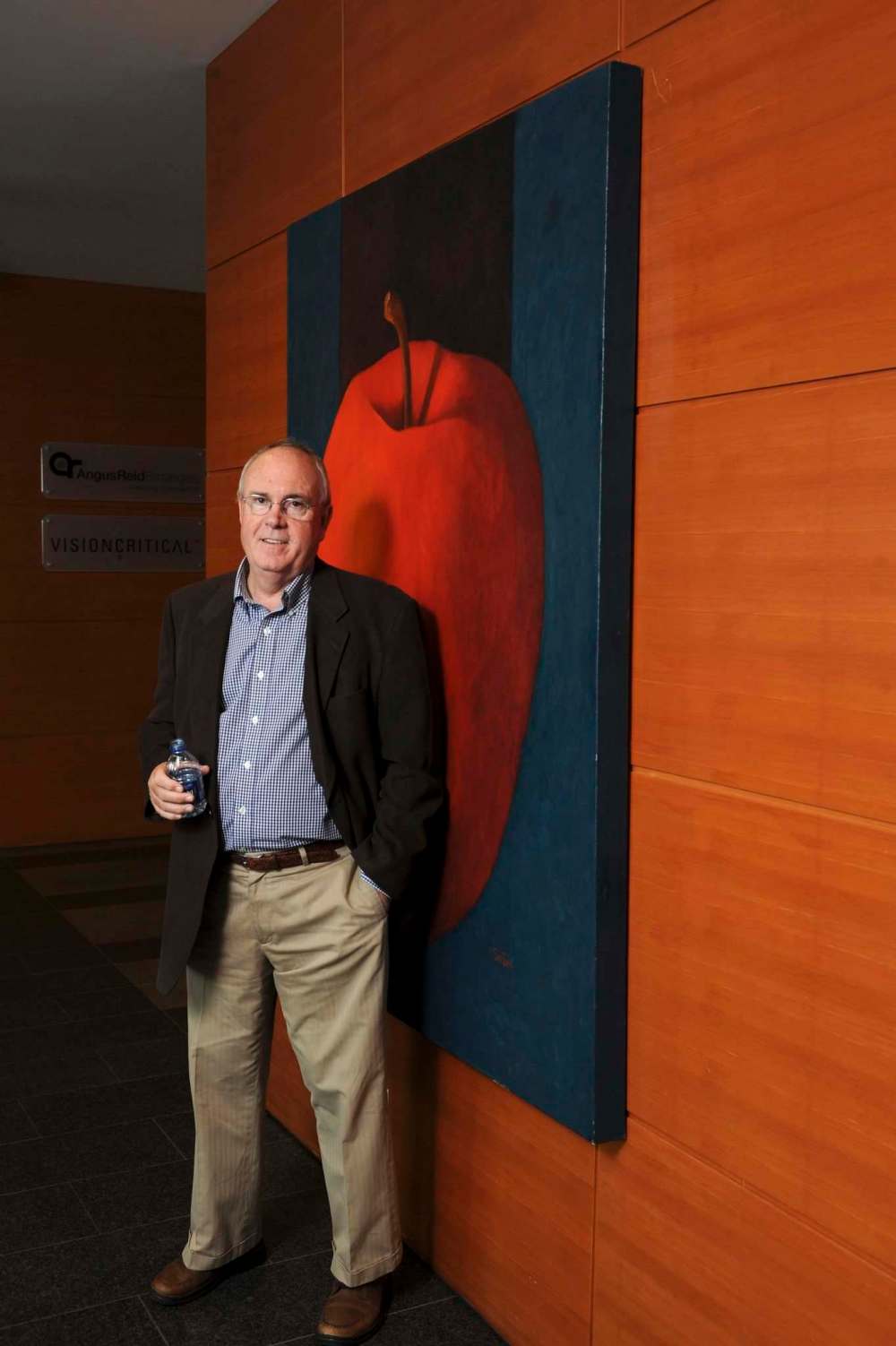
For pollster Angus Reid, the change to the summer jobs grant program is another illustration of the way Canadian society’s view of religion is changing.
Based on surveys of Canadian attitudes towards religion, he says there is a “lack of deep support for religious freedom and religious diversity” in this country.
A recent survey found a “relatively tepid support for the very concept of religious freedom,” he says, noting that when asked if the freedom to practise beliefs makes Canada a better or worse country, only 55 per cent said “better.”
The result, he says, is that political leaders could “sense an advantage in limiting the special status enjoyed by these organizations,” including in things like limiting their access to government funding.
It could also include restrictions on allowing people to claim a charitable tax exemption for giving to religious organizations, or withdrawing government support for religious schools.
“The fate of religion in Canada ultimately depends on public attitudes,” he says, adding that recent polling shows that 45 per cent of Canadians are against giving religious organizations special tax status.
“The same pattern is evident on opinions about religious schools and about regulations that would curtail the right of religious-based hospitals to opt out of assisted dying,” he says.
It all adds up to religion being slowly squeezed out of the public square, he maintains.
In the not-to-distant past, religious leaders were called upon to help make public policy. Today, he suggests, they are increasingly being “elbowed out of policy debates.”
But instead of just being ignored, now the discussion is about whether “they have any right to be in the public square at all.”
For Reid, a practising Catholic, this is troubling.
“How far is Canadian society willing to go to allow religious groups to practise their religion as they wish?” he asks.
“This is a new era we’re into. Religious groups need to pay attention.”

What does he think religious groups should do? They should “come together to lobby government, to tell their own stories” about how they are creating value for Canadians through their various services.
“Right now the narrative is largely being defined by the secular world,” he says.
And if groups can’t come together — then what?
“Then it will be a dark chapter for religious freedom in Canada,” he says.
jdl562009@gmail.com
The Free Press is committed to covering faith in Manitoba through our Religion in the News project. This reporting continues because readers like you step forward to fund it.
Donate now to support our reporting on religion.
Your donation is eligible for a charitable tax receipt.
BECOME A FAITH JOURNALISM SUPPORTER
John Longhurst has been writing for Winnipeg's faith pages since 2003. He also writes for Religion News Service in the U.S., and blogs about the media, marketing and communications at Making the News.
Our newsroom depends on a growing audience of readers to power our journalism. If you are not a paid reader, please consider becoming a subscriber.
Our newsroom depends on its audience of readers to power our journalism. Thank you for your support.
The Free Press is committed to covering faith in Manitoba through our Religion in the News project. This reporting continues because readers like you step forward to fund it.
Donate now to support our reporting on religion.
Your donation is eligible for a charitable tax receipt.
BECOME A FAITH JOURNALISM SUPPORTER
John Longhurst has been writing for Winnipeg's faith pages since 2003. He also writes for Religion News Service in the U.S., and blogs about the media, marketing and communications at Making the News.
Our newsroom depends on a growing audience of readers to power our journalism. If you are not a paid reader, please consider becoming a subscriber.
Our newsroom depends on its audience of readers to power our journalism. Thank you for your support.
Advertisement Advertise With Us
Advertisement Advertise With Us
The Free Press acknowledges the financial support it receives from members of the city’s faith community, which makes our coverage of religion possible.