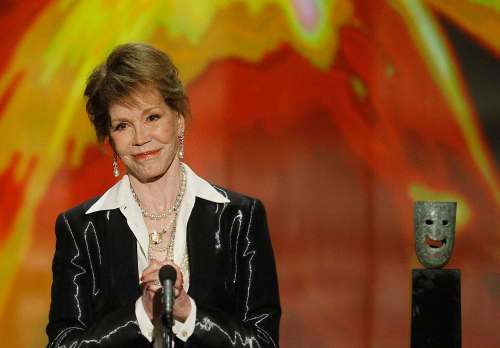
Mary Tyler Moore’s passing feels more personal than the rest
80-year-old icon one of television's most adored, enduring figures

Advertisement
Read this article for free:
or
Already have an account? Log in here »
To continue reading, please subscribe:

Digital Subscription
One year of digital access for only $205*
- Enjoy unlimited reading on winnipegfreepress.com
- Read the E-Edition, our digital replica newspaper
- Access News Break, our award-winning app
- Play interactive puzzles
*First annual payment billed as $205.00 + GST for one year. This annual subscription will automatically renew at $233.00 + GST every 52 weeks (10% off the regular annual price of $259.35). Offer available to new and qualified returning subscribers only. Cancel any time.
To continue reading, please subscribe:
Add Free Press access to your Brandon Sun subscription for only an additional
$1 for the first 4 weeks*
- Enjoy unlimited reading on winnipegfreepress.com
- Read the E-Edition, our digital replica newspaper
- Access News Break, our award-winning app
- Play interactive puzzles
*Your next Brandon Sun subscription payment will increase by $1.00 and you will be charged $17.95 plus GST for four weeks. After four weeks, your payment will increase to $24.95 plus GST every four weeks.
Read unlimited articles for free today:
or
Already have an account? Log in here »
Hey there, time traveller!
This article was published 25/01/2017 (3527 days ago), so information in it may no longer be current.
This one feels oddly personal.
The past year has been a sombre parade of celebrity deaths, beginning with last January’s passing of musicians David Bowie and Glenn Frey and continuing through the late winter and early spring with the deaths of comedian/actor Garry Shandling, record producer Sir George Martin, actress Patty Duke and pop-music icon Prince; summer brought sad farewells to legendary sportsmen Muhammad Ali and Gordie Howe, writer/producer Garry Marshall and actor Gene Wilder, and before 2016 could come to its woeful end we also lost golf pioneer Arnold Palmer, poet/musician Leonard Cohen, actor Alan Thicke, singer George Michael and the mother/daughter tandem of Debbie Reynolds and Carrie Fisher.
All of them were, in their own way, beloved, and the passing of each was followed by tributes and, for some, a few tears. But for several reasons, Wednesday’s passing of TV icon Mary Tyler Moore feels like it hits a little bit closer to home.
Moore, who died at age 80, was one of television’s most adored, enduring and important figures. She rose to stardom, as co-star of The Dick Van Dyke Show, in 1961, which is right around the time I started watching TV. So as someone who loved television as a kid and somehow grew up to spend most of my adult life watching it for a living, it’s fair to say Moore has been a pop-culture presence throughout my entire lifetime.
Paired with Van Dyke in that innovative ’60s sitcom, Moore, as Laura Petrie, redefined what a wife and mother and woman could be on television. The show ended after just five seasons, with series creator Carl Reiner having decided to exit on top rather than waiting for the series’ popularity to wane. And while a success of that magnitude might have been the defining moment for many TV careers, Moore was just getting started.
She returned to primetime in 1970 as star of The Mary Tyler Moore show, a sitcom that was produced under the auspices of MTM Enterprises, the production company she co-founded with her husband, TV executive Grant Tinker. To describe The Mary Tyler Moore show as groundbreaking doesn’t do justice to the many ways it advanced the cause of women in television.
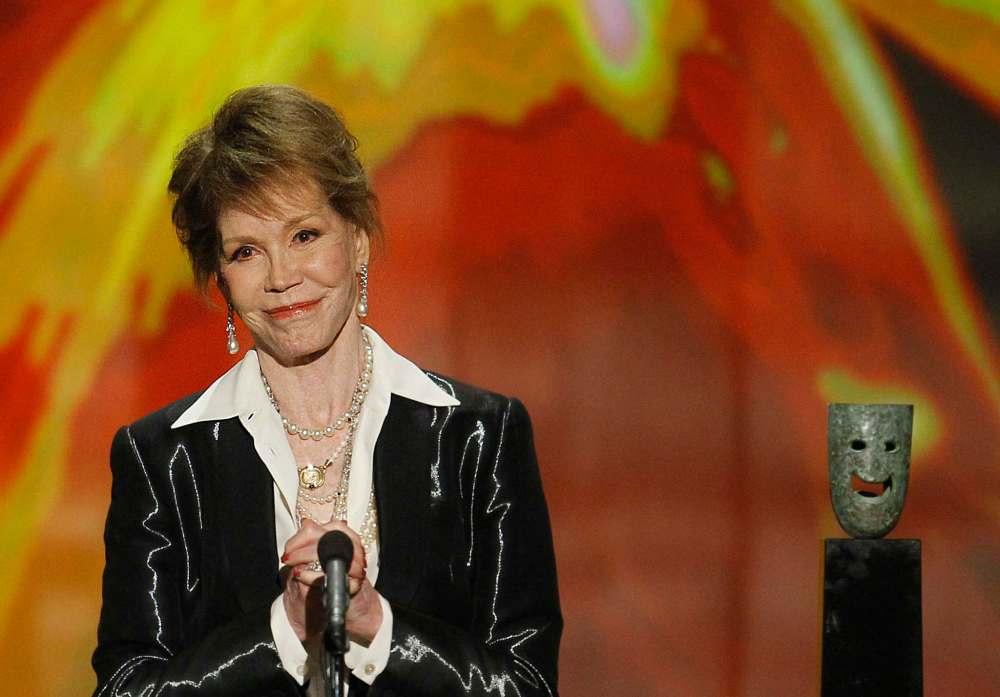
Its central character was a single, independent, intelligent female who did not depend on the support of a man and who succeeded on equal terms with her male co-workers (played by Ed Asner, Gavin McLeod and Ted Knight). Mary’s home life featured healthy, productive, supportive friendships with other strong, independent women (played by Valerie Harper and Cloris Leachman). Much of this was made possible by the fact The Mary Tyler Moore show also had numerous women on its writing staff — hardly a common occurrence in 1970s Hollywood.
The Mary Tyler Moore show was appointment television in our household, and I have very clear memories of Saturday nights spent watching it in the company of my mother.
After The Mary Tyler Moore Show ended in 1977 — and who could ever forget that foot-shuffling out-the-door group hug? — Moore tried her hand at a couple of short-lived variety shows and appeared in several movies, most notably with the courageous decision to play far outside her beloved-Mary TV persona as the embittered wife and mother opposite Donald Sutherland and Timothy Hutton in 1980’s Ordinary People.
But Moore’s contribution to television extended far beyond her on-screen performances. In addition to bringing The Mary Tyler Moore show to the small screen, MTM Enterprises was also responsible for launching three successful spinoffs — Rhoda, Phyllis and Lou Grant — and also produced The Bob Newhart Show, WKRP in Cincinnati, The White Shadow, Hill Street Blues and St. Elsewhere.
Moore contributed a tremendous amount to this TV-watching lifetime of mine, but if there’s one thing I will remember most, it’s simply the joy that watching her shows brought to my family and me. She was very likable, very talented and very, very good at TV comedy.
Singer/songwriter Sonny Curtis was referring to Moore’s fictional sitcom character, Mary Richards, when he penned the lyrics to the show’s unforgettable theme song, but they apply — now, as then — to the woman who did so much to define television as we know it. She really could turn the world on with her smile.
brad.oswald@freepress.mb.ca
Twitter: @BradOswald
Our newsroom depends on a growing audience of readers to power our journalism. If you are not a paid reader, please consider becoming a subscriber.
Our newsroom depends on its audience of readers to power our journalism. Thank you for your support.
Our newsroom depends on a growing audience of readers to power our journalism. If you are not a paid reader, please consider becoming a subscriber.
Our newsroom depends on its audience of readers to power our journalism. Thank you for your support.
Advertisement Advertise With Us
Advertisement Advertise With Us