Towering torte
However you slice it, vínarterta is cultural symbol and source of debate

Advertisement
Read this article for free:
or
Already have an account? Log in here »
To continue reading, please subscribe:

Digital Subscription
One year of digital access for only $205*
- Enjoy unlimited reading on winnipegfreepress.com
- Read the E-Edition, our digital replica newspaper
- Access News Break, our award-winning app
- Play interactive puzzles
*First annual payment billed as $205.00 + GST for one year. This annual subscription will automatically renew at $233.00 + GST every 52 weeks (10% off the regular annual price of $259.35). Offer available to new and qualified returning subscribers only. Cancel any time.
To continue reading, please subscribe:
Add Free Press access to your Brandon Sun subscription for only an additional
$1 for the first 4 weeks*
- Enjoy unlimited reading on winnipegfreepress.com
- Read the E-Edition, our digital replica newspaper
- Access News Break, our award-winning app
- Play interactive puzzles
*Your next Brandon Sun subscription payment will increase by $1.00 and you will be charged $17.95 plus GST for four weeks. After four weeks, your payment will increase to $24.95 plus GST every four weeks.
Read unlimited articles for free today:
or
Already have an account? Log in here »
Hey there, time traveller!
This article was published 24/11/2012 (5051 days ago), so information in it may no longer be current.
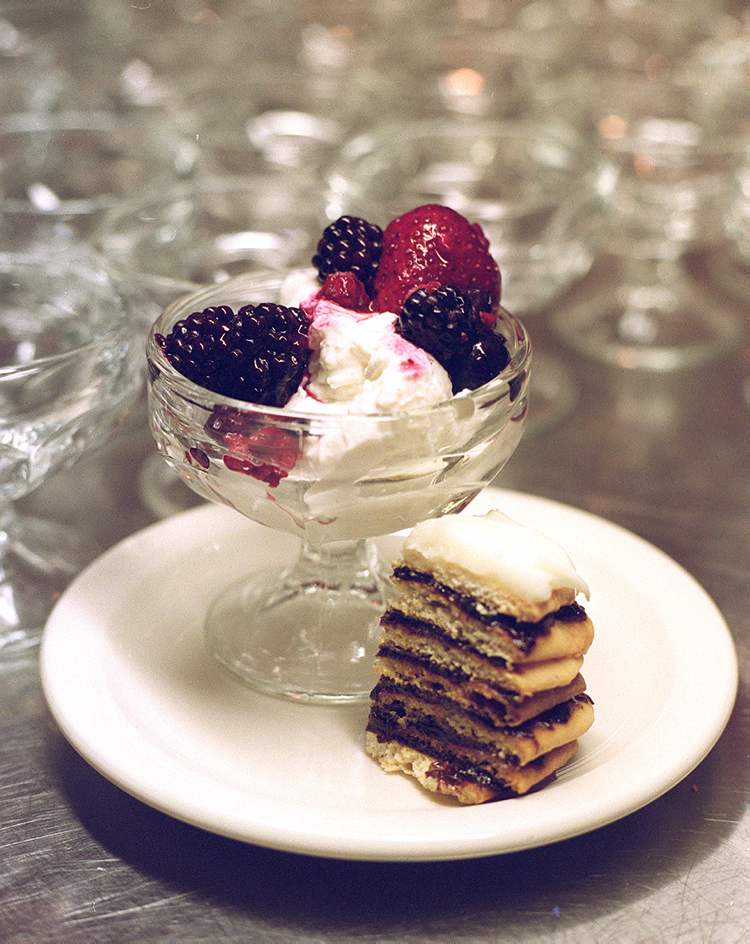
For the local Icelandic community, there is perhaps no food more strongly associated with its cultural heritage than the towering torte called vínarterta.
When Recipe Swap put out a call for vínarterta information — not just recipes but myths and memories, stories and lore — we got an immediate and overwhelming response. Manitoba’s Icelanders have a lot to say about this many-layered dessert.
Helle Wilson wrote to say that “in early days the Icelandic community in Canada had a fractious history.”
“One group Lutheran, one Unitarian, some Liberal and some Conservative. Some read the newspaper Lgberg; others read the newspaper Heimskringla. But when it came to the festive season, there was no division of opinion about which cake to serve. It was vínarterta.”
You could say that Manitobans of Icelandic descent agree on vínarterta, which is sometimes misspelled “vinatarta” and “vinaterta.” (The correct spelling, “vínarterta,” is in the Canadian Oxford Dictionary.) It would probably be more accurate to say that they agree up to a point. vínarterta is both an enduring symbol of Icelandic-Canadian identity and a source of endless debate.
Yes, vínarterta combines cookie-like dough with a prune-based filling. So far, so good. But doctrinal differences soon come up.
The standard vínarterta filling is straight-up prune, for example, but a few bakers advocate a mix of prunes and dates. Cardamom is absolutely non-negotiable for most, but some reach for cinnamon or ginger instead.
For Lee Kristine Finnson Solmundson, the big question is whether “to ice or not ice.”
A simple butter cream suffices for most. Some consider marzipan a treat, while others view it as heretical. A few hardliners reject frosting of any kind.
And then there’s the fraught question of layers. Six or seven?
Agnes Bardal Comack wrote a comic complaint — They Call This vínarterta? — about fancy nouveau variations on the cake. (Don’t even think about using strawberries.)
And certainly it is vínarterta’s unchanging nature that has made it a touchstone for so many Icelandic Manitobans. Recollections can reach back generations.
Johanne Benediktson has childhood memories of Christmas and counting the layers on her Aunt Ninna’s impossibly high cake. Pat Odegard associates vínarterta with her grandmother’s coffee parties, with the ladies scented by glycerine and rosewater, and the room smelling of good strong Icelandic coffee.
There is a fierce loyalty to family recipes and to secret tips and techniques for rolling and cutting. Doreen-Dawne Trach wrote that the first Christmas after her mother died she wept into the dough as she started the annual vínarterta: “She is always present every year when I make this.”
Some present-day bakers worry that they can’t quite live up to their mothers’ recipes. (Oh, those thin, perfectly round layers with just the right amount of filling.) They remember when women laboriously pitted the prunes and ran them through a hand-cranked meat grinder in what was a very long day’s work. (At least one writer admitted she now gives in to the temptation of pre-made prune paste.)
Agnes Bardal Comack recounts how the initial attempt by her and her sister, Margret, to replicate their mother’s much-loved vínarterta ended in messy disaster, while Paula Olafson recalls an aunt who assembled her first vínarterta without prebaking the cake layers. “Result was obviously unusual,” she writes (with great tact).
Clearly, the vínarterta is deeply rooted in the consciousness of Icelandic North Americans, with origins that go back to the 1800s. Back in Iceland, however, they seem to have moved on to other forms of dessert. Contemporary Icelanders are a bit baffled by the New World vínarterta fixation.
Helle Wilson sent in a funny account from good friends who visited Iceland and took along a vínarterta baked by her amma, Johanna Wilson, as a gift for their hosts. At their hosts’ house, they met a pastor from Winnipeg who was in Iceland on church business and had been asked by his wife to bring back an authentic Icelandic vínarterta. He hadn’t been able to find one, and, in fact, his Icelandic host family had no idea what one was. Helle’s friends’ hosts generously gave him half of theirs, so that part of this Winnipeg vínarterta ended up going right back to Winnipeg.
Thanks to Helle Wilson for their “well-travelled” family recipe. And thanks to everyone who wrote in with recipes, stories — and very strong opinions.
Amma Johanna Wilson’s vínarterta
Cookie layers:
228 g (1 cup) butter
375 ml (1 1/2 cups) white sugar
2 large eggs
5 ml (1 tsp) cardamom
5 ml (1 tsp) pure vanilla extract
45 ml (3 tbsp) cream
900 ml (4 cups) flour
5 ml (1 tsp) baking powder
Pinch of salt
Cream butter and sugar. Add eggs, cardamom, pure vanilla extract and cream. Mix together sifted flour, baking powder and salt, then add to the butter and sugar mixture, blending well.
Divide dough into six portions. Roll out the portions of the dough on a cookie sheet. Cut a 20 cm (8 in) round or square using a plate or pan as a guide. This recipe will make 6 or 7 layers, depending on how thinly they are rolled out. Bake at 175C (350F) for 8-10 minutes to a delicate light brown. Layers should be cooled before filling with cooled prune mixture.
Filling:
500 g (1 lb) pitted prunes
125 ml (1/2 cup) sugar
5 ml (1 tsp) pure vanilla extract
2 ml (1/2 tsp) grated nutmeg
1 ml (1/4 tsp) ground cloves
5 ml (1 tsp) cinnamon

1 ml (1/4 tsp) allspice
In water to cover, cook prunes until tender. Cool, then process prunes in food processor and add the sugar, vanilla and spices.
Finally, spread the filling on the cookie layers. Age the cake, in a covered container, for three to four days in the fridge.
Note: The secret to getting the layer a uniform thickness is to roll them out directly onto the cookie sheet and cut the circle or square using an inverted plate or pan, thereby avoiding having to lift the layers to the cookie sheet.
Studying at the University of Winnipeg and later Toronto’s York University, Alison Gillmor planned to become an art historian. She ended up catching the journalism bug when she started as visual arts reviewer at the Winnipeg Free Press in 1992.
Our newsroom depends on a growing audience of readers to power our journalism. If you are not a paid reader, please consider becoming a subscriber.
Our newsroom depends on its audience of readers to power our journalism. Thank you for your support.
Studying at the University of Winnipeg and later Toronto’s York University, Alison Gillmor planned to become an art historian. She ended up catching the journalism bug when she started as visual arts reviewer at the Winnipeg Free Press in 1992.
Our newsroom depends on a growing audience of readers to power our journalism. If you are not a paid reader, please consider becoming a subscriber.
Our newsroom depends on its audience of readers to power our journalism. Thank you for your support.
Related Articles
Our own Icelandic saga
Advertisement Advertise With Us
Advertisement Advertise With Us
History
Updated on Saturday, November 24, 2012 9:49 AM CST: corrects spelling of vínarterta