

Progressive candidate sorely missing from mayoral race

Advertisement
Read this article for free:
or
Already have an account? Log in here »
To continue reading, please subscribe:

Digital Subscription
One year of digital access for only $205*
- Enjoy unlimited reading on winnipegfreepress.com
- Read the E-Edition, our digital replica newspaper
- Access News Break, our award-winning app
- Play interactive puzzles
*First annual payment billed as $205.00 + GST for one year. This annual subscription will automatically renew at $233.00 + GST every 52 weeks (10% off the regular annual price of $259.00). Offer available to new and qualified returning subscribers only. Cancel any time.
To continue reading, please subscribe:
Add Free Press access to your Brandon Sun subscription for only an additional
$1 for the first 4 weeks*
- Enjoy unlimited reading on winnipegfreepress.com
- Read the E-Edition, our digital replica newspaper
- Access News Break, our award-winning app
- Play interactive puzzles
*Your next Brandon Sun subscription payment will increase by $1.00 and you will be charged $17.95 plus GST for four weeks. After four weeks, your payment will increase to $24.95 plus GST every four weeks.
Read unlimited articles for free today:
or
Already have an account? Log in here »
With Mayor Scott Gillingham officially launching his re-election campaign, one of the more intriguing questions surrounding Winnipeg’s 2026 civic election has less to do with the incumbent himself and more to do with who is missing from the race.
Specifically, where is the political left?
Where is organized labour?
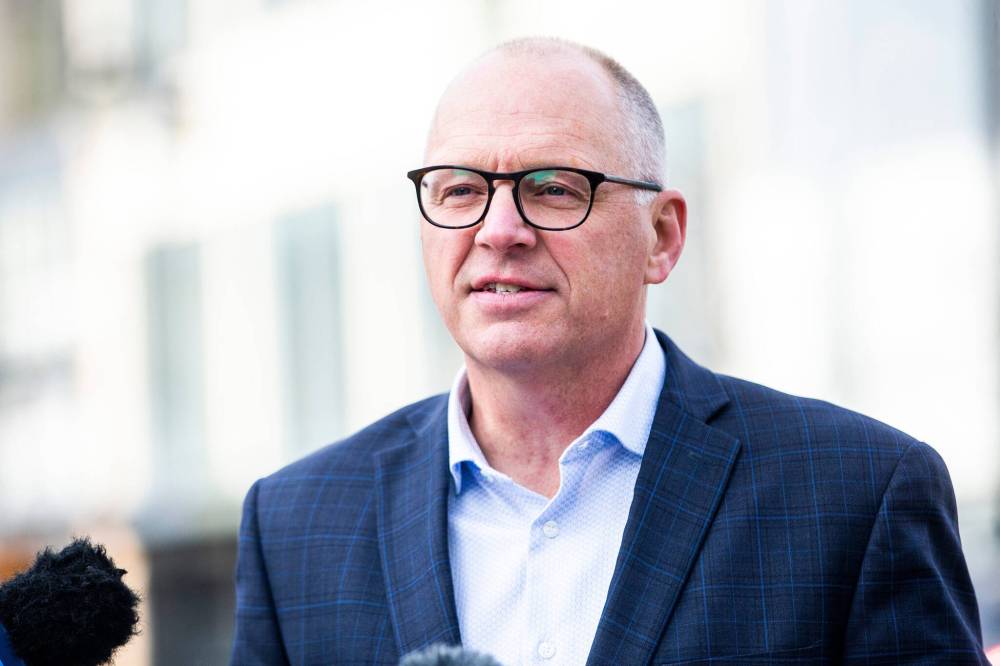
MIKAELA MACKENZIE / FREE PRESS FILES
MayorScott Gillingham
Where is the high-profile progressive candidate prepared to challenge Gillingham on transit, homelessness, urban planning and the future direction of Winnipeg?
There is still time for someone credible to enter the race. Candidate registration remains open until Sept. 22. But the clock is ticking, and with every passing week the likelihood diminishes that Winnipeg voters will see a serious, well-organized campaign from the left capable of framing the election around competing visions for the city.
That absence is difficult to understand given the sheer number of issues that should, in theory, provide fertile political ground for a progressive challenger.
Transit users are frustrated with unreliable service, overcrowded buses and routes that many riders still struggle to navigate under the city’s new transit network.
Homelessness and addiction problems have become increasingly visible in nearly every corner of Winnipeg. Housing affordability remains a growing concern.
And major city spending priorities — including billions earmarked for the widening of Kenaston Boulevard and the extension of Chief Peguis Trail — have long been criticized by progressives as outdated, car-oriented infrastructure planning that comes at the expense of public transit and urban redevelopment.
These are not minor disagreements. They represent fundamentally different political visions for how Winnipeg should grow and where public money should be spent.
Yet despite these clear ideological divides, there is no prominent labour-backed candidate stepping forward to make that case to voters.
Former mayor Glen Murray has ruled out another run. Social enterprise leader Shaun Loney is not running again. Other recognizable names from Winnipeg’s progressive circles remain absent from the race.
That is surprising in a city with Winnipeg’s political history.
This is, after all, the birthplace of the 1919 General Strike. Organized labour has long played a major role in shaping Manitoba politics. Unions remain highly influential in elections and continue to wield considerable organizational power. When labour decides to fully engage in a political campaign, it can mobilize volunteers, raise money and drive voter turnout.
Which raises the obvious question: if labour leaders and progressive activists believe Winnipeg is heading in the wrong direction, why has nobody emerged to challenge for the city’s top job?
The answer may partly reflect the growing difficulty of municipal politics itself.
Running for mayor is expensive, exhausting and intensely public. Candidates face constant scrutiny, social media attacks and endless demands on their time.
A serious mayoral bid requires fundraising, volunteers, policy development and citywide name recognition.
That reality undoubtedly discourages some otherwise qualified candidates.
There also appears to be a broader problem within Winnipeg’s progressive political movement: plenty of activism, but limited appetite for electoral risk.
It is relatively easy to criticize city hall decisions from the outside. Advocacy groups can oppose road expansions, demand better transit service or condemn the city’s response to homelessness without having to fully explain how they would govern differently within Winnipeg’s fiscal constraints.
A credible progressive candidate would need to explain how to substantially improve transit service while keeping property taxes politically acceptable. They would need to articulate realistic strategies to address homelessness, addictions and public safety simultaneously.
They would need to convince suburban homeowners that increased spending on transit and housing benefits the entire city, not just downtown neighbourhoods.
Those are difficult political arguments to make, but not impossible ones.
In fact, one could argue conditions are unusually favourable for a strong progressive campaign.
Gillingham himself has already broken one long-standing political taboo by significantly increasing taxes and fees. His administration imposed Winnipeg’s largest property tax increase since the 1990s and sharply raised garbage and sewer charges.
The mayor defended those decisions as necessary to fund infrastructure, public safety and long-delayed sewage treatment upgrades.
Whether voters agree or disagree, the political landscape has shifted. The old municipal script — promising low taxes above all else — is no longer entirely dominant. Winnipeg’s infrastructure deficits and service pressures have become too large to ignore.
That should create an opening for someone prepared to argue not simply for more spending, but for different spending priorities.
Instead, the left risks allowing the election debate to unfold largely on the incumbent’s terms.
That would be unfortunate for Winnipeg voters regardless of political ideology. Healthy municipal politics requires serious debate and competing visions.
Cities benefit when candidates challenge each other on transportation, policing, development, housing and taxation. Elections should force public conversations about long-term priorities and the kind of city residents want Winnipeg to become.

There is still time for that conversation to happen.
There are undoubtedly individuals within Winnipeg’s labour movement, non-profit sector, academia or former political circles who possess the profile, experience and credibility to mount a serious mayoral campaign. But if they intend to run, they will need to decide soon.
Because organizing a citywide campaign is not something that can be improvised at the last minute.
At some point, Winnipeg’s political left and organized labour will have to decide whether they truly want to shape city hall policy or whether they are content remaining on the sidelines criticizing the decisions of others.
tom.brodbeck@freepress.mb.ca
Tom has been covering Manitoba politics since the early 1990s and joined the Winnipeg Free Press news team in 2019.
Our newsroom depends on a growing audience of readers to power our journalism. If you are not a paid reader, please consider becoming a subscriber.
Our newsroom depends on its audience of readers to power our journalism. Thank you for your support.
Tom has been covering Manitoba politics since the early 1990s and joined the Winnipeg Free Press news team in 2019.
Our newsroom depends on a growing audience of readers to power our journalism. If you are not a paid reader, please consider becoming a subscriber.
Our newsroom depends on its audience of readers to power our journalism. Thank you for your support.
Advertisement Advertise With Us
Advertisement Advertise With Us