

Postal service’s future looking dim
Advertisement
Read this article for free:
or
Already have an account? Log in here »
To continue reading, please subscribe:
Monthly Digital Subscription
$1 per week for 24 weeks*
- Enjoy unlimited reading on winnipegfreepress.com
- Read the E-Edition, our digital replica newspaper
- Access News Break, our award-winning app
- Play interactive puzzles
*Billed as $4.00 plus GST every four weeks. After 24 weeks, price increases to the regular rate of $19.95 plus GST every four weeks. Offer available to new and qualified returning subscribers only. Cancel any time.
Monthly Digital Subscription
$4.99/week*
- Enjoy unlimited reading on winnipegfreepress.com
- Read the E-Edition, our digital replica newspaper
- Access News Break, our award-winning app
- Play interactive puzzles
*Billed as $19.95 plus GST every four weeks. Cancel any time.
To continue reading, please subscribe:
Add Free Press access to your Brandon Sun subscription for only an additional
$1 for the first 4 weeks*
- Enjoy unlimited reading on winnipegfreepress.com
- Read the E-Edition, our digital replica newspaper
- Access News Break, our award-winning app
- Play interactive puzzles
*Your next Brandon Sun subscription payment will increase by $1.00 and you will be charged $17.95 plus GST for four weeks. After four weeks, your payment will increase to $24.95 plus GST every four weeks.
Read unlimited articles for free today:
or
Already have an account? Log in here »
After more than a decade of threats from Ottawa to end door-to-door (D2D) mail delivery, is it finally going to happen?
Prime Minister Mark Carney this month announced that D2D mail service is “not viable,” as Canada Post has started losing, on average, about $10 million a day. In the previous fiscal year, Ottawa was forced to inject $1.57 billion into Canada Post to cover its operating costs.
As a result, Canada Post has announced that an additional 136,000 addresses in 13 communities will lose D2D service this year and rely instead on community mail boxes. (Winnipeg households affected include those with the following postal code prefixes: R2P, R2R, R2V, R2W, R2X, R3E, and R3H.)
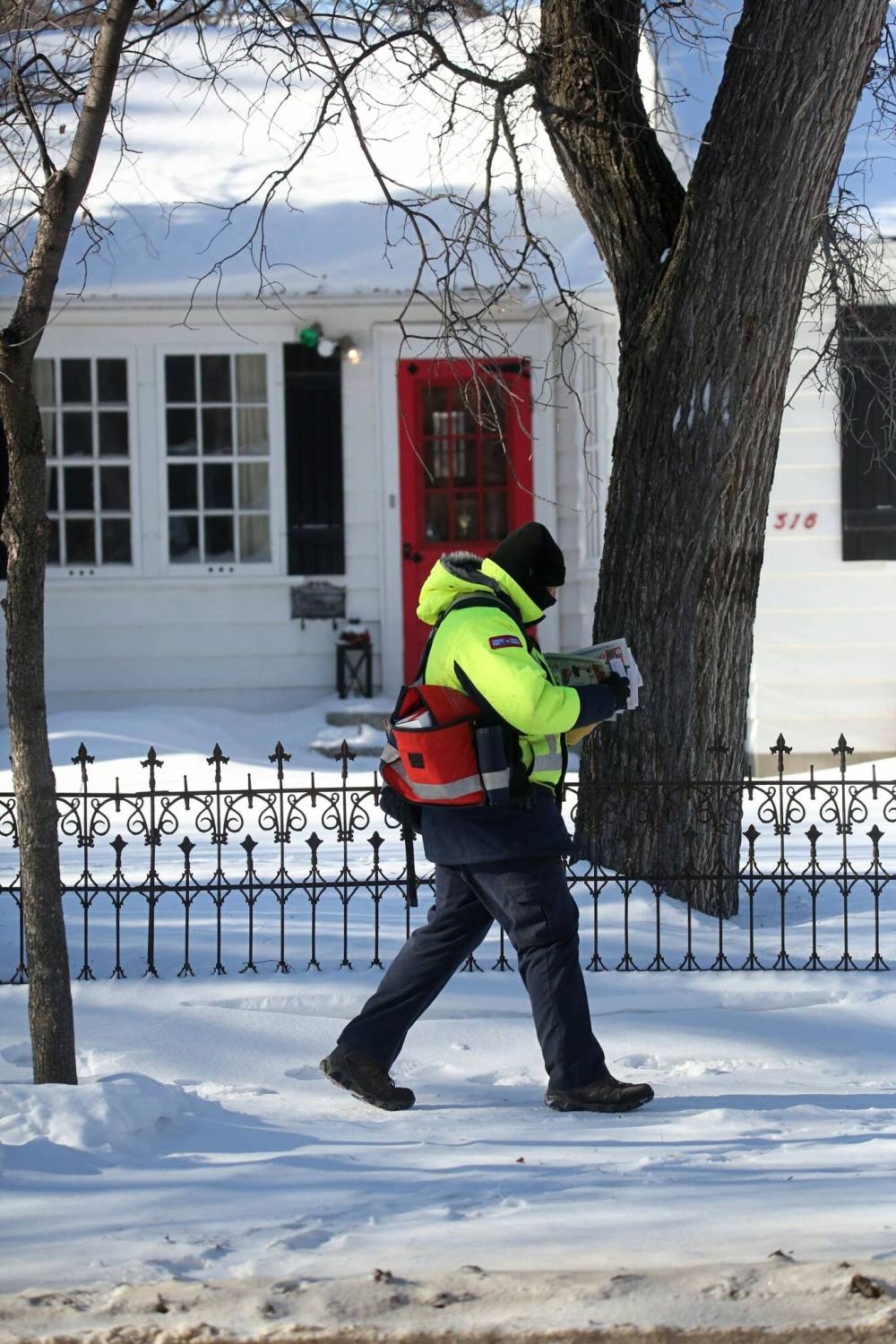
At the same time, Ottawa has lifted a moratorium on the closure of about 4,000 rural post offices from communities that have become essentially “urbanized” and thus able to get postal services operated out of private retail stores.
Is this a positive, inevitable development, or the cynical dismantling of what was once a core of government programs?
For left-leaning think tanks and public sector unions, the end of D2D is an affront to democracy and good government. These arguments are not without merit.
D2D mail is still offered in most democracies throughout the world. Although it may seem to be an outdated manner of communication for many younger people, it can be very important to older folks and people with disabilities. The supporters of D2D mail delivery argue that even in the age of instantaneous digital communications, the ability to send and receive mail on a timely basis is an important function of a democracy.
They also point out that working as an inside or outside postal worker is a very good job and plans to end D2D delivery will eliminate up to 30 per cent of those jobs, which is hardly good for the economy.
However, mitigating these arguments is the hard fact that D2D delivery is also an increasingly expensive service even as fewer people use it.

So, is the decision to trigger the beginning of the very end of D2D mail delivery fiscally prudent, or is it a cynical act of austerity? There are some cold hard facts that might put this change into perspective.
First, 75 per cent of Canadian households currently do not get D2D mail delivery. As urban centres have grown, new housing developments have sprung up with almost all of them relying on community mail delivery. Notwithstanding concerns about how this impacts the elderly or infirm, a vast majority of Canadians have adjusted and make regular trips to the community mailbox without incident.
There is little doubt that, faced with enormous pressures to fund more essential public services, the federal government has to find ways of cutting back. This is even more important in an age where potentially crippling budget deficits seem immune to reasonable efforts to retire them.
More importantly, the transmission of paper correspondence through the postal system is fast becoming a dying practice. In most countries with fully functioning postal services, letter volumes have dropped by more than half over the past decades. Canada Post estimates that currently, most households received an average of two letters per week in 2023, down from seven pieces of mail received in 2006.
It seems likely that the trend towards community mail delivery will continue to forge ahead. And as digital correspondence and paperless transactions become more the rule than the exception, stamps will become less of an essential commodity to keep on hand, and more of a collector’s item.