

No better time for Canada to refine fossil fuel contingency plans

Advertisement
Read this article for free:
or
Already have an account? Log in here »
To continue reading, please subscribe:
Monthly Digital Subscription
$1 per week for 24 weeks*
- Enjoy unlimited reading on winnipegfreepress.com
- Read the E-Edition, our digital replica newspaper
- Access News Break, our award-winning app
- Play interactive puzzles
*Billed as $4.00 plus GST every four weeks. After 24 weeks, price increases to the regular rate of $19.95 plus GST every four weeks. Offer available to new and qualified returning subscribers only. Cancel any time.
Monthly Digital Subscription
$4.99/week*
- Enjoy unlimited reading on winnipegfreepress.com
- Read the E-Edition, our digital replica newspaper
- Access News Break, our award-winning app
- Play interactive puzzles
*Billed as $19.95 plus GST every four weeks. Cancel any time.
To continue reading, please subscribe:
Add Free Press access to your Brandon Sun subscription for only an additional
$1 for the first 4 weeks*
- Enjoy unlimited reading on winnipegfreepress.com
- Read the E-Edition, our digital replica newspaper
- Access News Break, our award-winning app
- Play interactive puzzles
*Your next Brandon Sun subscription payment will increase by $1.00 and you will be charged $17.95 plus GST for four weeks. After four weeks, your payment will increase to $24.95 plus GST every four weeks.
Read unlimited articles for free today:
or
Already have an account? Log in here »
The oil crisis gripping the planet could be described as an economic apocalypse. Or, it could be positioned as an unprecedented economic opportunity.
South Korea is one of the nations that has adopted the latter perspective by expanding what it calls its “sunshine income village” initiative.
With virtually no domestic energy resources, South Korea must import vast amounts of coal, oil and gas. Most of that oil and gas has to travel through the Strait of Hormuz, currently paralyzed by the U.S.-Israel war in Iran.
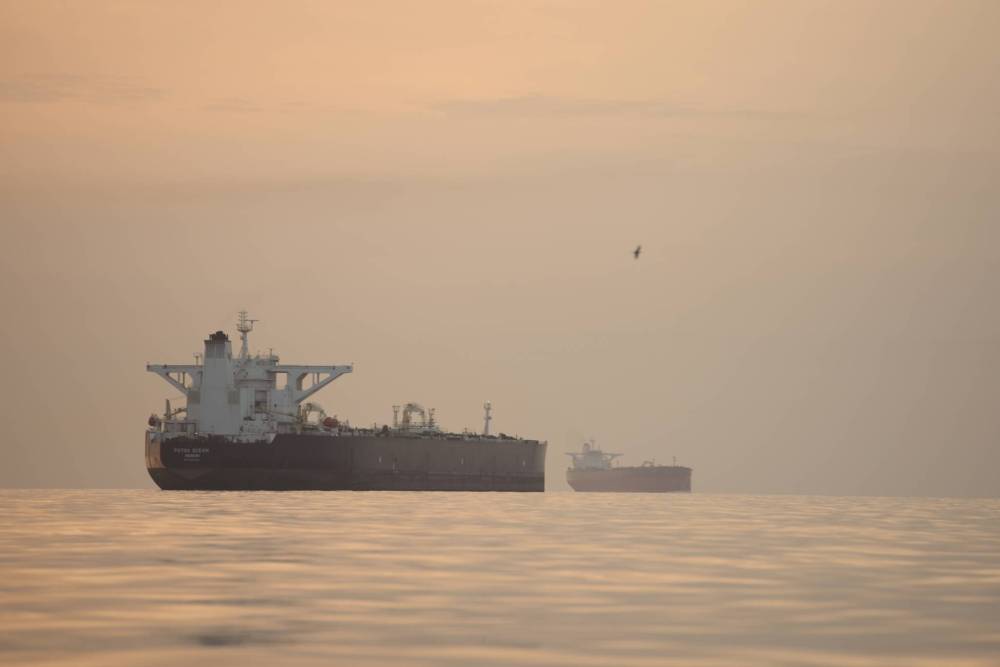
Tankers anchored in the Strait of Hormuz off the coast of Qeshm Island, Iran on Saturday. (Asghar Besharati / The Associated Press files)
South Korea is responding by investing billions of dollars to help smaller communities transition into sunshine income villages. Using government grants and loans, the villages install solar panel arrays to not only provide electricity for residents but sell enough power back to the country’s grid to provide a monthly cash dividend. That money is typically used to enhance social programs and community amenities.
The South Korean government said it is exploiting the current oil crisis to expedite existing policies to lessen the nation’s dependence on fossil fuels. There will be roughly 700 sunshine villages by the end of this year and 2,500 by 2030.
“Around the world, the Middle East war is driving even faster acceleration of renewable energy transition, so Korea, too, must pick up the pace,” Kim Sung-whan, minister of climate, energy and environment, told the Guardian.
How is Canada responding to this unique opportunity to reduce the dependency on fossil fuels? In some respects, we are keeping pace. However, we’re also clinging desperately to our fossil fuel industries.
Prime Minister Mark Carney has repeatedly stated a commitment to pursuing green and renewable energy sources, including wind, solar and energy storage technology. And he has promised to fast track some of these projects with significant federal funding along with more traditional resource development.
Across Canada, federal-provincial collaboration is producing results. Ontario committed to a $2-billion plan to build the first grid-connected small modular reactors in the G7; Nova Scotia is pursuing Canada’s largest off-shore wind farm; and the Fort Chipewyan Solar Project in Alberta is the largest solar array in Canada.
At the same time, the Carney government is working feverishly to increase Canada’s oil and gas industry to back-fill shortages of fossil fuels triggered by the war in Iran. Carney’s efforts have reverberated in Manitoba, where Premier Wab Kinew said recently that a federal investment in expanding operations at the Port of Churchill may be dependent on our ability to make the northern port a major export hub for liquid natural gas produced in Western Canada.
If you accept that climate change and the violent, destructive weather events that accompany it is the most pressing issue we face today (spoiler alert: it really is), then can we afford to embrace Ottawa’s “all of the above” strategy? There are many who think we cannot do both at the same time.
Former Liberal environment minister Catherine McKenna lashed out last week at Canada’s oil companies for not seizing the opportunity to do more to control carbon emissions from oil and gas production at a time when high oil prices are creating unprecedented windfall profits.
The Canadian Centre for Policy Alternatives issued a report this month that estimated oil and gas companies are making an additional $170 million per day from Iran war-driven spikes in oil prices. McKenna said despite that, the industry continues at a glacial pace on its commitments to make investments in new technology that would dramatically reduce its greenhouse gas emissions.
McKenna said Ottawa’s strategy, and the oil industry’s response, is alarming. “From an environmental perspective it makes no sense — and economically, even less,” she said last week at a Montreal climate summit. “Energy shocks are moving countries everywhere even faster toward renewable energy, which is cheaper, cleaner.”
Indeed, as quickly as Canada is building clean, renewable energy capacity, the oil and gas industry seems to be back-filling those gains. In Ottawa’s recently published greenhouse gas inventory for 2024, most industrial sectors showed progress in reducing emissions; oil and gas, however, stood alone with a significant increase.
And there are other areas of concern at the operational level of the oil and gas industry.

The Narwhal published an investigatory report this month documenting the historic increase in carbon emissions at the LNG Canada export facility in British Columbia, which now has the dubious distinction of having the highest source of liquefied natural gas emissions in the world.
The investigation revealed that despite Ottawa’s claims that Canada would produce the cleanest LNG in the world, the B.C. facility burned off more than 350 million cubic metres of gas in 2025, much of it because of malfunctioning equipment at the facility. That is more gas lost to flaring than any other LNG facility in the world.
At some point, Canada is going to have to pick sides. Although we are making progress in building renewable, clean energy capacity, we’re allowing oil and gas to grow exponentially with almost no concern about the future of our climate.
If we continue our attempts to have it both ways, we may find that rising temperatures and destructive weather events make it impossible for us to have it either way.
dan.lett@freepress.mb.ca
Born and raised in and around Toronto, Dan Lett came to Winnipeg in 1986, less than a year out of journalism school with a lifelong dream to be a newspaper reporter.
Our newsroom depends on a growing audience of readers to power our journalism. If you are not a paid reader, please consider becoming a subscriber.
Our newsroom depends on its audience of readers to power our journalism. Thank you for your support.
Born and raised in and around Toronto, Dan Lett came to Winnipeg in 1986, less than a year out of journalism school with a lifelong dream to be a newspaper reporter.
Our newsroom depends on a growing audience of readers to power our journalism. If you are not a paid reader, please consider becoming a subscriber.
Our newsroom depends on its audience of readers to power our journalism. Thank you for your support.
Advertisement Advertise With Us
Advertisement Advertise With Us