

Kinew won’t make same budget mistakes as deficit soars

Advertisement
Read this article for free:
or
Already have an account? Log in here »
To continue reading, please subscribe:
Monthly Digital Subscription
$1 per week for 24 weeks*
- Enjoy unlimited reading on winnipegfreepress.com
- Read the E-Edition, our digital replica newspaper
- Access News Break, our award-winning app
- Play interactive puzzles
*Billed as $4.00 plus GST every four weeks. After 24 weeks, price increases to the regular rate of $19.95 plus GST every four weeks. Offer available to new and qualified returning subscribers only. Cancel any time.
Monthly Digital Subscription
$4.99/week*
- Enjoy unlimited reading on winnipegfreepress.com
- Read the E-Edition, our digital replica newspaper
- Access News Break, our award-winning app
- Play interactive puzzles
*Billed as $19.95 plus GST every four weeks. Cancel any time.
To continue reading, please subscribe:
Add Free Press access to your Brandon Sun subscription for only an additional
$1 for the first 4 weeks*
*Your next subscription payment will increase by $1.00 and you will be charged $16.99 plus GST for four weeks. After four weeks, your payment will increase to $23.99 plus GST every four weeks.
Read unlimited articles for free today:
or
Already have an account? Log in here »
Although we don’t know exactly what is in next week’s provincial budget, you can bet that it will make for some particularly spicy debate.
Manitoba is straining under a $1.6-billion budget deficit for the current fiscal year, which ends March 31. The budget for next year should feature some tough and, likely, unpopular measures as the NDP try to moderate the deficit without undermining core services.
For better or worse, everyone wants to give Premier Wab Kinew advice about how he should manage that task: the Progressive Conservative opposition wants him to lower taxes, as do anti-tax lobby groups; socially progressive think tanks want him to avoid austerity and protect core services; business lobbies are looking for economic stimulus.
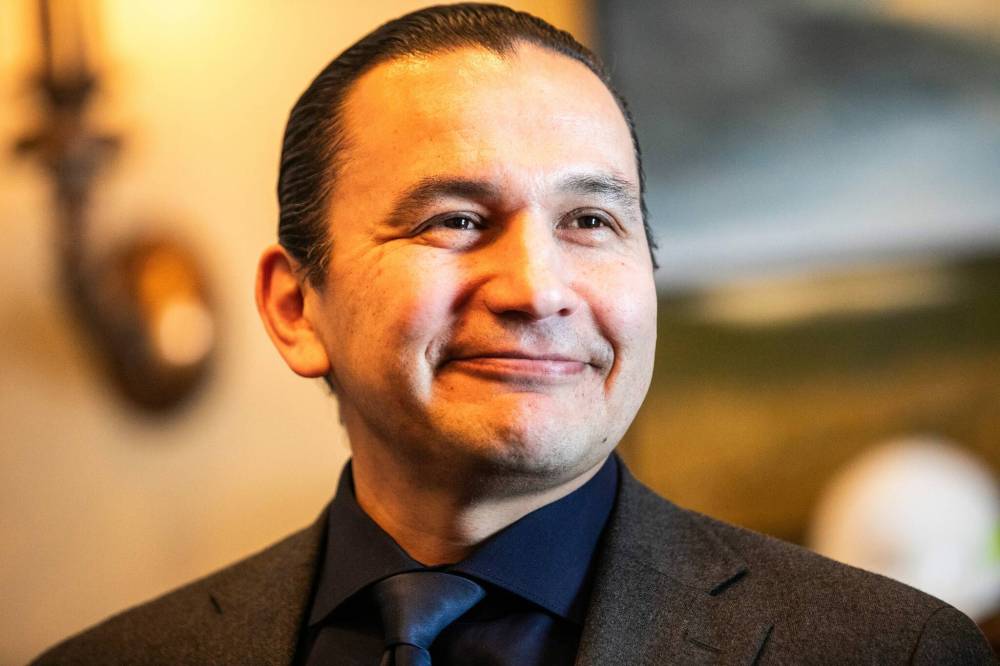
MIKAELA MACKENZIE / FREE PRESS FILES
Leading up to this month’s provincial budget, everyone wants to give Premier Wab Kinew advice, Dan Lett writes.
All that advice is hardly worthless, but the relentless barrage of ideas that gets dumped on the Manitoba legislature this time of year tends to have little value. Although some constituencies have better advice than others, far too much of the unsolicited ideas are one-dimensional rants that fail to recognize a fundamental fiscal reality: every budget action has an equal and opposite reaction.
You cut taxes, you have less money to spend on core services; cut spending on core services, and you run the risk of eroding the quality of life of the citizenry.
Nowhere are these budgeting realities more ignored than in the debate about taxation.
Even though Manitoba’s fiscal predicament means government cannot cut taxes without digging a deeper deficit hole, there is no shortage of shrill calls for lower taxes. Most of the lower-tax clamouring is coming from the Canadian Taxpayers Federation and the PCs, who believe current levels are strangling the provincial economy, and driving high-income Manitobans out of the province.
Although that is a common chorus sung this time of year, the taxpayers federation and Tories were somewhat provoked this time around.
Earlier this month, Kinew hinted the upcoming budget may claw back more of the education property tax credits from the top one per cent of income earners. For reference, the top one per cent earn an average annual income of $590,000.
Right now, those top earners — who, it can be said confidently, live in more expensive homes — are limited to a maximum annual education tax credit of $1,500. That is down from a 50 per cent rebate on gross education property taxes offered by the former Tory government.
Kinew was not explicit when he teased Manitobans, but paring tax credits for people earning that much money, at a time when the provincial treasury is in crisis, is modestly defensible.
The PC party counter-suggestion was to double the basic personal exemption — the amount of money you can make without paying taxes — to $30,000. It would be an extraordinarily expensive strategy that would provide little or no benefit to the lowest-income Manitobans, and maximum benefit to high-income Manitobans.
After crippling the treasury with eight years of tax cuts that required deep austerity in health care and education, one might have thought the Tories would have another card to play. Apparently, they haven’t had enough time in opposition to consider a different path.
Underlying the Tory proposal is a fundamental ruse about the benefits of tax cuts, and Manitoba’s place in the national taxation regime.
Tax cuts do not, as proponents argue, lead to economic growth. And Manitoba is certainly competitive on its tax rates.
It’s hard to compare provincial taxes because the provinces all use different thresholds. It would be fair to say, however, that Manitoba is pretty competitive on provincial income taxes; the Keystone province is neither the lowest (arguably Alberta, or maybe Ontario) or the highest (arguably Quebec).
What about high-wealth individuals? Manitoba does not index its tax brackets, which would boost the thresholds for higher taxation as income and the cost of living increases. On the other hand, Manitoba’s 17.4 per cent tax rate on incomes above $101,200 is a pretty good deal, particularly if you make more than a quarter million dollars.
The Tories will no doubt argue that if the NDP claws back more of the property tax credit from high-income earners, it will be tantamount to a tax increase. Perhaps, but it’s also a blow in favour of tax fairness.
Whatever Kinew and Finance Minister Adrien Sala do on budget day, they should stay clear of broadly based tax cuts or affordability supports that involve giving people of different income levels the same kind of benefit.
Kinew wasted significant sums of money with gas tax holidays in his first year. It’s unlikely he will repeat that mistake in the next budget.

What can we expect on March 24?
Given the gargantuan deficit, you will see a tightening of expenditures in non-core departments, and perhaps a slowing of expenditures in core departments, like health.
There might even be some increases in cost-recovery fees for some government services and, if Kinew’s teaser is any indication, a shifting of tax burden from lower-income to higher-income brackets.
The other thing the NDP can do right now is to spend significantly more time praying for rain this summer.
dan.lett@freepress.mb.ca
Born and raised in and around Toronto, Dan Lett came to Winnipeg in 1986, less than a year out of journalism school with a lifelong dream to be a newspaper reporter.
Our newsroom depends on a growing audience of readers to power our journalism. If you are not a paid reader, please consider becoming a subscriber.
Our newsroom depends on its audience of readers to power our journalism. Thank you for your support.
Born and raised in and around Toronto, Dan Lett came to Winnipeg in 1986, less than a year out of journalism school with a lifelong dream to be a newspaper reporter.
Our newsroom depends on a growing audience of readers to power our journalism. If you are not a paid reader, please consider becoming a subscriber.
Our newsroom depends on its audience of readers to power our journalism. Thank you for your support.
Advertisement Advertise With Us
Advertisement Advertise With Us