

Enlisted as boys, fought as men
Manitoba well-represented in D-Day blood spilled, acts of heroism
Advertisement
Read this article for free:
or
Already have an account? Log in here »
To continue reading, please subscribe:

Digital Subscription
One year of digital access for only $205*
- Enjoy unlimited reading on winnipegfreepress.com
- Read the E-Edition, our digital replica newspaper
- Access News Break, our award-winning app
- Play interactive puzzles
*First annual payment billed as $205.00 + GST for one year. This annual subscription will automatically renew at $233.00 + GST every 52 weeks (10% off the regular annual price of $259.35). Offer available to new and qualified returning subscribers only. Cancel any time.
To continue reading, please subscribe:
Add Free Press access to your Brandon Sun subscription for only an additional
$1 for the first 4 weeks*
- Enjoy unlimited reading on winnipegfreepress.com
- Read the E-Edition, our digital replica newspaper
- Access News Break, our award-winning app
- Play interactive puzzles
*Your next Brandon Sun subscription payment will increase by $1.00 and you will be charged $17.95 plus GST for four weeks. After four weeks, your payment will increase to $24.95 plus GST every four weeks.
Read unlimited articles for free today:
or
Already have an account? Log in here »
Hey there, time traveller!
This article was published 06/06/2019 (2634 days ago), so information in it may no longer be current.
They were all young men from Manitoba, mostly fresh from high school or just in their 20s. They worked in shops, factories and on Prairie farms. But when war came, they signed up.
Regardless of background, their paths intersected by land, sea and air in the spring of 1944. They were among the more than 14,000 Canadian soldiers who stormed a narrow stretch of the Normandy coast on June 6, 1944, as part of a massive Allied military campaign that changed the course of the Second World War.
The mission was code-named Operation Overlord, but it is far more commonly known as D-Day.
● ● ●
Roughly 700 Manitobans participated in D-Day. About half came from the ranks of the Royal Winnipeg Rifles, while the Fort Garry Horse Regiment accounted for about 150.
Pte. Wesley William Shwaluk, 21, of Oakburn, was a member of the 1st Canadian Parachute Battalion. He would be among the first to go into battle.
John Hippolyte Wickey was born in Switzerland, but he moved to Canada as a young man and could speak French and German. When war broke out in 1939, he joined the Fort Garry Horse before transferring to the Special Operations Executive in 1944. Its purpose was to conduct espionage, sabotage and reconnaissance in occupied Europe. In late May of that year, Wickey parachuted into France near Le Mans, a couple of weeks before the Allied invasion.
Lt. William Dalton Little recruited young men from Selkirk’s Dufferin Street, 29 in total. As a charter member of the so-called Dufferin Gang, Little, like most of his friends, was with the Fort Garry Horse. He was only 24 but was the commander of a Sherman tank.
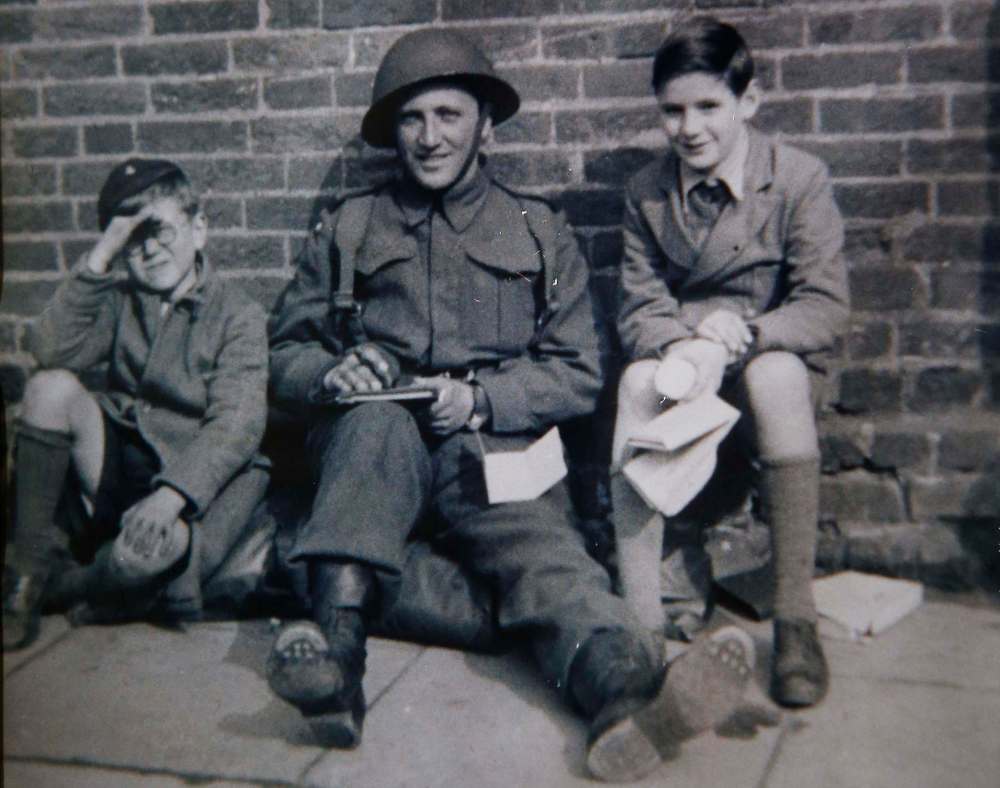
Cpl. Jim Parks couldn’t wait to join the fighting, enlisting at 15 years old with the Queen’s Own Cameron Highlanders after lying about his age. He later transferred to the Royal Winnipeg Rifles. Andrew Galoway Mutch lived in McCreary and was just 22 when he became one of the Rifles.
One of their commanding officers, Acting Maj. Hugh Clifford Chadderton, 25, was scarcely older than the men he oversaw as a platoon leader. He had lived most of his life in Winnipeg and enlisted as soon as war was declared; as had most of his class at Kelvin High School.
Winnipeg’s Sub-Lt. William Cooper Gardner had joined the Royal Canadian Navy at 18 and was in command of a large landing craft tank that would convey the Fort Garry Horse tanks to the Normandy beachhead.
Forward Observer Len van Roon, at 21, also of Winnipeg, was an “ack” — the assistant to the artillery fire commander for the 19th Canadian Army Field Regiment Royal Canadian Artillery troops — who would storm the beach.
At age 27, Warrant Officer Andrew Mynarski was the old man in the 419 Royal Canadian Air Force (RCAF) Squadron. The Winnipegger’s squadron would be tasked with bombing railway marshalling yards to prevent enemy reinforcements.
Squadron Leader Geoffrey Wilson Northcott, 24, of Minnedosa, had taken command of 402 “City of Winnipeg” Fighter Squadron, flying Supermarine Spitfire Mk, VBs. Northcott already had seven air-to-air victories with one shared and eight damaged or probables. The aircraft 402 flew were “clipped wing” variants that were well-suited for the low-level, close-cover sweeps over the beaches.
Pilot Officer David Murray Peden, 21, was born in Winnipeg but raised in Portage la Prairie. Posted as a bomber pilot to No. 214 Squadron, Royal Air Force Bomber Command, he flew on bombing raids in the run-up to the Allied invasion.
Flying Officer Harold Freeman, of Vestfold, was in RAF 198 Squadron in the Second Tactical Air Force flying a Hawker Typhoon fighter-bomber.
Just days before D-Day, Freeman, 27, died in a fiery midair collision during a rocket attack on a radar station in the Normandy area. His gallantry was cited in a recommendation for a Victoria Cross, which was subsequently denied.
“He had such fine determination, ardour and skill, and he always threw his whole heart into the job he was doing with the one object in mind, to get the job finished and get home to those he loved,” stated a letter to his parents.
● ● ●
Hitler’s imposing “Atlantic Wall” in northern France was impregnated with tank traps, concrete “pillboxes” festooned with machine guns and heavy weaponry, mines and barbed-wire barriers.
Allied commanders, wary of the tragic results of the Dieppe Raid in 1942, prepared a monumental amphibious campaign. On the south shore of England, more than three million military personnel were mobilized. For more than a year, while the necessary troops, ships, tanks, supplies and other equipment were steadily amassed, ground forces, sea and air forces trained extensively.

“We took our assault training in boats and small craft,” Parks recalled in Historica Canada’s Memory Project. “In Scotland, we did a lot of live exercises, live ammo and that meant Bangalore Torpedoes, which are used to blow holes in the barbed wire. Everybody there, the cooks, paymaster, the whole works, we all had to take identical training.”
During the preparation, a coterie of scientists working in what was dubbed “Churchill’s toy shop” created dozens of ingenious and deadly new weapons.
“Hobart’s Funnies,” named after the 79th Armoured Division Commander Maj.-Gen. Percy Hobart, featured tanks that spouted fire, thrashed chains to set off mines and could even swim.
The DD (duplex-drive) tank, nicknamed “Donald Ducks,” had waterproof side curtains that allowed the tank, once the secondary drive was initiated, to literally drive through water and then lower its canvas sides to emerge as a medium tank.
Some of the new “toys” were fake. Inflatable tanks and vehicles of a phantom army helped to convince the enemy that an attack was planned for Pas de Calais, the closest German stronghold across the English Channel.
Armadas of 7,000 ships and 10,000 aircraft were assembled in secret, but the invasion force was so large — 156,000 Allied troops from Canada, Britain and the U.S. — everyone knew an invasion of “Fortress Europe” was imminent.
The Canadians’ objective was to storm a narrow eight-kilometre stretch of the Normandy coast, code-named Juno Beach. The Americans would attack Omaha and Utah beaches to the west while the British would take Gold Beach, and alongside Canadians parachuting behind the enemy lines, Sword Beach to the east. After the debacle of Dieppe, where more than 900 Canadians were killed and thousands more injured, this was a chance to redeem Canadian honour.
In France, Wickey’s secret mission was to spread false rumours about the Allied invasion, report on German troop movements and, if possible, discover the location of the German V-1 “buzz-bomb” launching sites.
In the end, it was the weather over the English Channel that held the key to success. The invasion had been postponed twice.
Peden was in the flight commander’s office on June 5 when word came D-Day would be launched the following morning. Meteorologists were confident that a break in the squalls that were battering the channel would allow the invasion fleet to set out.
Peden flew that night to drop foil chaff to jam German night-fighter communications along a line approximately 135 kilometres north and east of Dieppe, in support of heavy bomber operations closer to the invasion beaches in Normandy.
When returning to England at the end of their mission, Peden and his crew witnessed an airborne armada of C-47 Dakota transports carrying the airborne vanguard of the invading Allied forces.
“A tremendous, awesome aerial armada was passing us in extended formation a mile or two on our left side… I watched them sailing silently onward to their date with destiny. I thought of the men squatting nervously inside,” Peden wrote in A Thousand Shall Fall.
Paratroopers with the 1st Canadian Parachute Battalion would make the first jumps into enemy territory in the early morning. British and American warships began a steady barrage of the beaches, while overhead, Mynarski watched the invasion fleet as it appeared through the morning mist. Aboard the transports, the landing craft assaults were being offloaded to carry the infantry while the landing craft tanks awaited the run to the beach.
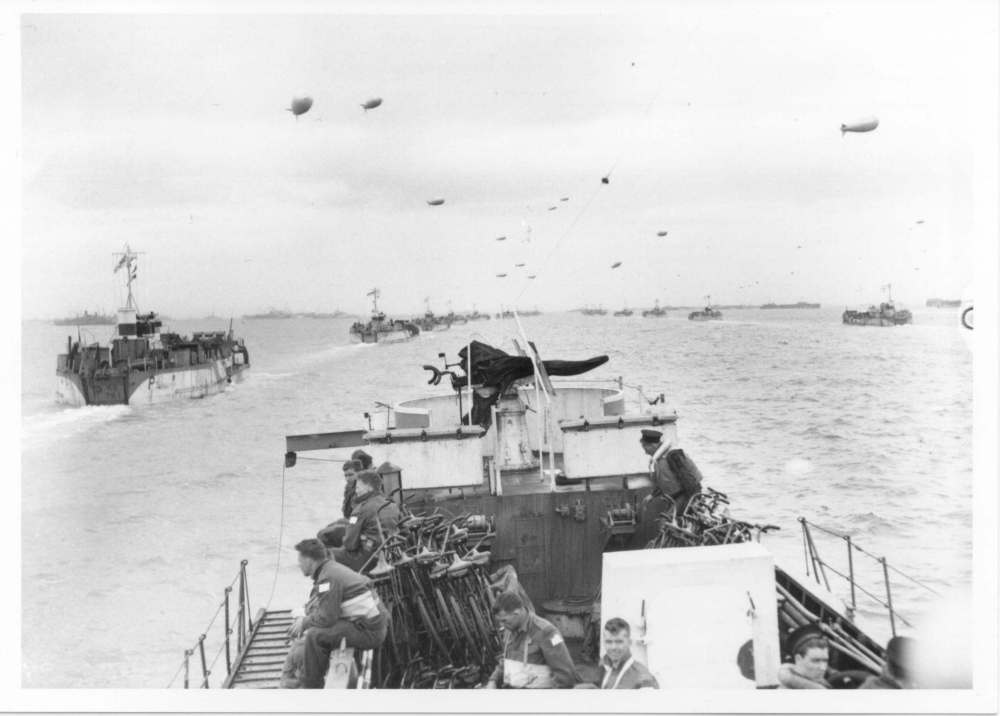
Gardner’s larger vessel was already loaded with tanks from the 10th Armoured Regiment (Fort Garry Horse). He manoeuvred the LCT close to the shore and unloaded the DD tanks. Floating over the tank traps, Little and others in his troop powered toward the beach in one of “Hobart’s Funnies,” to the astonishment of the defenders, who were unaware of this secret weapon.
Mutch may well have been the first to fall on Juno Beach. Crammed into a small LCA with 40 soldiers, he was in the first assault group when a large wave swept him into the sea. Mutch, weighted down by his equipment, sank without a trace.
Chadderton, looking over the carnage on the beach as his men were being cut down, paused to consider “the enormity” of what he saw.
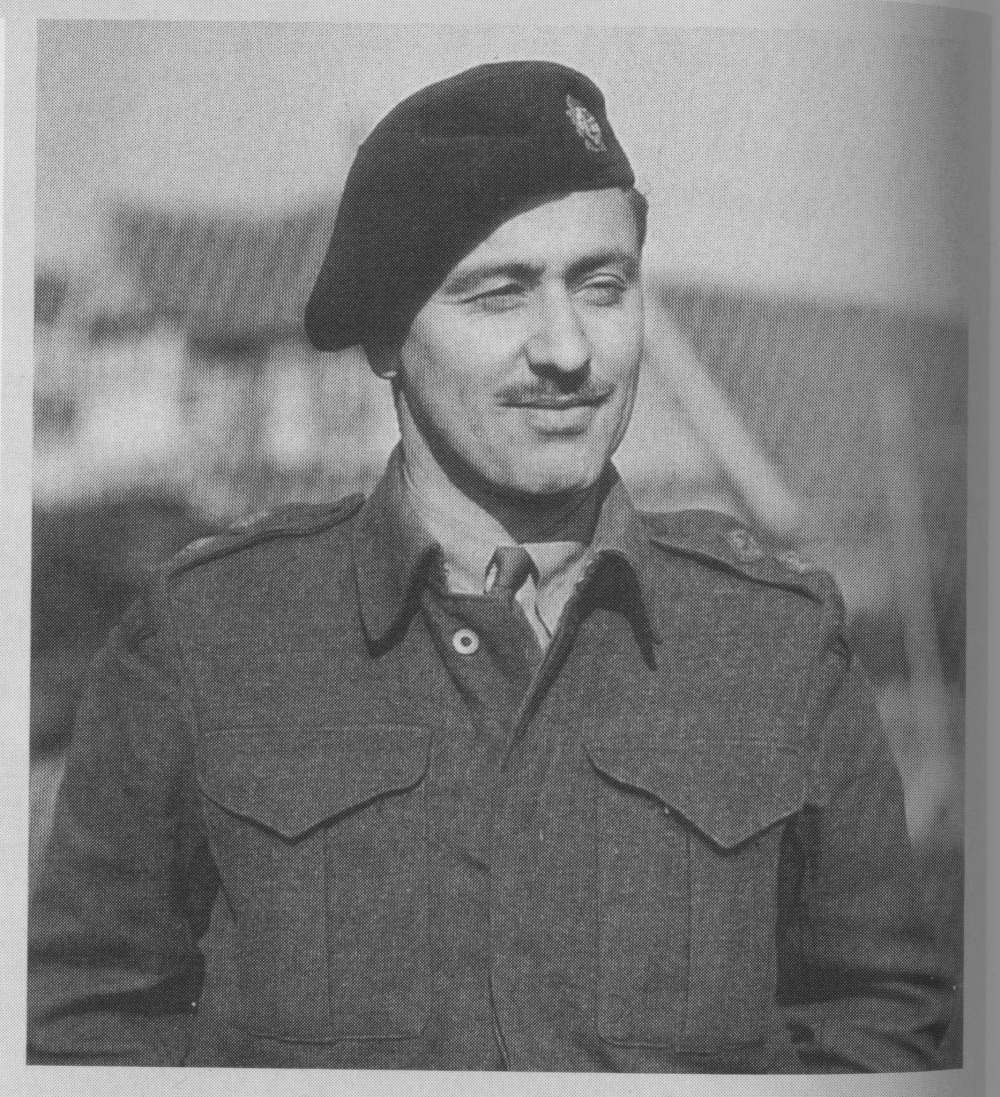
“I should have died right there,” he said in Faces of War.
Van Roon made sure that the 24 self-propelled 105-mm howitzer artillery weapons of the 19th Canadian Army Field Regiment were trained on the beach fortifications. His unit landed in support of the Ninth Shore (New Brunswick) Regiment.
“When the landing came, it was good to just get it over with. I’d do anything to get off of those boats…. The other boat didn’t show up. We were pretty fortunate to be in the one that survived. It was a pretty traumatic experience,” he said in the Memory Project. “We were pretty fortunate — there was a lot of rough going.”
Little’s tank landed directly in front of the seawall and fortified buildings at St. Aubin-sur-Mer. He turned and led his tanks to a gap in the wall, knocking out a German 50-mm anti-tank gun along the way. Meanwhile, the Royal Winnipeg Rifles were trying to cross the seawall at Courseulles-sur Mer, waiting for tanks of the 1st Hussars, which were slowed by the heavy seas.
With the surviving tanks of the Fort Garry Horse and 1st Hussars providing cover that day, Canadians fought their way farther inland than any other Allied troops, but paid a heavy price. By the end of the “Longest Day,” casualties included 340 Canadians killed, 574 wounded and 47 taken prisoner.
Northcott Text ColorSwatch/NoneStrokeStyle/$ID/SolidText ColorSwatch/NoneStrokeStyle/$ID/SolidText ColorText ColorText ColorText Colorled a combat patrol over Juno but encountered no enemy aircraft. A second sortie was much the same; the initial bombardment from the air and sea had been a factor in suppressing enemy resistance. Continued bombing of the railways and roads had shut down any organized counterattacks.
With Canadian paratroops pushing on from Sword, in the liberation of Ranville, France, near Caen, Shwaluk was killed three days later. He is buried in the Ranville War Cemetery where the graves of 76 Canadians are located. The 1st Canadian Parachute Battalion would lose more than half of their number in the aftermath of the D-Day campaign.
Mynarski would figure once more in the events surrounding D-Day. Just after midnight on June 13, his Avro Lancaster VR-A, from 419 RCAF “Moose” Squadron, was shot down over northern France, while on a mission to bomb a German supply line at Cambrai, France.
With his parachute and clothing on fire, Mynarski valiantly tried to save tail gunner Pat Brophy from his turret. Forced to retreat through the blazing bomber, he stood to attention at the exit and saluted his trapped comrade, before falling to a fiery death.
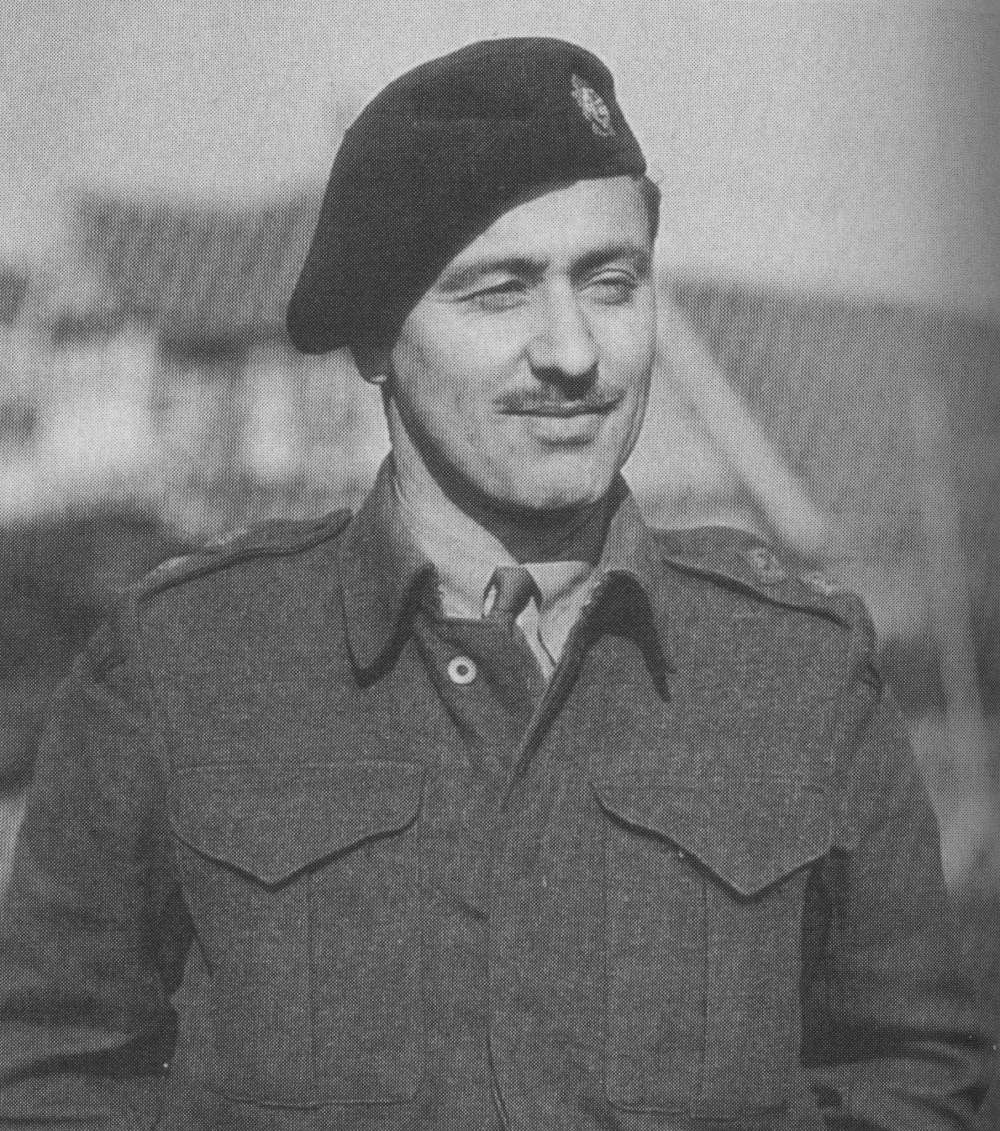
Brophy miraculously survived the crash, later recounting the bravery of his friend. His account resulted in the posthumous award of the Victoria Cross to Mynarski in 1946, the last award of its kind presented after the Second World War to a Canadian. Today, a city district, school and Air Cadet Squadron take his name. A statue honouring Mynarski was dedicated in 2015 at the Vimy Ridge Memorial Park in Winnipeg.
Little made it ashore with two tanks. “From then on it was straight fighting Germans until we finished up, May 3 (1945) in Oldenberg, Germany,” he said in a 2013 Free Press article. “That’s where we ended the war. We lost a lot of men. I was wounded once. A German threw a grenade over the wall and missed everyone but me.”
Little was awarded the Military Cross at the war’s conclusion. He continued a military career that included a stint in intelligence in Ottawa and concluded as military attaché to the Canadian High Commission in Cyprus, advising on Greek and Turkish armies. In 2013, he visited Juno Beach once more. On April 21, 2019, Little died at the age of 99.
Parks, who now lives in Ontario, has written extensively about his experiences and was back in France on the 40th, 50th, 60th and 70th anniversaries of D-Day.
Gardner finished his naval service doing convoy duty on HMCS Cobalt, retiring as a lieutenant-commander. He left the RCN after the war, returning to Winnipeg to become a lawyer. Gardner died in 2003.
In 1947, Wickey was awarded the Officer, Order of Orange-Nassau with Swords (Holland). He served as Military Governor of Wupertal. In the same year, Wickey joined the Corrections Service, where he served for 17 years, rising to deputy warden of Stony Mountain penitentiary. He was the first commanding officer of 5th Intelligence Training Company when it was formed in Winnipeg in 1952. Wickey died in 1994.
Chadderton, returning to Winnipeg, spent the postwar years lobbying on behalf of veterans and also the rehabilitation of child amputees. Chadderton lost part of his right leg in the fall of 1944 while in command of a Rifles’ company battling for the Scheldt Estuary in Belgium and Holland. He was secretary of the National Council of Veterans, and national secretary (later CEO) of the War Amputees of Canada, serving until 2009. He is commemorated by Chadderton Lake in Manitoba’s Duck Mountains. He died on Nov. 30, 2013.
After his command of the No. 402 Squadron, Northcott was promoted to wing commander, and at war’s end, flew as a pilot with Trans-Canada Airlines and remained active in the RCAF reserves until his retirement from the air force as a group captain in May 1955. Northcott’s uniform and military medals are displayed in the library and archives of No. 402 Squadron in Winnipeg, and his log books are at the Commonwealth Air Training Plan Museum in Brandon. He died in 1978.
After the war, Peden went to law school in Manitoba and became a Crown attorney. He is a former assistant deputy minister of municipal affairs and deputy minister of public utilities. He wrote three books, two of them on military history, namely Fall of an Arrow and A Thousand Shall Fall, the later documenting his wartime experiences.
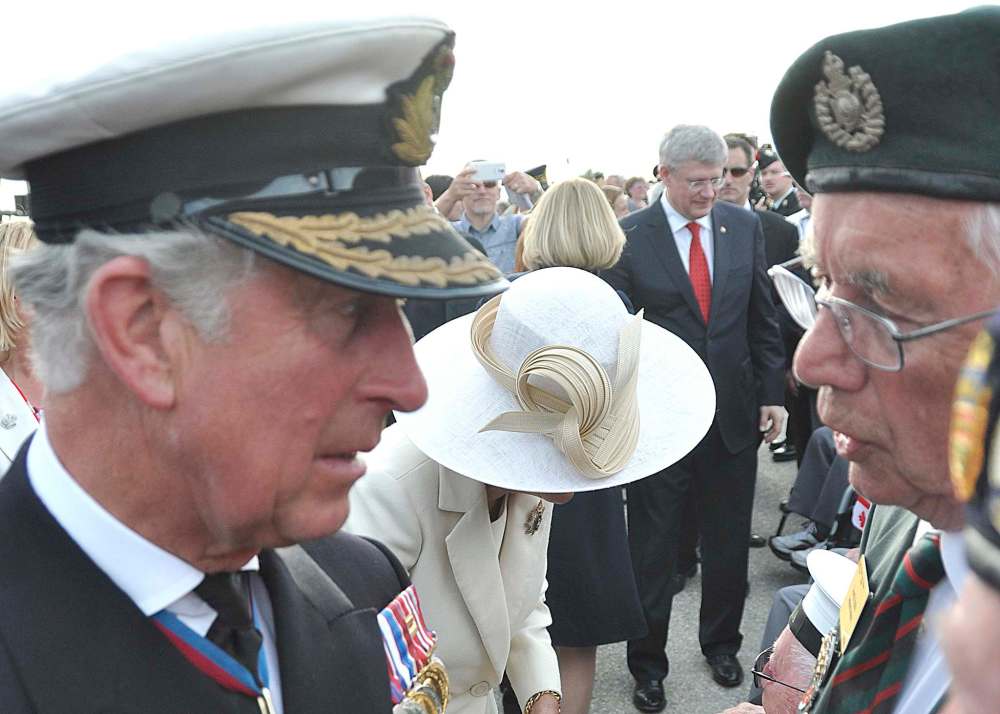

“It was a momentous time,” he said in a recent interview.
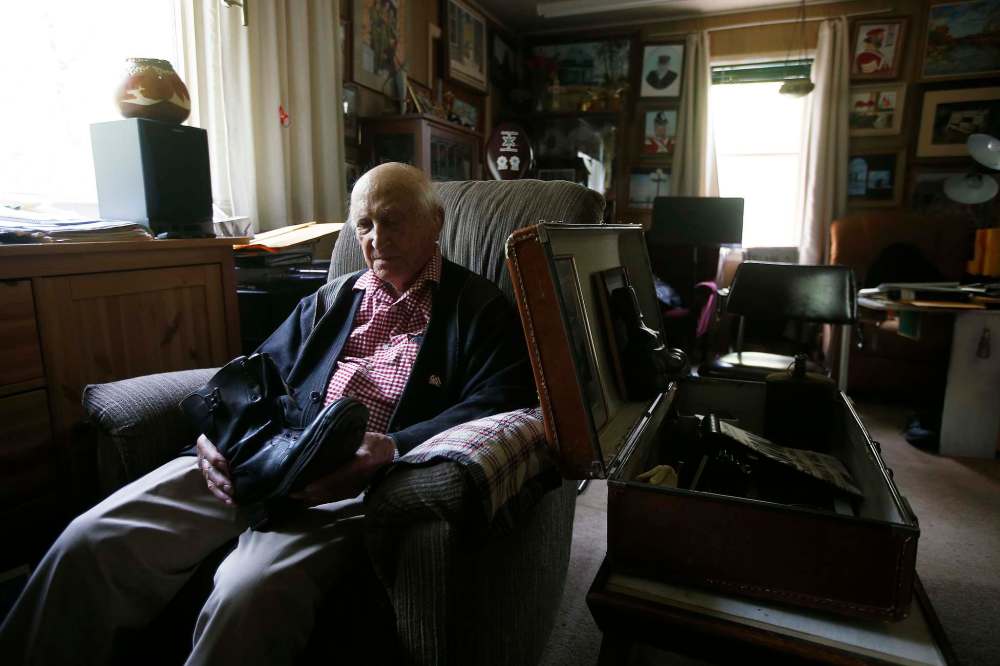
Van Roon continued on after the Normandy landings to go through the rest of France, Belgium, Germany and Holland. Some of the things he has held onto over the years are his cup and mess tin, and his army boots.
Over the course of 20 years, van Roon and his late wife, Verna, were instrumental in establishing the Charleswood Museum, which was dedicated to them in April 2007. The couple took a personal interest in researching each Charleswood casualty in Canada’s world wars and putting a photo of each in the Charleswood Historical Society’s memorial across from the legion on Roblin Boulevard.
“Then, it was important to do your part,” he recently recalled his time on Juno Beach. “Everybody played a role and you did what you had to do.”
— Bill Zuk is a Winnipeg author and historian
Remembering D-Day
The Manitoba branch of the Canadian Aviation Historical Society is hosting a special panel discussion on Thursday that focuses on D-Day’s aviation battle.
The panel includes:
John Bradley, who as a member in the Canadian Army, was deployed to Afghanistan, Kosovo, Namibia, Egypt and Israel (Golan Heights). He co-authored Aufklarer Luftwaffe Reconnaissance Aircraft & Units 1935–1945; 407 Squadron History: The Narrative Years and A History of the Air Defence of Canada, 1948–1997. His presentation will identify the losses incurred by RCAF in the 24-hour period of D-Day.
James Fergusson is the deputy director for the Centre for Defence and Security Studies, and political studies professor at the University of Manitoba. His presentation will focus on the legacy of D-Day.
Retired Lt.-Col. Robert Nash will highlight the operations carried out by RCAF No. 402 “City of Winnipeg” Squadron during the Normandy Campaign.
Jody Perrun teaches history at the University of Winnipeg, the University of Manitoba, and the Royal Military College of Canada, specializing in military history, post-Confederation Canada, and the Holocaust. He will document air operations that were critical to the D-Day and Normandy campaigns.
D-Day From the Air will be held at ANAVETS John Osborn VC Unit #No. 1, beginning at 7 p.m.
Please register your attendance ahead of time — (204) 290-8943 or wzuk11@gmail.com.
Related Articles
Emotions run free as Canadians mark D-Day

Advertisement Advertise With Us
Advertisement Advertise With Us