

Perfect HARMONY
Folk trio a popular draw before rock ruled

Advertisement
Read this article for free:
or
Already have an account? Log in here »
To continue reading, please subscribe:
Monthly Digital Subscription
$1 per week for 24 weeks*
- Enjoy unlimited reading on winnipegfreepress.com
- Read the E-Edition, our digital replica newspaper
- Access News Break, our award-winning app
- Play interactive puzzles
*Billed as $4.00 plus GST every four weeks. After 24 weeks, price increases to the regular rate of $19.95 plus GST every four weeks. Offer available to new and qualified returning subscribers only. Cancel any time.
Monthly Digital Subscription
$4.99/week*
- Enjoy unlimited reading on winnipegfreepress.com
- Read the E-Edition, our digital replica newspaper
- Access News Break, our award-winning app
- Play interactive puzzles
*Billed as $19.95 plus GST every four weeks. Cancel any time.
To continue reading, please subscribe:
Add Free Press access to your Brandon Sun subscription for only an additional
$1 for the first 4 weeks*
*Your next subscription payment will increase by $1.00 and you will be charged $16.99 plus GST for four weeks. After four weeks, your payment will increase to $23.99 plus GST every four weeks.
Read unlimited articles for free today:
or
Already have an account? Log in here »
Hey there, time traveller!
This article was published 28/09/2014 (4150 days ago), so information in it may no longer be current.
Between Elvis Presley being drafted into the U.S. army in 1958 and the arrival of the Beatles on North American shores in 1964, folk music enjoyed a prominent place in popular music.
Ushered in by the Kingston Trio’s surprise 1958 hit Tom Dooley, folk music graduated from fringe status to the commercial mainstream as teens and young adults scrambled for acoustic guitars and five-string banjos. Michael was rowin’ the boat ashore in countless coffeehouses, cafés and church basements across the continent.
Winnipeg’s answer to the Kingston Trio was the Roamers, a trio who, in the early to mid-’60s, enjoyed considerable popularity in nightclubs. Their musical abilities and impressive harmonies, coupled with an appealing singalong presentation, drew enthusiastic crowds wherever they performed.
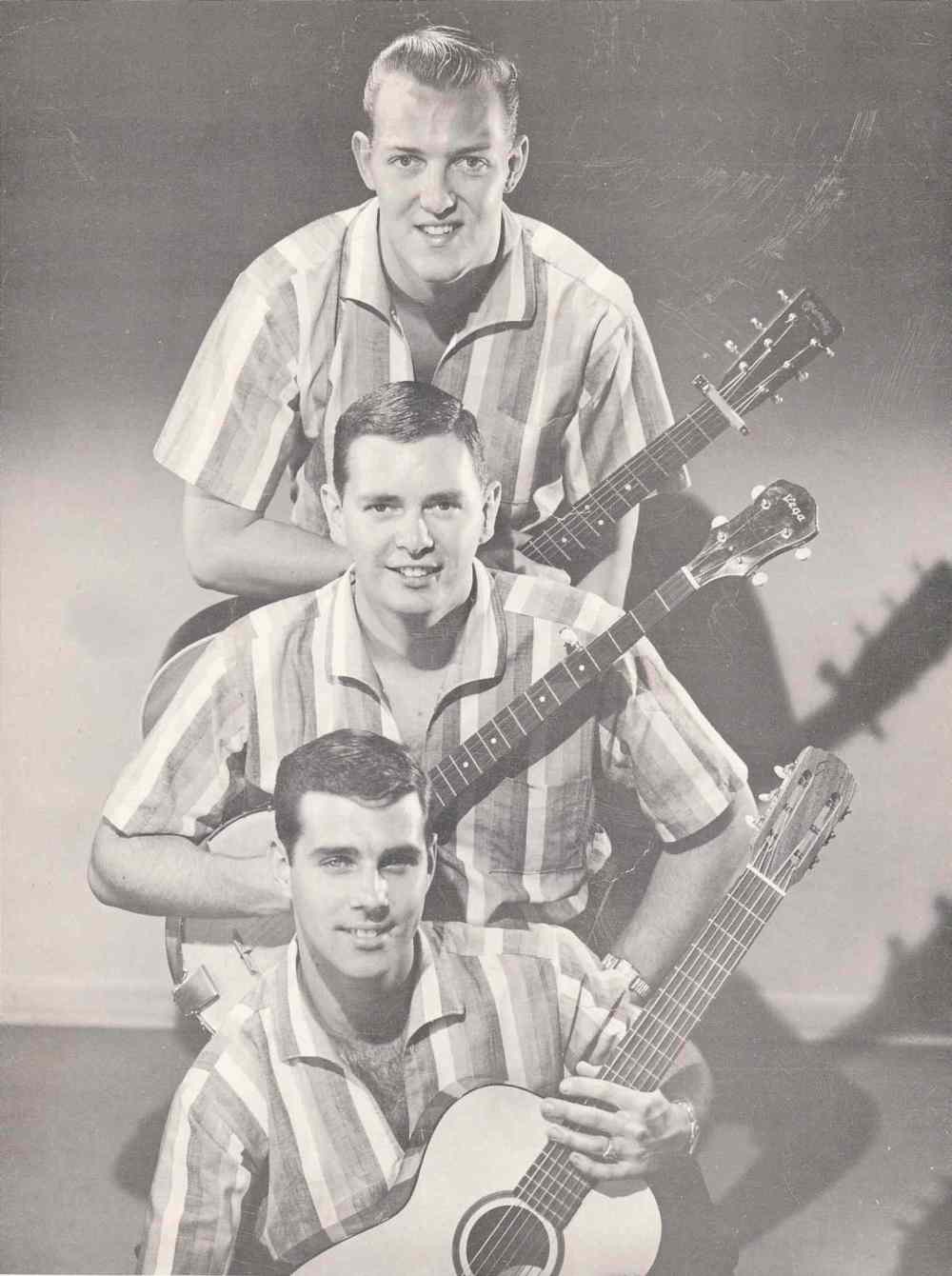
“There weren’t a lot of folk groups around Winnipeg at the time,” notes Roamers guitarist/bass player/singer Greg Brownell, who lived across the street from Neil Young on Grosvenor Avenue in Crescentwood. “That made us pretty unique.” Why folk music? “It was simple to play and sing, and people just loved to sit around and sing it.”
The trio — Brownell, Richard Price on banjo and vocals and Bill Copsey, also on guitar and vocals — came together rather casually around 1961. Price and Copsey had been students at Kelvin High School. Copsey had dabbled in rock ‘n’ roll, fronting Wild Bill Copsey & the Rhythm Rebels before taking a folk-music turn. Brownell, too, had wet his feet playing community clubs in rock band the Playboys before joining the 15-piece group the Cools. “The Cools played on a weekly radio broadcast from the Rancho Don Carlos out on Pembina Highway,” he recalls. “That was when the place was known as a Bottle Club.” Manitoba’s antiquated liquor laws wouldn’t allow booze to be served in the club. “They charged for the mix, and you brought your own bottle of booze. The tables even had a slot underneath to store your bottle in.”
Prior to Brownell joining, an early, short-lived version of the trio included future Blue Bombers player and general manager Paul Robson.
“That was my one and only musical endeavour,” laughs Robson, currently CEO of Canad Inns. “We sang at the Norwood Hotel on talent night. That was the limit of my singing abilities. I was quite happy to bow out.” The others recruited Copsey’s friend Brownell. Robson went on to the University of North Dakota and a career in sports. “Paul was a high-energy guy and a real showman,” states Price, who later served as Robson’s best man at his wedding.
With folk music in high demand in nightclubs, the Roamers quickly established a solid reputation. “We played a lot of Weavers songs and traditional songs we found in songbooks and on albums,” says Brownell. “We also loved the Clancy Brothers and did a lot of Irish drinking songs. Kingston Trio and Limeliters songs, too. Basically we just did the songs we liked.”
The trio was the featured act in the Gold Coach Lounge at Kennedy Street’s popular Town n’ Country nightclub on and off for more than two years, drawing lineups nightly.
“People loved to come see us and sing along,” states Price. “That was probably the highlight of our career playing there. We were making $600 a week, which was pretty good money then.”
‘We never saw it as a career or pushed it in that direction. What a great way to spend those young years of your life’
“I thought they were quite comparable to the Kingston Trio,” says Lorrie Waugh, ex-wife of Copsey, who saw the group at the T n’ C. “Their voices complemented each others in a lovely blend. And Richard was a very good banjo player, too.”
At 6-5, Copsey towered over his partners onstage. “On Bill, the guitar looked like a ukelele,” laughs Brownell.
Price recalls the time he bumped into singer Nat King Cole at the Town n’ Country. “It was winter and he was just going outside, and he said, ‘Man, it’s cold here.’ “
Brownell said black performers were sometimes prevented from mixing with white patrons or staying at certain hotels.
“We were talking with the Deep River Boys backstage at the Rancho Don Carlos and invited them to come sit with us in the main room, but they said they weren’t allowed to be in there. The City Centre was one of the few hotels that would let black performers stay there.”
An extended engagement at the Club Morocco on Portage Avenue brought the Roamers to the attention of producers from the CBC, who booked the trio to appear on several television shows.
“That was where the CBC staffers went after work for a drink,” recalls Brownell. “We played on Red River Jamboree, hosted by Stu Phillips. Lenny Breau was in the CBC band then but would never show up for rehearsals. The producer told us, ‘It doesn’t matter, because he never plays what we write down for him anyway.’ “
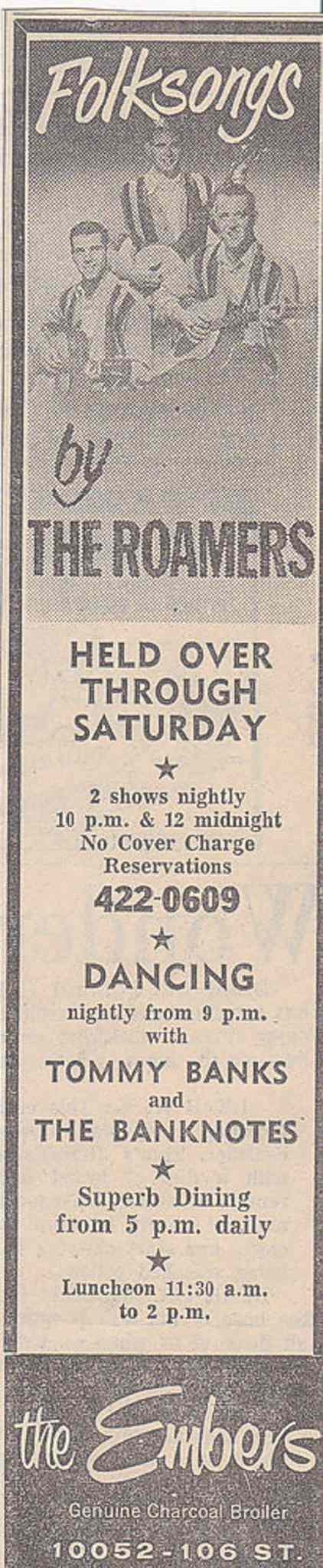
The Roamers also appeared on CBC’s nationally televised Time Out For Music and CBC Radio’s New Talent Parade.
The trio travelled to Edmonton for an engagement at the Paddock, followed by an appearance at the Embers, a club run by big-band leader and future senator Tommy Banks. They were held over for several weeks at the club. At a gig at Minneapolis’s famed Padded Cell nightclub, the Roamers were joined onstage for a couple of songs by the Smothers Brothers, who dropped by after their own gig.
“The place was short-staffed that night,” Brownell remembers, “so Tommy Smothers, the funny one, ended up serving drinks to people in the audience. We later partied with them at our rented apartment, and Tommy was so drunk he passed out.”
For a gig in Duluth, Minn., the club owner met the trio in Pembina, N.D., in his small plane to take them to Duluth. “He was flying really low and was using a road map to find his way,” laughs Brownell. “He had to keep leaning his head out the window to see the roads to follow. This was Bill’s first time in an airplane, so he was very uneasy.”
The group often played winter weekends at Kenora’s Kenricia Hotel. “The defrost on my ’48 Chevy didn’t work,” notes Brownell, “so one of us had to sit in the middle and scrape the frost off the windshield all the way there.”
Back in Winnipeg, the Roamers appeared on a bill at the Playhouse Theatre alongside Canadian folk-music luminary Oscar Brand and popular quartet the Travellers for a CBC Hootenanny show. They played the Fourth Dimension coffee house near the University of Manitoba and at the university itself.
The Beatles and the British Invasion sounded the imminent death knell for the folk boom in early 1964. Nightclubs wanted rock ‘n’ roll bands. Copsey bowed out to marry and settle down.
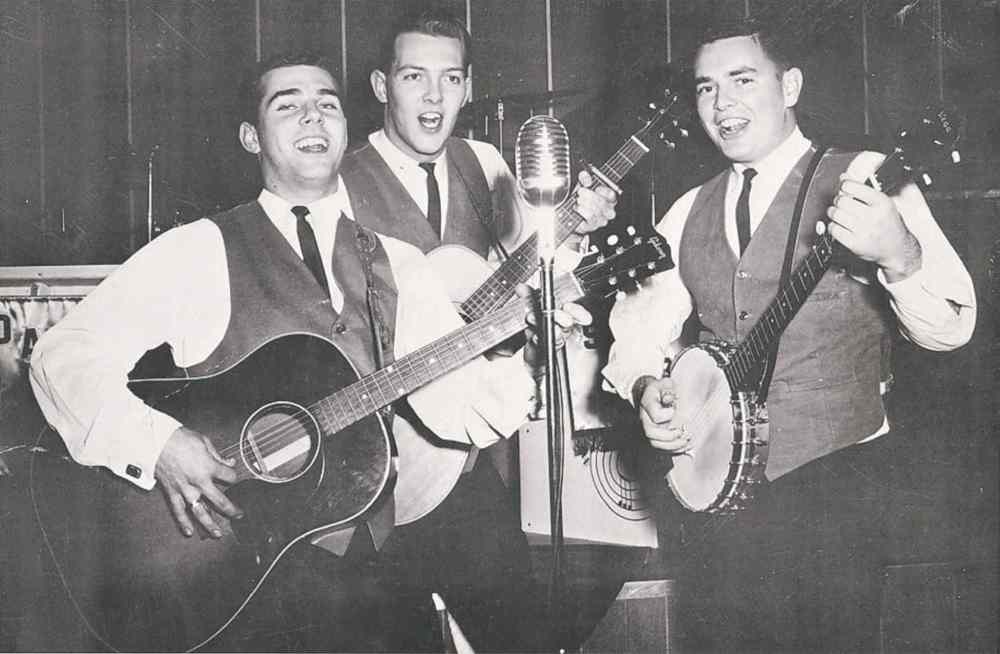
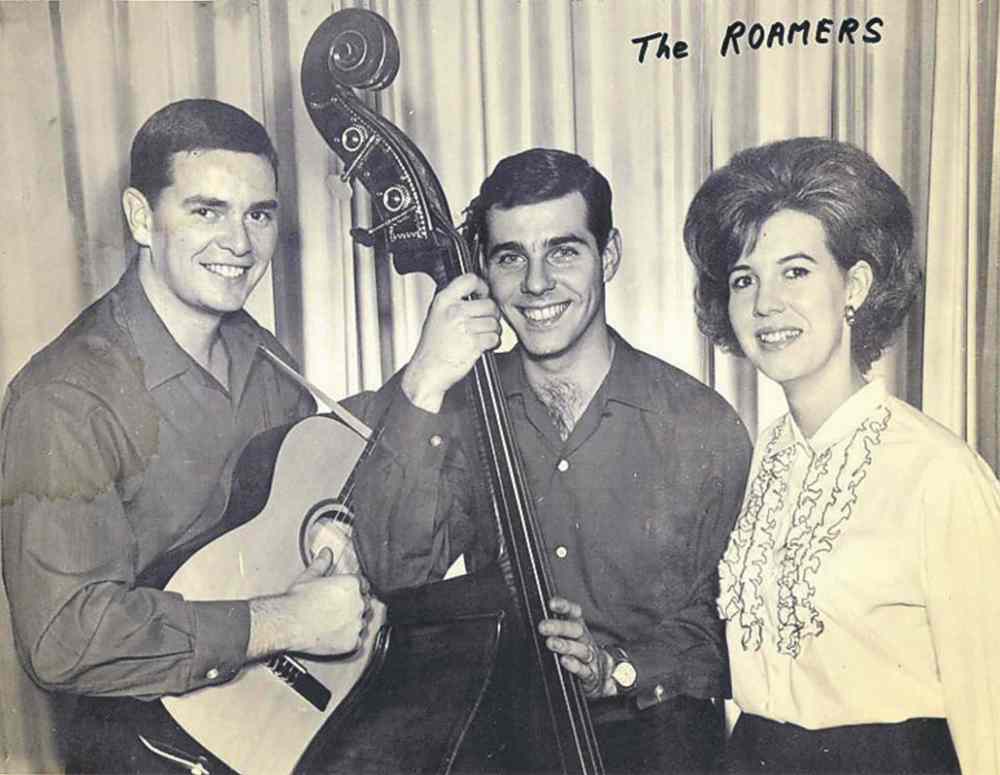
The others brought in singer Avril Johnson and carried on. During an extended gig at Thunder Bay’s St. Louis Hotel in 1965, Price earned his bush pilot’s licence and left the group, which folded soon after. Price worked as an airline pilot for Air Canada for five years before moving to British Columbia.
Brownell continued performing on and off for the next 20 years as a solo act under the name Rick Brown.
Copsey worked in sales and management in Winnipeg. He died of a heart attack in 1994 at the age of 53.
Johnson’s whereabouts are unknown.
“It was a wonderful time and a great way to make a living,” Brownell said of the Roamers’ time in the sun. “We were good friends and always got along well. But we never had any aspirations to take it any further. As long as it was fun, we did it. We never saw it as a career or pushed it in that direction. What a great way to spend those young years of your life.”

The Roamers never recorded.
When asked by noted folk-music authority Alan Mills on CBC Radio during the trio’s stay in Edmonton why he got into folk music, Price nonchalantly replied, “It beats working.”
Sign up for John Einarson’s October course on the Greenwich Village folk music scene at mcnallyrobinson.com.
Born and raised in Winnipeg, music historian John Einarson is an acclaimed musicologist, broadcaster, educator, and author of 14 music biographies published worldwide.
Our newsroom depends on a growing audience of readers to power our journalism. If you are not a paid reader, please consider becoming a subscriber.
Our newsroom depends on its audience of readers to power our journalism. Thank you for your support.
Born and raised in Winnipeg, music historian John Einarson is an acclaimed musicologist, broadcaster, educator, and author of 14 music biographies published worldwide.
Our newsroom depends on a growing audience of readers to power our journalism. If you are not a paid reader, please consider becoming a subscriber.
Our newsroom depends on its audience of readers to power our journalism. Thank you for your support.
Related Articles
‘I’ve basically been in this room for 3 1/2 years’: lengthy wait for new wheelchair decried

Advertisement Advertise With Us
Advertisement Advertise With Us