Transition to King Charles III as Canada head of state automatic after Queen’s death

OTTAWA - As momentous as the death of Queen Elizabeth II may be after her 70 years on the throne, it's pretty much business as usual in terms of Canada's governance.

Read this article for free:

or

Already have an account? Log in here »

To continue reading, please subscribe:

Subscribe and receive a limited-edition Free Press branded hat or tote.

Digital Subscription

One year of digital access for only $205*

  • Enjoy unlimited reading on winnipegfreepress.com
  • Read the E-Edition, our digital replica newspaper
  • Access News Break, our award-winning app
  • Play interactive puzzles

*First annual payment billed as $205.00 + GST for one year. This annual subscription will automatically renew at $233.00 + GST every 52 weeks (10% off the regular annual price of $259.35). Offer available to new and qualified returning subscribers only. Cancel any time.

To continue reading, please subscribe:

Add Free Press access to your Brandon Sun subscription for only an additional

$1 for the first 4 weeks*

  • Enjoy unlimited reading on winnipegfreepress.com
  • Read the E-Edition, our digital replica newspaper
  • Access News Break, our award-winning app
  • Play interactive puzzles
Start now

*Your next Brandon Sun subscription payment will increase by $1.00 and you will be charged $17.95 plus GST for four weeks. After four weeks, your payment will increase to $24.95 plus GST every four weeks.

Hey there, time traveller!
This article was published 08/09/2022 (1414 days ago), so information in it may no longer be current.

OTTAWA – As momentous as the death of Queen Elizabeth II may be after her 70 years on the throne, it’s pretty much business as usual in terms of Canada’s governance.

The monarch remains the constitutional head of state in this country, no matter who is filling the role at any given time, says Philippe Lagassé, an associate professor of international affairs at Carleton University and an expert on the role of the Crown in the Westminster system of government.

Hence, the succession from the Queen to her eldest son Charles, to be known as King Charles III, is automatic. There is no disruption to governing bodies that sit in her name or to legislation, oaths and other legal documents issued in her name.
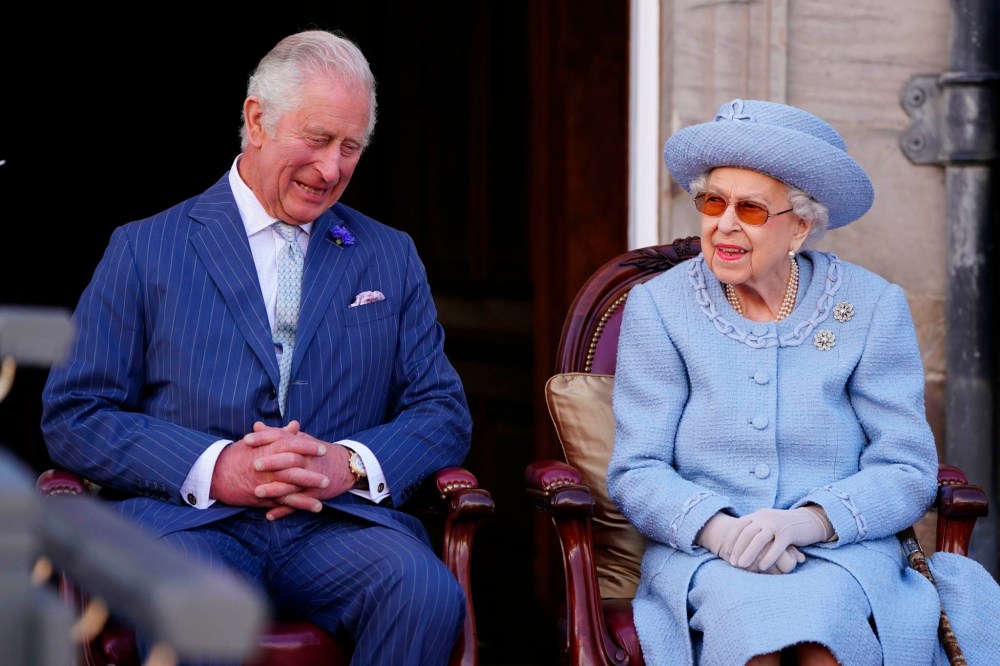
Britain's Queen Elizabeth II and Prince Charles, known as the Duke of Rothesay when in Scotland, attending the Queen's Body Guard for Scotland (also known as the Royal Company of Archers) Reddendo Parade in the gardens of the Palace of Holyroodhouse, Edinburgh last month. (Jane Barlow / Pool via AP)

“This transition does not require any action on Canada’s part,” Lagassé says.

“The phrase ‘The Queen is dead, long live the King!’ applies here and in the U.K.”

In common law, Lagassé says, the Queen and King are “the same legal person.” That’s because the Crown is what is known as a “corporation sole.”

“This means that, in their official capacity, the legal personality of the Queen (or) King does not change when different natural persons hold the position.

“That further means that any legal documents and instruments issued in the name of the Queen or that mention the Queen will apply and be understood to be from the King.”

That includes oaths of allegiance to the monarch, which are required in a host of cases, including becoming a member of Parliament or a member of the Canadian Armed Forces or a Canadian citizen.

“So, there’s no need to re-swear or re-sign anything,” Lagasse says.
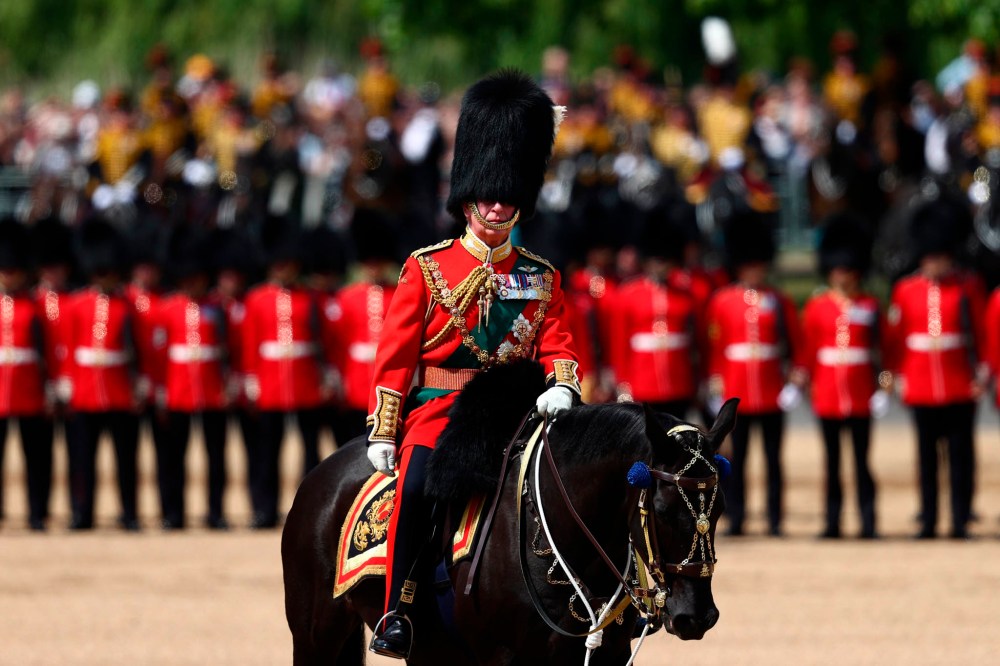
Britain's Prince Charles, Prince of Wales, in his role as Colonel of the Welsh Guards, takes part in the Trooping the Color parade, in London, last month, on the first of four days of celebrations to mark the Platinum Jubilee. (Adrian Dennis / Pool Photo via AP)

It wasn’t always that way.

In days of yore, the death of a monarch meant that parliaments sitting in that individual’s name in the United Kingdom and its colonies, including those that eventually became Canada, were automatically dissolved and elections had to be held.

“Dissolution by demise of the Crown” as it is known, flowed from the “premise that the Sovereign summons a parliament in his or her personal capacity and that, therefore, a parliament must die along with the individual King or Queen who sent for it,” says James Bowden, an acknowledged authority on such matters, in an April 2021 post on his scholarly blog, Parliamentum.

The practice reflected “an older medieval status of the Crown” when parliaments sat rarely, summoned by the monarch only when necessary, Bowden says. It was obviously “impractical and disruptive” in more modern times, as parliaments began sitting regularly and the monarch’s role became more ceremonial.

Dissolution by demise of the Crown was abolished in the U.K. in 1867 and the Parliament of the newly created Confederation of Canada followed suit in its first session the same year, according to Bowden.

Today, the Parliament of Canada Act expressly states that “Parliament shall not determine or be dissolved by the demise of the Crown and, notwithstanding the demise, shall continue, and may meet, convene and sit, proceed and act, in the same manner as if that demise had not happened.”

Similarly, oaths of allegiance to the Queen have been changed to include the words “and her heirs and successors,” explicitly doing away with the need to re-swear an oath to the new monarch after her death.
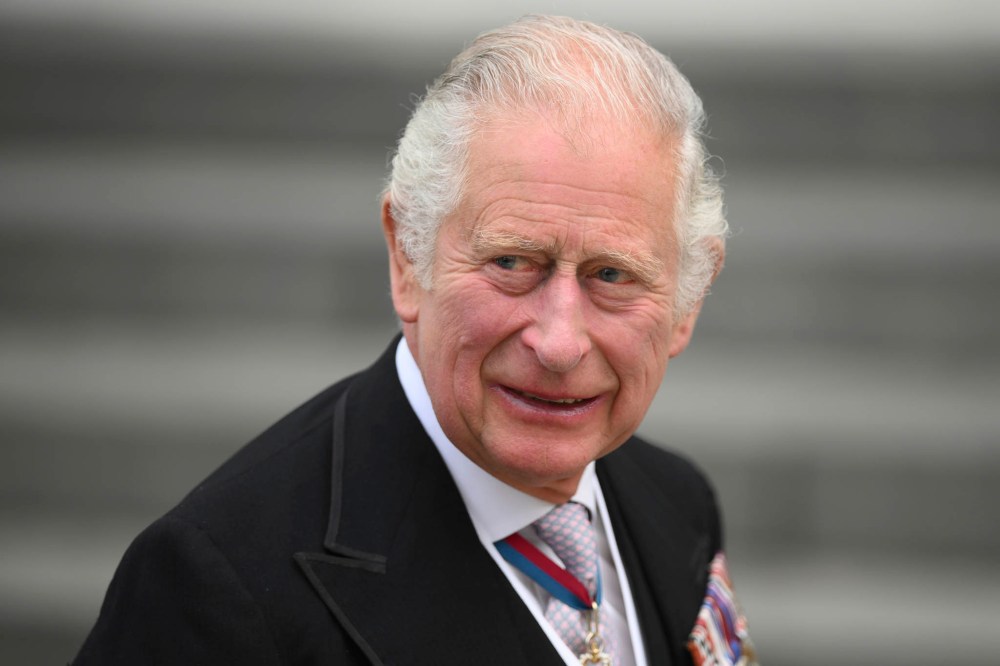
Britain's Prince Charles arrives for a service of thanksgiving for the reign of Queen Elizabeth II at St Paul's Cathedral in London last month on the second of four days of celebrations to mark the Platinum Jubilee. (Daniel Leal / Pool Photo via AP)

Provinces and territories have all adopted similar provisions.

However, in their zeal to remove references to the monarch in the act governing the National Assembly in 1982, Quebec also removed a provision that specified the legislature would not dissolve automatically on her death.

Historians and constitutional experts raised the alarm that this omission could plunge the province into an election upon the Queen’s death and potentially mean that all laws passed following her death would be scrapped.

The Quebec government introduced a bill in March 2021 to rectify the omission.

While the business of government in Canada will continue undisturbed, Lagassé says there are some formalities that will have to be observed.

For instance, Canada’s Privy Council, which includes all current and former cabinet ministers, is expected to meet when a new monarch ascends the throne. The governor general, the Crown’s representative in Canada, must also issue a proclamation on the new monarch.

“It is important to note, however, that this step merely affirms what has already occurred in law,” says Lagasse.
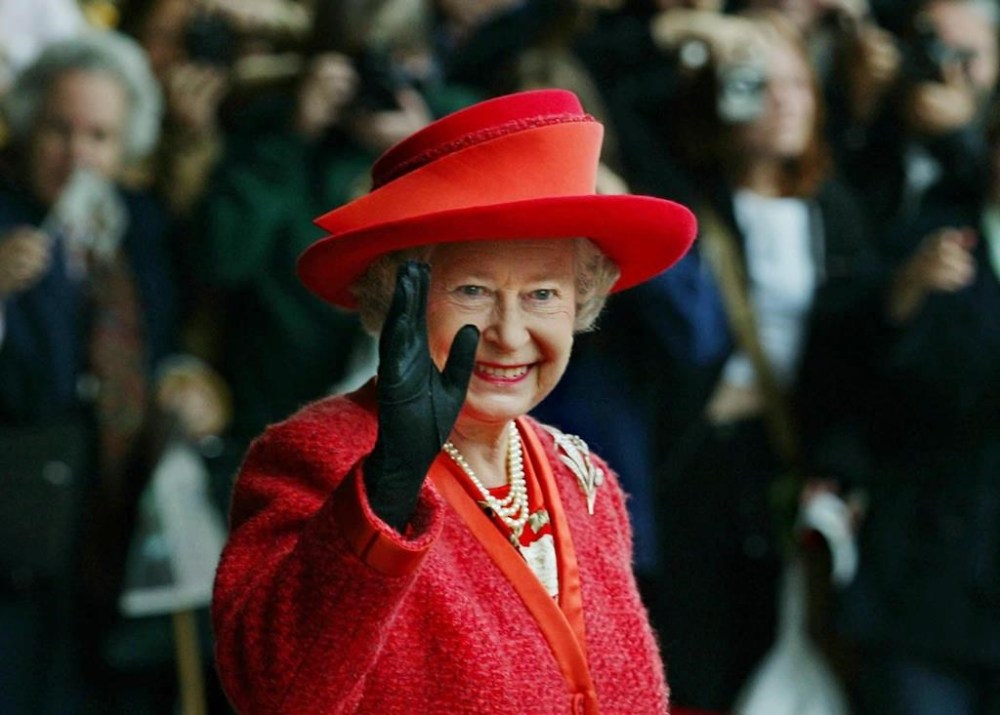
The succession from the Queen to her eldest son Charles is automatic, without any disruption to governing bodies that sit in her name or to legislation, oaths and other legal documents issued in her name. (Kevin Frayer / Canadian Press files)

There are also a number of protocols surrounding the official 10-day mourning period. It will culminate in a funeral service in London, which Commonwealth prime ministers and governors general are expected to attend.

Flags are already at half mast on official government buildings, including the Peace Tower on Parliament Hill, and members of the federal cabinet sported black ribbons on Thursday afternoon to commemorate the loss.

The public will be able to sign books of condolences online and in person at Rideau Hall, the governor general’s residence in Ottawa.

This report by The Canadian Press was first published Sept. 8, 2022.

Report Error Submit a Tip

More Stories

NDP handily retains northern seat in byelection

Carol Sanders 5 minute read Preview

NDP handily retains northern seat in byelection

Carol Sanders 5 minute read Tuesday, Jul. 21, 2026

Voters in The Pas-Kameesak stuck with the NDP — big time — in Tuesday’s byelection.

With all polls reporting, New Democrat Jennifer Flett received 74 per cent of the votes in the race to replace the late NDP MLA Amanda Lathlin. Flett, a former vice-chief and councillor for Opaskwayak Cree Nation, got a stronger mandate than the NDP received in the 2023 provincial election, when Lathlin received 67 per cent support.

Premier Wab Kinew welcomed Flett to the NDP caucus.

“She knows what families in her communities need, and I look forward to working with her to deliver better health care and more good jobs for The Pas-Kameesak,” he said in a release.

Read
Tuesday, Jul. 21, 2026

Strong, capable women rob Trudeau of moral authority

Dan Lett 6 minute read Preview

Strong, capable women rob Trudeau of moral authority

Dan Lett 6 minute read Wednesday, Mar. 6, 2019

The hole that Prime Minister Justin Trudeau fell into last week just got a little deeper, and his path back out significantly less certain.

Following an extraordinary week in which former Justice Minister Jody Wilson-Raybould publicly accused Trudeau and his senior staff of improper political pressure to help SNC-Lavalin, Treasury Board President Jane Philpott resigned from cabinet, saying she had lost confidence in the prime minister and cabinet. 

It was always going to be a challenge for Trudeau to survive the damage done by Wilson-Raybould following her resignation from cabinet, and testimony to a Commons committee last week. But Philpott's resignation has made that climb seem nearly unassailable.

At press time, Trudeau is reportedly hunkered down in his Ottawa office, contemplating some sort of statement of contrition. That's solid evidence that this latest development has pushed Trudeau's leadership to the brink of the abyss.

Read
Wednesday, Mar. 6, 2019

Oscar parties: Pitt goes right in, Phoenix engraves-and-runs

Andrew Dalton, The Associated Press 5 minute read Preview

Oscar parties: Pitt goes right in, Phoenix engraves-and-runs

Andrew Dalton, The Associated Press 5 minute read Monday, Feb. 10, 2020

BEVERLY HILLS, Calif. - Brad Pitt, tux still on but tie gone and best supporting actor Academy Award stowed away somewhere, stepped out of a car with a few friends at the quiet back entrance to Vanity Fair's annual post-Oscars party.

“Do you want to go to the red carpet?” an attendant asked.

“Nah,” Pitt said. “Let's go right in.”

He'd had enough of red carpets, cameras and questions after a long awards season that culminated in a very long Oscars on Sunday and a victory in the best supporting actor category for his role in “Once Upon a Time ... in Hollywood." It was time to party.

Read
Monday, Feb. 10, 2020

Winnipeggers vote resounding ‘no’ on reopening Portage and Main

Melissa Martin 6 minute read Preview

Winnipeggers vote resounding ‘no’ on reopening Portage and Main

Melissa Martin 6 minute read Wednesday, Oct. 24, 2018

It was one of the most divisive issues of the 2018 civic campaign, a public debate that was exhausting, bruising, stubborn.

Now, a key chapter in the Portage and Main saga is over. By a nearly 2-1 margin, Winnipeggers voted Wednesday against reopening the city's famous intersection to pedestrians. The final tally: 65 per cent "no" to 35 per cent "yes."

At Team Open's election-night party at Bailey's Lounge, news of the defeat was met with scattered jokes and tired, self-aware smiles. It is not the result advocates wanted — but it is the one they were prepared for, and expected.

"We knew it was a tough hill to climb," co-chairman Adam Dooley said. "Opinions were pretty entrenched. We did our best to try and move them, and tried to run a positive campaign. It's too bad we weren't able to persuade more people."

Read
Wednesday, Oct. 24, 2018

The number of Indigenous inmates in prison is a problem — but Ottawa has no plan to fix it

Ryan Thorpe 2 minute read Preview

The number of Indigenous inmates in prison is a problem — but Ottawa has no plan to fix it

Ryan Thorpe 2 minute read Thursday, Apr. 29, 2021

The number of Indigenous people being locked up in federal prisons is spiking despite overall declines in both incarceration and crime rates across the country.

Accounting for just five per cent of Canada's population, Indigenous people make up 30 per cent of the federal prison system's inmate population.

The crisis is particularly acute in the Prairies, where roughly 70 per cent of the people behind bars at Stony Mountain Institution north of Winnipeg are Indigenous.

Ryan Beardy, a former gang member and current justice advocate, mentor and freelance journalist, said that it was while he was incarcerated at Stony Mountain that he decided to begin speaking out about prison conditions in Canada.

Read
Thursday, Apr. 29, 2021

Lawyer working on unpaid tax bill in Costa Rica, Pallister says

Larry Kusch 1 minute read Preview

Lawyer working on unpaid tax bill in Costa Rica, Pallister says

Larry Kusch 1 minute read Tuesday, Dec. 18, 2018

Three-and-a-half months after acknowledging he owed luxury taxes on his Costa Rican vacation home, Brian Pallister now admits that the bill remains unpaid.

In a year-end interview, the premier expressed frustration at being unable to make the payment, citing unspecified problems in navigating the Costa Rican bureaucracy.

While he told the Canadian Press in late August that he had paid what he owed — roughly C$8,000, including penalties — it turns out that he had, in fact, transferred the money to his Costa Rican lawyer, Paul Oporta, to carry out the transaction.

"I've been assured by the lawyer that he is endeavouring his very best to get it done," Pallister said of the tax payment.

Read
Tuesday, Dec. 18, 2018