

Early childhood educators discuss First Nations students’ needs

Advertisement
Read this article for free:
or
Already have an account? Log in here »
To continue reading, please subscribe:
Digital Subscription
One year of digital access for only $1.44 a week*
- Enjoy unlimited reading on winnipegfreepress.com
- Read the E-Edition, our digital replica newspaper
- Access News Break, our award-winning app
- Play interactive puzzles
*Billed as $5.77 plus GST every four weeks. After 52 weeks, price increases to the regular rate of $19.95 plus GST every four weeks. Offer available to new and qualified returning subscribers only. Cancel any time.
To continue reading, please subscribe:
Add Free Press access to your Brandon Sun subscription for only an additional
$1 for the first 4 weeks*
- Enjoy unlimited reading on winnipegfreepress.com
- Read the E-Edition, our digital replica newspaper
- Access News Break, our award-winning app
- Play interactive puzzles
*Your next Brandon Sun subscription payment will increase by $1.00 and you will be charged $17.95 plus GST for four weeks. After four weeks, your payment will increase to $24.95 plus GST every four weeks.
Read unlimited articles for free today:
or
Already have an account? Log in here »
Early childhood educators traded tips to improve attendance and well-being among First Nations students and their families at a first-of-its-kind event in Winnipeg.
The University of Winnipeg hosted an inaugural roundtable for ECEs to share their challenges and successes related to Indigenous education on Tuesday.
“The limited assessment data that we do have shows Indigenous children are not doing as well in life as other children and so we need to pick it up,” said Sheri-Lynn Skwarchuk, a professor who oversees the developmental studies program.
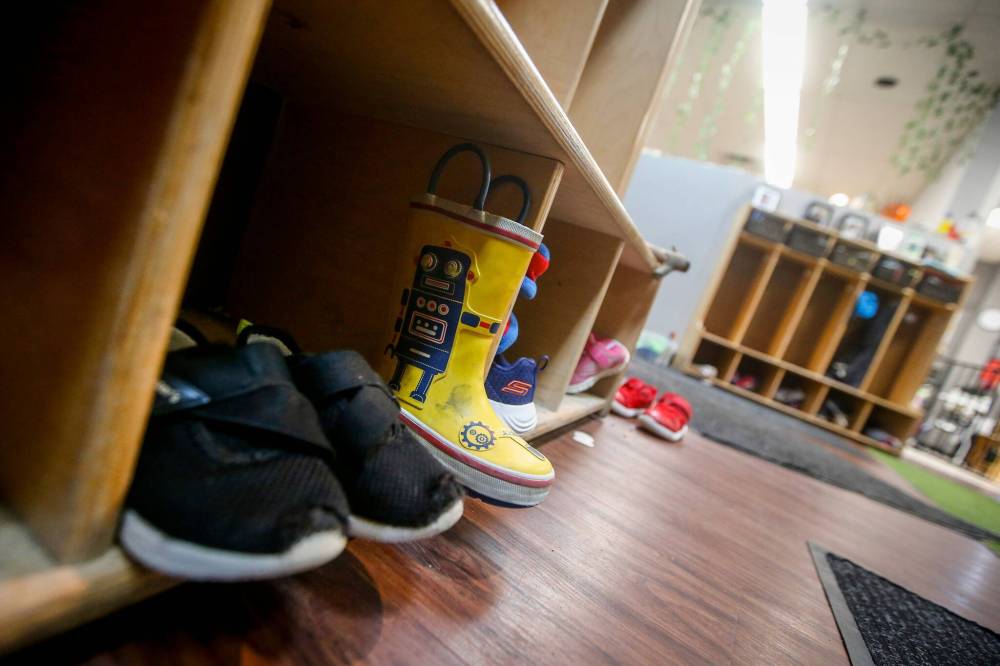
JOHN WOODS / FREE PRESS FILES
The University of Winnipeg hosted an inaugural roundtable for ECEs to share their challenges and successes related to Indigenous education on Tuesday.
The facilitator described the gathering of nearly 50 women, including front-line workers, centre co-ordinators and post-secondary instructors, as a momentous occasion for their shared profession.
It was an opportunity to build relationships, recognize the expertise of Indigenous ECEs and answer the Truth and Reconciliation Commission’s calls to action for the sector, Skwarchuk said.
The commission called for the development of “culturally appropriate early childhood education programs” for families who are First Nations, Métis and Inuit.
Throughout the morning discussion at U of W, early childhood educators spoke about how colonial policies and intergenerational trauma are ongoing barriers for the families.
Attendees, many of whom work on-reserve, identified physical space constraints, staffing shortages and emergencies, such as fires and Manitoba Hydro outages, as other challenges.
The crowd also heard about how educators have sought to decolonize curriculum and restructure programs accordingly.
Women shared stories about how they’ve been starting lessons with sharing circles, leading land-based learning activities and reframing children in their care as teachers in their own right.
“I want everyone to see the value in Head Starts because Head Starts are the opposite of a residential school,” said Lesli Fenner, an early childhood educator who runs the Peguis Family Centre Head Start Program.
“We’re trying to do the opposite and get out of the colonized way of teaching and that’s why we’re including the parents — we’re bringing the families in.”
Fenner attributes her centre’s success to the requirement for full-time parent participation, shared meals provided to families and a wide range of cultural programming.
As far as she’s concerned, one way to set children up for success is to ensure Head Starts, meant to be holistic family learning programs, aren’t treated as “daycare extensions.”
Manitoba’s latest report on school readiness shows Indigenous children are more likely than their peers to struggle with physical stamina, emotional maturity and basic literacy.
Kindergarten teachers use the early development instrument to assess whether incoming students are hitting targets for their age.
Nearly 29 per cent of Indigenous children were flagged as “vulnerable” in 2022-23 because they weren’t meeting expectations related to physical co-ordination and gross and fine motor skills. That’s more than double the percentage of non-Indigenous students in the same category. There was a smaller gap — nine per cent — in the assessment tool’s communication and general knowledge category.
“When they’re little, the problems may be little, but as they grow, those problems magnify,” said Skwarchuk, a self-described “ally and friend” to her Indigenous colleagues.

Early childhood educator Twyla McKay said she left U of W feeling empowered and inspired by all the ideas shared by “powerful women” on Tuesday.
It was well worth waking up at 4 a.m. to drive about 230 kilometres south from O-Chi-Chak-Ko-Sipi First Nation, where she oversees her community’s Aboriginal Head Start, she said.
“I always tell people that learning is lifelong. I’m walking in those shoes,” McKay said, adding that she is hopeful there will be many more opportunities to build on the discussions that started this week.
The province is in the early stages of drafting a child-care policy framework to support positive outcomes for children who are First Nations, Métis and Inuit.
maggie.macintosh@freepress.mb.ca
Maggie Macintosh reports on education for the Winnipeg Free Press. Funding for the Free Press education reporter comes from the Government of Canada through the Local Journalism Initiative.
Our newsroom depends on a growing audience of readers to power our journalism. If you are not a paid reader, please consider becoming a subscriber.
Our newsroom depends on its audience of readers to power our journalism. Thank you for your support.
Maggie Macintosh reports on education for the Winnipeg Free Press. Funding for the Free Press education reporter comes from the Government of Canada through the Local Journalism Initiative.
Our newsroom depends on a growing audience of readers to power our journalism. If you are not a paid reader, please consider becoming a subscriber.
Our newsroom depends on its audience of readers to power our journalism. Thank you for your support.
Advertisement Advertise With Us
Advertisement Advertise With Us